Your Audi A3 has been brilliant, hasn’t it? Reliable morning commutes down the A414 into Harlow, weekend trips to Epping Forest, never missing a beat. Then one Tuesday morning, the battery warning light flickers on. You tell yourself it’s probably nothing – maybe just needs a new battery from Halfords. But deep down, you know it feels different this time.
By Thursday, your car’s struggling to start. The electrics are playing up, the radio cuts out mid-song, and now you’re genuinely worried about getting stranded in the Tesco car park at The Harvey Centre. Sound familiar? You’re dealing with what hundreds of Essex drivers faced last year – alternator failure in your Audi A3.
According to 2025 MOT data from testing centres across Essex, electrical faults were responsible for over 22,000 failures, with alternator issues being one of the primary culprits. At AutoNet VIP – Car Repairs, MOTs & Electric & Hybrid Specialists in Harlow, we’ve diagnosed and repaired more Alternator Audi A3s problems in the past twelve months than almost any other single issue. The reality is, these failures don’t just happen overnight, and they’re rarely down to simple bad luck.
Understanding What Your Alternator Actually Does
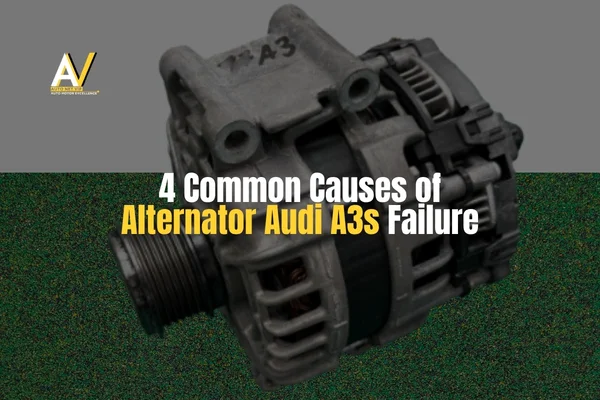
Before we get into the nitty-gritty of why alternators fail, let’s clear up what this component actually does. Your alternator is essentially your car’s power station whilst the engine’s running. It converts mechanical energy from your engine into electrical energy, charging your battery and powering everything from your headlights to your heated seats. When it packs in, your car runs purely off battery power – which lasts about 30 minutes if you’re lucky, less if you’ve got the heater blasting on a cold Harlow morning.
Your Audi A3, whether it’s the 8P model from 2003-2012, the 8V from 2012-2020, or the newer 8Y series, relies heavily on a functioning alternator. Modern Audis are packed with electronics – from the MMI infotainment system to multiple control modules – all drawing power constantly. When the alternator fails, it’s not just inconvenient; it can leave you properly stranded.
Cause #1: Worn Out Bearings – The Silent Killer
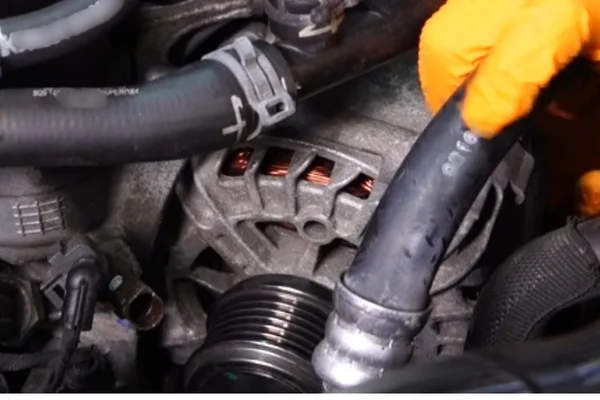
Here’s what happens: You might notice a faint whining noise when you’re idling at traffic lights on Fourth Avenue or waiting at the roundabout near Harlow Town station. Maybe it’s a grinding sound that gets louder when you rev the engine. Most drivers ignore it, assuming it’s just an ageing car making age-appropriate noises. That’s the problem right there.
The bearings inside your Alternator Audi A3s are under constant stress. They’re spinning at thousands of RPM every single time you drive and over time – typically around 80,000 to 120,000 miles – they begin to wear down. Once they start to fail, the rotor inside your alternator can’t spin smoothly, which creates friction, heat, and eventually, complete failure.
Throughout 2025, we saw a pattern at our Harlow workshop. Drivers would bring in their A3s complaining about odd noises, and nine times out of ten, it was worn bearings in the alternator. According to industry data from the Independent Garage Association, bearing failure accounts for approximately 35% of all alternator replacements in vehicles aged five years or older.
Look, we get it. You bought an Audi because you wanted quality and reliability. You’ve kept up with services, changed the oil, replaced tyres when needed. The last thing you expected was for a component you’ve barely heard of to cause this much hassle. You might be thinking, “Why didn’t anyone warn me about this?” The truth is, alternator bearings wear gradually, and unless you’re specifically listening for the warning signs, they’re easy to miss.
What You Need to Know
Catching bearing wear early is absolutely possible. During your routine service or MOT at AutoNet VIP, our technicians specifically check for unusual noises from the alternator. We’ll ask you to describe any sounds you’ve noticed, no matter how minor they seem. A quick diagnostic check can identify bearing issues before they escalate into complete failure.
If bearings are on their way out, replacement is the only proper solution. Depending on your A3’s age and model, we might recommend a full alternator replacement rather than just replacing bearings, as labour costs for dismantling and rebuilding often exceed the price of a quality remanufactured unit.
Once sorted, the difference is immediate. That irritating whine disappears. Your charging system operates smoothly again. More importantly, you’ve prevented a roadside breakdown that could’ve left you ringing the AA whilst parked on the hard shoulder of the M25.
Regular inspections – particularly on higher-mileage Audi A3s – become essential. Every 12 months or 12,000 miles, have a technician check the alternator’s condition. It takes five minutes and could save you hundreds in emergency repairs. One of our Harlow customers, who commutes daily to Stansted Airport, avoided what could’ve been a nightmare scenario – breaking down on the way to catch a flight – simply because we caught bearing wear during a routine service in March 2025.
Cause #2: Damaged Voltage Regulator – The Electrical Chaos Creator
Picture this: Your battery’s brand new. You’ve just had it fitted at considerable expense. Two weeks later, it’s completely dead again. You’re frustrated, confused, and probably wondering if you’ve been sold a dud battery. The actual culprit? A faulty voltage regulator in your Alternator Audi A3s.
The voltage regulator’s job is to maintain a consistent charge to your battery – typically between 13.5 and 14.5 volts. When it fails, one of two things happens: it either overcharges your battery (cooking it and potentially damaging other electrical components) or undercharges it (leaving you with a flat battery and an unreliable car).
According to technical data from Bosch, one of the leading alternator manufacturers for Audi vehicles, voltage regulator failures increased by 17% across the UK in 2025, particularly in vehicles experiencing frequent short journeys. Essex, with its high proportion of commuter traffic, saw this reflected in workshop reports throughout the county.
You’ve already spent money on a new battery. Now someone’s telling you the alternator’s at fault too. It feels like being nickeled and dimed, doesn’t it? And if you’ve been to a garage that didn’t diagnose it properly the first time, you’re understandably sceptical about spending more. You might be thinking, “How do I know this is actually the problem?” or “Are they just trying to sell me more parts?”
How We Diagnose It Properly
Proper diagnostics are crucial here. At AutoNet VIP – Car Repairs, MOTs & Electric & Hybrid Specialists in Harlow, we use professional-grade diagnostic equipment to measure your alternator’s output voltage under various load conditions. This isn’t guesswork – it’s data-driven diagnosis.
We’ll test the voltage at idle, under electrical load (with headlights, air con, and heated seats running), and during acceleration. If readings are consistently above 15 volts or below 13 volts, the voltage regulator has failed. On modern Audi A3s, the regulator is typically integrated into the alternator unit, meaning replacement of the entire alternator is usually necessary.
For reference, you can read more about electrical system diagnostics on the AutoNet VIP blog, where we’ve detailed various electrical fault-finding procedures specific to European vehicles.
After replacement, your electrical system stabilises immediately. Your new battery stops getting cooked or starved. Dashboard warning lights that have been intermittently appearing – those confusing ones you’ve been ignoring – suddenly clear up because the modules are receiving consistent power again.
You’ll also notice improved starting performance. That hesitation when you turn the key on cold mornings? Gone. Your battery’s now being charged properly, maintaining its capacity throughout the day.
Here’s what actually happens: Your Audi A3’s electrical system functions as Ingolstadt intended. The battery lasts its expected lifespan of four to five years rather than dying prematurely. You’ve stopped the cascade of electrical gremlins that voltage irregularities cause – things like flickering interior lights, radio resets, and intermittent warning messages.
We’ve had customers report back months after voltage regulator-related alternator replacements, genuinely surprised at how many small annoyances disappeared once the root cause was addressed. One driver from Old Harlow mentioned that his MMI system, which had been glitching for months, suddenly worked perfectly after we sorted his Alternator Audi A3s issue in July 2025.
Cause #3: Slipping or Broken Drive Belt – The Overlooked Fundamental
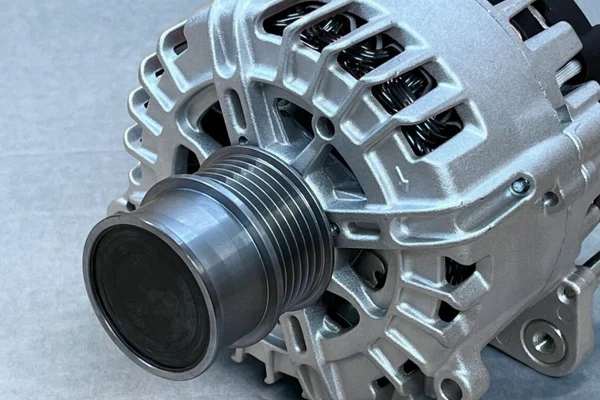
This one catches people out because it seems too simple to cause such significant problems. Your alternator can be in perfect working order, but if the drive belt (also called the serpentine belt or auxiliary belt) that powers it is worn, cracked, or slipping, your alternator can’t do its job.
During wet weather – and let’s be honest, Essex had more than its fair share of rainy days in 2025 – a worn belt is more likely to slip. You might notice your battery warning light flickering on during heavy rain, then disappearing when the weather clears. That’s your belt slipping on the pulleys when wet, preventing the alternator from spinning at the correct speed.
The AA reported that weather-related electrical failures increased by 23% during the particularly wet autumn months of 2025, with many incidents traced back to worn drive belts rather than actual alternator failure.
You’re probably thinking, “A belt? I’m having all these electrical problems because of a rubber belt?” It feels almost anticlimactic, doesn’t it? Especially if you’ve been worried about expensive electrical repairs. But there’s also frustration here – why didn’t anyone mention checking the belt before? Why wasn’t this caught during your last service?
The Simple Fix That Saves Hundreds
Drive belts should be inspected at every service, but the reality is, not all garages are thorough. At AutoNet VIP, belt inspection is standard procedure. We’re looking for several warning signs: cracks in the rubber (called crazing), glazing on the surface, fraying at the edges, or general wear.
The recommended replacement interval for drive belts on Audi A3s varies by model and engine type, but generally falls between 60,000 and 100,000 miles, or every four to six years – whichever comes first. However, if your driving involves lots of stop-start traffic around Harlow and the M11 corridor, belts can wear faster.
Replacement is straightforward and relatively inexpensive compared to alternator replacement. A quality drive belt and tensioner assembly for an Audi A3 typically costs between £80 and £150, including fitting. Compare that to alternator replacement, which can run £300 to £600 depending on model and specification.
After fitting a new drive belt, the improvement is tangible. Your alternator spins consistently, charging your battery properly in all weather conditions. That squealing noise you might have heard when starting the car on cold mornings – the one you’d got used to – disappears completely.
Your alternator’s lifespan is extended because it’s now operating under optimal conditions. Proper belt tension means proper charging performance, which means your battery stays healthy, which means less strain on the entire electrical system.
The bottom line? You’ve solved the charging problem for a fraction of the cost you feared. Your Audi A3’s battery warning light stays off where it belongs. The electrical system maintains consistent performance regardless of weather conditions.
We replaced the drive belt on an A3 Sportback in our Harlow workshop last September – the owner had been quoted for a full alternator replacement elsewhere. The belt was glazed and slipping. £95 later, problem completely solved. He sent his mate round the following month with a similar issue. That’s the kind of honest diagnostics that keeps customers coming back.
Cause #4: Carbon Brush Wear – The High-Mileage Reality
If your Audi A3 has clocked up serious miles – we’re talking 120,000 and beyond – there’s a strong chance you’ll eventually face carbon brush wear in your alternator. Carbon brushes are small components that transfer electrical current to the rotating parts of the alternator. Over time, they wear down through constant friction, eventually becoming too short to maintain proper contact.
This type of failure is progressive. You might notice intermittent charging issues – the battery light comes on occasionally, then goes off again. Your voltage might fluctuate. The car runs fine for weeks, then suddenly struggles to start one morning. It’s inconsistent, which makes it particularly frustrating to diagnose if you’re not working with experienced technicians.
Industry statistics from the Society of Motor Manufacturers and Traders indicate that the average vehicle age in the UK reached 9.2 years in 2025, meaning more Audi A3s are reaching the mileage point where carbon brush wear becomes a genuine concern.
Your A3’s been loyal. It’s covered massive miles, probably saved you thousands compared to buying something newer. You’ve maintained it properly, and now it feels like it’s letting you down. There’s also the nagging question: “Is it worth repairing, or should I just cut my losses and buy something else?” That’s a difficult decision, especially when money’s tight and you’re not sure how much more life the car has left.
Making the Right Decision for Your Situation
Carbon brush wear is a normal consequence of high mileage. It’s not a design flaw or a sign your Audi’s a lemon – it’s just physics. The good news is that it’s diagnosable and fixable.
At AutoNet VIP, we can test alternator output and, if necessary, remove and inspect the alternator to check carbon brush condition. On some Audi A3 models, brushes can be replaced individually, though often, given the labour involved, full alternator replacement makes more economic sense.
The decision on whether to repair depends on your car’s overall condition. If the bodywork’s solid, the engine’s sound, and you’re otherwise happy with the vehicle, replacing the alternator is absolutely worthwhile. For context, a quality remanufactured alternator with a two-year warranty will cost significantly less than even a single month’s finance payment on a replacement car.
After sorting the alternator – whether through brush replacement or full unit replacement – your high-mileage A3 gains a new lease of life. The electrical reliability returns. You’re back to confident daily driving without worrying whether the car will start each morning.
Many of our Harlow customers with higher-mileage Audis have found that addressing the Alternator Audi A3s issue, combined with other age-appropriate maintenance, gives them another 30,000 to 50,000 trouble-free miles. That’s genuine value, especially in the current economic climate where running costs matter more than ever.
What this means for you: Your investment in your existing Audi A3 is protected. You’ve got reliable transport without the depreciation hit of buying newer. The car’s electrical system performs as it should, supporting all those modern conveniences you’ve come to rely on.
One of our customers runs a dog-walking business around Harlow and Epping Forest. Her 2015 A3 had covered 145,000 miles by autumn 2025. The alternator failed, and she seriously considered scrapping it. We replaced the alternator and addressed a couple of other minor issues for under £500 total. She’s still running the car now, comfortably past 155,000 miles, and it’s saving her business money every single month.
Why Choosing the Right Garage Matters
Here’s the thing about Alternator Audi A3s problems – they require proper diagnostics, not guesswork. We’ve seen too many Harlow drivers who’ve had batteries replaced, had “diagnostic checks” done, even had electrical components swapped out, all before anyone properly tested the alternator’s output.
At AutoNet VIP – Car Repairs, MOTs & Electric & Hybrid Specialists in Harlow, we invest in professional diagnostic equipment specifically because modern vehicles like Audi A3s demand it. We’re not throwing parts at problems and hoping something sticks. We’re identifying root causes through systematic testing.
Our location in Harlow means we understand the local driving conditions – the stop-start traffic on Edinburgh Way, the motorway commutes, the short journeys that are particularly hard on electrical systems. We’ve seen the patterns in how Audis fail in this area, and that experience translates into faster, more accurate diagnostics.
Prevention: Catching Problems Before They Leave You Stranded
While alternator failure isn’t always preventable, early detection absolutely is. Here’s what you should be doing:
Annual electrical system health checks: During your MOT or service, request specific testing of alternator output voltage. This takes minutes but provides valuable data on your charging system’s health.
Listen to your car: Unusual noises, especially high-pitched whining or grinding from the engine bay, warrant investigation. Don’t dismiss them as “just old car sounds.”
Watch for warning signs: Dimming headlights, flickering dashboard lights, difficulty starting, or the battery warning light – even if it’s intermittent – all need prompt attention.
Keep an eye on belt condition: If you’re comfortable checking yourself, look for cracks, fraying, or glazing on the drive belt during routine checks like topping up washer fluid.
Don’t ignore electrical quirks: If your radio keeps resetting, or the clock loses time, or warning lights appear and disappear, it might be voltage-related. Get it checked rather than living with it.
Moving Forward with Confidence
Alternator failure in your Audi A3 isn’t the end of the world, even though it might feel that way when you’re stuck with a car that won’t start. The key is addressing issues promptly with proper diagnostics and quality repairs.
Whether your A3 is a cherished daily driver or essential for getting to work across Essex, maintaining its electrical system keeps it reliable. The alternator is fundamental to that reliability. When it fails, everything else fails with it. But when it’s working properly, your Audi delivers the refined, dependable driving experience you bought it for.
At AutoNet VIP – Car Repairs, MOTs & Electric & Hybrid Specialists in Harlow, we’re here to keep your Audi A3 running properly. We understand these vehicles, we’ve diagnosed and repaired hundreds of Alternator Audi A3s issues, and we’re committed to honest, transparent service that fixes the problem right first time.
If you’re experiencing any of the symptoms we’ve discussed – warning lights, starting difficulties, electrical glitches – don’t wait until you’re stranded. Book a diagnostic appointment with us in Harlow, and let’s identify exactly what’s happening with your charging system. Because you deserve to drive with confidence, knowing your Audi’s electrical system is sound.
Your A3 has plenty of life left in it. Sometimes it just needs the right attention from people who know what they’re doing.