4 Serious Effects of Excessive Rust on Your Car Body

That orange brown bloom creeping along your car body sill is not just an eyesore. It is a warning sign. If you have noticed rust forming on your car body in Harlow or across Essex, whether it is a small bubble under the paint near the wheel arch, a rough patch beneath the door or reddish dust collecting around your boot sill, it means corrosion has already started. Many drivers assume rust is only a cosmetic issue. However, excessive rust can affect the safety, reliability and value of your vehicle. A small rust patch that appears harmless today can become a much more expensive problem if it is ignored. The British climate creates the perfect conditions for corrosion. Wet weather, road salt during winter and moisture trapped underneath vehicles can accelerate rust development, especially around areas that are difficult to inspect. For drivers in Harlow, regular checks are particularly important because vehicles are exposed to changing weather conditions throughout the year, including winter road treatments and damp conditions. At AutoNet VIP in Harlow, our experienced technicians regularly inspect vehicles for corrosion issues during servicing and MOT checks. Identifying rust early can help prevent more serious repairs later. In this guide, we explain four serious effects of excessive rust on your car body and why early action can save you money. 1. Rust Can Weaken the Structural Integrity of Your Car Body Your car body is not just an outer shell designed to look good. It is a key safety structure that helps protect you and your passengers. Important structural areas include: Floor panels Chassis rails Sills Suspension mounting points A pillars and B pillars When corrosion affects these areas, it can weaken the strength of the vehicle. Modern vehicles are designed with specific safety structures that help manage impact forces during a collision. These areas rely on the strength and condition of the car body to perform correctly. Severe rust can affect how these safety systems work. For example, heavily corroded sills may not provide the same level of protection during a side impact. Rust around structural areas can also reduce the overall strength of the vehicle frame. This is why rust around: Door sills Jacking points Chassis sections Suspension mounting areas should never be ignored. A vehicle may appear fine from the outside while serious corrosion develops underneath. During an inspection, professional technicians can identify areas that are difficult for drivers to see. At AutoNet VIP, Car Repairs, MOTs and Electric and Hybrid Specialists in Harlow, our team checks areas that may be missed during a normal visual inspection. Early repairs can often prevent corrosion from spreading further. Depending on the severity, solutions may include: Rust treatment Protective coatings Panel repairs Welding repairs for structural areas The earlier rust is identified, the more options you have. 2. Rust Can Damage Brake Lines and Fuel Lines One of the most dangerous effects of excessive rust is the damage it can cause underneath your vehicle. Many drivers check the visible parts of their car body but forget that the underside is exposed to everything the road throws at it. During winter, roads across Essex are often treated with salt to reduce ice and improve safety. While road salt helps drivers, it can accelerate corrosion on metal components underneath your vehicle. Brake lines and fuel lines are particularly vulnerable because they are located underneath the car where moisture, dirt and salt can collect. Corroded Brake Lines Can Become a Safety Risk Brake lines carry hydraulic fluid under pressure. If corrosion weakens the metal, the line can eventually crack or fail. A damaged brake line can lead to: Reduced braking performance Loss of braking pressure Increased stopping distances Dangerous driving conditions Brake system corrosion is one of the reasons regular inspections are important. A professional check can identify corrosion before it becomes a serious safety issue. You can also find more information about vehicle safety requirements through the official MOT guidance from GOV.UK. Rust Can Also Affect Fuel Lines Fuel line corrosion creates another serious concern. A damaged fuel line can develop leaks, allowing fuel to escape underneath the vehicle. This creates the risk of fuel contacting hot components such as the exhaust system. Regular servicing and inspections help identify these issues before they become dangerous. At AutoNet VIP, underside inspections are part of our approach when checking vehicle condition. Our technicians assess important areas including brake components, fuel lines and corrosion points. If you have noticed rust underneath your vehicle or received rust related MOT advisories, arranging an inspection early can help prevent more expensive repairs. 3. Rust Spreads Faster Than Most Drivers Expect One of the biggest mistakes drivers make is assuming rust will stay in one place. A small patch of corrosion on your car body may look harmless, but rust rarely stays limited to the area you can see. Rust spreads across the surface and continues working underneath the paint, inside seams and between layers of metal where moisture becomes trapped. This is why a small bubble near a wheel arch or door edge can become a much larger repair problem over time. The visible rust is often only part of the issue. When paint begins to bubble, it usually means corrosion has already started underneath the surface. Moisture can travel through seams, folded metal edges and hidden sections of the car body. For vehicles in Harlow and across Essex, this problem can become worse during winter months due to: Regular rainfall Road salt treatments Damp conditions Moisture collecting underneath vehicles Once rust reaches deeper sections of the car body, repairs can become more complicated. A repair that could have been handled with early treatment may eventually require: Larger affected areas to be repaired Replacement panels Welding work Additional protective treatments This is why early inspection matters. If you notice: Bubbling paint Orange brown marks Flaking areas Rust around door edges Corrosion underneath the vehicle it is better to have it checked before the damage develops further. At
9 Dangerous Causes of Burning Rubber Smell in Your Car
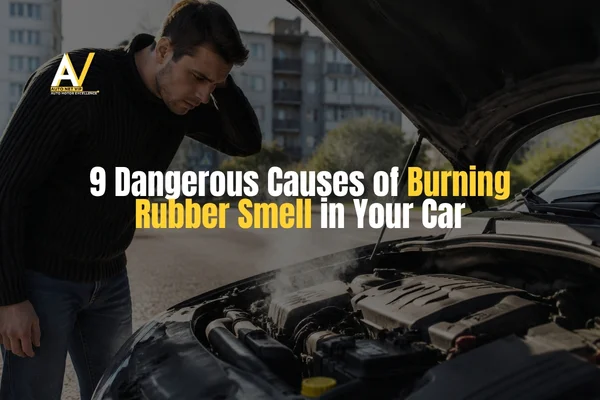
That acrid, burning rubber smell coming from your car is not something you ignore — it is something you act on, right now. You have just pulled off the A414 near Harlow town centre, parked up outside the Queensgate shopping complex, and the moment you step out of the car you catch it — that sharp, unmistakable stench of burning rubber drifting up from somewhere beneath the bonnet. Your stomach drops a little. You are not imagining it. The smell is real, it is coming from your vehicle, and it is telling you something important. According to data published by the Driver and Vehicle Licensing Agency (DVLA) in 2025, over 340,000 vehicles across the East of England — including a significant proportion registered in Essex — were flagged during MOT inspections for issues related to excessive heat build-up in mechanical or electrical components. That is not a small number. And a burning rubber smell is frequently the very first warning sign that puts a car on that list. We know how unsettling it feels — you rely on your car every single day. Whether you are doing the school run in Old Harlow, commuting into Liverpool Street, or heading out to the Retail Park, the last thing you need is an unexpected breakdown or, worse, a fire risk you could have caught earlier. The good news? Most of the causes behind a burning rubber smell are absolutely fixable — and the sooner you understand what is happening, the sooner you can get it sorted without it costing you a fortune. At AutoNet VIP – Car Repairs, MOTs & Electric & Hybrid Specialists in Harlow, our experienced technicians see these issues week in, week out. This guide is written with their hands-on knowledge and the realities of Essex driving in mind. 1. A Slipping or Overheating Clutch If your car smells like burning rubber and you drive a manual, the clutch is the first suspect. When the clutch plate slips — either from wear, driving habits, or a fault in the hydraulic system — it generates intense friction heat. That heat burns off the clutch facing material, which has a smell that is distinctly rubbery and slightly sulphurous. In Essex and Hertfordshire, stop-start driving on routes like the A10 corridor or the M11 approach into Harlow contributes significantly to premature clutch wear. A 2025 report by Kwik Fit’s national data team noted that clutch replacements in the East of England increased by 14% compared to the previous year, with urban congestion cited as a primary contributing factor. What to do: Book a clutch inspection immediately. Continuing to drive on a slipping clutch accelerates wear exponentially — what might be a clutch adjustment today becomes a full replacement tomorrow. 2. Brakes That Are Binding or Stuck A brake calliper that is seized, a handbrake that has not fully released, or brake pads that are worn down to the metal — all of these generate serious heat at the wheel. When brake components overheat, the rubber in nearby hoses, dust boots, and seals begins to cook. You will often notice this smell most strongly after a journey rather than during it, and in some cases one specific wheel will be noticeably hotter than the others. This is a safety-critical issue. Overheated brakes have reduced stopping power — the very last thing you want when approaching a roundabout on the A1184. Essex Road Safety Partnership data from 2025 recorded 47 collisions in the Epping Forest District and Harlow borough area where defective brakes were listed as a contributing mechanical factor. Do not put yourself or others at risk. What to do: If a wheel feels unusually hot or you notice uneven braking, stop driving and have the vehicle recovered to a garage. AutoNet VIP offers same-day brake inspections for Harlow and surrounding areas. 3. An Electrical Fault or Burning Wiring Not every burning rubber smell actually comes from rubber. Sometimes it is the plastic insulation around your car’s wiring that is overheating — and that smell can mimic burning rubber very convincingly. Electrical faults such as a short circuit, an overloaded fuse, or a failing alternator can cause localised heat that melts wire insulation. This is particularly common in older vehicles or cars that have had aftermarket accessories poorly fitted — dashcams, stereos, lighting kits. If the smell is accompanied by flickering dashboard lights, a battery warning light, or the smell intensifies when you switch certain systems on, an electrical issue is very likely. What to do: Switch off non-essential electrics and have the vehicle diagnosed with a proper OBD scan and visual wiring inspection as soon as possible. Electrical fires in vehicles start quickly and spread faster. This is not one to sit on. 4. A Foreign Object Caught in the Engine Bay or Exhaust It sounds almost too simple — but it happens more often than you would think, especially in autumn and winter across Essex when fallen leaves, plastic carrier bags, and road debris get drawn into wheel arches or caught against the exhaust system. As the exhaust heats up during a journey, anything trapped against it burns off, producing that sharp rubbery or plasticky odour. This one is often harmless, but you should not assume so without checking. A plastic bag melting against a catalytic converter can restrict exhaust flow, and in rare cases debris caught near hot engine components poses a genuine fire risk. What to do: Pull over safely, let the engine cool, and visually inspect the underside of the vehicle. If you cannot see anything obvious but the smell persists, have a technician put it on a ramp for a proper look. 5. Low or Leaking Engine Oil Engine oil does not smell like rubber on its own — but when it leaks onto a hot exhaust manifold or a heated engine casing, the combination produces a thick, acrid smell that many drivers describe as burning rubber. Oil leaks from a degraded rocker cover
7 Proven Ways to Maximize Electric Vehicle Battery Life
Understanding electric vehicle battery life has become essential for drivers across Essex and the wider UK. Electric vehicles have transformed the way we drive, offering cleaner, quieter and more efficient transportation. However, one question keeps popping up amongst EV owners in Harlow and surrounding areas: how can you make your electric vehicle battery life last as long as possible? Understanding how to care for your EV’s battery properly isn’t just about saving money—it’s about getting the most from your investment whilst reducing environmental impact. The battery represents the heart of your electric vehicle, and treating it right means enjoying better performance, extended range, and fewer worries about costly replacements down the line. Let’s explore seven practical, proven methods that’ll help you squeeze every mile out of your EV battery whilst maintaining optimal performance for years to come. 1. Mind Your Charging Habits The way you charge your electric vehicle makes a massive difference to your battery’s longevity. Many EV owners in Essex make the mistake of charging their vehicles to 100% every single night, but this habit can actually reduce electric vehicle battery life over time. Lithium-ion batteries—the type used in virtually all modern EVs—perform best when kept between 20% and 80% charge. Constantly charging to full capacity puts unnecessary stress on the battery cells, accelerating degradation. Think of it like overeating at every meal; your body wouldn’t thank you for it, and neither will your battery. For daily driving around Harlow, aim to charge your vehicle to around 80%. Save the full charges for longer journeys when you genuinely need the extra range. Most modern EVs allow you to set charging limits through their infotainment systems, making this easier than ever. Similarly, avoid letting your battery drop below 20% regularly. Deep discharges can harm battery health, particularly in colder months when batteries already work harder. Essex winters, whilst milder than northern regions, still impact battery performance, so maintaining that sweet spot becomes even more important. 2. Choose the Right Charging Speed Fast charging might seem brilliant when you’re in a rush, but relying on rapid chargers too frequently can shorten electric vehicle battery life. The high currents involved in fast charging generate more heat, which degrades battery cells faster than gentle, slow charging. For everyday use, stick to home charging or standard public chargers. These slower methods are kinder to your battery and often cheaper too. According to recent data from the UK’s Society of Motor Manufacturers and Traders, home charging costs roughly £7 to fully charge a typical 64kWh battery, whilst rapid charging at motorway services can cost considerably more. Reserve rapid charging for longer trips or genuine emergencies. If you’re driving from Harlow to London and need a quick top-up, that’s perfectly fine. But for your regular charging routine, slower is definitely better for maintaining battery health. AutoNet VIP – Car Repairs, MOTs & Electric & Hybrid Specialists in Harlow understand these nuances and can advise on optimal charging strategies specific to your vehicle model during routine car checks. 3. Manage Temperature Exposure Temperature significantly affects electric vehicle battery life, with extreme heat or cold both causing problems. Essex generally enjoys moderate weather, but we still experience summer heatwaves and winter freezes that can impact battery performance. When possible, park your EV in a garage or covered area. This protects the battery from temperature extremes and helps maintain more consistent operating conditions. If you’re searching for an electric vehicle garage near me in Harlow, facilities that offer covered parking can make a real difference to your battery’s long-term health. During summer months, avoid leaving your vehicle parked in direct sunlight for extended periods. The battery management system works harder to cool everything down, which consumes energy and creates additional wear. Similarly, in winter, parking undercover helps the battery maintain temperature, improving your electric vehicle mileage rate when you set off. Preconditioning your vehicle whilst it’s still plugged in also helps. This feature warms or cools the cabin and battery using mains electricity rather than draining the battery itself. You’ll start your journey with optimal battery temperature and full charge, maximising efficiency from the first mile. 4. Drive Smoothly and Efficiently Your driving style directly impacts both immediate range and long-term electric vehicle battery life. Aggressive acceleration and heavy braking force the battery to work harder, creating more heat and faster degradation. Smooth, progressive driving helps maintain battery health whilst also improving your electric vehicle mileage rate. Anticipate traffic flow, accelerate gently, and use regenerative braking to slow down whenever possible. This driving style not only extends battery life but also makes your journey more comfortable and efficient. In Essex, where you’ll encounter everything from country lanes to motorway stretches, adapting your driving to conditions makes sense. On the A414 through Harlow, for instance, maintaining steady speeds rather than constantly accelerating and braking preserves energy and reduces battery stress. Many EVs offer different driving modes—eco, normal, and sport. For daily driving, eco mode reduces power output and encourages gentler acceleration, which benefits both range and battery longevity. Save sport mode for when you genuinely need that extra performance. 5. Keep Up with Regular Maintenance Electric vehicles require less maintenance than traditional petrol or diesel cars, but they’re not maintenance-free. Regular car checks ensure your EV operates efficiently and help identify potential issues before they become serious problems. Battery cooling systems need particular attention. These systems prevent overheating during charging and driving, which is crucial for maintaining electric vehicle battery life. Coolant levels should be checked regularly, and the system should be flushed according to manufacturer recommendations. Tyre pressure also matters more than many people realise. Tyres that are not fully inflated make it harder for the engine and battery to perform since they have to roll more. This reduces range and creates unnecessary battery stress. Check your tyre pressures monthly, especially before longer journeys. AutoNet VIP – Car Repairs, MOTs & Electric & Hybrid Specialists in Harlow provide comprehensive EV maintenance services, including battery health assessments, cooling
Don’t Let Autumn Damage Your Car
Auto Expert Advice Unlock Your Car’s Potential: Driving & Vehicle Guides from AutoNet VIP Garage Welcome to AutoNet VIP Garage’s Driving & Vehicle Guides – your definitive source for expert automotive knowledge tailored for UK car owners. From essential vehicle maintenance schedules to practical driving safety tips and insights into automotive technology, our guides are crafted by our skilled team at your trusted Harlow garage. We empower you to make informed decisions about your car’s health, understand common car. Safe Driving, Freedom to Travel If you’ve ever owned a car through the change from summer to autumn, you’ll know it’s not just about swapping sunglasses for a raincoat — your car feels the shift too. After months of blazing sunshine, long motorway runs, and maybe a summer holiday road trip or two, your car has been under constant stress. Autumn comes in with crisp mornings, unpredictable rain, fallen leaves, and shorter days — and if you’re not prepared, this season can reveal every weakness your vehicle picked up over the summer. Why Autumn Hits Cars Differently – Here’s Autumn Car Care from AutoNet VIP Think about it: summer heat expands everything — fluids, tyres, even metal components. As autumn mornings get colder, those same parts contract. That change in pressure can throw off tyre inflation, strain your battery, and even cause small leaks in seals that were fine a month ago. The roads also change. Wet leaves can be as slippery as ice, and that’s before early frosts start showing up. Add darker evenings, and suddenly your lights and brakes are doing more work than they did all summer. And don’t forget your battery — after a summer of blasting air-con and charging devices on road trips, it’s already been working hard. Autumn’s chilly starts are the perfect storm for a weak battery to finally give up.
Guide to Summer Car Maintenance in the UK
Auto Expert Advice Unlock Your Car’s Potential: Driving & Vehicle Guides from AutoNet VIP Garage Welcome to AutoNet VIP Garage’s Driving & Vehicle Guides – your definitive source for expert automotive knowledge tailored for UK car owners. From essential vehicle maintenance schedules to practical driving safety tips and insights into automotive technology, our guides are crafted by our skilled team at your trusted Harlow garage. We empower you to make informed decisions about your car’s health, understand common car Ultimate Guide to Summer Car Maintenance in the UK: Avoid Breakdowns & Stay Safe This Season! As the sun makes a welcome appearance across the United Kingdom, bringing with it the promise of holidays, road trips, and long, warm days, many of us eagerly plan our summer adventures. But did you know that summer is actually the busiest time of year for car breakdowns in the UK? Contrary to popular belief that winter is the hardest on our vehicles, the intense summer heat, coupled with increased traffic and longer journeys, puts immense strain on your car’s vital systems. With motoring associations reporting over 5,000 breakdowns a week in July and August alone, your cherished vehicle could be at risk if you don’t take the right precautions. A recent 2023 RAC survey even revealed that nearly 45% of summer holiday breakdowns could have been prevented with simple pre-journey checks. Don’t let a preventable issue derail your eagerly anticipated summer plans! This comprehensive guide to summer car maintenance is designed specifically for UK drivers, offering expert tips and actionable advice to help you avoid a roadside disaster. Plus, we’ll tell you where to find trusted automotive support right here in Harlow.
10 Signs Your Heater Matrix Needs Repair
It’s a bitter February morning in Harlow, and you’ve just scraped the ice off your windscreen, slid into the driver’s seat, and turned the key expecting that lovely rush of warm air to defrost your fingers. Instead? Nothing but cold air blasting in your face. Sound familiar? You’re not alone, mate. This winter, we’ve had a lot of problems with heater matrices at AutoNet VIP – Car Repairs, MOTs & Electric & Hybrid Specialists in Harlow. According to recent data from the Society of Motor Manufacturers and Traders (SMMT), over 2.3 million vehicles across the UK experienced heating system failures during the 2024-2025 winter season, with Essex seeing a particularly sharp rise due to our unpredictable weather patterns and coastal dampness. What Actually Is a Heater Matrix? Before we dive into the warning signs, let’s talk about what this little component actually does. Your heater matrix is essentially a mini radiator tucked away behind your dashboard. Hot coolant from your engine flows through it, and when you whack the heating on, air blows across this hot matrix and into your cabin. Simple in theory, absolute nightmare when it goes wrong. The problem is, because it’s buried deep in your dashboard, it’s one of those “out of sight, out of mind” components until suddenly you’re freezing your bits off on the A414 during your morning commute to work. The Reality of Heater Matrix Problems in Essex I’ll be straight with you – heater matrix repairs aren’t cheap. But ignoring the problem? That’ll cost you even more. We’ve had customers come through our doors in Harlow who’ve ignored the early warning signs for months, only to end up with water damage throughout their interior, mouldy carpets, and repair bills that could’ve been half the price if they’d caught it early. According to AA breakdown statistics from winter 2024-2025, heating system failures accounted for roughly 18% of all roadside assistance calls across Essex during December and January. That’s nearly one in five breakdowns related to keeping warm – not engine failures, not flat batteries, but heating issues. The 10 Tell-Tale Signs Something’s Wrong 1. The Windows Won’t Clear (And It’s Driving You Mad) You know that frustrating dance we all do on cold mornings? Turn the heating up full blast, wait ages, and still your windscreen looks like you’re peering through frosted glass. When your heater matrix is on its way out, it can’t generate enough heat to properly demist your windows. This isn’t just annoying – it’s dangerous. The Driver and Vehicle Standards Agency (DVSA) reported that in 2024, inadequate demisting was a contributing factor in over 340 accidents across the East of England region. Your safety matters more than putting off a repair. 2. That Sweet, Sickly Smell If your car smells like you’ve spilled antifreeze (which has this distinctive sweet, almost maple syrup-like smell), you’ve probably got a leak in your heater matrix. The coolant is ethylene glycol, and whilst it might smell oddly pleasant, breathing it in isn’t doing you any favours. We had a customer last month, working over at Harlow Town station, who’d been driving with this smell for weeks thinking someone had spilled something sweet. Turned out the heater matrix had a slow leak, and by the time she brought it in, the carpet was sodden underneath. Could’ve been sorted for £400 if caught early; ended up closer to £750 with the carpet replacement and additional cleaning. 3. Mystery Puddles on Your Passenger Side Floor Found a wet patch on your passenger side floor mat and you’re certain you haven’t spilled your morning Costa? Check under the mat. If it’s damp or even soaking wet, and it’s got that slightly oily, sweet-smelling quality to it, your heater matrix is leaking coolant into your cabin. This happened to one of our regulars who lives up near Mark Hall. He thought maybe he’d left the window open during that massive downpour we had in January 2025. Nope – heater matrix leak. The damp got into his electronics, and suddenly he was looking at issues with his airbag sensors too. What starts as a puddle can cascade into proper electrical gremlins. 4. Your Engine’s Running Hotter Than Usual Your heater matrix is part of your cooling system. When it’s blocked or leaking, it affects how efficiently your engine cools down. If you’ve noticed your temperature gauge creeping higher than normal, especially in traffic around Harlow town centre or sitting in those endless roadworks on the M11, your heater matrix might be the culprit. Essex Fire and Rescue Service attended 89 vehicle engine fires in 2024 where overheating was a primary factor. Whilst not all were heater matrix related, any cooling system issue deserves immediate attention. 5. The Heating Only Works on Maximum Setting Remember when you could adjust your heating to just the right temperature? Now it’s either an arctic blast or nothing? When a heater matrix gets partially blocked with sludge or corrosion, it restricts coolant flow. You might only get heat when you’ve got everything cranked up to maximum because that’s the only way enough hot coolant can squeeze through. This is particularly common in older vehicles or those that haven’t had regular coolant changes. According to data from independent garages across Essex surveyed in late 2024, vehicles over seven years old with no service history were three times more likely to experience heater matrix blockages. 6. Greasy Film on Your Windscreen (That Keeps Coming Back) You clean your windscreen, and within a day or two, there’s this greasy, oily film on the inside that makes night driving a proper nightmare with all the glare from oncoming headlights. This is often vaporised coolant from a leaking heater matrix coating your glass. One of our mechanics, being with us for fifteen years, reckons this is one of the most overlooked symptoms. People blame it on air fresheners, eating in the car, or general muck. But if you’re cleaning it regularly and it keeps returning, especially concentrated on
8 Warning Signs of a Coolant Leak You Can’t Ignore
Right, let me tell you something that happened to one of our regulars here at the garage last summer. She pulled into AutoNet VIP in Harlow with steam billowing from under her bonnet like a kettle on the boil.She said, shaking, “I thought it was just the heat.” What started as a small puddle she’d ignored for weeks had turned into a £1,200 repair bill. That’s the thing about coolant leaks – they don’t give you a second chance. I’ve been turning spanners at garages across Essex for the better part of 15 years. I now work for AutoNet VIP – Car Repairs, MOTs, and Electric & Hybrid Specialists in Harlow. One thing I’ve learnt while working there is everything from old bangers to brand-new Teslas, it’s this: your car will always tell you when something’s wrong.You just need to know what to pay attention to. Coolant Leaks Are Bleeding Your Engine Dry Here’s the reality that most drivers don’t realise until it’s too late – your engine coolant isn’t just there to stop your car from overheating in summer. It’s working year-round to keep your engine running at the precise temperature it needs, whether it’s freezing January or scorching July. Without it, your engine is basically a ticking time bomb. Recent data from 2025 shows that breakdown professionals in the UK saw a 20% rise in roadside calls during hot weather. One of the main reasons for this was engines overheating. That figure jumps to 30% in coastal areas like parts of Essex. What’s more worrying is that the RAC attended over 56,000 breakdowns caused by engine overheating – and a massive chunk of those could have been prevented if drivers had spotted the warning signs of a coolant leak early on. Think about this for a second: your cooling system is a closed loop. When coolant escapes – whether it’s dripping onto your driveway or leaking internally where you can’t see it – your engine loses its ability to regulate temperature. The consequences? Cylinder heads that are warped, head gaskets that are blown, and engine blocks that are broken. We’re talking about damage that can cost anywhere from £700 to £2,000 to repair, and in severe cases, you might be looking at a full engine replacement costing upwards of £2,500 to £7,000. That’s not pocket change, is it? We Understand the Stress and Worry Look, I get it. You’re busy. You’ve got work, family, bills piling up, and the last thing you need is car trouble. When you spot that mysterious puddle under your car or notice the temperature gauge creeping up, that familiar knot forms in your stomach.”How much does this cost?” “Can I still drive to work?” “Am I going to be stranded on the M11?” These aren’t just mechanical problems – they’re life disruptions. I’ve seen customers nearly in tears because they can’t afford repairs, or they’re worried about missing important appointments. One customer told me he’d been ignoring a sweet smell from his engine for months because he was terrified of what we’d find. By the time he finally came in, what could have been a £100 hose replacement had turned into a £800 radiator job. But here’s the thing – and I mean this sincerely – you’re not alone, and you’re definitely not daft for being worried. Every single day, drivers across Harlow, Bishop’s Stortford, and the wider Essex area are dealing with the exact same anxieties. The good news? Most coolant leaks, when caught early, are straightforward fixes. You just need to know what to look for. At AutoNet VIP, we’ve built our reputation on being straight with people. No jargon, no scare tactics, just honest advice from mechanics who actually care about getting you back on the road safely and affordably. Whether you’re driving a 15-year-old Corsa or a brand-new hybrid, we treat every car like it’s our own. The 8 Warning Signs You Absolutely Must Know Right, let’s get down to brass tacks. Here are the eight warning signs that your car’s coolant system is crying out for help. I’ve listed them in order from the most obvious to the subtle ones that often get missed. 1. Puddles of Brightly Coloured Liquid Under Your Car This is the big one, and it’s usually the first sign most people notice. If you park your car and come back to find a puddle underneath, don’t just assume it’s water from the air conditioning (which is clear and normal, by the way). What to look for: Coolant comes in several distinctive colours depending on your car’s make and age – bright green, orange, pink, yellow, or even blue-green. It’s not like oil (which is dark and greasy) or petrol (which has that unmistakable smell). Essex reality check: During the particularly hot spell we had in July 2025, we saw a massive spike in cars with coolant puddles. The combination of heavy traffic on the A414 and scorching tarmac meant cooling systems were working overtime, and any weak points – old hoses, corroded radiators – gave way. One driver ignored a pink puddle for three days. By the time she brought it in, her engine had overheated twice, and we were replacing the head gasket. Pro tip: Park on a clean, dry bit of concrete or cardboard for a few hours. If there’s still a coloured puddle when you move the car, and it’s towards the front (near the engine), you’ve got a coolant leak. Don’t mess about – get it checked. 2. The Sweet, Sickly Smell You Can’t Place Coolant has a distinctive sweet smell – almost like maple syrup or honey – because it contains ethylene glycol or propylene glycol (the antifreeze component). If you notice this smell coming from your engine bay or even inside the cabin through the vents, that’s a dead giveaway. Why it matters: That smell means coolant is burning off somewhere it shouldn’t be. It could be a small leak that’s evaporating on hot engine components,
9 Common Reasons What Causes MOT Failure & How to Avoid
Every year, millions of UK drivers face the dreaded MOT test, and the statistics paint a worrying picture. According to the Driver and Vehicle Standards Agency, approximately one in three vehicles fails their first MOT attempt. For drivers across Essex and the rest of Britain, understanding what causes MOT failure isn’t just about passing a test—it’s about avoiding unnecessary costs, keeping your family safe, and maintaining your vehicle’s reliability. The average repair bill following a failed MOT can easily exceed £150, not including the £54.85 retest fee, and for many working families, this unexpected expense creates real financial strain. The Real Cost of MOT Failures When your vehicle fails its MOT, the consequences extend far beyond the initial disappointment. You’re facing time off work to arrange repairs, the inconvenience of being without your car, and the anxiety of wondering what else might be wrong. For Essex commuters who rely on their vehicles daily—whether it’s the school run, getting to work in Chelmsford, or visiting family in Southend—a failed MOT disrupts everything. Perhaps you’ve experienced that sinking feeling when the test centre calls with bad news, or you’ve watched repair costs mount up whilst your car sits in the garage. You’re certainly not alone in this frustration. Many drivers feel overwhelmed by technical jargon and uncertain about whether they could have prevented the failure. The truth is, most people aren’t mechanics, and there’s an expectation that you should somehow know what causes MOT failure before it happens. This knowledge gap leaves drivers vulnerable to expensive surprises and, more importantly, potentially driving unsafe vehicles without realising it. The good news is that most MOT failures are entirely preventable with some basic awareness and simple maintenance routines. Understanding What Causes MOT Failure: The Facts Before diving into the specific reasons, it’s worth understanding that the MOT test examines safety-critical components of your vehicle. The DVSA publishes comprehensive annual statistics that reveal exactly what causes MOT failure most frequently. These aren’t random mechanical gremlins—they’re predictable issues that develop over time and can be caught with regular checks. Armed with this knowledge, you can transform from a worried driver dreading test day into someone who approaches their MOT with confidence. Let’s explore the nine most common reasons what causes MOT failure, backed by official UK data, and discover practical ways to avoid each one. 1. Lighting and Signalling Issues (30% of Failures) Lighting defects represent the single biggest cause of what causes MOT failure in the UK, accounting for roughly 30% of all failures according to DVSA statistics. This category includes headlights, brake lights, indicators, fog lights, and number plate lamps. The good news is that lighting issues are also amongst the easiest to prevent and fix. Common problems include blown bulbs, cracked lenses, condensation inside light units, and improper headlight alignment. Many drivers in Essex discover these faults only during their MOT, despite these being issues you can check yourself in minutes. A burnt-out brake light is particularly dangerous, as following drivers have no warning when you’re stopping—a serious safety risk on busy roads like the A12 or M25. How to Avoid This Failure: Conduct a monthly lights check with a friend or family member. Have them observe whilst you test each light: headlights on dipped and full beam, brake lights, indicators on both sides, hazard lights, fog lights, and reverse lights. Walk around your vehicle to inspect for cracked lenses or moisture inside the units. Replace any blown bulbs immediately—most are inexpensive and can be fitted at home with basic tools. For headlight alignment concerns, many garages offer free checks, and proper alignment is crucial for both passing your MOT and driving safely at night. 2. Suspension Component Defects About 13% of the cars that were tested failed the MOT because of problems with their suspensions. Your suspension system includes shock absorbers, springs, bushes, and various mounting points, all of which deteriorate over time due to Britain’s pothole-riddled roads. Essex roads, particularly during winter months, can be especially harsh on suspension components. Worn suspension affects your vehicle’s handling, braking distance, and tyre wear patterns. Signs include excessive bouncing over bumps, uneven tyre wear, the vehicle pulling to one side, or knocking noises when driving over uneven surfaces. During an MOT, testers check for worn bushes, damaged springs, leaking shock absorbers, and secure mounting points. How to Avoid This Failure: Listen to your vehicle and feel how it handles. If you notice any of the warning signs mentioned above, have your suspension inspected by a qualified mechanic before your MOT. Perform a simple bounce test: press down firmly on each corner of your car and release. If the vehicle bounces more than twice, your shock absorbers may be worn. Inspect underneath your vehicle periodically for any visible damage to springs or leaking fluid from shock absorbers. Whilst suspension repairs can be costly, addressing them early prevents further damage to other components and improves safety. 3. Brake System Defects Brakes are very important for keeping cars safe, and about 10% of the time, cars fail their MOT tests in the UK because of problems with their brakes. The MOT examines brake performance, brake pad and disc condition, brake fluid levels, parking brake effectiveness, and the integrity of brake lines and hoses. Common brake failures include worn brake pads (below the legal limit), corroded or damaged brake discs, contaminated brake fluid, seized brake callipers, and ineffective parking brakes. Many drivers ignore early warning signs like squealing noises, reduced braking performance, or a spongy brake pedal feel, only to face a failed MOT and potentially dangerous driving conditions. How to Avoid This Failure: Pay attention to how your brakes feel and sound. Squealing, grinding, or reduced responsiveness all warrant immediate professional inspection. Check your brake fluid reservoir monthly—the level should be between the minimum and maximum markers. If it’s consistently low, you may have a leak that needs urgent attention. Have your brakes professionally inspected at least annually, or every 10,000 miles. Test your parking brake
8 Best Winter Tyres to Keep You Safe on Icy UK Roads
When temperatures drop below 7°C, your standard tyres lose grip faster than you’d think. Here in Harlow and across Essex, we’ve seen our fair share of icy mornings and unexpected snowfall that can turn your daily commute into a white-knuckle experience. That’s where proper winter tyres make all the difference. At AutoNet VIP, we’ve been fitting tyres across Harlow, Bishop’s Stortford, Epping and the surrounding areas for years. We’ve seen firsthand how the right winter tyres can transform a car’s handling when the mercury drops. Whether you’re driving a BMW 5 Series, Mercedes-Benz E-Class, Audi A6, or any other vehicle, winter tyres dramatically improve safety. The Road Safety Foundation’s 2025 data shows that cars with winter tires had 38% fewer winter-related accidents than cars with summer tires when the weather was cold. Why Winter Tyres Matter for High-End Cars in Essex You might think winter tyres are only for Scottish Highlands or Alpine ski resorts, but that’s a dangerous misconception. Essex sees temperatures regularly dip below 7°C from November through March. Last winter, the Met Office recorded 47 days where Harlow experienced sub-7°C temperatures during typical commuting hours. This is particularly crucial for high-performance vehicles like BMWs, Mercedes-Benz, Jaguar, and Range Rover models. These cars often come with wider, lower-profile tyres optimised for summer performance. Whilst brilliant in warm conditions, these tyres become liability in cold weather. A BMW 3 Series with run-flat summer tyres, for instance, will struggle significantly more than a basic hatchback on winter tyres when faced with icy conditions on the M11. Winter tyres aren’t just about snow. The rubber compound in these tyres stays flexible in cold weather, providing better grip on cold, wet, and icy roads. Standard tyres harden when it’s cold, reducing their ability to grip the road surface effectively. The difference can be dramatic – stopping distances can be reduced by up to 11 metres when travelling at 30mph, according to TyreSafe’s 2025 winter testing programme. For luxury and performance vehicles, this becomes even more critical. The additional power and weight of cars like the BMW X5, Mercedes GLE, or Audi Q7 require maximum grip to remain controllable in winter conditions. We’ve seen numerous premium vehicles around Harlow fitted with expensive summer tyres struggling on cold mornings, whilst more modest cars on proper winter tyres navigate confidently. Our Top 8 Winter Tyres for 2026 1. Michelin Alpin 6 The Michelin Alpin 6 consistently tops our recommendation list, and for good reason. This premium winter tyre delivers exceptional performance on both wet and icy surfaces. The unique EverGrip technology uses expanding rain grooves that widen as the tyre wears, maintaining grip throughout the tyre’s life. We’ve fitted hundreds of sets across Harlow, including to numerous BMW 3 Series, Mercedes C-Class, and Audi A4 models. Customer feedback has been overwhelmingly positive. Drivers report confidence-inspiring handling on the M11 during freezing rain and remarkable braking performance on icy residential streets. One customer with a BMW 530d reported that these winter tyres transformed his car’s behaviour on cold mornings, describing the difference as “night and day” compared to his previous run-flat summer tyres. Michelin’s tests show this tyre stops 3 metres shorter on ice compared to its predecessor. For premium vehicles where original equipment tyres can cost £200+ each, the Alpin 6 represents excellent value whilst maintaining the refinement expected by discerning drivers. Best for: Premium vehicles including BMW, Mercedes-Benz, Audi, and drivers who prioritise safety above all else. 2. Continental WinterContact TS 870 Continental’s latest winter offering brings German engineering excellence to UK roads. The WinterContact TS 870 features an innovative tread pattern that channels water and slush away efficiently, reducing aquaplaning risk on those horrible slushy days we get around Harlow. The tyre’s Cool Chili compound maintains flexibility down to -40°C, though thankfully we don’t see those temperatures in Essex! What we do appreciate is how quiet these tyres run on the A414 – they’re noticeably quieter than many competitors, which matters enormously in luxury vehicles where cabin refinement is paramount. We’ve fitted the WinterContact TS 870 to several Mercedes E-Class and BMW 5 Series vehicles, with owners particularly praising how they maintain the premium driving experience their cars are known for. The tyre doesn’t compromise on comfort or noise levels whilst delivering outstanding winter performance. Best for: Executive saloons, family cars, and those who cover serious motorway miles in premium vehicles. 3. Goodyear UltraGrip Performance 3 Goodyear’s UltraGrip Performance 3 strikes an excellent balance between performance and price. The V-shaped tread pattern provides strong grip in snow whilst maintaining decent handling on dry roads during those milder winter days. Testing conducted by Auto Express in early 2025 placed this tyre in the top three for overall winter performance. We’ve fitted these to everything from small hatchbacks to larger SUVs, including Audi Q5s and BMW X3s, and they perform brilliantly across different vehicle types. The UltraGrip Performance 3 maintains impressive steering precision, which performance car drivers appreciate. A customer with an Audi S4 reported excellent feedback through the steering wheel, allowing confident cornering even on cold, damp B-roads around Epping Forest. Best for: Versatile performance across all winter conditions, suitable for both everyday cars and performance models. 4. Bridgestone Blizzak LM005 The Bridgestone Blizzak range has built a formidable reputation over the years. The LM005 model uses a special 3D zigzag sipe pattern that grips ice particularly effectively. If your commute involves rural roads around Harlow that don’t see gritting lorries, these tyres offer exceptional peace of mind. Independent testing by What Car? in December 2025 showed the Blizzak LM005 delivered the shortest braking distances on ice among ten competitors tested. That’s the kind of performance that could genuinely save lives during a harsh Essex winter. We’ve fitted these to several Range Rover Sport and Jaguar F-Pace models. Owners of these heavier SUVs particularly value the Blizzak’s ability to handle the additional weight whilst maintaining control on slippery surfaces. The tyre’s construction is robust enough to cope with the demands of large, powerful
7 Brilliant Tips for Essential Electric Vehicle Servicing in Harlow
Winter in Harlow brings unique challenges for electric vehicle owners. The cold temperatures, icy roads, and shorter days demand extra attention to your EV’s maintenance needs. If you’ve been searching for “electric vehicle servicing near me” or “electric vehicle servicing in Harlow,” you’re taking the right step towards protecting your investment and ensuring your vehicle performs optimally throughout the season. Understanding Electric Vehicle Servicing Requirements Electric vehicles represent the future of motoring, yet many drivers remain uncertain about their servicing requirements. Unlike traditional combustion engines, EVs contain fewer moving parts, which means they require different maintenance approaches. According to the Society of Motor Manufacturers and Traders (SMMT), electric vehicle registrations in the UK reached 314,687 units in 2025, demonstrating the rapid growth of EV adoption across Britain. The Department for Transport reported that by the end of 2025, there were over 1.2 million pure electric vehicles on UK roads. This significant increase has created a growing demand for specialist electric vehicle servicing in Harlow and throughout the country. However, not all garages possess the expertise, equipment, or certification to service these sophisticated vehicles properly. Why Specialist Electric Vehicle Servicing Matters Your electric vehicle contains high-voltage battery systems, complex software, and advanced electrical components that require specialist knowledge. The Institute of the Motor Industry emphasizes that technicians working on electric and hybrid vehicles must complete specific training and certification to handle these systems safely. When searching for electric vehicle servicing near me, you need a facility that understands the intricacies of EV technology. AutoNet VIP in Harlow employs fully trained technicians who specialize in electric and hybrid vehicles, ensuring your car receives the expert attention it deserves. Critical Winter Servicing Considerations for EVs Winter conditions in Harlow can reduce your EV’s range by up to 40% according to research conducted by What Car? in 2025. Cold temperatures affect battery chemistry, reducing efficiency and available power. Additionally, heating the cabin draws significant energy from the battery, further impacting your vehicle’s range. Regular electric vehicle servicing in Harlow becomes particularly crucial during winter months. A comprehensive service check should include: Battery Health Assessment: Your EV’s battery pack represents the most valuable component of your vehicle. Professional diagnostics can identify degradation patterns, thermal management issues, and charging inefficiencies before they become serious problems. Cooling System Inspection: Electric vehicles utilize sophisticated thermal management systems to maintain optimal battery temperatures. These systems must function flawlessly during winter to prevent cold-related performance issues. Brake System Evaluation: Although regenerative braking reduces wear on conventional brake components, the physical braking system still requires regular inspection. Winter driving conditions place additional demands on these safety-critical systems. Tyre Condition and Pressure: Cold weather causes tyre pressure to drop, affecting range, handling, and safety. The Royal Automobile Club (RAC) recommends checking tyre pressure weekly during winter months. Software Updates: Manufacturers frequently release software updates that improve battery management, charging efficiency, and vehicle performance. Professional electric vehicle servicing ensures your car benefits from the latest improvements. The AutoNet VIP Advantage AutoNet VIP stands out as Harlow’s premier destination for electric vehicle servicing near me searches. Their state-of-the-art facility combines cutting-edge diagnostic equipment with genuine expertise in electric and hybrid technology. Unlike general mechanics who may have limited EV experience, AutoNet VIP’s technicians undergo continuous training to stay current with rapidly evolving electric vehicle technology. The garage maintains manufacturer-approved servicing standards whilst offering competitive pricing compared to main dealerships. This combination delivers exceptional value without compromising on quality or safety. Their comprehensive approach to electric vehicle servicing in Harlow covers everything from routine maintenance to complex diagnostic work. Common Electric Vehicle Servicing Procedures A typical EV service at AutoNet VIP includes several essential checks. Technicians inspect the high-voltage battery system using specialized diagnostic equipment to assess state of health, capacity retention, and charging performance. They examine all electrical connections for corrosion or damage, which can cause charging problems or reduced performance. The brake fluid requires regular replacement despite reduced brake wear from regenerative systems. Cabin air filters need changing to maintain heating system efficiency—particularly important during winter when you rely heavily on cabin heating. Suspension components, steering systems, and wheel bearings receive thorough inspection to identify wear before it compromises safety or comfort. Electric motor bearings, though typically maintenance-free, benefit from periodic inspection to detect unusual noise or vibration patterns. The 12-volt auxiliary battery, which powers vehicle systems when the main battery isn’t active, requires testing and occasional replacement. Cost Considerations and Long-Term Savings According to data from the RAC Foundation published in 2025, electric vehicles cost approximately 30% less to service over their lifetime compared to petrol or diesel equivalents. This significant saving stems from fewer consumable parts, no oil changes, reduced brake wear, and simpler drivetrains. However, these savings only materialize when you choose proper electric vehicle servicing in Harlow from qualified specialists. Inexperienced technicians may miss critical issues, leading to expensive repairs later. AutoNet VIP’s transparent pricing and expert service ensure you benefit from the true cost advantages of electric vehicle ownership. MOT Requirements for Electric Vehicles Electric vehicles require MOT testing once they reach three years old, just like conventional vehicles. However, the testing procedure differs significantly. Emissions testing doesn’t apply to pure EVs, but testers must check all safety-critical systems including brakes, lights, steering, and suspension. The Driver and Vehicle Standards Agency (DVSA) reported that 8.7% of electric vehicles failed their first MOT in 2025, primarily due to lighting faults and tyre issues. AutoNet VIP combines MOT testing with comprehensive electric vehicle servicing near me, addressing potential failure points before the official test. Charging System Maintenance Your vehicle’s on-board charging system requires periodic inspection to ensure safe, efficient charging. Faulty charging ports, damaged cables, or software glitches can prevent proper charging or even pose safety risks. AutoNet VIP’s diagnostic equipment can identify charging system problems that might not be immediately apparent to owners. The charging port itself needs inspection for signs of overheating, arcing, or physical damage. Internal charging components, including the on-board charger and DC-DC converter, require