
Right, let me tell you something that happened to one of our regulars here at the garage last summer. She pulled into AutoNet VIP in Harlow with steam billowing from under her bonnet like a kettle on the boil.She said, shaking, “I thought it was just the heat.” What started as a small puddle she’d ignored for weeks had turned into a £1,200 repair bill. That’s the thing about coolant leaks – they don’t give you a second chance.
I’ve been turning spanners at garages across Essex for the better part of 15 years. I now work for AutoNet VIP – Car Repairs, MOTs, and Electric & Hybrid Specialists in Harlow. One thing I’ve learnt while working there is everything from old bangers to brand-new Teslas, it’s this: your car will always tell you when something’s wrong.You just need to know what to pay attention to.
Coolant Leaks Are Bleeding Your Engine Dry
Here’s the reality that most drivers don’t realise until it’s too late – your engine coolant isn’t just there to stop your car from overheating in summer. It’s working year-round to keep your engine running at the precise temperature it needs, whether it’s freezing January or scorching July. Without it, your engine is basically a ticking time bomb.
Recent data from 2025 shows that breakdown professionals in the UK saw a 20% rise in roadside calls during hot weather. One of the main reasons for this was engines overheating. That figure jumps to 30% in coastal areas like parts of Essex. What’s more worrying is that the RAC attended over 56,000 breakdowns caused by engine overheating – and a massive chunk of those could have been prevented if drivers had spotted the warning signs of a coolant leak early on.
Think about this for a second: your cooling system is a closed loop. When coolant escapes – whether it’s dripping onto your driveway or leaking internally where you can’t see it – your engine loses its ability to regulate temperature. The consequences? Cylinder heads that are warped, head gaskets that are blown, and engine blocks that are broken. We’re talking about damage that can cost anywhere from £700 to £2,000 to repair, and in severe cases, you might be looking at a full engine replacement costing upwards of £2,500 to £7,000.
That’s not pocket change, is it?
We Understand the Stress and Worry
Look, I get it. You’re busy. You’ve got work, family, bills piling up, and the last thing you need is car trouble. When you spot that mysterious puddle under your car or notice the temperature gauge creeping up, that familiar knot forms in your stomach.”How much does this cost?” “Can I still drive to work?” “Am I going to be stranded on the M11?”
These aren’t just mechanical problems – they’re life disruptions. I’ve seen customers nearly in tears because they can’t afford repairs, or they’re worried about missing important appointments. One customer told me he’d been ignoring a sweet smell from his engine for months because he was terrified of what we’d find. By the time he finally came in, what could have been a £100 hose replacement had turned into a £800 radiator job.
But here’s the thing – and I mean this sincerely – you’re not alone, and you’re definitely not daft for being worried. Every single day, drivers across Harlow, Bishop’s Stortford, and the wider Essex area are dealing with the exact same anxieties. The good news? Most coolant leaks, when caught early, are straightforward fixes. You just need to know what to look for.
At AutoNet VIP, we’ve built our reputation on being straight with people. No jargon, no scare tactics, just honest advice from mechanics who actually care about getting you back on the road safely and affordably. Whether you’re driving a 15-year-old Corsa or a brand-new hybrid, we treat every car like it’s our own.
The 8 Warning Signs You Absolutely Must Know
Right, let’s get down to brass tacks. Here are the eight warning signs that your car’s coolant system is crying out for help. I’ve listed them in order from the most obvious to the subtle ones that often get missed.
1. Puddles of Brightly Coloured Liquid Under Your Car
This is the big one, and it’s usually the first sign most people notice. If you park your car and come back to find a puddle underneath, don’t just assume it’s water from the air conditioning (which is clear and normal, by the way).
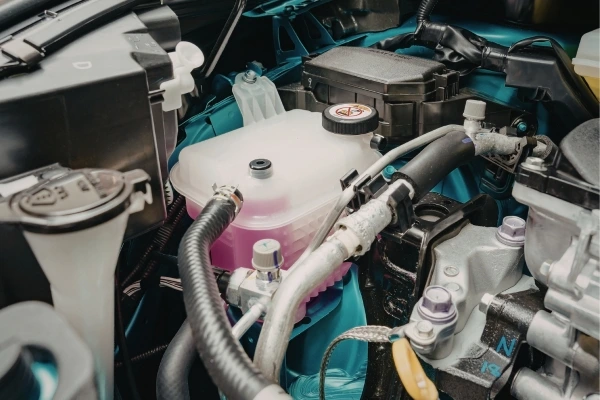
What to look for: Coolant comes in several distinctive colours depending on your car’s make and age – bright green, orange, pink, yellow, or even blue-green. It’s not like oil (which is dark and greasy) or petrol (which has that unmistakable smell).
Essex reality check: During the particularly hot spell we had in July 2025, we saw a massive spike in cars with coolant puddles. The combination of heavy traffic on the A414 and scorching tarmac meant cooling systems were working overtime, and any weak points – old hoses, corroded radiators – gave way. One driver ignored a pink puddle for three days. By the time she brought it in, her engine had overheated twice, and we were replacing the head gasket.
Pro tip: Park on a clean, dry bit of concrete or cardboard for a few hours. If there’s still a coloured puddle when you move the car, and it’s towards the front (near the engine), you’ve got a coolant leak. Don’t mess about – get it checked.
2. The Sweet, Sickly Smell You Can’t Place
Coolant has a distinctive sweet smell – almost like maple syrup or honey – because it contains ethylene glycol or propylene glycol (the antifreeze component). If you notice this smell coming from your engine bay or even inside the cabin through the vents, that’s a dead giveaway.
Why it matters: That smell means coolant is burning off somewhere it shouldn’t be. It could be a small leak that’s evaporating on hot engine components, or it might be leaking into the cabin through a faulty heater core.
Warning for pet owners: This is crucial – coolant smells and tastes sweet, which makes it attractive to dogs and cats. But here’s the kicker: it’s highly toxic. Even a little bit could harm pets. If you’ve got a leak and your car’s parked on the drive where your pets roam, you need to get it sorted immediately. I’ve heard heartbreaking stories from customers who didn’t realise the danger until it was too late.
3. Your Temperature Gauge Is Climbing Into the Red
Modern cars have a temperature gauge on the dashboard (or a warning light that looks like a thermometer in water). Under normal driving conditions, the needle should sit comfortably in the middle. If you notice it creeping towards the red zone, your engine is overheating – and nine times out of ten, low coolant is the culprit.
What’s happening: Without enough coolant circulating through the engine, heat isn’t being absorbed and dissipated properly. The engine temperature spikes, and if you keep driving, you’re risking catastrophic damage.
2025 UK data: According to breakdown recovery services, engine overheating accounts for approximately 20% of all roadside breakdowns. During the heatwaves we experienced in summer 2025, breakdown specialists like Green Flag predicted over 17,000 breakdowns in a single scorching weekend – with overheating engines being the top cause. That’s six breakdowns per minute. Mental, isn’t it?
What to do RIGHT NOW: If your temperature gauge is in the red, pull over safely as soon as possible. Turn off the engine and let it cool completely (at least 30 minutes to an hour). Do NOT attempt to open the radiator cap while it’s hot – you could get scalded by pressurised steam. Once it’s cooled down, check your coolant reservoir. If it’s low or empty, you’ve got a leak.
4. Steam or White Smoke Billowing From Under the Bonnet
This is the dramatic one – the scene from every breakdown nightmare. If you see steam or white smoke pouring out from under your bonnet, your coolant is boiling over.
Why it happens: When coolant levels drop too low, the remaining coolant gets hotter and hotter until it starts to boil. The steam you’re seeing is coolant vapour escaping through the radiator cap or overflow tank.
Don’t panic, but do act: This is serious, but it’s not necessarily the end of your car. Pull over immediately, turn off the engine, and call for help. Do not attempt to drive it any further – even “just to get home”. Every extra minute the engine runs without proper cooling causes exponential damage.
Local example: We had a customer who thought he could “nurse it home” after seeing steam. He made it about two miles before the engine seized completely. What could have been a £200 radiator repair turned into a £4,500 engine replacement. Don’t be that person.
5. Low Coolant Warning Light Won’t Go Away
Most modern cars are clever – they’ve got sensors that monitor coolant levels and will flash up a warning light if things aren’t right. It usually looks like a thermometer floating in liquid, or it might just say “COOLANT LEVEL LOW ADD COOLANT” in plain English on your dashboard.
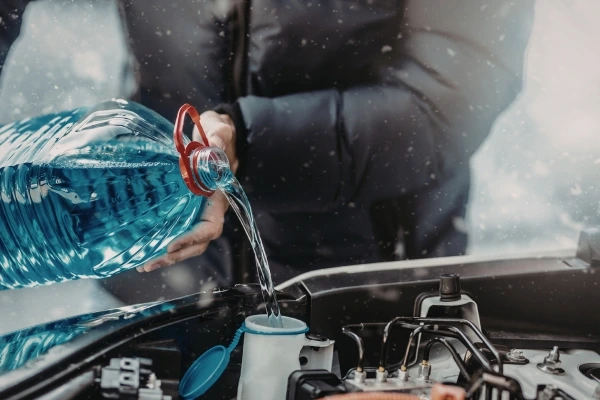
The mistake people make: Topping up the coolant and thinking that’s job done. Here’s the thing – if you’re having to top up your coolant regularly (more than every six months), you’ve got a leak. Coolant doesn’t just “disappear”.You should only lose approximately 0.25% of your coolant every four to six months, which is about two to three ounces a year. Anything more than that is abnormal.
What we see at AutoNet VIP: Drivers who’ve been topping up their coolant every few weeks for months, convinced they’re “keeping on top of it”. Then they bring the car in for an MOT, and we find a slow leak that’s been gradually getting worse. By that point, the cooling system might have internal corrosion, or the water pump bearings are on their way out.
6. Your Engine Is Running Rougher Than Usual
This one’s more subtle, but it’s worth paying attention to. If your engine is idling roughly, losing power, or you’re getting reduced acceleration, low coolant could be a contributing factor.
The connection: When coolant levels drop and the engine starts running hotter than it should, combustion becomes less efficient. You might notice the engine sounds different – perhaps a bit “knocky” or it’s not pulling as smoothly as it used to.
Combined with increased fuel consumption: Overheating engines burn more fuel because they’re working harder to maintain power. If you’re suddenly having to fill up more often and you’ve noticed rough running, check your coolant levels. These symptoms together are a strong indicator something’s not right with your cooling system.
7. Visible Stains or Corrosion Around the Radiator
Pop your bonnet and have a look at your radiator (it’s usually at the very front of the engine bay). If you see dried crusty deposits, discolouration, or rust-coloured staining on or around the radiator, that’s evidence of coolant that’s leaked and evaporated.
Why radiators fail: Corrosion is the number one killer of radiators. It happens when coolant gets old and loses its protective properties. If you don’t change your coolant regularly (and let’s be honest, most people don’t even think about it), rust and mineral buildup eat through the radiator’s thin metal walls. Cracks can also form from repeated heating and cooling cycles, or from small impacts with road debris.
Maintenance reality: You should be having your cooling system checked as part of your regular service – ideally every two years at minimum. At AutoNet VIP, we always inspect the cooling system during MOTs and services because we know how often it gets neglected. Prevention is so much cheaper than cure.
Related reading: For more on seasonal maintenance and keeping your cooling system in top shape throughout the year, check out our article on seasonal car services in Harlow.
8. Gurgling or Bubbling Sounds When the Engine Is Running
This is one of the more unusual signs, but it’s a proper red flag. If you hear a gurgling, bubbling, or whistling sound coming from the engine bay (especially near the radiator or coolant reservoir), it means there’s air in the cooling system where there should only be liquid.
What causes it: Air gets into the cooling system when there’s a leak or when the coolant level is low. When coolant escapes, air takes its place. The water pump then tries to circulate this air along with whatever coolant is left, creating that distinctive gurgling sound.
The head gasket complication: Now, here’s where it gets a bit more serious. Bubbling can also be a sign of a blown or leaking head gasket. In this case, combustion gases are escaping into the cooling system, creating bubbles. This is a more expensive repair (we’re talking £700 to £2,000), so if you hear persistent bubbling, don’t delay – get it diagnosed properly.
Either way: Whether it’s a simple leak or a head gasket issue, bubbling noises mean you need professional attention. Don’t ignore it hoping it’ll go away.
What You Need to Do Right Now
Alright, so you’ve read the warning signs, and you’re thinking, “Hang on, my car’s doing some of that.” Don’t panic – here’s exactly what you need to do, step by step.
Immediate Actions If You Suspect a Coolant Leak
Step 1: Stop driving if the temperature gauge is high or you see steam. This isn’t negotiable. Continuing to drive with an overheating engine will multiply your repair costs faster than you can say “blown head gasket”. Pull over safely, turn off the engine, and wait for it to cool.
Step 2: Check your coolant level when the engine is completely cold. Never, and I mean never, try to open the radiator cap or coolant reservoir when the engine is hot. The system is pressurised, and you could be sprayed with boiling coolant. Wait at least an hour after the engine was last running. Then carefully open the reservoir cap using a thick cloth. Check the level – it should be between the “MIN” and “MAX” marks.
Step 3: Look for obvious leaks. With the engine cold, have a proper look under the bonnet and underneath the car. Look for wet spots, puddles, or dried crusty deposits. Check the radiator, hoses (especially where they connect to the engine and radiator), and the water pump area. Even if you can’t see anything obvious, there might be an internal leak.
Step 4: Book a diagnostic check with a trusted garage. This is where AutoNet VIP comes in. We’ve got the proper diagnostic equipment to pressure-test your cooling system and pinpoint exactly where the leak is coming from. We use dye testing for tricky leaks that aren’t immediately visible. A diagnostic check typically costs between £75 and £200, which is money well spent to avoid guesswork and bigger bills down the line.
Understanding Your Repair Options and Costs (2025 UK Prices)
Let’s talk brass tacks about what repairs actually cost. I’m giving you these figures based on our experience here in Harlow and the wider Essex area, as well as industry data from 2025.
Minor repairs (£50-£200):
- Replacing a perished coolant hose
- Tightening loose hose clamps
- Replacing a faulty radiator cap
- Topping up coolant (if it’s just low due to normal evaporation)
Medium repairs (£200-£500):
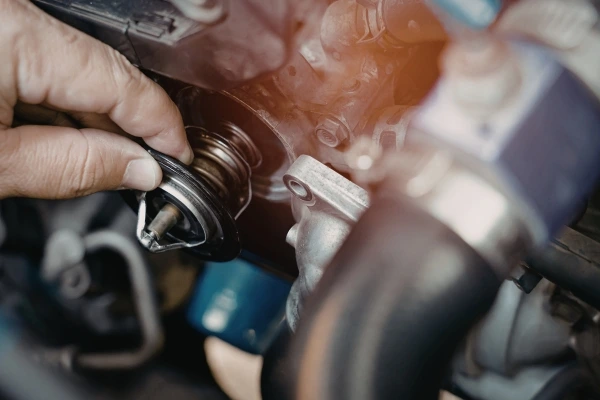
- Replacing the thermostat and housing
- Fixing small radiator leaks
- Replacing the expansion tank
- Water pump replacement (depending on accessibility)
Major repairs (£700-£2,000+):
- Full radiator replacement
- Head gasket repair or replacement
- Water pump replacement on complex engines
- Multiple components needing attention
Critical repairs (£2,500-£7,000):
- Complete engine replacement (if catastrophic overheating has occurred)
- Cracked engine block repairs
The Essex advantage: Labour costs here in Harlow and the surrounding Essex towns are generally more reasonable than what you’d pay in Central London. At AutoNet VIP, we pride ourselves on competitive pricing and honest service. We’ll never recommend work you don’t need, and we’ll always give you options.
Prevention: The Checklist Every Driver in Essex Should Follow
Here’s the maintenance routine that’ll keep coolant leaks at bay and save you a fortune in the long run:
Every two weeks (or before long journeys):
- Check your coolant level when the engine is cold
- Look for any visible puddles under the car
Every six months:
- Have a thorough look under the bonnet for signs of leaks, stains, or corrosion
- Check that all hoses feel firm (not soft, spongy, or cracked)
Every year or 12,000 miles:
- Get a full service that includes cooling system inspection
- Have your garage check the condition and strength of your coolant
Every two to five years (check your handbook):
- Get a complete coolant flush and replacement
- This is especially important for preventing corrosion and maintaining the cooling system’s efficiency
Special considerations for hybrid and electric vehicles:
- Modern hybrids and EVs have more complex cooling systems (they cool batteries as well as motors)
- If you’re driving a hybrid or electric vehicle in Harlow, make sure your garage is properly qualified – like we are at AutoNet VIP
- For more details on our EV and hybrid expertise, visit our services page
Seasonal awareness: Remember, we now experience more extreme weather in the UK than ever before. Summer 2025 saw record temperatures, with the Met Office warning that 40°C days could occur every three years by the end of the century. Your cooling system needs to be in tip-top shape to cope with these conditions.
Peace of Mind and a Reliable Motor
Here’s what happens when you catch a coolant leak early and get it sorted properly: you save money, you save stress, and you keep your car running reliably for years to come.
That customer I mentioned at the start – the one with the £1,200 repair bill? She now comes in religiously every six months for a check-up. She’s driven her car another 40,000 miles without a single breakdown. Compare that to the customer who ignored the warning signs and ended up with a seized engine.
When you spot the warning signs we’ve talked about, you’re not being paranoid – you’re being sensible. You’re protecting your investment and avoiding the nightmare scenario of being stranded on the hard shoulder of the M11 in rush hour traffic.
Why AutoNet VIP Is Your Best Choice in Harlow
Look, I could stand here and reel off a list of reasons why we’re great, but I’d rather let our work speak for itself. What I will say is this:
- We’re electric and hybrid vehicle specialists, which matters more and more as cars get more complex
- We use manufacturer-approved diagnostic equipment
- We’re located at Unit 27, Harlow Business Centre, CM20 2HU – easy to reach from Harlow, Epping, Bishop’s Stortford, Sawbridgeworth, and the wider Essex and Hertfordshire areas
- We’ve got proper on-site parking and a clean waiting area with WiFi if you want to hang about
- We’re straight-talking mechanics who’ll give you the honest truth about what needs doing
Our customers regularly travel from across Essex and even North London because they trust us. We’ve built our reputation one honest repair at a time, and that’s something we take seriously.
You can call or WhatsApp us on 07300 305705, use our online booking system, or drop us a message on Facebook or Instagram. We’ll fit you in as quickly as we can, and we’ll get to the bottom of your coolant issue without any faff.
Take Action Before It’s Too Late
Right, let’s wrap this up. You’ve now got the knowledge to spot a coolant leak before it becomes a disaster. You know the eight warning signs, you understand what causes them, and you know exactly what to do if you suspect your car has a problem.
The choice is yours: ignore that puddle, that sweet smell, that creeping temperature gauge – and risk being one of those 56,000 breakdowns we talked about. Or take 10 minutes to check your coolant, book a diagnostic check, and sort it out while it’s still cheap and simple.
I know which option I’d choose, and I reckon you do too.
Your car is trying to tell you something. The question is: are you listening?
Remember: Small leaks become big problems. Big problems become expensive repairs. Expensive repairs become insurance write-offs. Don’t let it get that far.
Stay safe on the roads, keep an eye on those warning signs, and if you’re ever in doubt, pop down to see us at AutoNet VIP in Harlow. We’ll put the kettle on and have a proper look at your motor – no pressure, no sales pitch, just honest advice from mechanics who care.
AutoNet VIP – Car Repairs, MOTs & Electric & Hybrid Specialists
Unit 27, Harlow Business Centre, Harlow, CM20 2HU
Tel/WhatsApp: 07300 305705
Website: autonetvip.co.uk
Serving drivers across Harlow, Epping, Bishop’s Stortford, Sawbridgeworth, Essex, Hertfordshire, and North London with quality car repairs backed by years of experience.
