
Boost hybrid vehicle gas mileage and you’ll transform your driving experience. The shift towards hybrid vehicles across the UK continues to gain momentum, with approximately seven per cent of cars on British roads now being either pure electric or hybrid models. For drivers in Essex and beyond, understanding how to maximise hybrid vehicle gas mileage has become essential, particularly as fuel prices remain unpredictable and environmental concerns grow more pressing.
Hybrid vehicles promise impressive fuel economy figures, with some models claiming between 60 and 85 miles per gallon in urban traffic conditions. However, achieving these numbers in real-world driving requires more than simply purchasing a hybrid. The reality is that many owners fail to unlock their vehicle’s full potential, often achieving fuel consumption rates considerably below manufacturer claims.
At AutoNet VIP in Harlow, we’ve witnessed firsthand how proper maintenance and driving techniques can transform a hybrid’s performance. Our team of electric and hybrid specialists has compiled these nine powerful tips to help you squeeze every last mile from your tank whilst reducing your carbon footprint and saving money.
1. Master Gentle Acceleration Techniques
The manner in which you press the accelerator pedal has an enormous impact on hybrid vehicle gas mileage. Harsh acceleration forces the petrol engine to kick in immediately, bypassing the electric motor’s efficiency advantages entirely.
Think of your right foot as a feather rather than a hammer. Smooth, gradual acceleration allows the electric motor to handle the initial power delivery, which consumes no petrol whatsoever. This technique proves particularly valuable in stop-start traffic, where aggressive driving can slash fuel economy by up to 25 per cent.
When pulling away from traffic lights or roundabouts, ease into the throttle progressively. Most hybrid vehicles feature dashboard displays showing power flow between the battery, electric motor, and petrol engine. Watch these displays and aim to keep the vehicle in electric-only mode for as long as possible during acceleration.
In Essex’s busy towns and along congested routes such as the A127, this gentle approach can dramatically improve your average consumption. Recent testing has shown that hybrid drivers who adopt smoother acceleration patterns achieve real-world fuel economy improvements of approximately 15 to 30 per cent compared to those with heavy-footed habits.
2. Anticipate Traffic Flow and Coast Wisely
Looking well ahead and reading the road is perhaps the single most effective technique for improving hybrid vehicle gas mileage. Professional driving instructors across the UK consistently emphasise this skill, as it enables you to maintain momentum whilst minimising unnecessary braking and acceleration.
When you spot brake lights ahead or a red traffic signal in the distance, lift off the accelerator early. Most hybrids feature regenerative braking systems that convert kinetic energy back into electricity when you decelerate. This recovered energy recharges the battery, extending the distance you can travel using electric power alone.
However, coasting in neutral or with the clutch depressed (on manual models) isn’t always the most efficient approach. Modern hybrids are designed to maximise regeneration when you simply lift off the throttle whilst in gear. The dashboard displays will show energy flowing back into the battery during this process.
On Essex’s roads, where you’ll encounter frequent roundabouts and varying traffic conditions, developing this anticipatory driving style becomes crucial. Drivers who master this technique report real-world fuel consumption figures that come much closer to official claims, sometimes even exceeding them during careful motorway cruising.
3. Maintain Optimal Tyre Pressures
Properly inflated tyres represent one of the most overlooked yet significant factors affecting hybrid vehicle gas mileage. Research from TyreSafe indicates that tyres inflated just six pounds per square inch below the recommended pressure can increase fuel consumption by three per cent, costing UK drivers collectively over £600 million annually.
Under-inflated tyres create additional rolling resistance, forcing your hybrid’s engine to work harder to maintain speed. This extra effort translates directly into increased fuel consumption, whether you’re running on electric power or the petrol engine. The effect compounds during longer journeys, where rolling resistance plays a more prominent role than stop-start efficiency.
Check your tyre pressures at least monthly, ideally when the tyres are cold before you’ve driven anywhere. The correct pressures are listed in your vehicle’s handbook and usually on a sticker inside the driver’s door frame. Many modern hybrids recommend slightly higher pressures for the rear tyres when carrying passengers or cargo.
At AutoNet VIP in Harlow, we include comprehensive tyre pressure checks during every service and MOT. Our technicians also inspect tread depth and wear patterns, as unevenly worn tyres can indicate alignment issues that further compromise fuel efficiency. Regular car checks help identify these issues early. Keeping your tyres at the correct pressure can improve your hybrid vehicle gas mileage by up to five per cent without any change to your driving style.
4. Reduce Unnecessary Weight and Drag
Every kilogram your hybrid vehicle carries directly impacts fuel consumption. The physics are simple – more weight requires more energy to accelerate and maintain speed, whether that energy comes from your battery or petrol tank.
Conduct a thorough boot clearance at least monthly. That winter emergency kit, forgotten bags of shopping, or tools you used weeks ago all contribute to reduced efficiency. Research suggests that carrying 50 kilograms of excess weight can increase fuel consumption by up to two per cent. Whilst this might seem modest, over a year of driving it accumulates to dozens of pounds in wasted fuel.
Aerodynamic drag presents another often-ignored efficiency killer. Roof bars and roof boxes create significant wind resistance, particularly at higher speeds. Even empty roof racks can reduce fuel economy by five per cent or more on motorway journeys. If you’re not actively using these accessories, remove them.
Similarly, open windows at speed create turbulence that forces your hybrid to work harder. Whilst it might seem counterintuitive, using air conditioning at motorway speeds often proves more efficient than driving with windows down. However, in town at lower speeds, opening windows beats running the air conditioning system, which places additional load on the engine.
5. Leverage Eco Driving Modes Effectively
Most modern hybrids offer multiple driving modes, typically including an Eco or Economy setting alongside Normal and Sport options. These modes fundamentally alter how your vehicle responds to throttle inputs and manages power delivery between the electric motor and petrol engine.
Eco mode recalibrates the accelerator pedal response, making it less sensitive to inputs. This encourages smoother acceleration and helps you maintain speeds that favour electric-only running. The mode also adjusts climate control systems, reducing their power draw to preserve battery charge for propulsion.
However, Eco mode isn’t universally the best choice for every situation. On motorways or when overtaking, the reduced throttle response can feel frustrating and may actually encourage you to press the pedal harder, negating the efficiency benefits. In these scenarios, Normal mode often delivers better real-world hybrid vehicle gas mileage by providing adequate power without excessive throttle input.
Experiment with your vehicle’s driving modes across different road types. Many drivers in Essex find that Eco mode works brilliantly for their daily commute through town centres like Chelmsford or Basildon, whilst Normal mode suits A-road and motorway driving. Understanding when to use each mode can improve your overall fuel economy by five to ten per cent.
6. Schedule Regular Professional Maintenance
Proper servicing plays an absolutely critical role in maintaining optimal hybrid vehicle gas mileage. Unlike conventional vehicles, hybrids feature complex powertrains with both electric and combustion components that require specialist knowledge to maintain correctly.
Engine oil quality proves particularly important. Using the wrong viscosity or allowing oil to degrade reduces engine efficiency, increasing friction and forcing the engine to work harder. Modern synthetic oils formulated for hybrids can provide fuel economy improvements of up to four per cent compared to conventional oils. At AutoNet VIP, our electric and hybrid specialists in Harlow use only manufacturer-approved lubricants specifically designed for hybrid applications.
Spark plugs also deserve attention. These components fire millions of times every thousand miles, enduring tremendous electrical and thermal stress. Worn or fouled plugs cause misfiring, which wastes fuel and reduces power output. Following the manufacturer’s replacement schedule ensures optimal combustion efficiency and prevents the gradual degradation of hybrid vehicle gas mileage.
Air filters represent another frequently overlooked maintenance item. A clogged air filter restricts airflow to the engine, disrupting the optimal air-fuel mixture and reducing efficiency. In Essex’s urban areas, where air quality can vary, filters may require replacement more frequently than the standard service interval suggests.
Professional hybrid servicing at specialist facilities like AutoNet VIP includes comprehensive battery health checks, cooling system inspections, brake fluid testing, and thorough car checks to ensure every component operates efficiently. These preventative measures identify potential issues before they compromise efficiency or lead to costly repairs. Regular maintenance can maintain your hybrid’s fuel economy within ten per cent of its as-new performance for well over 100,000 miles.
7. Optimise Climate Control Usage
Air conditioning systems place significant demands on hybrid vehicles, directly impacting fuel consumption. The compressor requires considerable power to operate, and whilst some of this can come from the battery during electric running, it ultimately translates into either increased electricity consumption or earlier engine activation.
The strategic approach involves pre-conditioning your cabin whilst connected to a charger, for plug-in hybrid models. This allows you to heat or cool the interior using mains electricity rather than depleting your battery or running the engine. Many modern hybrids offer smartphone apps that enable remote climate control activation.
Once underway, use climate control judiciously. Rather than setting the temperature to extreme values, choose moderate settings and use the seat heating or cooling functions if fitted. These targeted comfort features consume far less energy than conditioning the entire cabin volume.
In winter, understand that the petrol engine will run more frequently to provide cabin heating and to reach optimal operating temperature. This phenomenon is normal and necessary for both comfort and efficiency. However, you can minimise the impact by parking in sheltered locations when possible and using heated seats to reduce reliance on blown air heating.
Recent studies have shown that minimising unnecessary air conditioning use can improve hybrid vehicle gas mileage by up to 15 per cent during summer months in the UK, where ambient temperatures rarely justify continuous maximum cooling.
8. Plan Routes and Combine Journeys
Route planning might seem old-fashioned in the age of satellite navigation, but thoughtful journey organisation significantly influences hybrid vehicle gas mileage. Multiple short trips with cold starts dramatically reduce efficiency compared to one longer journey that allows the powertrain to reach optimal operating temperature.
Cold engines operate less efficiently, requiring richer fuel mixtures and producing higher emissions. The hybrid system also takes time to reach its ideal operating temperature, during which the electric motor cannot deliver maximum efficiency. Combining errands into a single journey eliminates multiple cold starts and allows your hybrid to operate in its sweet spot.
Modern navigation systems often offer eco-routing options that favour routes with smoother traffic flow over shortest distance calculations. These routes may add a few minutes to your journey but can deliver substantial fuel savings by avoiding stop-start congestion and steep hills where possible.
In Essex, this might mean choosing the M11 over local roads during peak hours, despite the slightly longer distance. The consistent motorway speeds allow your hybrid to settle into efficient cruising, often achieving 50 miles per gallon or better on these sections. Conversely, local roads through busy villages can see the economy plummet to below 40 miles per gallon due to constant acceleration and braking.
9. Monitor and Learn From Performance Data
Modern hybrids provide extensive real-time and historical fuel consumption data through their dashboard displays and increasingly through smartphone connectivity. This information proves invaluable for understanding your driving patterns and identifying opportunities for improvement.
Pay attention to your instantaneous fuel consumption display, particularly during the first weeks of implementing these efficiency techniques. You’ll quickly notice which driving behaviours trigger the petrol engine and which allow extended electric-only operation. This feedback creates a learning loop that naturally encourages more efficient habits.
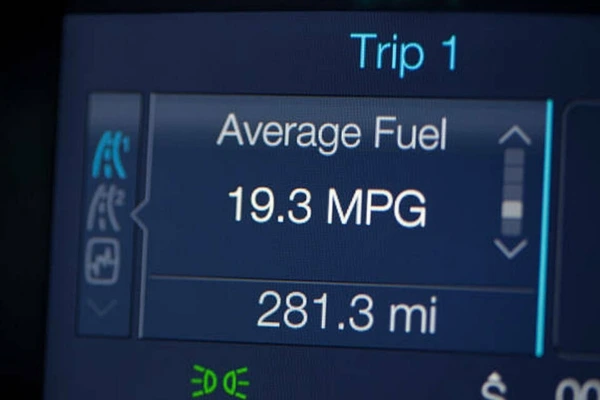
Trip computer data reveals patterns over time. If your average hybrid vehicle gas mileage drops suddenly, it signals potential mechanical issues requiring investigation. Gradual decline over many months often indicates maintenance needs such as spark plug replacement or air filter changes.
Many drivers in Essex who begin actively monitoring their fuel consumption report improvements of 20 per cent or more simply through increased awareness and minor behavioural adjustments. Setting personal targets and tracking progress adds an element of challenge that makes efficient driving more engaging.
Some manufacturers offer downloadable reports showing how your driving style compares to other owners of the same model. These comparisons can provide motivation and reveal specific areas where your technique could improve. At AutoNet VIP in Harlow, we can download and interpret diagnostic data during services, identifying any hybrid system inefficiencies that might be compromising your fuel economy.
Understanding Real-World Hybrid Performance
It’s crucial to maintain realistic expectations about hybrid vehicle gas mileage. Official WLTP test figures, whilst more representative than previous testing methods, still don’t perfectly replicate real-world conditions. Independent testing by organisations like What Car? consistently shows that real-world fuel consumption averages approximately 15 to 30 per cent lower than official claims for most hybrids.
For example, the Toyota Yaris Cross, which tops efficiency charts, achieves over 60 miles per gallon in careful real-world driving, though official figures claim even higher numbers. The key lies in understanding your specific usage pattern and optimising within that context rather than pursuing unrealistic targets.
Plug-in hybrids present particular challenges if regular charging isn’t possible. Recent research involving over 127,000 plug-in hybrids across Europe revealed they emit considerably more than claimed when operating primarily on their petrol engines. Without regular charging, these vehicles become relatively inefficient due to carrying the extra weight of large battery packs.
For Essex drivers, self-charging hybrids often represent a more practical choice than plug-in variants unless you have reliable access to charging facilities at home or work. The best self-charging models like the Toyota Yaris and Honda Civic consistently achieve real-world fuel economy above 50 miles per gallon with careful driving.
The Role of Professional Hybrid Specialists
Maintaining optimal hybrid vehicle gas mileage requires more than just good driving habits. These complex vehicles demand specialist knowledge for proper maintenance and diagnosis. Unlike conventional cars, hybrids feature high-voltage systems, regenerative braking components, and sophisticated power management computers that require specific training and equipment to service correctly.
AutoNet VIP in Harlow represents exactly the type of specialist facility hybrid owners need. Located at Harlow in Essex, their team possesses over 60 years of combined experience specifically focused on electric and hybrid vehicle technology. As certified electric and hybrid specialists, they understand the unique maintenance requirements these vehicles present.
Their services extend beyond basic oil changes to include comprehensive battery health assessments, hybrid system diagnostics, specialised cooling system maintenance, and detailed car checks. The high-voltage battery packs in hybrids require specific coolant and cooling system care to maintain optimal performance and longevity. Degraded cooling system performance can force the petrol engine to run more frequently, directly reducing hybrid vehicle gas mileage.
Regular professional maintenance at specialist garages like AutoNet VIP ensures your hybrid operates at peak efficiency throughout its lifetime. They use manufacturer-approved diagnostic equipment to identify subtle issues before they escalate into major problems. This preventative approach proves far more cost-effective than waiting for breakdowns whilst also maintaining the fuel economy you purchased the hybrid to achieve.
Maximising Your Hybrid Investment
Hybrid vehicles represent a significant investment in both your finances and environmental responsibility. Extracting maximum hybrid vehicle gas mileage from your vehicle requires a combination of thoughtful driving techniques, regular maintenance, and understanding your specific model’s characteristics.
The nine tips outlined here aren’t individual tricks but rather interconnected principles that work synergistically. Gentle acceleration combined with route planning and proper tyre pressures creates a foundation for efficiency that substantially exceeds what any single technique could achieve alone.
For drivers across Essex, from Harlow to Southend-on-Sea, these strategies prove particularly valuable given the mix of urban, rural, and motorway driving the region demands. The variable road conditions actually work to a hybrid’s advantage when driven correctly, as the electric motor excels in town whilst the petrol engine provides efficient cruising on faster roads.
Remember that hybrid vehicle gas mileage improvement is a gradual process. Don’t expect overnight transformation but rather steady progress as you refine your technique and ensure your vehicle receives proper care from specialists like AutoNet VIP. With patience and attention to these principles, achieving fuel economy that approaches or even exceeds official claims becomes entirely realistic, delivering the financial savings and environmental benefits that motivated your hybrid purchase in the first place.
