You’re driving down the A414 heading into Harlow town centre when you feel it—a vibration that wasn’t there yesterday. Your right foot eases off the accelerator instinctively, and there it is again. That unsettling rumble beneath your seat that makes your morning coffee spill just enough to annoy you. Sound familiar? You’re not imagining things, and no, your car isn’t just “getting old.”
Listen, we’ve seen it countless times here at the workshop. Drivers come through our doors at AutoNet VIP – Car Repairs, MOTs & Electric & Hybrid Specialists in Harlow, scratching their heads about mysterious vibrations, clunking noises, or that concerning shudder when they accelerate. Nine times out of ten, when we get the motor up on the ramp, we’re looking at a propshaft that’s crying out for help.
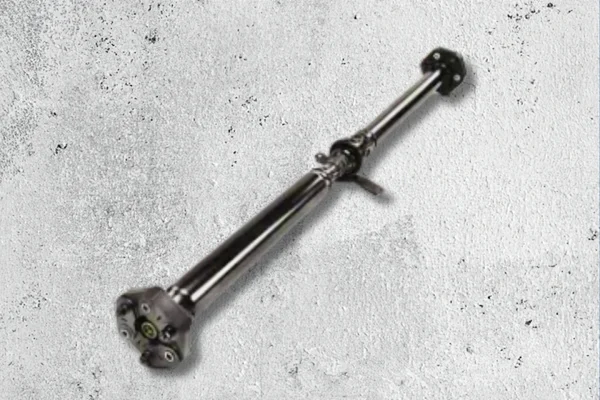
The thing is, your propshaft—that often-overlooked component spinning away underneath your vehicle—is absolutely critical to getting power from your engine to your wheels. When it starts failing, it doesn’t just whisper politely that something’s wrong. It shouts. And if you’re reading this because you’ve noticed something off with your drive, you’re already ahead of the game.
According to data from Essex Trading Standards published in early 2025, vehicle component failures contributed to nearly 23% of roadside breakdowns across the county last year. The propshaft, whilst not the most common culprit, featured prominently in rear-wheel and four-wheel drive vehicle failures—particularly in commercial vehicles and older models popular in our area. What’s more concerning? The AA reported that delayed maintenance on drivetrain components cost UK motorists an average of £847 extra in emergency repairs during 2025, money that could’ve been saved with early intervention.
We get it. You’ve got enough on your plate without worrying about components you can’t even see. Between getting the kids to school, making it to work on time, and everything else life throws at you, the last thing you need is an unexpected garage bill. But here’s the good news: catching propshaft problems early is entirely doable, and fixing them before they escalate can save you serious money and hassle.
So let’s talk about what you need to watch for. These seven signs are your propshaft’s way of asking for attention—and trust us, it’s worth listening.
1. Vibrations That Intensify With Speed
That subtle tremor you feel through the floor when you’re cruising at 50mph? It’s not the road surface, and it’s not your tyres needing balancing. When a propshaft is going off-balance, it creates vibrations that typically get worse as you accelerate. You might barely notice it at 30mph through Harlow’s residential streets, but once you’re on the M11 heading toward Stansted, it becomes impossible to ignore.
The propshaft spins at incredibly high speeds—sometimes exceeding 3,000 revolutions per minute. When the shaft itself becomes bent, even by a millimetre or two, or when the universal joints (U-joints) start wearing out, that perfect balance is destroyed. What you feel is the result of an unbalanced rotating mass, and it only gets worse with time.
We had a customer from Old Harlow last February who’d been living with vibrations for three months, convinced it was “just how the van drives.” When we finally examined it, the propshaft was so far gone that the universal joint was on the verge of complete failure. Had it let go whilst he was driving, we’d be talking about a completely different—and far more expensive—situation. Instead, we caught it, replaced the faulty components, and he was back on the road the same day, vibration-free.
The fix? Sometimes it’s as straightforward as rebalancing the shaft or replacing worn U-joints. Sometimes the shaft itself needs replacing. Either way, addressing it early costs a fraction of what you’ll pay if the propshaft fails completely and damages surrounding components.
2. Clunking Noises When You Change Gears
Picture this: you’re sat at the lights on Edinburgh Way, waiting for green. The light changes, you shift into first, release the clutch, and there’s that metallic “clunk” from underneath. It’s not your gearbox—it’s coming from further back. That’s your propshaft speaking up.
This noise typically points to worn universal joints or a failing centre bearing. When these components develop excessive play, you get that distinctive clunk as the slack is taken up during gear changes or when transitioning between acceleration and deceleration. It’s particularly noticeable when you’re moving off from a standstill or when you’re in stop-start traffic around The Stow or Harvey Centre.
According to vehicle inspection data from Essex County Council’s MOT testing facilities in 2025, worn drivetrain components—including propshaft-related issues—were identified in approximately 14% of failed MOT tests for vehicles over eight years old. That’s a significant chunk of failures that could’ve been prevented with earlier attention.
The beautiful thing about catching this early is that replacing a universal joint is a relatively affordable job. Leave it too long, though, and that excessive movement can damage the propshaft itself, the gearbox output shaft, or even the differential. What starts as a £150-200 repair can quickly balloon into something costing well over a grand.
3. Squeaking Sounds From Underneath
You know that annoying squeak that seems to come and go, especially noticeable when you’re driving slowly through a car park or residential area? The one that makes you turn down the radio so you can pinpoint where it’s coming from? There’s a decent chance it’s your propshaft’s universal joints running dry.
U-joints need lubrication to function smoothly. When they’re not getting enough grease—either because the seals have perished or because they’ve never been serviced—metal starts grinding on metal. That’s your squeak. It might seem minor, even slightly embarrassing when you’re parking up at Tesco and everyone can hear it, but it’s a warning sign you shouldn’t ignore.
We see this particularly often in vehicles that don’t get regular servicing. Propshaft maintenance isn’t always included in standard service schedules, especially on older vehicles. Here at AutoNet VIP, we always inspect the propshaft during services, but not every garage does. If your propshaft hasn’t been greased in years, those U-joints are likely crying out for attention.
The good news? If you catch it at the squeaking stage, you might get away with a simple service—cleaning out old grease, repacking with fresh lubricant, and checking the seals. Wait until the squeaking becomes grinding, and you’re looking at component replacement. It’s a classic case of a stitch in time saving nine.
4. Shuddering During Acceleration
You’re pulling onto the A1169, accelerating to match traffic speed, and the whole car shudders. Not a gentle vibration—a proper shudder that makes you think something fundamental is wrong. You back off the accelerator and it smooths out. That’s not normal, and it’s definitely not something to live with.
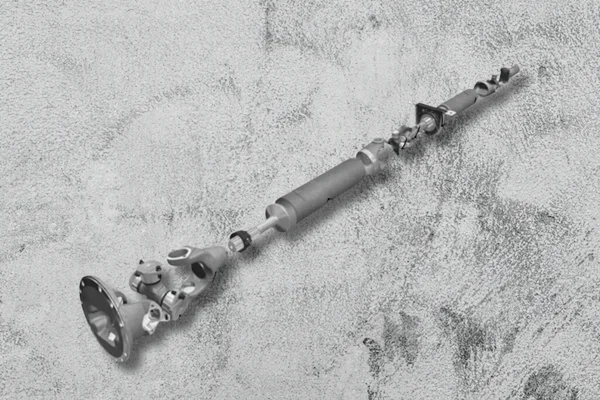
This symptom often indicates problems with the U-joints or, in vehicles with a two-piece propshaft, issues with the centre support bearing. When these components wear, they can’t properly accommodate the angles and movements the propshaft goes through during acceleration. The result? That uncomfortable shuddering that makes you question whether you should even be driving the car.
According to data from the Society of Motor Manufacturers and Traders, the average age of vehicles on UK roads hit 9.2 years in 2025—the highest on record. Older vehicles naturally have more wear on components like propshafts, making these issues increasingly common across Essex and beyond.
What makes this particularly important is that shuddering during acceleration puts enormous stress on other drivetrain components. Your gearbox, differential, and even your engine mounts are all working overtime to cope with those irregular forces. Fix the propshaft issue, and you’re protecting thousands of pounds worth of other components from premature wear.
5. Unusual Movement or Play Underneath
Now, you probably aren’t crawling underneath your car regularly—most people aren’t. But if you’ve had your vehicle up on ramps for an oil change or any other DIY maintenance, it’s worth giving the propshaft a visual check. Grab it with both hands and try to move it up and down, side to side. There should be virtually no play. If it moves more than a millimetre or two, or if you can hear clicking as you move it, you’ve found your problem.
Excessive play typically means the U-joints are worn, the centre bearing has failed, or the mounting points have become loose. Any of these issues can lead to complete failure if left unaddressed. We’ve seen propshafts completely separate from vehicles—thankfully whilst stationary in our workshop rather than on the M25.
One thing we always tell customers: if you can feel play in the propshaft, you’re already past the “early warning” stage. This is your propshaft’s final call for help before something breaks. Book it in immediately. Don’t wait until next week when it’s more convenient, and definitely don’t plan that road trip to Scotland you’ve been thinking about.
At AutoNet VIP, we include a thorough drivetrain inspection in every MOT and service. You can read more about our comprehensive vehicle health checks on our MOT testing services page, where we detail exactly what we examine to keep your motor running safely.
6. Turning Circle Issues (Four-Wheel Drive Vehicles)
If you’re driving a 4WD or AWD vehicle—and there are plenty around Harlow, especially among the Range Rovers and Land Rover Discoveries we see regularly—pay attention to how your vehicle behaves on tight turns. A failing propshaft, particularly in the front-to-rear transfer system, can cause binding or jerking when you’re turning sharply at low speeds, like manoeuvring in a car park.
This happens because the front and rear axles need to rotate at slightly different speeds when turning. A healthy propshaft system, complete with functioning universal joints and CV joints, allows for this difference. When these components wear out, they can’t accommodate the angular changes needed during turns, resulting in that characteristic binding sensation.
We had a customer last autumn with a BMW X5 who’d been experiencing this for months. She’d taken it to another garage who’d told her it was “just how these cars drive.” When she finally brought it to us for a second opinion, we found the rear propshaft’s CV joint was completely shot. After replacement, the binding disappeared entirely. She couldn’t believe she’d been putting up with it for so long.
The challenge with this symptom is that it’s easy to dismiss as “normal” if you’re not familiar with how your vehicle should handle. Trust your instincts. If turning feels different than it used to, or if you notice resistance or jerking that wasn’t there before, get it checked.
7. Visible Damage or Rust
Sometimes the issue is obvious if you know where to look. Crawl underneath (safely, on level ground, with the vehicle properly supported) and actually look at your propshaft. Are there dents or dings from hitting road debris? Has the protective coating worn away, allowing rust to take hold? Can you see cracks in the rubber boots that protect the universal joints?
According to a 2025 report from the Environmental Transport Association, road salt usage in Essex increased by 18% compared to the previous winter due to more frequent freeze-thaw cycles. That’s brilliant for keeping our roads safe, but it’s absolute murder on vehicle undersides, particularly unprotected metal components like propshafts.
Rust doesn’t just look unsightly—it weakens the metal. A propshaft needs to be strong enough to handle substantial torque whilst spinning at high speeds. Corrosion compromises that strength. We’ve seen shafts that looked solid from a distance but were so corroded they could be dented with finger pressure. That’s catastrophic failure waiting to happen.
Similarly, physical damage from bottoming out on speed bumps, hitting debris on the A10, or clipping that concrete parking block you didn’t quite see can bend or dent the propshaft. Even minor damage can throw off the balance, leading right back to those vibrations we discussed earlier.
The solution? Regular visual inspections, particularly if you drive on rough roads or in harsh conditions. And if you spot damage or significant corrosion, don’t wait. The cost of replacement is far less than the cost of recovery, repairs to other damaged components, and potential injury if the propshaft fails whilst driving.
Why Harlow Drivers Can’t Afford to Ignore These Signs
Here’s the reality: Harlow sits at a crucial junction of major routes. The M11, A414, and A1169 see heavy traffic daily, with speeds that push vehicle components hard. Add in the stop-start traffic around town centre, the speed humps in residential areas, and the general wear from daily driving, and your propshaft is working harder than you might think.
Data from Harlow District Council’s 2025 transport assessment showed that the average Harlow resident drives approximately 8,200 miles annually—slightly above the national average of 7,400 miles. More miles mean more wear on every component, propshafts included.
We’re not trying to scare you. We’re trying to save you money, stress, and potentially much worse. A failed propshaft doesn’t just leave you stranded—it can cause significant damage to your vehicle’s underside as it flails about, or worse, create a dangerous situation if it happens at motorway speeds.
What Happens During a Propshaft Inspection
When you bring your vehicle to us with concerns about your propshaft, here’s what actually happens. We start with a road test to experience the symptoms firsthand. There’s no substitute for actually feeling what the vehicle is doing. Then we get it up on the ramp for a proper inspection.
We check every component: the universal joints for wear and play, the centre bearing (if fitted) for smoothness and secure mounting, the propshaft itself for straightness and balance, the rubber boots for cracks or tears, and all mounting points for security and wear. We’re looking for anything that suggests current problems or impending failure.
If we find issues, we explain exactly what’s wrong, what needs doing, and what it’ll cost. No surprises, no upselling components you don’t need. Just honest assessment from technicians who’ve been working on vehicles in Harlow for years. You can learn more about our diagnostic approach on our car servicing page, where we detail our commitment to transparent, thorough vehicle care.
The Cost of Getting It Right
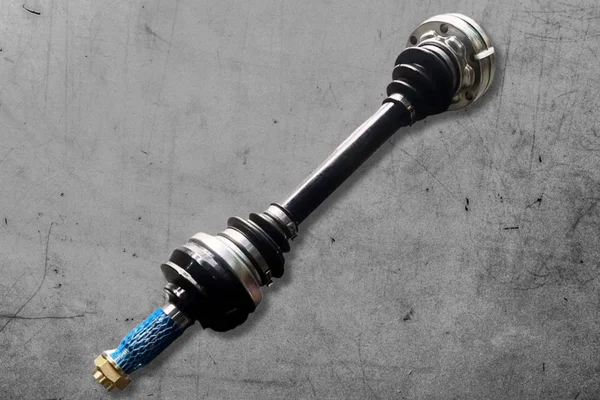
Let’s talk about money, because that’s what most people want to know. A propshaft repair typically ranges from £150 for a simple U-joint replacement on a straightforward vehicle, up to £600-800 for a complete propshaft replacement on a more complex car. Yes, that’s a chunk of money. But compare it to the alternative.
A failed propshaft can damage your gearbox output shaft (£800-1,200 to repair), your differential (£1,000-2,500 depending on the vehicle), your vehicle’s underside requiring panel repairs (£400-800), and potentially leave you facing a recovery bill (£100-300). Suddenly that £150-800 repair looks like an absolute bargain.
More importantly, there’s the safety aspect. A propshaft failure at speed can cause loss of control, particularly in rear-wheel drive vehicles where the sudden loss of drive can lead to instability. The risk to you, your passengers, and other road users simply isn’t worth ignoring the warning signs.
Taking Action Today
If you’ve recognised any of these seven signs in your vehicle, don’t put off getting it checked. It won’t get better on its own—it’ll only get worse, and more expensive. Book in for a diagnostic check. It typically takes us about an hour to thoroughly inspect a propshaft system and give you definitive answers about what, if anything, needs doing.
Here at AutoNet VIP – Car Repairs, MOTs & Electric & Hybrid Specialists in Harlow, we see these issues daily. We understand how concerning vehicle problems can be, especially when you’re not sure what you’re dealing with or how much it might cost. That’s why we pride ourselves on clear communication, fair pricing, and getting you back on the road safely and quickly.
Your propshaft might be hidden underneath your vehicle, out of sight and usually out of mind, but it’s fundamental to your car’s ability to drive safely. Those vibrations, clunks, squeaks, and shudders aren’t just annoying—they’re your vehicle’s way of asking for help. Listen to what it’s telling you, act on the warning signs, and you’ll save yourself money, stress, and potential danger down the line.
The roads around Harlow demand reliable vehicles. Whether you’re commuting to London, running the school run to local schools, or using your vehicle for work, you need to know it’s safe and dependable. Don’t let a failing propshaft put that at risk. Get it checked, get it fixed and get back to driving with confidence.