A lot of MOT failures are not caused by major engine trouble. They come down to things drivers overlook for months – a worn tire, a blown bulb, brake wear, or a warning light that stayed on too long. If you are wondering what fails an MOT test, the good news is that many of the most common issues are easy to spot and often cheaper to fix when caught early.
The MOT is designed to check that a vehicle meets minimum road safety and environmental standards. It is not the same as a full service, and it will not assess every part of your car’s long-term health. That is why some cars pass an MOT and still need repairs soon after, while others fail on simple items that could have been sorted before the appointment.
What fails an MOT test most often
Most failures tend to fall into the same broad areas: lights, tires, brakes, suspension, visibility, emissions, and safety systems. Some are obvious, but others catch drivers out because the car still feels fine to drive.
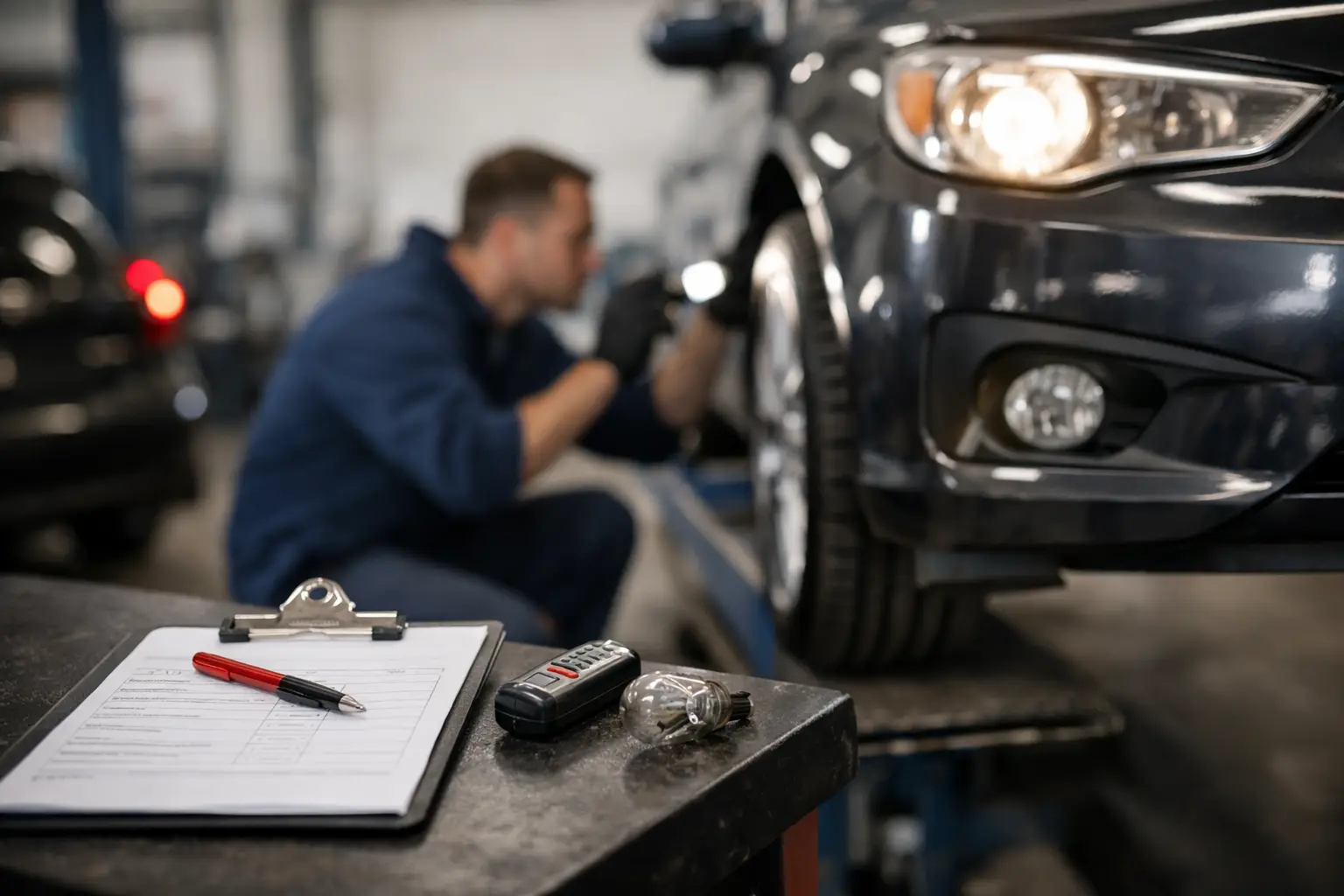
Lighting is one of the biggest examples. A headlight that has stopped working, a brake light that is dim, or a turn signal flashing too quickly can all create an instant problem on test day. Drivers often do not notice these faults because they are inside the vehicle when the issue appears, and many only become obvious when someone else points them out.
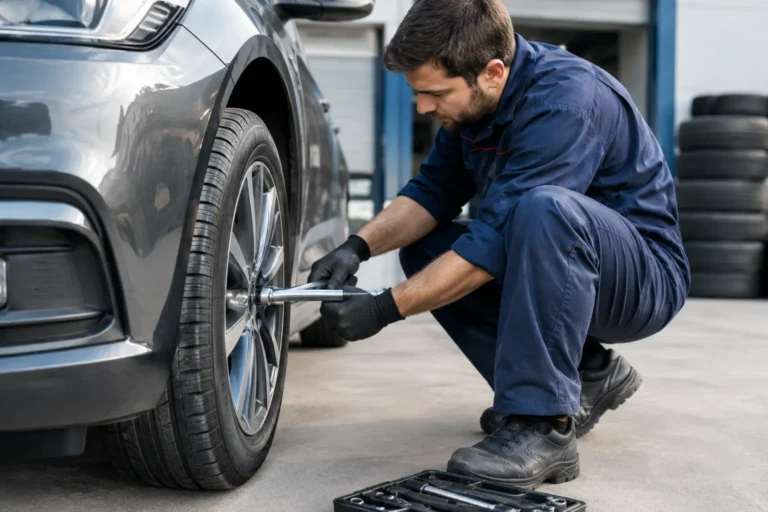
Tires are another common reason for failure. If the tread is below the legal limit, the tire is damaged, or the rubber is wearing unevenly, the vehicle may fail. Uneven tire wear can also suggest something else is wrong, such as poor alignment or worn suspension parts. In that case, replacing the tire alone may not solve the root issue.
Brakes matter for obvious reasons, but brake failures are not always dramatic. Sometimes the pads are too worn, the discs are badly scored, or the braking performance is not balanced correctly across the axle. A car can still stop and yet fall short of the required standard during inspection.
Suspension and steering issues also show up regularly. Worn bushes, damaged shock absorbers, broken springs, or excessive play in steering components can all lead to a fail. Many of these faults develop gradually, so drivers get used to the car feeling a little less stable or a little noisier over time.
The small things that still fail an MOT test
One of the most frustrating parts of MOT testing is that small defects can still lead to a failure. Windscreen wipers, washer fluid, mirrors, and the condition of the windshield are all checked because they affect visibility and safety.
A split wiper blade may seem minor until it smears water across the glass instead of clearing it. If your washer bottle is empty, that can also become an issue because the system needs to work properly. Chips or cracks in certain areas of the windshield can fail the test too, especially if they interfere with the driver’s view of the road.
Seatbelts are another area where simple faults matter. If a belt does not latch correctly, retract as it should, or shows damage, it may fail. The same applies to doors that do not open or close securely from the required positions.
Horn operation is checked as well. It sounds basic, but a non-working horn is still a safety defect. Number plates must also be secure, legible, and correctly displayed.
Warning lights and electronic faults
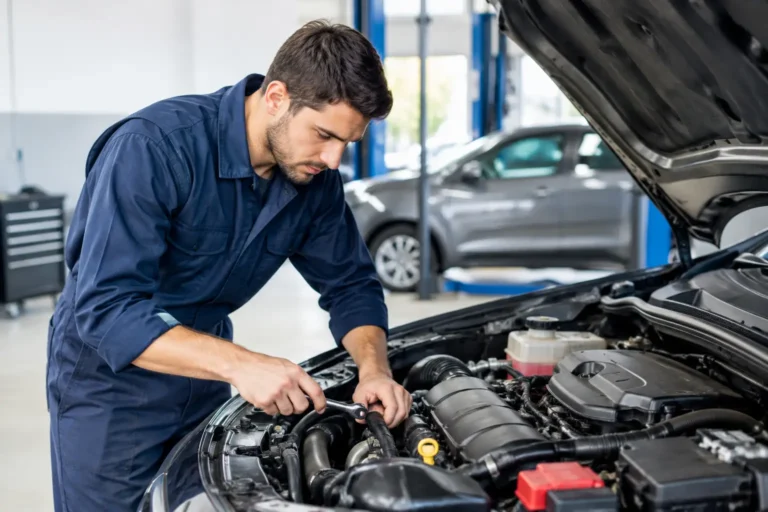
Modern vehicles can fail for issues that are not visible from the outside. Dashboard warning lights are a major one. If the airbag light, ABS light, engine management light, or other relevant safety and emissions warnings are on at the time of test, that can lead to a failure.
This is where owners of newer petrol, diesel, hybrid, and electric vehicles can get caught out. The problem may be a failed sensor, software issue, battery-related fault, or wiring problem rather than a traditional mechanical defect. Either way, if the system shows a fault that affects safety or emissions compliance, it cannot simply be ignored.
That is why proper diagnostics matter. Clearing a warning light without fixing the underlying cause is rarely a real solution. If the fault returns during the test cycle, you are back where you started, usually with more wasted time and cost.
Emissions and exhaust problems
Emissions are a frequent failure area, especially on older vehicles and diesels used mainly for short trips. If the exhaust system is leaking, insecure, excessively noisy, or producing emissions above the allowed level, the vehicle may fail.
For diesel drivers, DPF-related issues can be especially common. Repeated short journeys may prevent proper regeneration, which can contribute to warning lights and emissions problems. For petrol vehicles, faults involving oxygen sensors, catalytic converters, ignition issues, or fuel mixture problems can all affect the emissions result.
It depends on the car and how it is used. A vehicle that gets regular longer runs may stay cleaner internally than one that only does school runs and local stop-start driving. That does not mean local use is wrong – it just means the maintenance needs can be different.
Body, structure, and road safety checks
Not every failure is about what is under the hood. The tester will also assess whether the vehicle is structurally safe. Excessive corrosion in key areas, insecure body components, or damage that affects safety can all result in failure.
This is especially relevant on older cars and working vehicles. Rust near suspension mounting points, brakes, steering components, or seatbelt anchor points is far more serious than cosmetic surface rust on a non-structural panel. Drivers sometimes assume rust is only an appearance issue, but in the wrong place it becomes a safety concern very quickly.
How to reduce the risk of failing
If you want to improve your chances of passing, a simple pre-check goes a long way. Check all exterior lights, inspect the tires for tread depth and visible damage, make sure the windshield is clear and the wipers work properly, top up washer fluid, and look at the dashboard for warning lights before you leave home.
It is also worth paying attention to how the car has been behaving in the weeks before the test. Pulling under braking, knocking over bumps, excessive smoke, unusual exhaust noise, or a steering wheel that feels off-center are all signs that something may need attention.
The most effective approach is not to treat the MOT as the only time your vehicle gets looked at. Routine servicing helps catch wear before it turns into a failure. It also gives you more control over cost, because planned maintenance is usually easier to manage than urgent last-minute repairs.
What happens if your vehicle fails
If your car fails its MOT, the result will show the defects found and how serious they are. Some issues are dangerous and need to be addressed immediately. Others are major defects that still mean a fail, even if the car seemed usable on the way in.
The right next step is a clear explanation and a realistic repair plan. That matters because not every failed item carries the same urgency, and not every car owner has the same budget or timeline. A trustworthy garage should explain what the defect means, what it takes to fix, and whether there are related issues worth addressing at the same time.
At AutoNet VIP, that customer-first approach matters because drivers want straight answers, not confusion. If a vehicle fails, the priority is to explain the reasons clearly and help the owner move forward with confidence.
The main thing drivers get wrong about MOT failures
Many people assume an MOT failure means the car is generally in poor condition. That is not always true. A well-maintained car can still fail on a bulb, a tire, or a newly triggered warning light. On the other hand, a car that passes is not automatically problem-free.
The MOT is a snapshot of legal roadworthiness on the day of the test. It is an essential check, but it works best when combined with regular maintenance and early attention to small faults.
If your test date is approaching, the smartest move is not to wait and hope for the best. A quick check now can save you the inconvenience of a fail later, and often the repair bill is smaller when the problem is caught before it has a chance to spread.