A car that brakes smoothly one week and starts shuddering the next is telling you something. If you are wondering how to spot brake vibration, the first thing to know is that it rarely feels exactly the same in every vehicle. Sometimes it comes through the steering wheel, sometimes through the brake pedal, and sometimes it feels like the whole car is pulsing as it slows.
That difference matters, because brake vibration is a symptom, not a diagnosis. The underlying issue could be worn brake components, uneven rotor surfaces, suspension play, tire problems, or even a wheel that is not sitting correctly. The safest approach is to notice the signs early and have them checked before a small repair turns into a bigger one.
How to Spot Brake Vibration While Driving
Most drivers notice brake vibration during normal road use, not when the car is parked or idling. You press the pedal, the vehicle begins to slow, and instead of a clean, even stop, you feel a shake, pulse, or judder.
The clearest sign is a repeated vibration that appears only when braking. If the car feels smooth at speed but starts shaking as soon as you apply the brakes, that points toward the braking system or a related part affected under braking load.
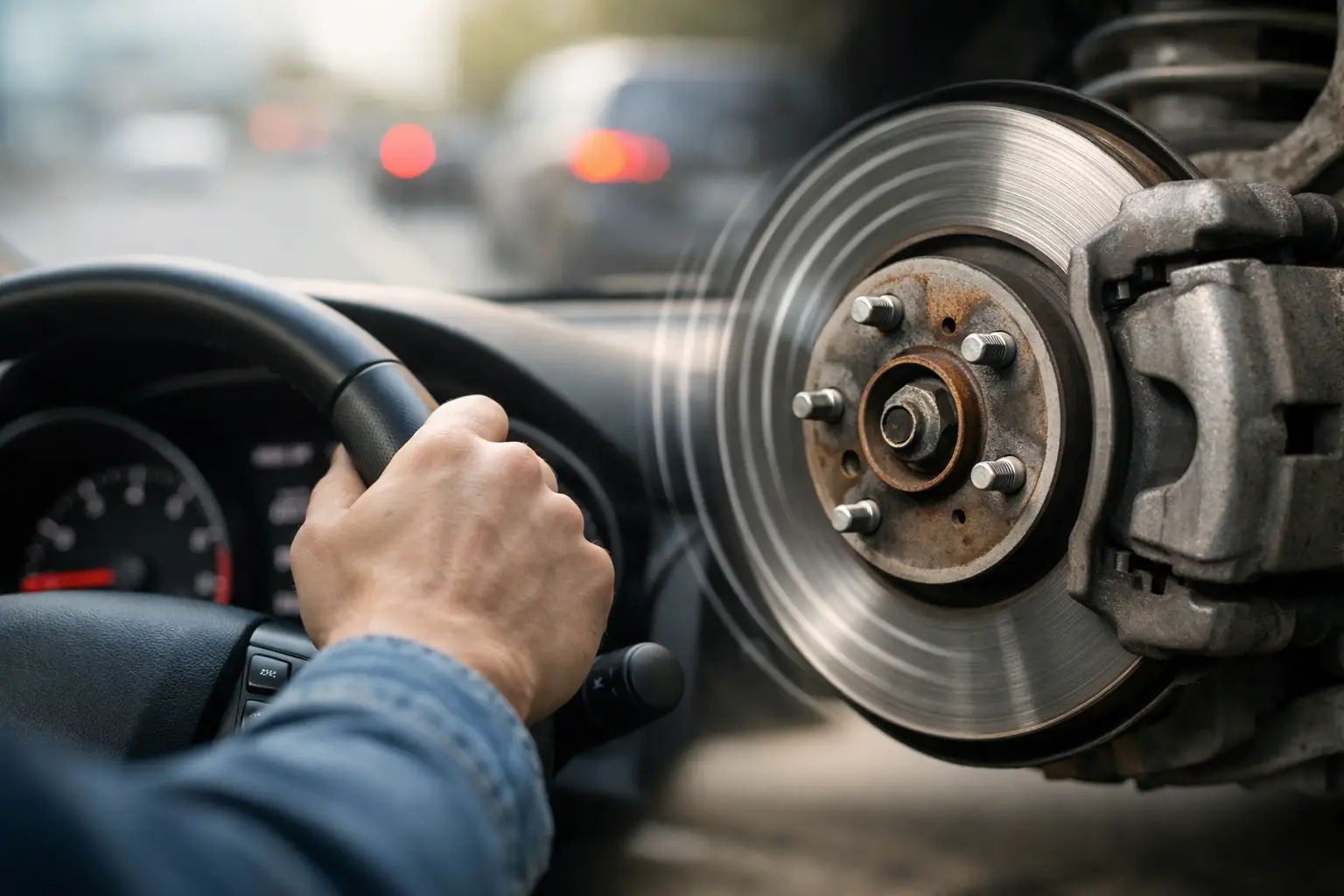
Pay attention to where you feel it most. A vibration in the steering wheel often suggests an issue at the front brakes or front suspension. A pulse through the brake pedal can point to rotor surface variation or uneven brake contact. If the whole vehicle seems to wobble while slowing down, the cause can be broader and may involve tires, rear brakes, suspension parts, or wheel fitment.
Speed also gives useful clues. Some brake vibration shows up only at highway speeds when braking from 60 mph or above. Other cases happen even in low-speed traffic. High-speed braking vibration is often easier to feel because the loads are greater, but low-speed symptoms should not be ignored. In some cases, they mean the wear has become severe enough to show up all the time.
What Brake Vibration Usually Feels Like
Drivers describe this problem in different ways, which can make it harder to explain at the shop. It may feel like a shaking steering wheel, a pedal that pulses against your foot, a rapid front-end shimmy, or a stop that feels uneven and rough.
It is not always violent. Early brake vibration can be subtle – more like a faint trembling than a hard shake. That is one reason people put it off. They assume it is a rough road surface or a one-off event. If it happens more than once, especially under similar braking conditions, it is worth taking seriously.
A useful way to think about it is consistency. If the vibration appears repeatedly when braking and disappears when you release the pedal, that pattern is a strong warning sign. Random rattles over potholes are different. Brake vibration has a trigger, and the trigger is usually brake application.
Common Causes of Brake Vibration
The most common cause is uneven brake rotor wear, often called warped rotors by drivers. In reality, the issue is often thickness variation or uneven deposits on the rotor surface rather than a rotor that has physically bent out of shape. Either way, the result is the same for the driver – the brake pad grips unevenly as the wheel turns, creating a pulse or shake.
Overheated brakes can contribute to this. Repeated hard braking, heavy loads, poor-quality parts, or sticking calipers can create hot spots on the rotor. Once the braking surface becomes uneven, smooth braking is harder to achieve.
Worn brake pads can also play a role. If pads are heavily worn, glazed, contaminated, or wearing unevenly, they may no longer make proper contact with the rotor. That can lead to noise, reduced stopping performance, and vibration.
Caliper problems are another possibility. A sticking caliper can keep a brake pad dragging against the rotor, causing excess heat and uneven wear. In some cases, seized slide pins or corrosion prevent the caliper from moving freely, which creates uneven pressure during braking.
There are also times when the brakes are not the only issue. Suspension wear, steering play, wheel bearing faults, tire defects, or poor wheel balance can all create or worsen a vibration felt while braking. This is why a proper inspection matters. Replacing pads and rotors alone will not solve the problem if a worn suspension component is part of the picture.
When It Might Not Be the Brakes Alone
Brake vibration is easy to blame on rotors, but that can be too simplistic. If the steering wheel shakes even when you are not braking, you may also have a tire balance problem, wheel damage, or suspension wear. Braking can simply make that existing problem more noticeable.
If the vehicle pulls to one side during braking, that may suggest uneven braking force, a sticking caliper, or suspension alignment concerns. If you hear clunking along with vibration, worn suspension bushings or steering parts may be involved.
Modern vehicles, including hybrids and EVs, can make diagnosis slightly more nuanced. Regenerative braking changes how friction brakes are used, which can sometimes allow corrosion or uneven surface buildup to develop on brake components, especially if the car does lots of short trips. That does not mean the system is failing, but it does mean a technician should look at the full braking setup rather than guessing.
How to Check the Warning Signs Safely
You do not need to take anything apart to notice useful clues. Start by asking yourself a few simple questions during normal driving. Does the vibration happen every time you brake, or only during harder stops? Is it worse at higher speed? Do you feel it in the wheel, the pedal, or the whole car? Is there any squealing, grinding, or pulling at the same time?
After a drive, you can also pay attention to smells and heat, without touching brake components directly. A sharp burning smell after routine driving can suggest a dragging brake. If one wheel area seems much hotter than the others, that can point to a sticking caliper, but this is something best confirmed professionally.
What you should not do is keep testing the problem aggressively. Repeated hard stops to “see if it gets worse” can increase heat and damage. And if the vibration is severe, the car feels unstable, or the brake warning light comes on, it is better not to keep driving at all.
How Serious Is Brake Vibration?
It depends on the cause and how advanced it is, but brake vibration should never be treated as harmless. At best, it is an early sign that parts are wearing unevenly. At worst, it can mean reduced braking performance, longer stopping distances, excess heat, or damage spreading to other components.
There is also the comfort factor. A car that shakes under braking is harder to control smoothly, especially in traffic or emergency stops. Even mild vibration can become a bigger safety issue in wet conditions, on steep roads, or when carrying passengers and cargo.
Waiting usually makes the repair more expensive. A small issue such as uneven pad wear or minor rotor problems can develop into caliper damage, rotor replacement, or additional suspension wear if ignored for too long.
When to Book an Inspection
If you have noticed repeated vibration under braking, book an inspection sooner rather than later. You do not need to wait for grinding noises or a dashboard light. Early diagnosis is usually faster, clearer, and less costly than dealing with a fully developed brake fault.
A proper inspection should include more than a quick glance at the pads. The technician should assess rotor condition, pad wear, caliper operation, tire condition, wheel fitment, and relevant steering and suspension components. That full picture is what leads to the right repair the first time.
At a modern workshop such as AutoNet VIP, that matters even more because many braking complaints overlap with electronic systems, ABS behavior, chassis components, and vehicle-specific wear patterns. A good garage will explain what they found in plain language, tell you what is urgent and what can wait, and price the work clearly.
How to Reduce the Chances of It Coming Back
Good-quality brake parts, correct installation, and proper torque on the wheels all help. So does fixing related issues instead of only replacing the most obvious component. If a caliper is sticking or a suspension part is worn, those root causes need attention too.
Driving habits matter as well, but only to a point. Frequent hard braking creates more heat, while very light use over long periods can allow corrosion and uneven buildup, especially on cars that sit often. The goal is not perfect driving. It is regular maintenance and early attention when something changes.
If your car no longer feels smooth when you slow down, trust that instinct. Brakes should feel controlled, predictable, and even. When they do not, getting them checked promptly is one of the simplest ways to protect both your safety and your repair budget.
A small shake during braking is easy to dismiss on a busy week. It is also one of those problems that gets more expensive the longer it is asked to explain itself.