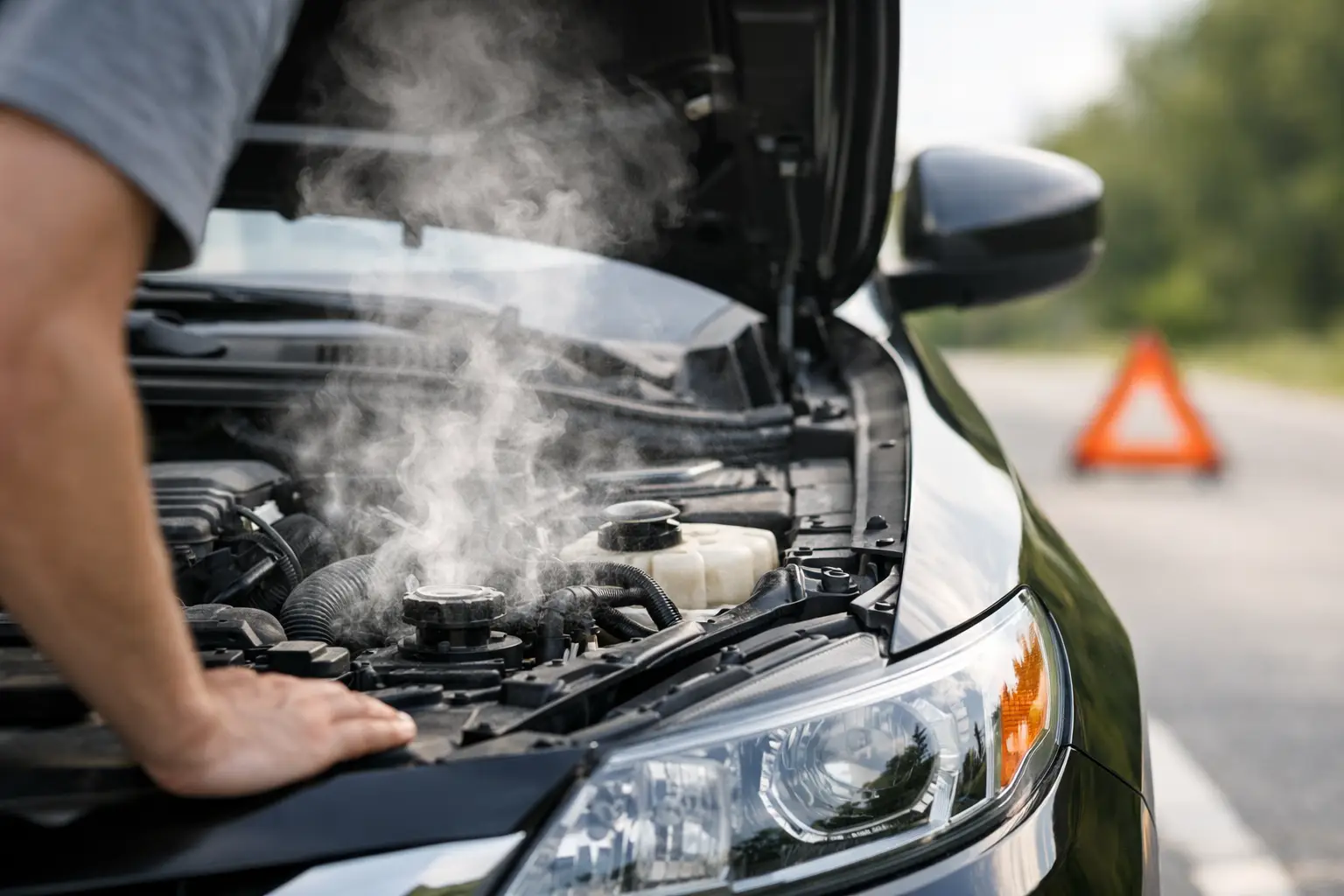
You glance at the temperature gauge, and it is suddenly higher than normal. Then maybe you notice steam, a warning light, or that hot, sweet smell coming from under the hood. If you are asking, why is my car overheating, the short answer is that your engine is either generating too much heat or not getting rid of it properly. The more useful answer is that overheating usually points to a cooling system fault that needs attention quickly.
An engine runs hot by design, but only within a controlled range. When that balance is lost, even a small issue can turn into a much bigger repair. A neglected coolant leak might lead to a warped cylinder head. A failing fan motor might seem minor in traffic, but become serious on a warm day with the air conditioning on. That is why overheating is never something to brush off and hope disappears on its own.
Why is my car overheating while driving?
When a car overheats on the road, the cause is usually tied to coolant flow, airflow, or a failing component that can no longer keep engine temperature stable under load. Sometimes the problem shows up only in traffic. Other times it happens at highway speed. That difference matters because it helps narrow down the fault.
If the temperature climbs while idling or sitting in slow traffic, the radiator fan or fan control system is a common suspect. At low speed, your car relies heavily on the cooling fan to pull air through the radiator. If that fan is weak, intermittent, or not coming on at all, heat builds quickly.
If it overheats more at higher speeds, the issue may be low coolant, a stuck thermostat, a restricted radiator, or a water pump problem. At that point, the engine is working harder and producing more heat, so any weakness in the cooling system becomes harder to hide.
Low coolant level
Low coolant is one of the most common causes of overheating. Coolant carries heat away from the engine and toward the radiator, where that heat can be released. If the level drops too far, the system cannot do its job efficiently.
The reason for low coolant is often a leak, not simple evaporation. It could be a split hose, a worn radiator, a leaking water pump, a failed expansion tank, or even an internal engine problem such as a head gasket failure. Topping it off may help in the moment, but if the level keeps falling, the real fault still needs to be found.
Thermostat stuck closed
The thermostat controls when coolant begins circulating through the radiator. If it sticks closed, coolant stays trapped in the engine for too long, and temperatures rise fast. This often causes a vehicle to go from normal to dangerously hot in a short space of time.
A thermostat is not an expensive part compared with major engine work, but ignoring it can be costly. It is one of those components that seems small until it is not.
Water pump failure
The water pump keeps coolant moving through the system. If it fails, circulation drops or stops, and the engine can overheat very quickly. In some cases, the pump leaks first. In others, the internal impeller wears down or breaks, reducing flow even before a visible leak appears.
This is where proper diagnostics matter. A pump can fail in ways that are not obvious to the average driver, especially if the symptoms come and go.
Radiator problems
A radiator can only cool effectively if coolant flows through it properly and air passes across it. Internal blockages, corrosion, bent fins, or external debris can all reduce performance. If the radiator is partially clogged, you may notice the car runs hotter on longer drives or in warm weather.
Older vehicles are more prone to this, but newer cars are not immune, especially if the wrong coolant has been used or service intervals have been skipped.
Cooling fan faults
If your car overheats mostly when stopped, a failed cooling fan is high on the list. The issue could be the fan motor itself, a relay, fuse, temperature sensor, or wiring fault. Because modern vehicles rely on electronics to trigger cooling operation, the cause is not always mechanical.
This is especially relevant on newer petrol, diesel, hybrid, and even some electrified systems where thermal management is tightly controlled. One failed signal can create a real overheating issue.
Other reasons why my car is overheating
Not every overheating complaint has the same root cause. Some are straightforward. Others point to deeper engine trouble.
A bad radiator cap, for example, can allow pressure loss in the cooling system. That lowers the boiling point of the coolant and makes overheating more likely. A collapsed hose can restrict flow. Air trapped in the system after poor-quality repair work can also create hot spots and unstable temperature readings.
Then there is the head gasket. A blown head gasket can push combustion gases into the cooling system, force coolant out, and cause repeated overheating. This is the scenario drivers worry about most, and for good reason. It is usually not the first thing to assume, but it should not be ruled out if you are losing coolant with no obvious external leak, seeing white exhaust smoke, or noticing milky residue in the oil.
Warning signs you should not ignore
Overheating rarely starts with steam pouring everywhere. Often, the early signs are more subtle.
You may see the temperature gauge sitting higher than usual, especially on hills or in traffic. The heater might start blowing cold air because coolant is too low to circulate properly. You could smell coolant, notice puddles under the car, or hear the fan running much more than normal. Some drivers also report reduced performance or a warning message on the dashboard before a full overheat happens.
The key point is this: if your car is trending hotter than usual, it already needs attention. Waiting for the red zone is a gamble.
What to do if your car overheats
If the gauge rises sharply or you get an overheating warning, reduce the strain on the engine as soon as it is safe. Turn off the air conditioning and, if needed, turn the heater on to help draw heat away from the engine. Then pull over safely and switch the engine off.
Do not remove the radiator cap while the engine is hot. Pressurized coolant can cause serious burns. Let the car cool fully before anyone inspects the system.
If coolant is visibly pouring out, if there is heavy steam, or if the engine has already gone into the red, driving farther is a risk. This is where a small towing bill is usually much cheaper than engine replacement. It depends on the cause, but once an engine has severely overheated, every extra minute of running can multiply the damage.
Can I keep driving if my car is overheating?
Usually, no. There are rare situations where the gauge briefly climbs because of a temporary operating condition, then returns to normal. But if the warning remains, the temperature keeps rising, or the cause is unknown, continuing to drive is not worth it.
Modern engines are built with tight tolerances. They do not respond well to extreme heat. Aluminum cylinder heads can warp. Head gaskets can fail. Plastic cooling system parts can crack further under pressure. What starts as a bad thermostat can end as a major engine repair if it is ignored.
That is why a trustworthy shop will not just clear a warning and send you on your way. The job is to identify why the engine got hot in the first place, pressure-test the system, inspect for leaks, verify fan operation, and confirm the repair has actually solved the issue.
How overheating problems are diagnosed properly
A proper diagnosis is more than topping up coolant and hoping for the best. The cooling system needs to be checked as a whole because several faults can create similar symptoms.
A technician may pressure-test the system, inspect hoses and the radiator, confirm thermostat operation, check whether the water pump is circulating coolant correctly, and verify fan activation through the control system. If there are signs of internal engine trouble, further testing may be needed to rule out head gasket failure.
This matters because misdiagnosis is common with overheating complaints. Replacing the thermostat will not fix a cracked expansion tank. Fitting a new radiator will not solve a failed fan relay. Good repair work starts with accurate diagnosis, clear explanation, and no guesswork.
How to lower the risk of overheating
The best prevention is routine maintenance done on time and done properly. Coolant should be checked and replaced at the correct intervals, not ignored for years. Hoses, caps, and belts should be inspected before they fail, especially on higher-mileage vehicles. If your temperature gauge has been creeping upward, that is your warning to act early.
It also helps to pay attention after any cooling system work. If a vehicle starts running hot after service, there may be trapped air, an incorrect fill procedure, or a part that was not functioning properly before the repair. A good garage will take that seriously and sort it quickly.
If you are dealing with repeated overheating or a warning light that keeps coming back, the best next step is a professional diagnostic inspection rather than trial-and-error parts replacement. At AutoNet VIP, that means clear answers, transparent recommendations, and repairs based on what your vehicle actually needs.
An overheating engine rarely fixes itself, but it often gives you a chance to catch the problem before it gets expensive.