A dashboard warning light, a strange brake noise, or an MOT due date can all create the same question: should you book an MOT or full service? They are often scheduled together, but they do very different jobs. One checks whether your vehicle meets the legal standard to be driven on public roads. The other helps protect its condition, reliability, and long-term value.
Knowing the difference means you can make a confident decision, avoid unnecessary surprises, and give your garage the right information when you book. For drivers who rely on their car every day – whether for commuting, school runs, business, or family travel – that clarity matters.
What an MOT actually checks
An MOT is an annual roadworthiness test required for most vehicles once they reach three years old. It is not a maintenance appointment and it does not involve replacing parts as part of the test. Its purpose is to assess whether key safety and environmental items meet the minimum legal requirements on the day your vehicle is tested.
The tester checks areas such as brakes, tires, steering, suspension, lights, seat belts, mirrors, wipers, the windscreen, horn, emissions, and visible parts of the exhaust and fuel system. They also check the vehicle identification number and registration plates. For electric vehicles, emissions testing does not apply, but the safety checks still do.
A pass confirms that the vehicle met the relevant standard at the time of inspection. It is not a guarantee that no component will wear out shortly afterward. Brake pads can be legally acceptable during an MOT yet still be close enough to their limit that planning a replacement soon is sensible. The same applies to tires, suspension components, batteries, and wiper blades.
Advisories are worth taking seriously
If an item is not yet severe enough to fail the test but may need attention soon, it can be recorded as an advisory. Advisories are useful early warnings, not a reason to panic. Ask your garage to explain what each one means, how urgent it is, and what signs to watch for.
Clear advice should separate essential work from maintenance that can be planned. That gives you control over the timing and cost rather than leaving you to deal with a preventable breakdown later.
What a full service includes
A full service is a planned maintenance visit. Unlike the standardized MOT, its exact content depends on your vehicle’s age, mileage, manufacturer schedule, fuel type, and service history. A quality full service is designed to identify wear, replace time-sensitive fluids and filters where required, and keep the car operating as intended.
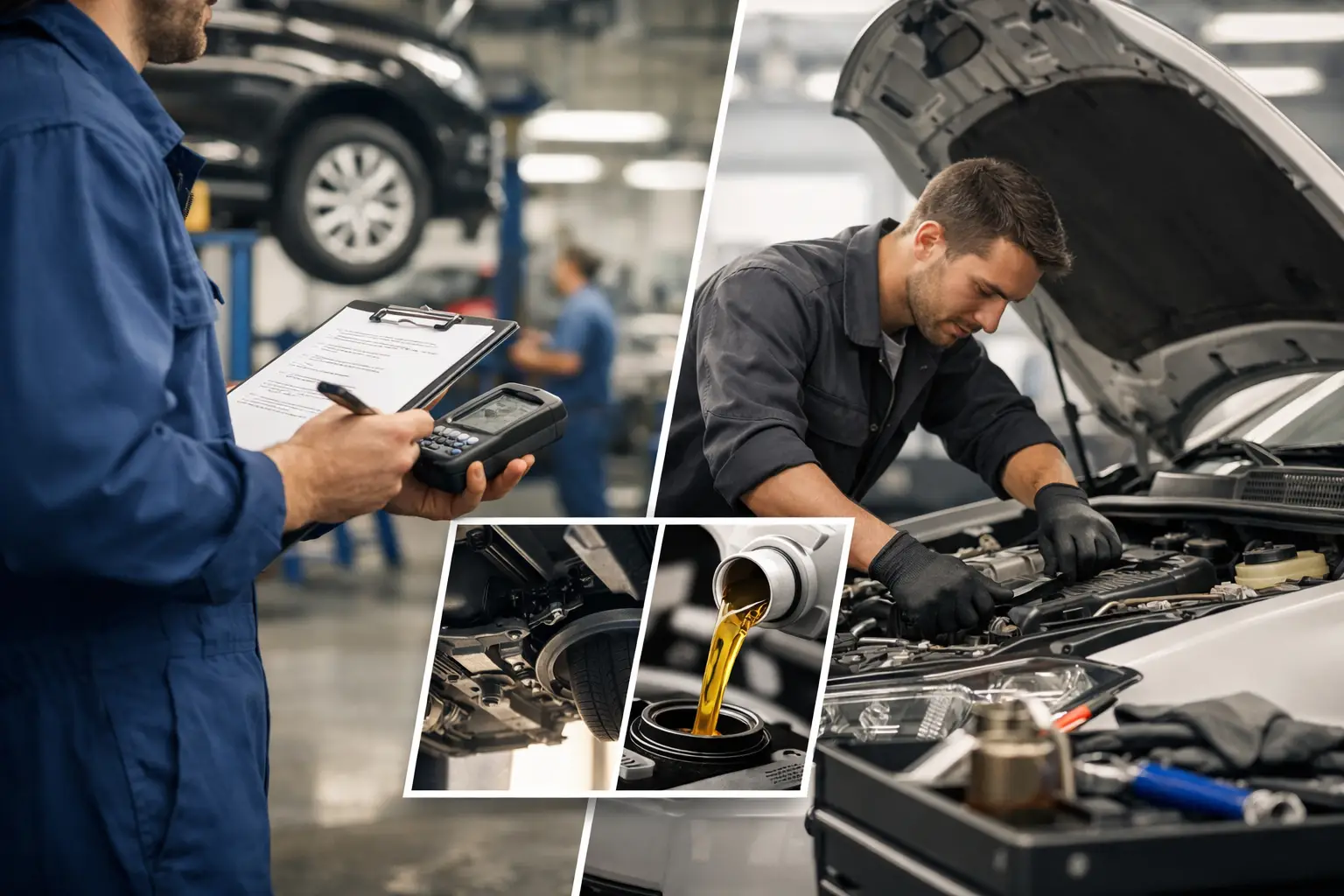
Typical work may include changing the engine oil and oil filter, inspecting or replacing air and cabin filters, checking fluid levels and condition, examining brakes and tires, checking steering and suspension, and inspecting belts, hoses, battery health, lights, and wipers. The technician may also carry out a diagnostic scan, depending on the vehicle and service requirements.
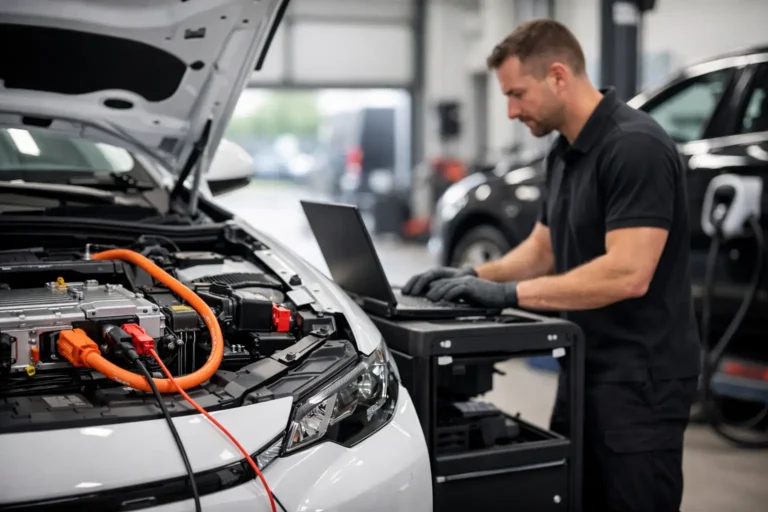
For diesel vehicles, a service may include checks related to the diesel particulate filter and emissions system. Hybrid and electric vehicles need a different approach. They do not require engine oil changes in the same way as gasoline or diesel models, but they still need brake, tire, suspension, coolant, charging-system, and high-voltage safety checks. This is why it is useful to choose a garage equipped and trained for the type of vehicle you drive.
A full service should follow the manufacturer’s recommendations rather than a one-size-fits-all checklist. Some items have time intervals as well as mileage intervals. For example, brake fluid, spark plugs, transmission fluid, and timing belts or chains may need attention even if the car has not covered many miles.
MOT or full service: which should you book?
If your MOT certificate is about to expire, you need an MOT. If your service is due according to the dashboard reminder, service book, or manufacturer schedule, you need a service. If both are due around the same time, booking them together is usually the most convenient option.
Combining the appointments does not mean a service replaces the MOT, or vice versa. The MOT remains a legal test with defined pass and fail criteria. The service is broader maintenance work focused on preventing problems and preserving performance.
There are practical benefits to doing both on one visit. Your vehicle is only off the road once, and a technician can investigate maintenance concerns before or alongside the test. If repairs are needed, you can discuss the findings and approve work with a clearer picture of the car’s overall condition.
However, there are occasions when it makes sense to book separately. If you have a warning light, overheating, vibration, poor braking, a starting problem, or a major fluid leak, do not wait for the MOT date. Book diagnostics or repair work as soon as possible. An MOT is not a substitute for addressing a safety concern.
How often should you service your car?
Many vehicles need servicing every 12 months or around 10,000 to 12,000 miles, but the correct interval is the one set by the manufacturer. Some modern cars use variable servicing, where the vehicle calculates when maintenance is due based on how it has been driven.
Short journeys, stop-start traffic, heavy loads, frequent towing, and long periods of inactivity can all place extra strain on a vehicle. In those circumstances, earlier maintenance may be sensible. Conversely, a low-mileage car is not automatically maintenance-free. Fluids can degrade, tires can age, batteries can weaken, and seals can dry out while a vehicle is parked.
Keep records of every service and repair. A complete history can support resale value, help diagnose recurring issues, and show that the vehicle has been maintained responsibly. It also allows your garage to recommend only the work that is genuinely due.
What happens if your car fails its MOT?
A failed MOT does not always mean a large repair bill. Failures range from simple issues, such as a blown bulb or worn wiper blade, to more significant brake, tire, suspension, or emissions faults. The important thing is understanding the defect and the safe next step.
If your current MOT has expired and the vehicle has failed, you generally cannot drive it on the road unless you are traveling to a pre-booked repair appointment or another MOT test. If the vehicle has been classified as dangerous, it should not be driven until repaired, even if there is time left on the existing certificate.
Ask for a straightforward explanation of the failure items, the recommended repair, and the price before work begins. At AutoNet VIP, the focus is on clear findings and informed approval, so you know what is essential now and what can be scheduled later.
Simple checks between garage visits
Regular professional servicing is essential, but a few quick checks at home can help prevent avoidable trouble. Check tire pressures and tread regularly, especially before a longer journey. Make sure lights work, keep washer fluid topped up, and pay attention to changes in how the car starts, stops, steers, or sounds.
You should also respond promptly to warning lights. Some are reminders, while others signal faults that can affect safety or cause more expensive damage if ignored. When in doubt, a diagnostic check is better than guessing.
A well-maintained vehicle should not feel like a mystery. Book the MOT when it is legally due, follow the correct service schedule, and use advisories as a chance to plan ahead. That approach keeps everyday driving safer, reduces unwanted disruption, and gives you a clearer view of what your car needs next.