A clutch problem rarely arrives at a convenient time. One day the pedal feels slightly different or the engine revs higher than usual; the next, pulling away becomes difficult. So, how much does clutch repair cost? For most manual vehicles in the UK, a clutch replacement commonly costs between £450 and £1,200. The final bill depends heavily on the vehicle, the parts required, and how much labor is involved in accessing the clutch.
The most useful way to think about the price is not as one fixed number, but as a combination of diagnosis, parts, and labor. A trusted garage should explain each part of that estimate before work begins, so you know whether you are paying for a straightforward clutch kit or a more involved repair involving the flywheel, hydraulics, or gearbox.
How Much Does Clutch Repair Cost on Average?
For a small or mid-size manual car, a typical clutch replacement often falls around £450 to £750. Larger family cars, SUVs, vans, and premium vehicles can be £700 to £1,200 or more. Some vehicles require the gearbox, subframe, or other major components to be removed to reach the clutch, which adds significant labor time.
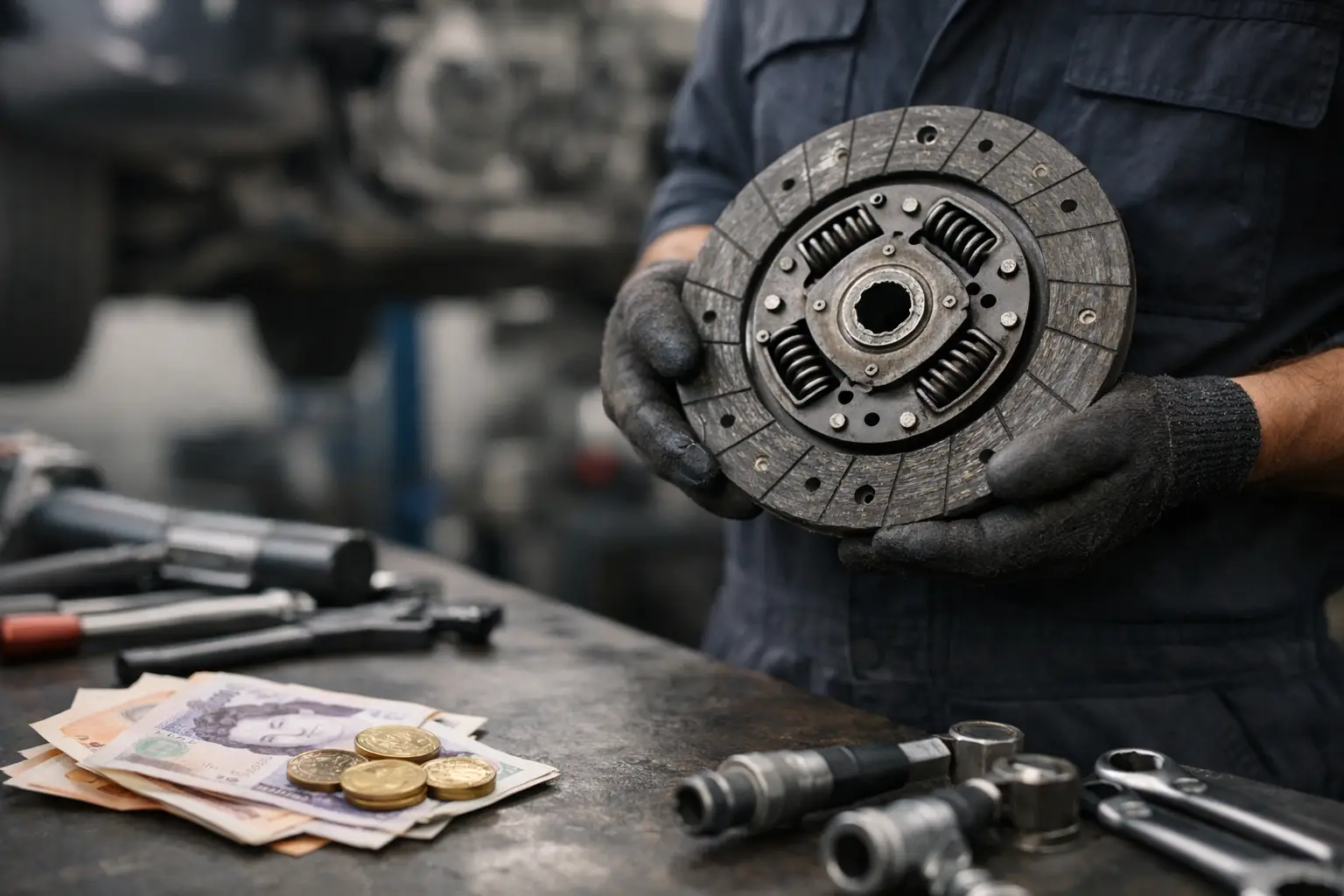
The phrase “clutch repair” can also cover several different jobs. In many cases, the worn friction plate cannot be repaired individually in a practical or reliable way. The usual solution is to replace the clutch kit, which normally includes the clutch disc, pressure plate, and release bearing. Replacing these parts together helps avoid paying for the same labor twice if another part fails soon afterward.
A basic estimate may not include every item that becomes visible after the gearbox is removed. That does not automatically mean a garage is adding unnecessary work. The condition of the flywheel, release mechanism, seals, and hydraulic components can only be properly assessed once the clutch is accessible. The key is clear communication before any additional work is approved.
What Changes the Price of a Clutch Repair?
The make and model of your vehicle are the biggest cost factors. A clutch on a compact city car is generally quicker to access and uses less expensive parts than one on a high-torque diesel, a performance vehicle, or a commercial van. Engine layout, transmission design, and available working space all affect labor time.
The flywheel is another major variable. Many modern diesel and higher-torque petrol vehicles use a dual-mass flywheel, often called a DMF. It is designed to smooth engine vibration and protect the transmission, but it can wear or develop excess movement. If it needs replacement at the same time as the clutch, the bill may increase by £400 to £900 or more depending on the vehicle and parts chosen.
Hydraulic faults can also resemble a worn clutch. A leaking master cylinder, slave cylinder, or hydraulic line may cause a soft pedal, difficulty selecting gears, or a pedal that stays on the floor. These repairs may be less expensive than a full clutch replacement, but on some vehicles the slave cylinder sits inside the gearbox bell housing. In that situation, gearbox removal may still be necessary.
Parts quality matters as well. A reputable garage will normally use quality original-equipment or equivalent parts suited to your vehicle. A cheaper clutch kit can look attractive at first, but saving a small amount on parts is rarely worthwhile if the component wears early and the same labor-intensive job has to be repeated.
Typical Clutch Cost Scenarios
A small petrol hatchback with a conventional flywheel may need only a clutch kit and labor, placing the repair toward the lower end of the usual range. A family diesel with a dual-mass flywheel may require a clutch kit, flywheel, new bolts, and several more hours of labor, moving the cost closer to four figures.
Vans deserve special consideration. They often carry heavier loads, spend more time in stop-start traffic, and have drivetrains built for higher torque. A van clutch may cost more to replace, but ignoring early symptoms can be even more expensive if a failing clutch damages the flywheel or leaves the vehicle off the road during a working week.
Hybrid and electric vehicles are different. Most fully electric vehicles do not have a conventional clutch in the same way as a manual gasoline or diesel car. Some hybrids use automated transmissions or specialized drivetrains, so the cause of a driveability issue must be diagnosed carefully rather than assumed to be a clutch fault. A modern workshop should assess the vehicle’s specific system before quoting repairs.
Signs You May Need a Clutch Inspection
A slipping clutch is one of the clearest warning signs. You may notice the engine revving rise without a matching increase in road speed, particularly when accelerating uphill or in a higher gear. A burning smell after pulling away or maneuvering can also indicate clutch slip.
Other symptoms can point to clutch, hydraulic, or gearbox concerns. These include difficulty selecting first or reverse gear, a pedal that feels unusually stiff or soft, vibration through the pedal, a biting point that has changed suddenly, or a grinding noise when pressing the clutch pedal. None of these signs confirms the exact fault on its own, which is why diagnosis matters.
Do not wait for complete clutch failure if you can avoid it. A vehicle that will not engage gear can leave you stranded, while continued driving with a slipping clutch may create additional heat and damage. Booking an inspection when symptoms first appear gives you more control over timing and cost.
Is It Safe to Drive With a Bad Clutch?
It depends on the symptom, but it is not a problem to dismiss. A mild change in pedal feel may allow you to drive carefully to a garage, while severe slipping, difficulty selecting gears, or a pedal that remains on the floor needs prompt attention. If the vehicle will not reliably move, stop safely, or select gears, do not continue driving it.
A clutch issue can also affect safety at junctions, roundabouts, and in traffic, where predictable pull-away is essential. If you are unsure, arrange a professional assessment rather than risking a breakdown or further drivetrain damage.
How to Get a Fair Clutch Repair Estimate
Ask for an estimate that separates labor from parts and states what is included. It should clarify whether the quote covers a complete clutch kit, fluids, replacement bolts where required, and any likely additional items such as a flywheel. A good garage will also explain what can only be confirmed after inspection and will contact you before carrying out extra chargeable work.
It is sensible to compare quotes, but compare the scope of work rather than the headline figure alone. One price may include a quality clutch kit and warranty-backed labor, while another may exclude essential components or use lower-grade parts. The cheapest estimate is not always the lowest-cost repair over the life of the vehicle.
At AutoNet VIP, the aim is to make repair decisions straightforward: diagnose the issue properly, explain the findings in plain language, and provide clear pricing before work goes ahead. Whether your car needs a clutch replacement, a hydraulic repair, or a gearbox-related inspection, knowing the cause first protects both your budget and your vehicle.
If your clutch is slipping, noisy, or making gear changes difficult, arranging an inspection now can turn an uncertain breakdown risk into a planned repair with a clear cost and a practical next step.