A car air conditioning system that suddenly blows warm air is frustrating, especially when you rely on it for school runs, commuting or long journeys. But the answer is not always a straightforward refill. When considering air con regas vs repair, the right choice depends on why the system has stopped cooling – and guessing can turn a small fault into repeat expense.
A regas restores the refrigerant your system needs to produce cold air. A repair fixes the fault that allowed performance to drop in the first place. They can sometimes be part of the same visit, but they are not interchangeable services. A proper assessment gives you a clear explanation of what your car needs, why it needs it and what it will cost before work begins.
Air con regas vs repair: the key difference
Your car’s air conditioning is a sealed system. Refrigerant circulates under pressure, changing from gas to liquid and back again to move heat out of the cabin. It works alongside the compressor, condenser, evaporator, pipes, seals, valves and electrical controls. If every part is operating correctly, you should have reliable cooling and effective demisting.
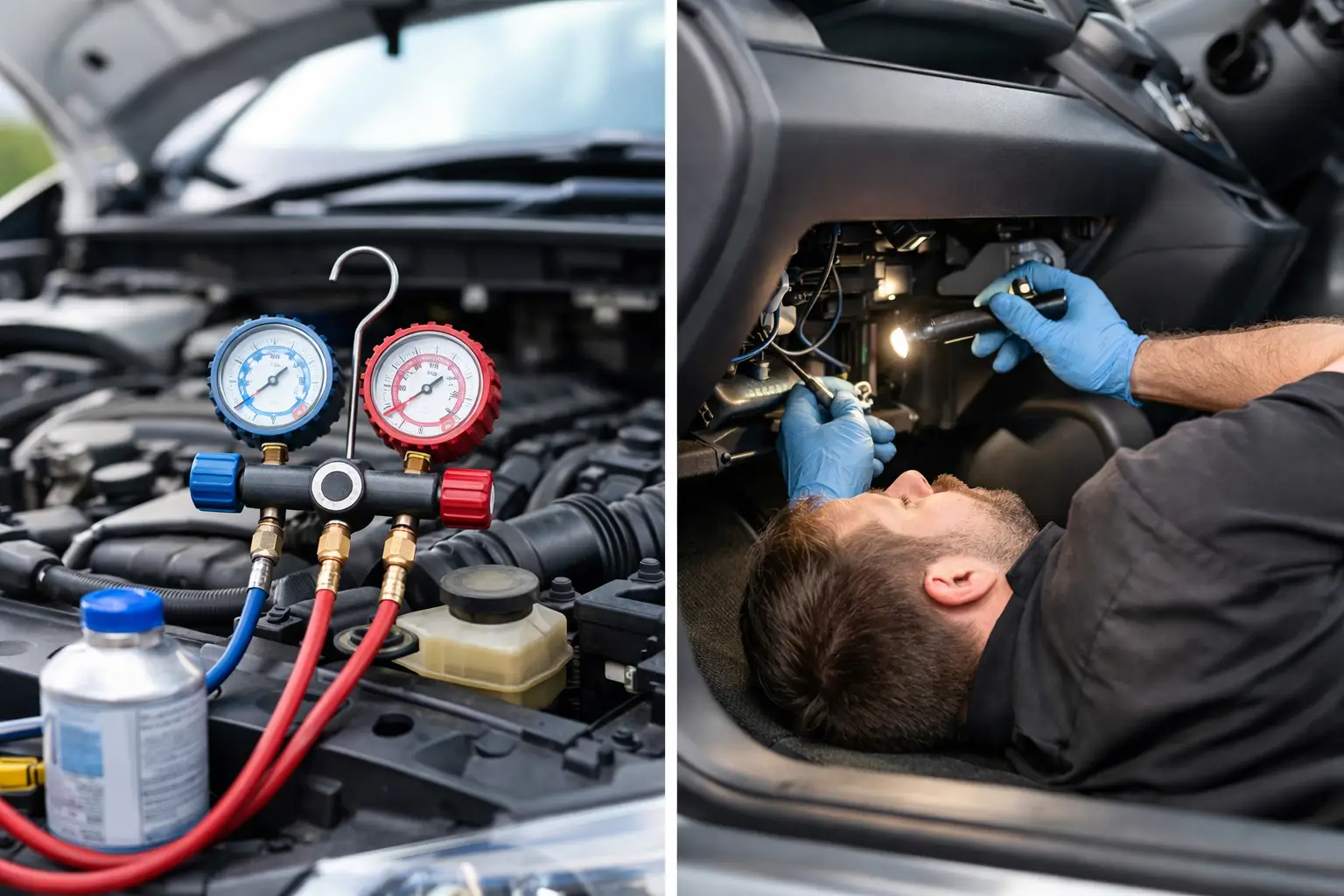
An air con regas involves recovering the remaining refrigerant, checking the system’s vacuum and refilling it with the manufacturer-specified quantity of refrigerant and oil. Many vehicles use R134a, while newer models commonly use R1234yf. These gases are not interchangeable, so using the correct equipment and refrigerant matters.
An air con repair addresses a component or control problem. This may mean replacing a leaking condenser, repairing a damaged pipe, fitting a new pressure sensor or investigating a compressor that is not engaging. The system is then regassed once the repair is complete and tested properly.
Put simply, a regas is maintenance where the system is otherwise sound. A repair is necessary when something has failed, leaked or is preventing the air con from operating as intended.
When a regas may be all you need
Refrigerant levels can fall gradually over time, even in a healthy system. Tiny losses through seals and service connections are possible over several years. If your air con has become less cold rather than failing abruptly, and there are no other warning signs, a regas may restore normal performance.
It is often a sensible option when the system still blows cool air but takes longer to do so, or when it has not been serviced for a number of years. Air conditioning is not only for hot weather, either. It helps remove moisture from the air inside the car, which makes demisting quicker in wet and cold conditions.
However, a regas should not be treated as an annual top-up by default. A sealed system should not lose enough refrigerant every year to need routine refilling. If it does, there may be a slow leak worth finding.
Signs your car is more likely to need an air con repair
A sudden change in performance usually points towards a fault rather than ordinary refrigerant loss. If the air con was cold last week and is completely warm today, it needs more than an assumption and a refill.
Common signs include a compressor that does not click in when the air con is switched on, inconsistent cooling, unusual rattling or squealing noises, a visible oily mark around pipes or the condenser, or an air con warning message on the dashboard. A musty smell may also indicate bacteria or moisture around the evaporator, although this is usually a cleaning issue rather than a refrigerant fault.
Damage to the condenser is particularly common. It sits at the front of the vehicle, where it is exposed to road debris, salt and minor impact damage. A small stone strike can create a leak that empties the system surprisingly quickly. Recharging without addressing that leak may provide cold air briefly, but it will not deliver a lasting fix.
Electrical faults also matter. Modern climate control systems rely on sensors, relays, wiring and control modules. Hybrid and electric vehicles add further considerations because their compressors may be high-voltage and require the correct oil and safe working procedures. This is where diagnostic capability is just as important as mechanical experience.
Why a regas is not a substitute for diagnosis
It can be tempting to book the lowest-priced regas available when your cabin feels warm. Yet refrigerant is not fuel: it is not something that should simply be used up. If the level is significantly low, there is a reason to investigate.
A professional air con service should begin with checks that help separate a low charge from a more serious issue. Technicians can inspect visible components, assess operating pressures, check whether the compressor is commanded to run and use diagnostic equipment to identify stored fault codes. Where a leak is suspected, the appropriate leak-detection process can help locate it.
This approach protects your budget. It avoids paying for refrigerant that may escape again and helps prevent unnecessary replacement of expensive parts. It also allows the garage to give you options. For example, a minor seal or valve issue may be affordable to resolve now, while a failed compressor requires a more detailed conversation about parts, labour and the condition of the vehicle.
What can cause air con faults?
Air conditioning faults rarely have one universal cause. Age and mileage play a part, but usage does too. Cars that rarely have the air con switched on can develop dried seals or compressors that do not circulate lubricant regularly. Running the system for a short period throughout the year helps keep it exercised.
Road conditions are another factor. Condensers and pipework are vulnerable to corrosion and debris. A collision repair, bumper removal or previous work in the front of the vehicle can occasionally affect connections or wiring. On older cars, rubber seals and hoses naturally deteriorate.
Sometimes the issue is simpler. A blocked cabin filter can restrict airflow, making the air con feel weak even when the refrigeration side is working. A faulty blower motor or flap actuator can also leave one side of the cabin warmer than the other. These faults need a different repair entirely, which is why the symptom alone does not tell the full story.
The value of getting the right refrigerant and oil
Modern air con servicing is not a one-size-fits-all job. Your vehicle manufacturer specifies the refrigerant type and exact charge weight. Too little refrigerant can reduce cooling and compressor lubrication. Too much can increase pressure and affect performance.
The oil used in the system is equally important. This is especially relevant for hybrid and electric vehicles, where an incorrect oil can compromise electrical insulation in a high-voltage compressor. A garage should identify the vehicle correctly and follow the applicable service information rather than relying on a generic refill.
This is also why DIY recharge cans are a poor substitute for professional servicing. They cannot properly recover refrigerant, accurately measure the existing charge or establish whether the system is leaking. They can mask the cause while adding unnecessary risk to the system.
How to decide what to book
If your air con has gradually become less effective and has not been serviced for several years, a regas with proper checks may be a reasonable starting point. If cooling has stopped suddenly, the compressor is noisy, a warning light is present or the system has needed repeated regassing, book an air con diagnostic inspection instead.
Be clear about the symptoms when you speak to the garage. Mention whether the fault is constant or intermittent, whether one side of the car is warmer, whether you have noticed noises and when the system was last serviced. That information can save time and make the assessment more accurate.
At AutoNet VIP, the priority is not to sell a regas where a fault remains. It is to identify the cause, explain the findings in plain language and agree the most sensible repair route with you. Cold air is welcome on a hot day, but a system that holds pressure, protects its components and demists properly is what gives you confidence for every journey.