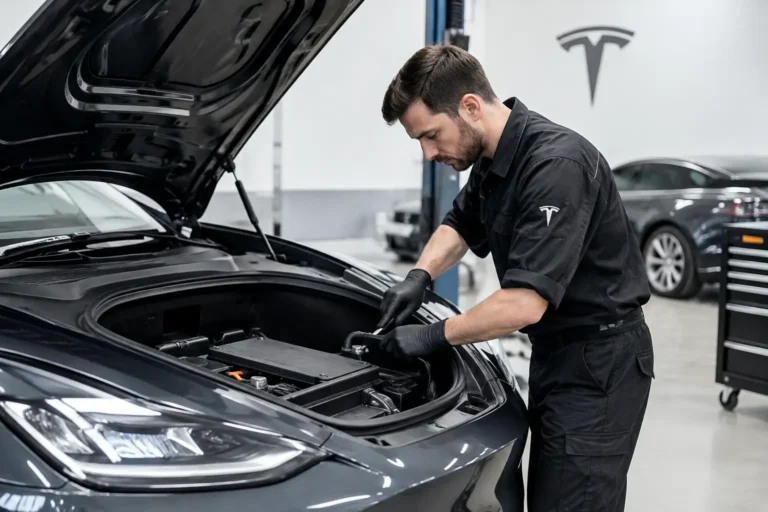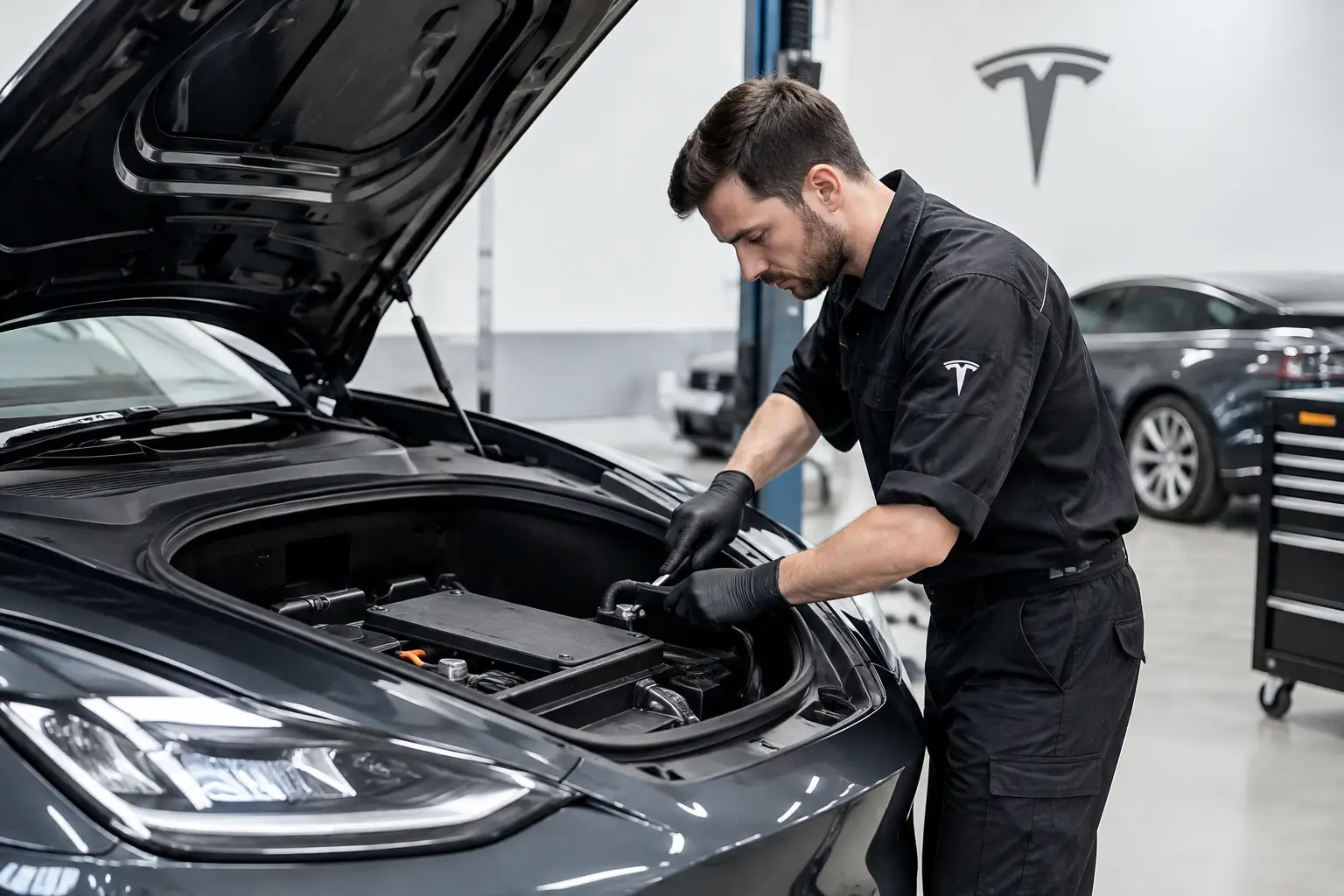
Searching for a Tesla technician in Burnt Mill Harlow usually means you want a clear answer to a practical question: can a local garage look after your electric car properly? The answer depends on the work required. A Tesla still needs tyres, brakes, suspension checks, air conditioning care, wheel alignment and fault diagnosis. However, any work involving high-voltage components requires the right training, safety procedures and equipment.
The best choice is not simply the nearest workshop or the one promising the cheapest price. It is a technician who understands where standard vehicle maintenance ends, where specialist EV safety begins, and who will explain that distinction honestly before any work starts.
What a Tesla technician should be able to handle
Electric vehicles have fewer conventional service items than petrol or diesel cars, but they are not maintenance-free. Road conditions, mileage and time still affect components that every driver relies on. A capable technician should be comfortable inspecting and repairing the mechanical systems around the electric drivetrain, while following correct processes for an EV.
For many Tesla owners, the most common workshop needs are tyre replacement, puncture repair, wheel balancing, alignment, brake inspections, suspension concerns and air conditioning faults. These jobs matter more than they may appear. A small alignment issue can shorten the life of expensive tyres, while brakes that are used less often due to regenerative braking can suffer from corrosion if they are not inspected and cleaned when needed.
A proper assessment should also look at warning lights, unusual noises, steering feel, vibration, charging-related concerns and 12V battery symptoms. The vehicle may be highly advanced, but the basic rule remains the same: investigate the cause before recommending a repair.
High-voltage safety is not optional
The orange cables and high-voltage components in an electric vehicle are not areas for guesswork. Technicians working around these systems need appropriate EV training, insulated tools where required, safe isolation procedures and a controlled workshop process.
This does not mean every job needs high-voltage work. Replacing tyres or assessing a worn suspension component is very different from working on a battery pack, inverter or drive unit. A trustworthy garage will tell you clearly whether the issue is within its scope or whether manufacturer support is the right route. That honesty protects both you and the vehicle.
When to book Tesla diagnostics
A warning message on the screen does not always mean a major failure, but it does deserve attention. Modern electric cars rely on multiple electronic control systems, sensors and communication networks. Reading a fault code is only the beginning. The technician should use it alongside live data, the vehicle’s history and a physical inspection to reach a sensible diagnosis.
Book diagnostics if you notice repeated alerts, reduced performance, an unfamiliar noise, charging interruptions, uneven tyre wear, a pulling sensation through the steering wheel or a change in braking feel. It is also worth arranging a check after a significant pothole strike or kerb impact. Damage may not be obvious from the outside, but alignment, tyres and suspension can be affected.
Be cautious of anyone who offers a fixed answer before examining the car. Diagnostic time is often the fairest approach because it allows the garage to identify what is actually wrong rather than replacing parts on speculation. You should know the diagnostic charge in advance, what checks it covers and how the findings will be reported back to you.
The maintenance areas Tesla owners should not overlook
Tesla ownership can reduce the need for oil changes and many engine-related repairs, but it does not remove the need for routine vehicle care. A practical maintenance plan is based on condition and use rather than following habits from an older petrol car.
Tyres deserve particular attention. Electric cars are heavy and deliver instant torque, both of which can accelerate tyre wear. Check pressures regularly, inspect the tread and sidewalls, and have the alignment checked if wear is uneven or the car does not track straight. Choosing tyres with the correct load rating and specification is essential, not an optional upgrade.
Brakes are another area where a technician adds real value. Regenerative braking reduces friction-brake use, which can mean discs and pads do not work hard enough to keep surface corrosion at bay, especially on cars used mainly for short local journeys. An inspection can identify sticking calipers, corroded discs or uneven pad wear before braking performance is affected.
Cabin filters and air conditioning should be treated as comfort and visibility items, not luxuries. A poorly maintained climate system can lead to weak airflow, unpleasant smells and ineffective demisting. For family cars and commuter vehicles, that is a problem worth sorting early.
Suspension and steering components also work hard on Essex roads. Knocks over bumps, a vague steering response or a change in ride height should be checked promptly. Leaving a worn component untreated can affect handling and create extra tyre wear.
Tesla servicing, software and warranty considerations
Not every task has the same route. A local independent EV-capable garage can often provide excellent support for tyres, brakes, suspension, air conditioning, alignment, body repairs and many diagnostic or maintenance concerns. Certain software functions, account-linked features, battery warranty matters and manufacturer-specific campaigns may need to go through Tesla.
That is not a drawback when the garage is upfront about it. Good vehicle care is about using the right specialist for the job, not forcing every issue into one workshop. Ask the technician whether the proposed work could affect your warranty, whether genuine or equivalent-quality parts are being used, and whether the work will be documented on your invoice.
For newer vehicles, it is sensible to keep all records together. Clear paperwork helps you track repairs, supports future resale and gives you a useful history if a concern returns. It also prevents misunderstandings about what has already been inspected or replaced.
Questions worth asking before you book
You do not need to be an EV expert to choose a technician with confidence. Start with a few straightforward questions: Does the workshop carry out EV work regularly? What training and safety processes do its technicians use? Can it explain the diagnostic findings in plain English? Will you receive a price before repairs are authorised?
It is also reasonable to ask whether the garage can source the correct tyres or parts, whether it offers wheel alignment after suspension or tyre work, and how quickly it can inspect an urgent concern. A premium service should feel organised, not confusing. You should never be left chasing updates or facing surprise charges after the work has been completed.
At AutoNet VIP, the focus is on giving Harlow drivers clear advice, modern diagnostics and repair recommendations that match the condition of the vehicle. If a job needs manufacturer involvement, that should be explained plainly. If it can be repaired safely and cost-effectively locally, you should understand exactly what is being done and why.
MOT checks for electric vehicles
An electric car still requires an annual MOT once it reaches the relevant age. It is not tested for exhaust emissions, but that does not make the test less useful. Tyres, brakes, lights, suspension, steering, seat belts, visibility and general roadworthiness all remain central to the inspection.
Preparing early can save time. Check that lights work, tyres are legal and free from damage, wipers clear the screen properly, and the windscreen is not obstructed in the driver’s view. If you have noticed a warning message, a noise or poor tyre wear, arrange an inspection before the MOT rather than hoping it will pass unnoticed.
A Tesla is a sophisticated car, but dependable ownership still comes down to sensible checks and qualified care. When something feels different, booking an assessment early is usually the easiest way to protect your time, your safety and the value of your vehicle.