A BMW badly worn auxiliary drive belt warning is not one to ignore until the next service. This belt may look like a simple rubber component, but on many BMW engines it drives vital accessories such as the alternator and air-conditioning compressor. If it slips, frays or breaks, the result can range from a flat battery and warning lights to overheating or, on certain engines, far more serious damage.
The sensible next step depends on what the car is doing now. A warning message with no unusual noise may allow a short, careful journey directly to a garage. A squealing belt, burning-rubber smell, battery warning light, rising temperature gauge or loss of steering assistance calls for the engine to be switched off safely and recovery arranged.
What the auxiliary drive belt does on a BMW
The auxiliary drive belt, also called the serpentine belt, sits on the outside of the engine and transfers power from the crankshaft to ancillary components. Its exact job varies by BMW model, engine and year. In many petrol and diesel BMWs, it helps run the alternator, air-conditioning compressor and, on some older designs, the water pump or power-steering pump.
That variation matters. Many newer BMWs use electric power steering and electric coolant pumps, so a failed belt may not cause immediate heavy steering or overheating. It can still stop the alternator charging the battery, however, leaving the vehicle reliant on stored electrical power. Modern BMWs use a great deal of electrical equipment, and a battery can discharge surprisingly quickly once charging stops.
On certain engines, a shredded belt can create a risk beyond the accessories it drives. Loose belt material can be drawn towards the front crankshaft seal area. If debris reaches places it should not, engine damage can follow. This is why a visibly damaged belt should be treated as a repair requirement, not a cosmetic advisory.
Signs of a badly worn auxiliary drive belt
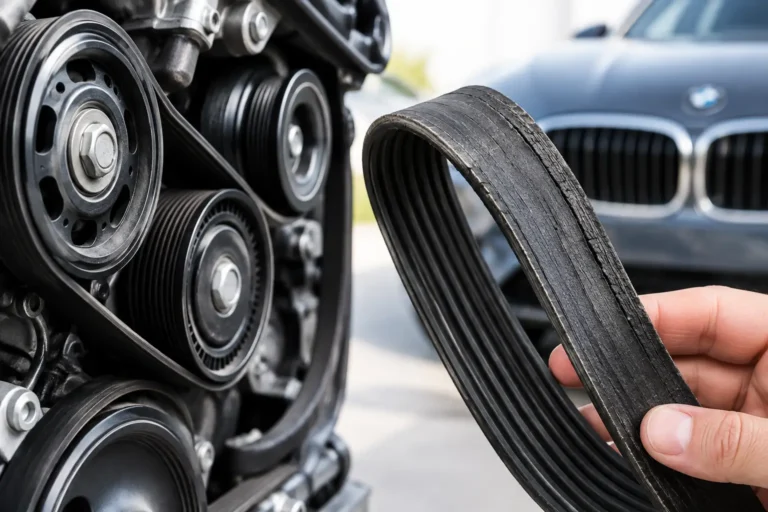
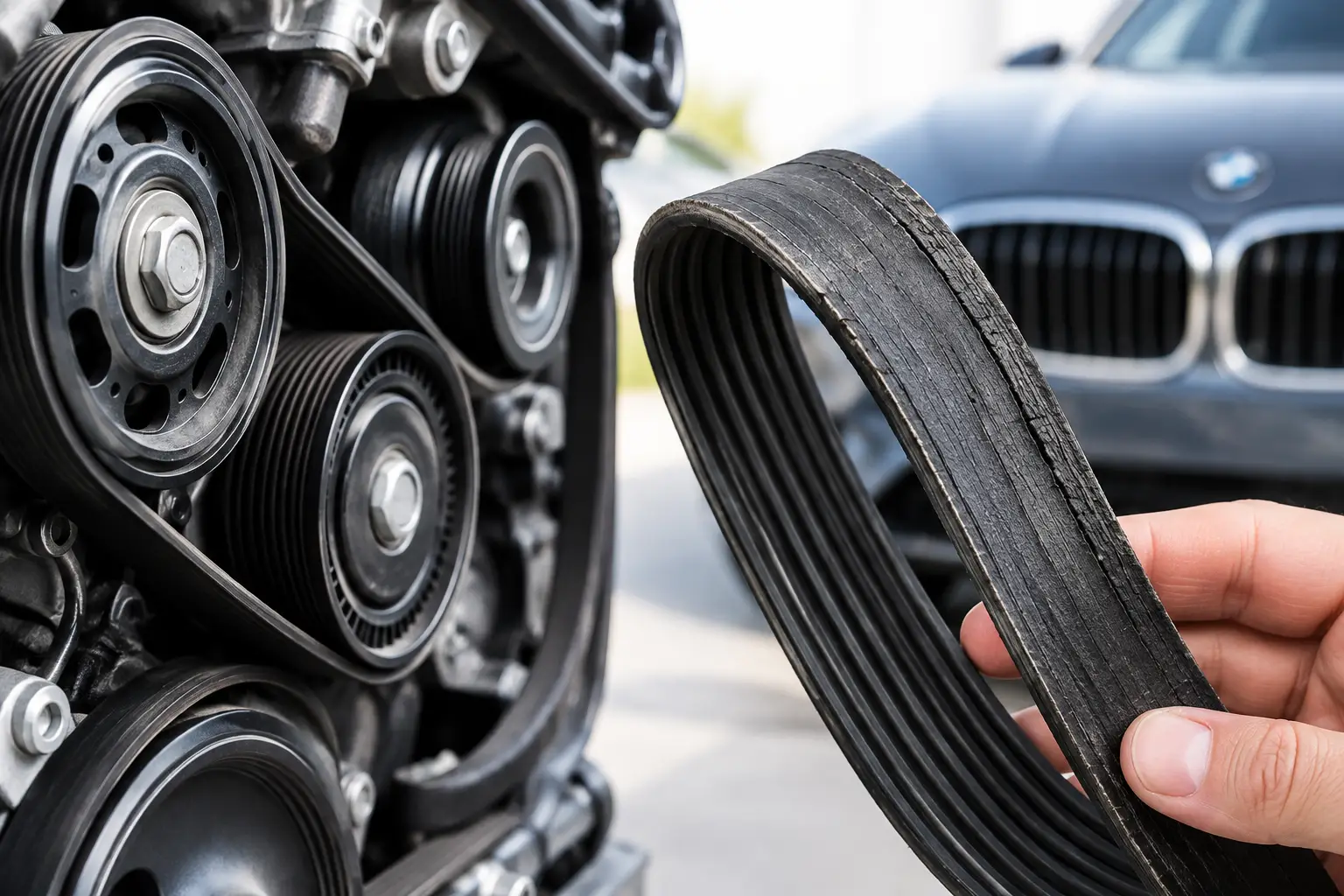
Rubber belts do not always fail without warning. During a routine inspection, a technician may find cracking across the ribs, frayed edges, glazing, missing sections or contamination from oil or coolant. These are clear signs that the belt needs further attention.
From the driver’s seat, the earliest symptom is often a chirp or squeal when starting the engine, pulling away or turning on the air conditioning. A slipping belt can also produce an occasional burning-rubber smell. Do not assume these noises are harmless simply because they disappear once the engine is warm.
A battery or charging-system warning is another common clue. It does not prove that the belt is at fault – the alternator, wiring and battery itself must also be tested – but a damaged or slipping belt is one possible cause. Other signs can include air conditioning that stops cooling properly, steering that suddenly becomes heavier on models with a hydraulic pump, or an engine temperature warning where the belt-driven system affects coolant circulation.
Why the belt may wear early
Age and mileage play a part, but auxiliary belts often deteriorate because another component is no longer working correctly. A weak tensioner may allow the belt to flap or slip. A rough idler pulley, seized alternator pulley or misaligned accessory can chew through a new belt in a short time. Oil from a leaking gasket or coolant from a hose leak can soften the rubber and reduce grip.
This is why replacing the belt alone is not always the right repair. A proper inspection should assess the belt, tensioner, idler pulleys, crankshaft pulley and driven accessories. The cause needs to be corrected, otherwise the same warning may return and the customer pays twice.
Is it safe to drive with a BMW badly worn auxiliary drive belt?
There is no one answer for every BMW. A technician who has inspected a lightly cracked belt may advise replacement soon and confirm that the car can be used cautiously until the booking. A belt that is splitting, heavily frayed, loose, noisy or leaving rubber debris around the engine bay should not be relied on for normal driving.
If the battery warning light appears while driving, reduce electrical load where it is safe to do so and head only to a safe stopping point or directly to a nearby repairer. Avoid an unnecessary journey, motorway driving or relying on the car to get you home if the warning is accompanied by noise or smell. Once battery voltage falls, warning lights can multiply and systems may begin shutting down.
Stop as soon as it is safe if you see an engine temperature warning, steam, a strong burning smell, sudden loss of steering assistance or clear signs that the belt has come off. Continuing to run the engine in these conditions can turn a straightforward ancillary-belt repair into a much larger bill.
What a proper BMW belt inspection involves
A reliable diagnosis starts with a visual inspection of the belt routing and condition. The technician checks for cracks, rib damage, contamination, uneven wear and signs that the belt has moved out of line. They will also listen for bearing noise and examine the tensioner and pulleys for play, roughness or poor alignment.
The charging system should be tested rather than guessed at. A healthy-looking belt does not rule out an alternator fault, while a battery warning light does not automatically mean the alternator needs replacing. Testing voltage output and battery condition helps identify the real fault before work is authorised.
If the belt has broken or shed material, the inspection should go further. The technician needs to establish why it failed and check that debris has not caused damage around the crankshaft area. The right scope of work depends on the engine fitted and the condition found, so clear advice before repairs begin is essential.
Replacement timing and cost factors
BMW service schedules and model-specific guidance should always take priority, but visual condition is just as important as age. Belts can deteriorate sooner on cars used for short trips, frequent stop-start driving, heavy accessory use or high-mileage commuting. A vehicle that has been sitting for a long period can also develop cracks as rubber hardens.
The price of replacement depends on access, engine layout and whether associated parts are required. Replacing a belt before it fails is usually modest compared with dealing with a breakdown, a damaged tensioner or a charging failure. If a tensioner or pulley shows wear, replacing it at the same time can be sensible because the labour overlaps and it protects the new belt.
Quality parts matter here. The belt must be the correct specification and fitted with the correct routing and tension. A cheap, poorly matched belt can be noisy, wear rapidly or slip under load, which defeats the purpose of the repair.
How to reduce the chance of repeat problems
Checking under the bonnet occasionally can catch obvious trouble early. With the engine off and cooled down, look for rubber dust, visible cracks, fraying or wet contamination around the belt area. Never put hands, tools or clothing near a running belt.
More importantly, act on new squeals, charging warnings and fluid leaks promptly. A small oil leak may seem unrelated to drivability, yet it can shorten belt life significantly. Regular servicing gives a garage the opportunity to spot these issues before they leave you stranded.
For BMW owners in Harlow and the surrounding area, AutoNet VIP can inspect the auxiliary belt system, diagnose related charging faults and explain the work needed before proceeding. A quick check at the first sign of wear is usually the calmest, fairest way to keep a small belt problem from becoming an unexpected day off the road.