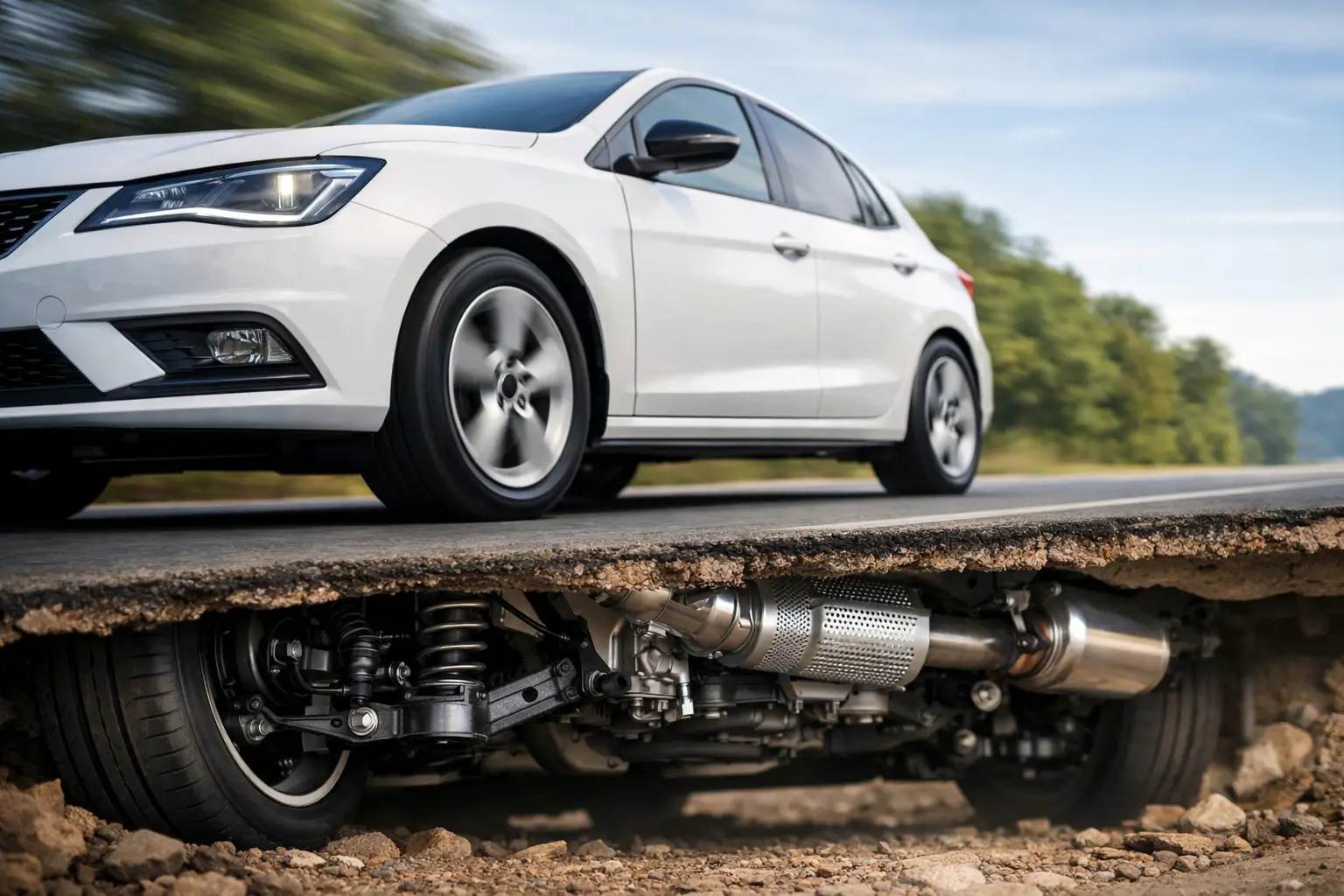
A quiet drive can be reassuring, but it is not a full health check. Your SEAT drives fine. But what’s happening underneath? Much of the wear that affects safety, MOT results and future repair costs develops out of sight – beneath the floorpan, behind wheels and around components you are unlikely to inspect on the driveway.
That does not mean every mark underneath your car is urgent. Surface rust, road grime and damp patches are common, particularly after a British winter. The concern is when small, hidden issues are left until they become a failed MOT, a breakdown or a repair that could have been prevented with an earlier inspection.
Why a smooth drive can hide a problem underneath
Your SEAT’s suspension, steering, brakes, exhaust and underbody are built to take punishment. Potholes, speed humps, flooded roads, kerb knocks and salted winter surfaces all take their toll. The car may still feel stable and comfortable because several parts can wear gradually before the change becomes obvious from the driver’s seat.
This is especially true of bushes, ball joints, shock absorbers and wheel bearings. A rubber bush can crack without producing a dramatic noise. A small fluid leak may only leave a trace on the undertray. Corrosion can begin beneath protective coatings, where it is invisible until a technician removes a wheel or gets the vehicle safely on a ramp.
SEAT models such as the Ibiza, Leon, Ateca and Tarraco share proven engineering, but they are not immune to age, mileage or local road conditions. A low-mileage car used mainly for short trips can still suffer from corrosion and sticking brakes. A motorway commuter may place more demand on tyres, suspension and wheel bearings.
What can be happening underneath your SEAT?
Corrosion: the difference between cosmetic and structural
Not all rust is the same. Light surface corrosion on exposed metal parts, such as a subframe or suspension arm, is often manageable and may simply need monitoring. Structural corrosion is different. If rust weakens a load-bearing area, a suspension mounting point, a brake pipe or a seatbelt anchorage, it can become a serious safety concern and an MOT failure.
The underside is exposed to water, salt and grit throughout the year. Cars that regularly travel short distances may not dry fully underneath, while vehicles parked on damp ground can also be more vulnerable. Protective underseal can help, but it needs checking rather than assuming it will last forever. If moisture gets trapped behind damaged coating, corrosion can progress where you cannot see it.
Suspension and steering wear
Suspension does far more than make a journey comfortable. It keeps tyres in contact with the road and helps the vehicle remain predictable when braking or cornering. Worn dampers, broken springs, tired top mounts and deteriorated bushes can affect handling long before they cause a complete failure.
You may notice a knocking sound over rough roads, a car that feels less settled through bends or uneven tyre wear. In some cases, there is no clear symptom at all. A ramp inspection can reveal a cracked bush, a leaking shock absorber or excess movement in a ball joint before it turns into a bigger job.
A single pothole strike is worth taking seriously if the steering wheel is no longer straight, the car pulls to one side or a new vibration appears. Wheel alignment may need correcting, but a good garage should first check for bent, damaged or worn components rather than simply adjusting the alignment figures.
Brake pipes, hoses and seized components
Your brake pads and discs are visible through the wheels, but important parts of the braking system run underneath the vehicle. Brake pipes can corrode, flexible hoses can deteriorate and rear brake mechanisms can seize when they are not used or serviced properly.
A corroded brake pipe may look minor until pressure is applied during a hard stop. That is why MOT inspections pay close attention to its condition. Warning signs include a soft brake pedal, reduced braking confidence, a vehicle that pulls under braking or a hot smell from one wheel after a journey. These symptoms need prompt inspection, not guesswork.
Fluid leaks and damaged undertrays
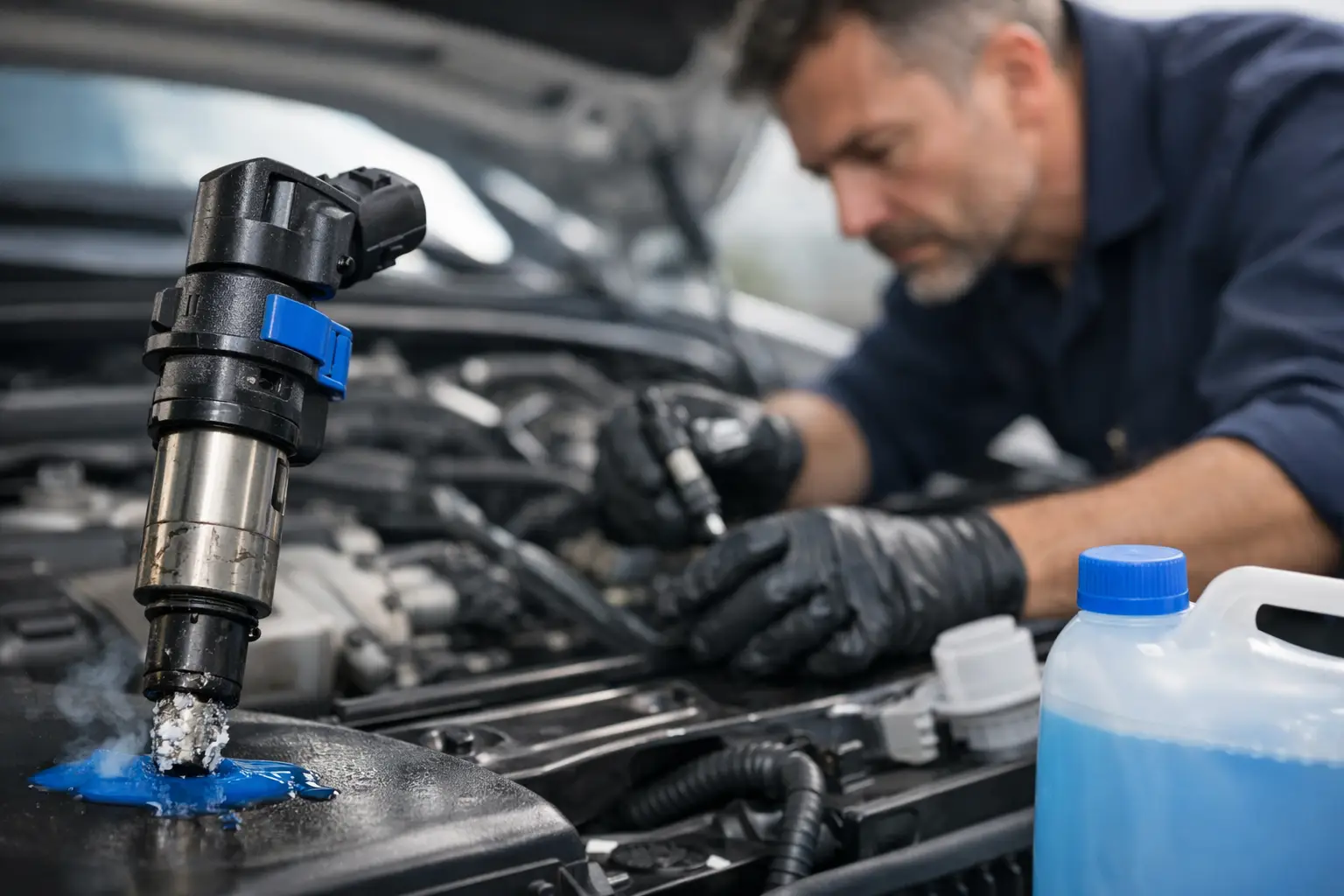
Oil, coolant, gearbox fluid and brake fluid each leave different clues, but identifying a leak from a driveway stain alone is difficult. Modern cars often have undertrays that catch or spread fluid, meaning the visible drip may not show where the leak started.
An engine oil mist around an older component may be monitored, while an active leak from the engine, gearbox or cooling system needs a proper diagnosis. On DSG automatic SEAT models, correct fluid condition and leak checks are particularly worthwhile because transmission repairs can be expensive if an issue is ignored.
Undertrays also protect wiring, pipework and mechanical components from water and debris. If one is loose, cracked or missing after an impact, it can cause rattles and leave vulnerable parts more exposed. It is a relatively simple issue to address early, but less so once road debris has damaged something behind it.
Exhaust damage and heat shields
Exhaust systems endure constant heating and cooling, as well as water and road salt. A small blow can become louder over time, while a loose heat shield may create an irritating metallic rattle that comes and goes at certain engine speeds.
Exhaust leaks are not simply a noise problem. They can affect emissions, fuel economy and MOT compliance. On petrol models, faults involving the catalytic converter or lambda sensors may also trigger an engine warning light. Diesel vehicles can have additional concerns around the diesel particulate filter and associated sensors.
Your SEAT drives fine, but what is worth checking?
A professional inspection underneath the car is the most reliable answer. A technician can assess components under load, look behind wheels and inspect areas hidden by covers. This is useful before an MOT, before a long journey, after a harsh winter or when buying a used vehicle.
Between garage visits, keep an eye out for changes rather than trying to diagnose the exact cause yourself. Book a check if you notice:
- a new knock, clunk, squeak or metallic rattle over bumps;
- vibration through the steering wheel, seat or brake pedal;
- uneven tyre wear, pulling to one side or a steering wheel that sits off-centre;
- fresh fluid on the ground where you park; or
- an advisory from a previous MOT mentioning corrosion, tyres, brakes, suspension or leaks.
MOT advisories deserve particular attention. They are not automatic failures, but they are a record of parts that may deteriorate before the next test. Addressing them at a sensible time gives you more choice over appointments and repairs, rather than forcing a decision when the vehicle has already failed.
The value of a proper underbody inspection
A thorough check should not be a vague glance with a torch. The vehicle needs to be raised safely so the technician can inspect the condition and security of suspension parts, steering joints, brake lines, exhaust sections, tyres, wheel bearings, undertrays and visible signs of leakage or corrosion.
The result should be explained in plain language. If a component needs attention now, you should know why, what the safety implications are and what the likely cost involves. If it is safe to monitor, that should be stated just as clearly. Honest advice is not about finding work on every vehicle. It is about helping you plan maintenance before small defects create avoidable disruption.
For hybrid and electric SEAT vehicles, underside checks also need extra care around high-voltage cabling, battery protection and cooling systems. These vehicles still have conventional brakes, tyres, suspension and steering, but their electrical systems require trained handling and suitable diagnostic equipment.
A well-maintained SEAT should feel dependable every day, not just on the test drive home from the garage. If you have heard a new noise, received an MOT advisory or simply cannot remember when the underside was last inspected, arrange a clear, practical vehicle check with a workshop that will show you what it has found and explain your options. At AutoNet VIP, that means straightforward advice, transparent pricing and repairs based on what your car genuinely needs.