That sound. You know the one. You’re pulling out of a junction on Edinburgh Way, or slowing down near the Queensgate roundabout, and your car lets out a high-pitched squeal that makes the driver next to you glance over. Your stomach drops a little. You tell yourself it’ll go away. But it doesn’t.
Squeaky brakes are one of the most commonly ignored warning signs in the UK — and one of the most costly mistakes drivers make. According to data from the Driver and Vehicle Standards Agency (DVSA) published in 2025, nearly 10 million MOT tests in 2024 ended in failure — roughly one in every five cars tested. Brake-related faults are consistently among the top reasons vehicles are turned away. And yet, the majority of those failures could have been avoided with earlier attention to warning signs — including that squeak your car has been making for the past two months.
Here at AutoNet VIP – Car Repairs, MOTs & Electric & Hybrid Specialists in Harlow, the mechanics have seen it all. Drivers from across Essex — Epping, Sawbridgeworth, Bishop’s Stortford, and right across Harlow — come in with brake problems that started as a quiet squeak and turned into a grinding metal-on-metal nightmare. The difference between a £90 brake pad replacement and a £600 disc and calliper job is often just a few weeks of putting it off.
This guide is for you if you’ve heard that squeak, that squeal, or even a subtle grinding that comes and goes. We’re going to walk you through the five most common reasons your brakes are making noise, what each one means for your safety and your wallet, and what you should do about it before your next MOT.
Why Squeaky Brakes Should Never Be Put on the Back Burner
Let’s be real for a moment. Life in Harlow is busy. Whether you’re commuting into London on the M11, doing the school run around Potter Street, or running a business that depends on your van — your car is not something you have the luxury of losing. So when a noise starts up that you’re not sure about, the temptation is to wait and see.
Here’s the problem. Brake-related issues are one of the leading causes of MOT failures in the UK. And the pattern our mechanics see repeatedly is this: a driver hears the squeak, leaves it for a month or two, the squeak becomes a grind, and by the time they book in, the brake discs are scored and the callipers are sticking. What could have been a quick pad change becomes a much bigger job.
The good news? Squeaky brakes are almost always fixable. Most causes are straightforward, well-understood, and sorted quickly by a trained pair of hands. The key is knowing what you’re dealing with — and acting before it escalates.
Cause #1 — Worn Brake Pads (The Most Common Culprit)
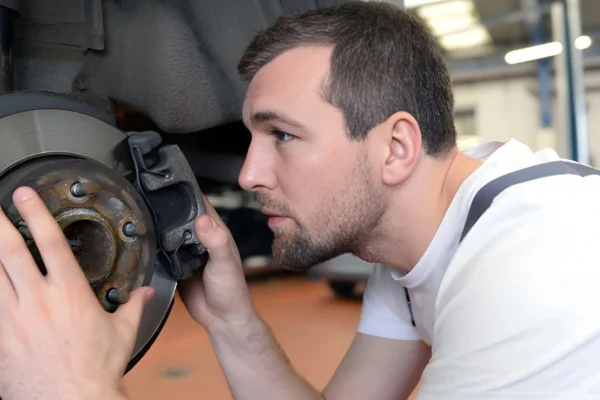
This is the big one. Worn brake pads are responsible for the majority of brake-related squeaking in vehicles across the UK, and Essex roads are no exception.
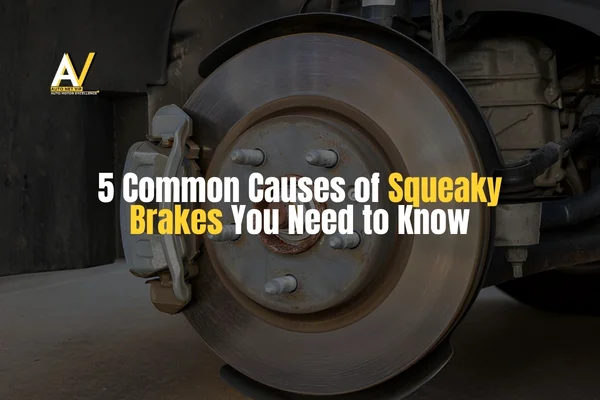
Here’s how it works. Every brake pad has a layer of friction material — that’s the part that grips your brake disc to slow the car down. As that material wears down through normal use, a small metal tab called a wear indicator is exposed. That tab is designed to do one thing: make a high-pitched squeak to tell you the pads need replacing. It is, quite literally, a built-in alarm system.
The most frequent cause of squeaky brakes is worn brake pads. Over time, the friction material on the pads wears down, and when it gets too thin, the metal underneath can contact the rotor, causing a squeaking noise. This sound serves as a warning that the pads need to be replaced to avoid further damage.
If you ignore the squeak long enough, the wear indicator stops being the problem — because now there’s no pad material left at all. Metal is grinding on metal. The squeaking turns into a deep, awful grinding noise, and your brake discs are being scored with every stop. At that point, you’re not just replacing pads. You’re replacing discs too, and potentially callipers.
What to look out for: A high-pitched squeal when braking, particularly during the first few stops of the day. If the noise has progressed to a grinding sound that doesn’t go away, get it checked immediately.
The fix: Brake pad replacement. This is one of the most routine jobs at any garage. At AutoNet VIP, the team sources quality pads suited to your specific make and model — not the cheapest generic alternative — and always inspects the discs while they’re in there to make sure nothing else has been affected.
Cause #2 — Surface Rust on Brake Discs (The Essex Weather Factor)
If your car has been sitting on the drive overnight — or for a few days while you’ve been away — and the brakes squeak sharply during the first mile or so before going quiet, this is almost certainly the cause.
Brake discs are made from cast iron. That’s great for heat dissipation and stopping power, but it does mean they’re vulnerable to surface rust — especially in a county like Essex, where damp mornings are a near-daily occurrence from October through to April. A thin layer of oxidisation forms on the disc surface overnight, and when you first apply the brakes in the morning, you hear a brief squeal or scraping as the pads clear that rust off.
If your brakes are squeaking only in the morning and the noise goes away after a few minutes into your journey, this is a sign of condensation on the rotors — a fairly common occurrence that should not cause too many issues.
The important thing here is the word “brief.” Surface rust squeaking should disappear within the first few braking applications. If the noise persists beyond that, it’s pointing to something else.
There is a longer-term concern here too. If a vehicle sits unused for an extended period — think several weeks in winter — the layer of rust can build up to the point where it starts genuinely wearing down the pads. Essex weather and irregular usage are a combination that mechanics at AutoNet VIP see regularly, particularly with older vehicles kept as second cars.
What to look out for: Squeaking only at the start of a journey, on damp mornings, that fades within a minute or two. This is generally low concern. Persistent squeaking that remains throughout your drive is a different matter.
The fix: In mild cases, regular driving clears surface rust naturally. In more advanced cases where the rust has caused uneven wear, a disc inspection is recommended. The team at AutoNet VIP can assess whether your discs have been affected during any routine service or MOT preparation check.
Cause #3 — Brake Pad Glazing (The Hard-Driving Problem)
This one catches drivers off guard because glazed brake pads often look fine from the outside. There’s no obvious wear, no metal tab showing. But the brakes squeal loudly and, worse, they don’t stop the car as well as they should.
Glazing happens when brake pads overheat repeatedly — through heavy braking on a long descent, aggressive stop-start driving, or simply running pads that aren’t suited to the vehicle’s weight and performance. The friction material hardens and develops a smooth, almost glassy surface. That glassy surface generates less grip on the disc, so your stopping distances increase — and it creates a loud, high-pitched squeal.
Glazing occurs when there is a build-up of heat on the brake components caused by hard or frequent braking, which eventually leads to the brakes hardening and reduces the levels of grip. It is also a common cause of loud squealing.
For drivers who do a lot of motorway driving on the M11 and A414, or those who tow caravans or trailers around the Essex countryside, glazing is more of a risk. It’s also something that happens when budget brake pads are fitted — materials that aren’t designed to handle heat properly.
What to look out for: Loud squealing under normal braking, combined with a feeling that the car is taking longer to stop. If your brake pedal feels less responsive than it used to, that’s a significant warning sign.
The fix: In mild cases, a controlled deceleration cycle can help deglaze pads. In most cases, replacement is the right call. The mechanics at AutoNet VIP will assess pad condition, heat damage, and disc surface quality as part of any brake inspection — and advise you honestly on whether replacement is genuinely needed.
Cause #4 — Debris and Contamination Caught Between Pad and Disc
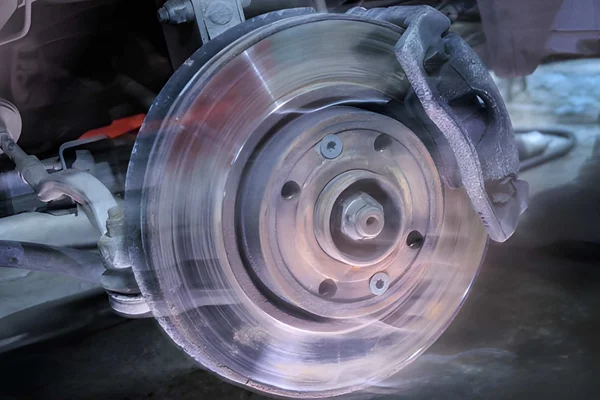
Essex roads, particularly the rural stretches around Harlow — through Matching, North Weald, and Roydon — throw up all manner of road debris. Grit, small stones, compacted mud, and even fragments of road surface can work their way between your brake pad and disc. When that happens, every time you press the brake pedal you’re grinding that debris into the disc surface.
The sound this creates ranges from a rhythmic clicking and squeaking that corresponds to wheel rotation, through to a sharper, grinding noise on braking. Unlike surface rust, this kind of debris contamination doesn’t clear itself after a few stops.
Brake dust and debris can accumulate between the brake pad and rotor, causing squeaking noises — often a temporary issue that can be resolved with a thorough cleaning of the braking components.
Contamination can also come from within the braking system. If a brake caliper develops a seal leak and brake fluid gets onto the pad surface, it compromises friction in a serious way. This is less common but more serious — brake fluid on pads dramatically reduces stopping power and the vehicle becomes dangerous to drive.
What to look out for: A rhythmic squeaking or clicking that corresponds to how fast you’re going — it speeds up as the car speeds up, and slows down as you decelerate. Also watch for brake fade or a pulling sensation to one side.
The fix: A thorough inspection and cleaning of the brake components, or pad replacement if the friction material has been compromised. Any evidence of a caliper leak needs to be addressed as a priority, not an advisory. If you’re in any doubt, book a diagnostic at AutoNet VIP — they’ll tell you exactly what’s happening, not just what you want to hear.
Cause #5 — Sticking Callipers (The Silent Danger)
This is the cause that concerns mechanics most, because drivers often don’t notice it until the car starts pulling to one side — or until the brake disc has been destroyed by continuous friction.
A brake calliper is the hydraulic clamp that squeezes the brake pad against the disc when you press the pedal. When everything is working properly, the calliper releases that pressure fully when you lift off the pedal, allowing the disc to spin freely. When a calliper sticks — due to corrosion, a seized piston, or a damaged slider pin — it keeps the pad pressed against the disc even when you’re not braking.
The result is continuous friction. Continuous heat. Continuous wear. Your fuel consumption goes up because the car is working against a dragging brake. Your pads wear down at an accelerated rate. The disc overheats and warps. And the whole time, you might hear a low-level grinding or squeaking that comes and goes — because the pressure isn’t constant, it fluctuates.
A sticky calliper or wheel cylinder can cause brake pads to be continuously forced against the rotor blade, creating a grinding, crunching, or squeaking sound.
Sticking callipers are more common on older vehicles and on cars that have covered high mileage on salt-treated roads. For Essex drivers who regularly use the A10 or A120 in winter — both of which are heavily gritted — corrosion builds up on brake components over several winters.
What to look out for: A persistent squeak or grinding that doesn’t correspond only to braking. One wheel that’s notably hotter than the others after a journey. The car pulling to one side when braking. A burning smell after driving.
The fix: Calliper inspection, and depending on the extent of the damage, either a rebuild or replacement. This is not a DIY job — brake callipers are safety-critical components and need to be handled by a professional with the right tools and knowledge. The team at AutoNet VIP – Car Repairs, MOTs & Electric & Hybrid Specialists in Harlow handles calliper work across all vehicle types, including electric and hybrid vehicles where the brake system operates differently due to regenerative braking.
What Squeaky Brakes Mean for Your MOT
With your MOT due, this matters directly. The RAC Foundation reported that easily avoidable MOT failures have risen by 133,000 over four years — and brakes are consistently in the top bracket of failure reasons. One in ten cars fails their MOT due to issues with the braking system.
The 2025 DVSA guidelines introduced stricter brake efficiency testing for vehicles over ten years old, which affects a significant number of Essex drivers running older vehicles as daily transport. If your car is a decade old and you’ve been hearing brake noise, the time to address it is before the MOT bay — not after.
The mechanics at AutoNet VIP carry out pre-MOT checks that include a full brake system assessment. They’ll check pad thickness, disc condition, calliper operation, brake fluid quality, and handbrake effectiveness — giving you a clear picture of where you stand before the official test. That’s far less stressful (and less expensive) than a failed MOT and a repair bill on top.
The Honest Truth About Brake Noise in Electric and Hybrid Vehicles
If you drive an electric or hybrid vehicle, brake maintenance works a little differently — and it’s worth knowing about.
EVs and hybrids use regenerative braking, which means the electric motor does much of the slowing-down work, harvesting energy back into the battery as it decelerates. Because the mechanical brakes are used less frequently, they can actually suffer from more surface rust and glazing than a conventional petrol car’s brakes — the pads and discs simply don’t get used often enough to stay clean.
If you drive a Nissan Leaf, Toyota Prius, or any other EV or hybrid and you’ve noticed brake squeaking, don’t assume it’s fine just because the car stops well. AutoNet VIP is one of the few garages in Harlow fully equipped and certified to work on electric and hybrid braking systems. Their team understands the nuances of regenerative braking and can give your EV’s brakes the specialist attention they need.
Looking After Your Brakes — What You Can Do Between Services
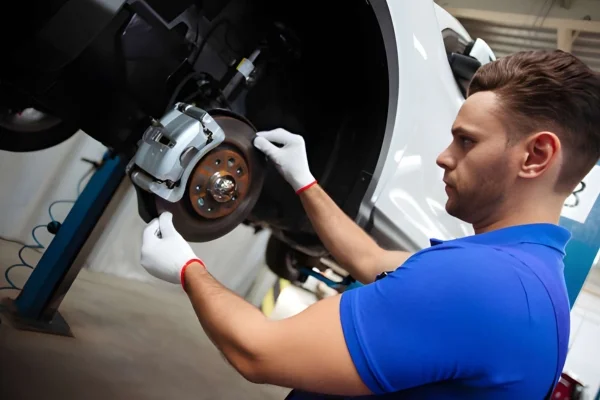
You don’t need to be a mechanic to give your brakes a reasonable chance of staying healthy. A few simple habits make a real difference.
Avoid riding the brakes on downhill sections — use engine braking where possible and apply pressure firmly rather than holding the pedal down gently for long periods. This reduces heat build-up and prevents glazing. Allow your brakes time to dry out after driving through standing water, particularly after heavy rain on roads around the Stort Valley. Listen to what your car is telling you — a sound that appears once might be surface dust; a sound that comes back consistently is asking for attention. And have your brakes inspected at least once a year, ideally as part of a full service. It costs far less than fixing the damage that builds up when problems go unchecked.
Your Next Step — Don’t Wait Until the Grind Gets Louder
Squeaky brakes are not something your car grows out of on its own. Every mile you drive with worn pads, glazed surfaces, contaminated components, or a sticking calliper is another mile of damage accumulating — and another step closer to a repair bill that could have been a fraction of the size.
The team at AutoNet VIP – Car Repairs, MOTs & Electric & Hybrid Specialists in Harlow is based at Unit 27, Harlow Business Centre, CM20 2HU — easy to reach from across Harlow, Epping, Sawbridgeworth, Bishop’s Stortford, and the surrounding Essex area. They carry out honest brake inspections, give you clear pricing before any work begins, and will never recommend something you don’t actually need.
Whether you drive a petrol, diesel, hybrid, or fully electric vehicle — the brake advice is the same. Get it checked. Get it sorted. Drive with confidence.
To book a brake inspection or get a free quote, call or WhatsApp AutoNet VIP on 07300 305705, or use the online booking link at staging.autonetvip.co.uk/. You can also read more about how AutoNet VIP approaches suspension and brake diagnostics in their detailed guide on vehicle safety inspections.
Your brakes work hard every single day. Give them the attention they deserve — and you’ll drive away knowing your car is genuinely safe.