That moment a dashboard light appears is rarely convenient. You are heading to work, doing the school run, or trying to get home, and suddenly you are wondering whether you can keep driving or need a car diagnostics warning light check right away. The problem is not just the light itself. It is the uncertainty. Some warnings point to minor issues, while others mean the car should be checked before a small fault turns into an expensive repair.
A proper diagnostic check removes the guesswork. Instead of replacing parts based on assumption or clearing a code and hoping for the best, a technician reads the fault data, checks live system information, and confirms what is actually causing the warning. That matters more than ever in modern vehicles, where one issue can affect engine performance, emissions, braking systems, driver assistance features, or battery management.
What a car diagnostics warning light check actually does
Many drivers assume a warning light check means plugging in a scanner, reading a code, and naming the faulty part. In reality, that is only the starting point. Fault codes tell you where the car has detected a problem, but they do not always tell you why it happened.
For example, an engine warning light may relate to a sensor reading outside its expected range. That could mean the sensor has failed, but it could also be caused by wiring damage, a vacuum leak, low system voltage, a software issue, or a separate component affecting the reading. A good diagnostic process looks beyond the code itself.
That is why experienced garages combine scan tool data with physical inspection, technical knowledge, and test procedures. On petrol, diesel, hybrid, and electric vehicles, the systems are more connected than many people realize. A warning on one module can trigger a response somewhere else, so accuracy matters.
Which warning lights need immediate attention?
Not every dashboard light means stop the car immediately, but some should never be ignored. Red warning lights usually indicate a serious issue or a system requiring urgent attention. Oil pressure, brake system, engine temperature, and charging system warnings fall into that category. If one of these appears, continuing to drive can increase damage or create a safety risk.
Amber or yellow lights often mean the vehicle is still driveable, but it still needs attention soon. Common examples include the check engine light, ABS, tire pressure monitoring, diesel particulate filter, and stability control warnings. These may not stop your journey in the moment, but delaying inspection can lead to poor fuel economy, failed emissions testing, reduced performance, or more expensive repairs later.
A flashing light is generally more urgent than a steady one. A flashing check engine light, for instance, can signal an active misfire that may damage the catalytic converter if the car keeps running under load.
Common reasons dashboard warning lights come on
The most familiar warning is the check engine light, but even that covers a wide range of faults. It can be triggered by ignition problems, emissions faults, fuel system issues, air intake leaks, sensor failures, or software-related faults. Sometimes the car still feels normal, which leads drivers to put it off. That is where costs can creep up.
ABS and brake warnings may point to wheel speed sensors, damaged wiring, low brake fluid, or faults in the control module. Battery and charging lights can mean a weak battery, alternator fault, poor ground connection, or electrical drain. On diesel vehicles, glow plug, AdBlue, or DPF warnings often relate to emissions systems that need proper testing rather than guesswork.
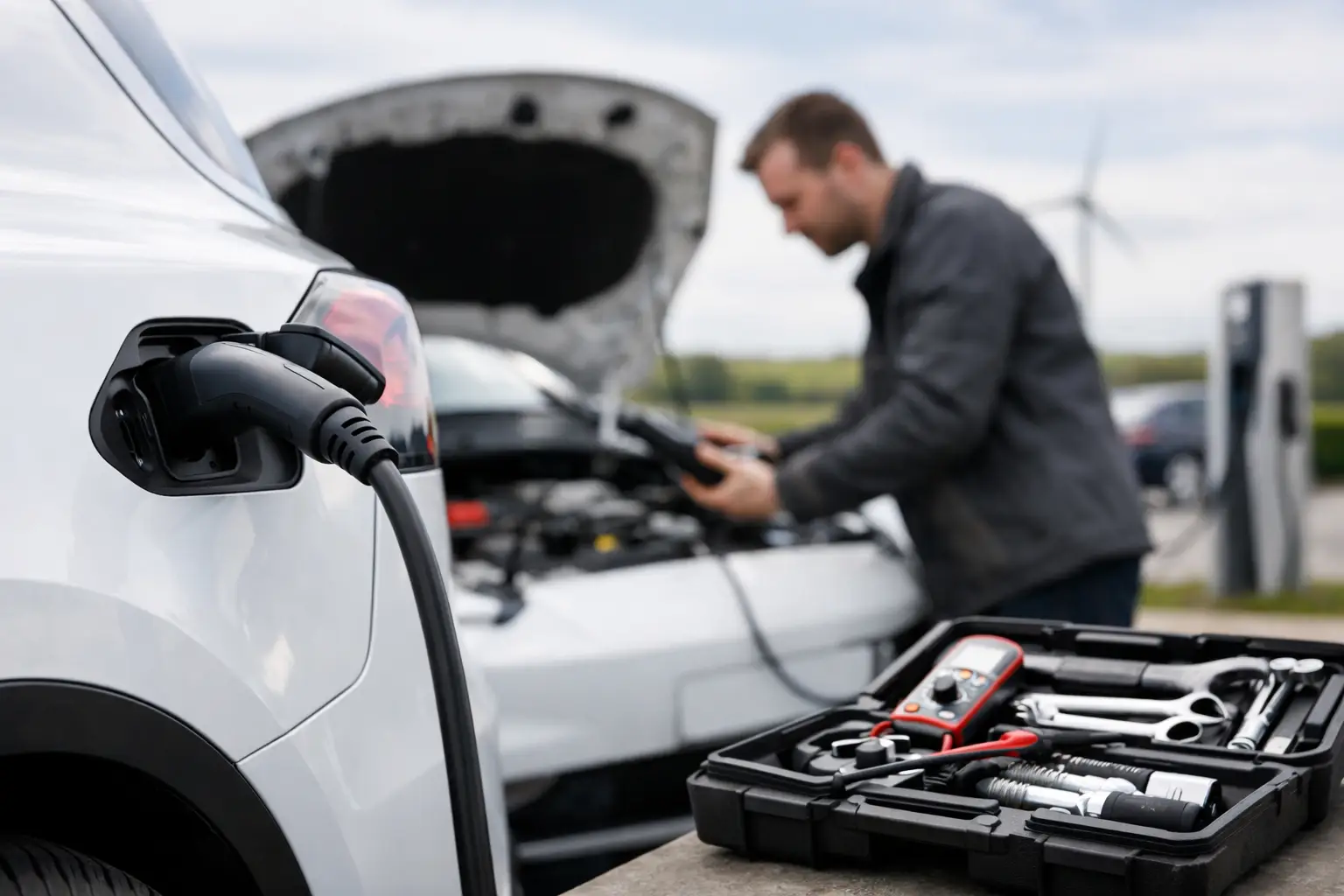
Hybrid and electric vehicles add another layer. Warning lights may involve battery management, charging systems, cooling circuits, insulation monitoring, or communication faults between modules. These systems need the right equipment and trained technicians, not just a generic scan tool.
Why a code reader at home is not always enough
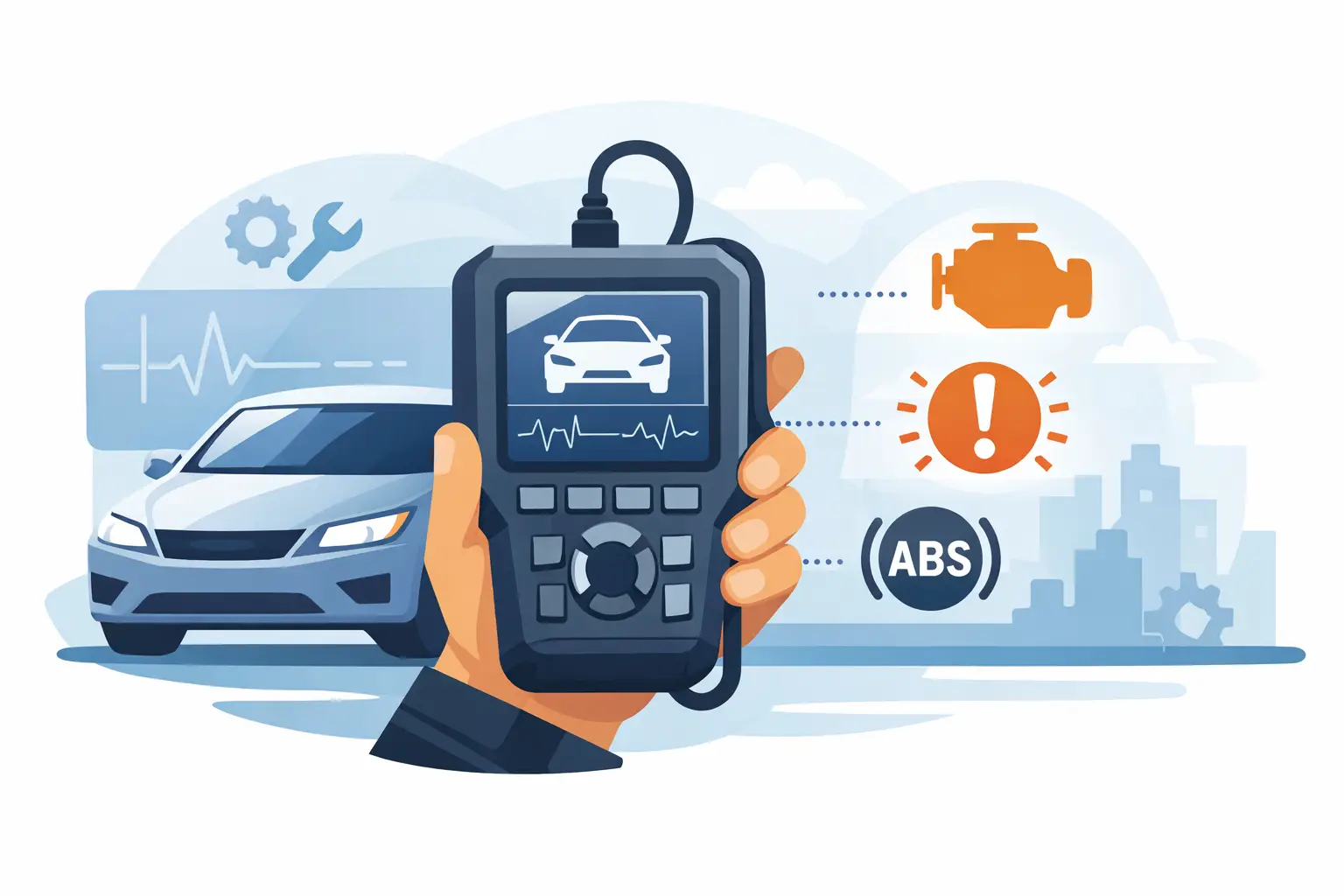
A basic code reader can be useful, especially if you want a general idea of the issue before booking the car in. It may tell you that the engine has logged a misfire or that an oxygen sensor is out of range. What it usually cannot do is confirm the root cause with confidence.
Many consumer tools only access limited systems. They may not read manufacturer-specific codes, body control modules, transmission data, airbag systems, or advanced driver assistance faults. They also tend to provide less live data, fewer guided tests, and no real interpretation of how one fault relates to another.
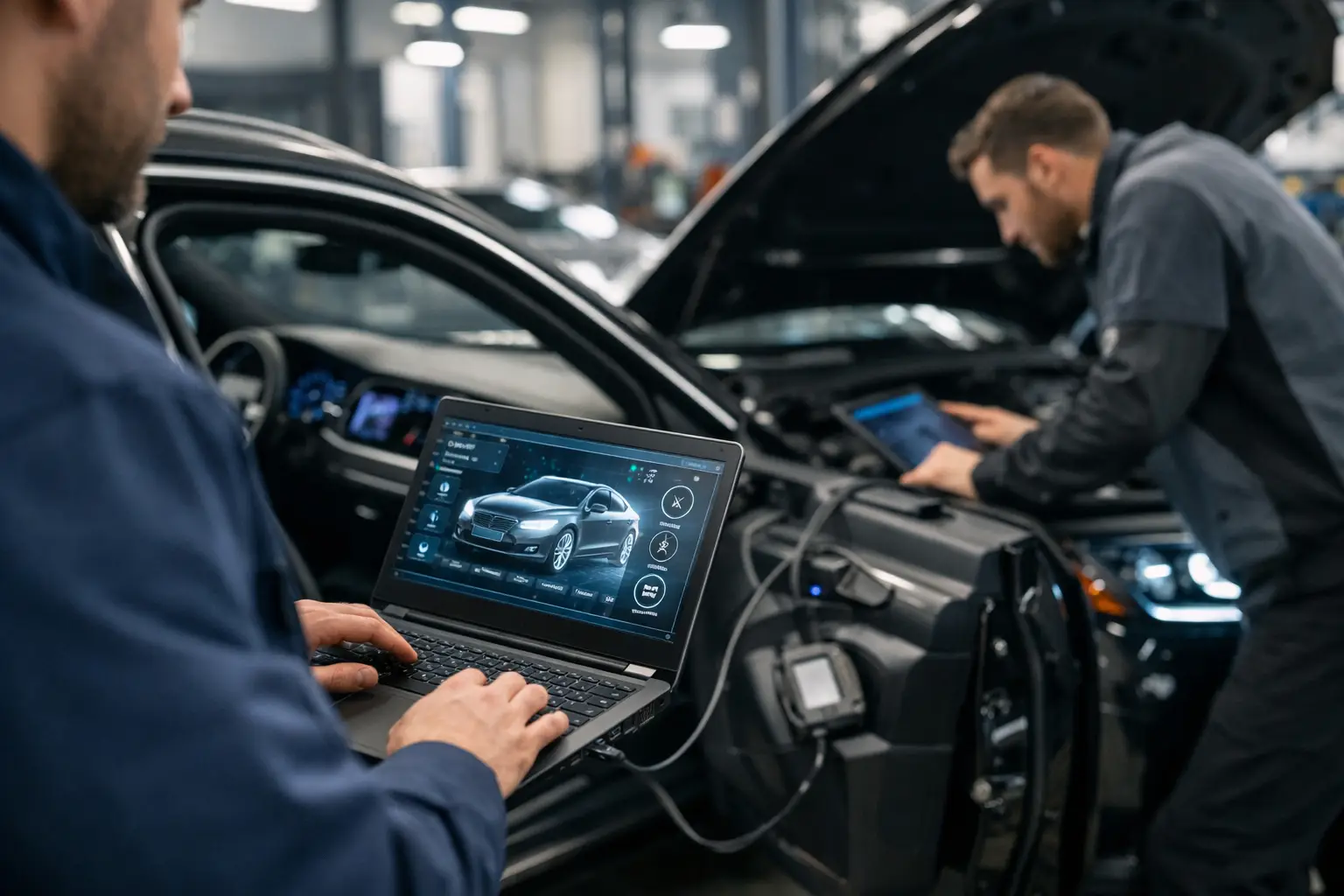
This is where proper workshop diagnostics make a difference. A technician is not just reading a screen. They are looking for patterns, checking freeze-frame data, testing circuits, verifying sensor values, and deciding whether the warning was caused by a failed component, a mechanical issue, or an intermittent electrical problem.
The value of a professional car diagnostics warning light check
A professional car diagnostics warning light check can save money, but not in the way people sometimes expect. It does not always produce the cheapest immediate answer. Sometimes the real fix is more involved than replacing the first part suggested by a code. What it does provide is a better chance of fixing the problem correctly the first time.
That means fewer unnecessary parts, less repeat labor, and less frustration. It also helps protect systems that are expensive to replace. If an engine issue is caught early, it may prevent catalytic converter damage. If a charging fault is diagnosed quickly, it may save the battery and avoid a roadside breakdown. If brake or ABS faults are identified properly, it helps keep the vehicle safe.
The best garages also explain the findings clearly. That matters because drivers should know whether the issue is urgent, whether the car is safe to drive, and what options they have if more than one repair path is possible.
What to expect during a warning light check
The process usually starts with a conversation. A technician will ask what light appeared, when it came on, whether the car feels different, and if any recent work has been carried out. Those details help narrow the diagnosis, especially for intermittent faults.
Next comes the electronic scan. This checks the relevant control modules for stored and pending fault codes. After that, the technician may review live data, perform a visual inspection, and carry out further testing. Depending on the issue, that might include battery testing, smoke testing for intake leaks, sensor checks, road testing, or manufacturer-specific guided functions.
Sometimes the answer is straightforward. Other times, diagnosis takes longer because the fault is intermittent or has more than one possible cause. Honest communication matters here. A good garage will tell you what has been confirmed, what still needs testing, and what the likely next step is.
Car diagnostics warning light check for newer vehicles
Modern cars are much more software-driven than they used to be. Even routine systems are monitored by multiple control units, and a fault in one area can trigger warnings in another. That is one reason warning light diagnosis has become more specialized.
Vehicles with start-stop systems, adaptive cruise control, parking sensors, lane assistance, hybrid drivetrains, and EV charging functions need broader diagnostic coverage. In some cases, repairs also require software updates, coding, recalibration, or system resets after parts are fitted.
This is why choosing a garage with the right equipment matters. On newer vehicles, the difference between a quick scan and a complete diagnosis can be the difference between solving the issue and chasing it for weeks.
When you should book in without delay
If the light is red, flashing, or accompanied by poor performance, unusual noises, smoke, overheating, hard starting, braking changes, or warning messages, it is best to stop taking chances and arrange inspection as soon as possible. The same goes for lights that return repeatedly after being cleared.
Even if the car seems fine, recurring warnings are a sign the fault has not truly gone away. Ignoring them often turns a manageable repair into something more disruptive. For daily commuters, families, and van drivers who rely on their vehicle, downtime is often more costly than the diagnosis itself.
At a well-equipped garage such as AutoNet VIP, the goal is not to confuse you with technical language or push repairs you do not need. It is to identify the fault accurately, explain it clearly, and help you make an informed decision based on safety, urgency, and cost.
A warning light is your car asking for attention, not always shouting disaster. The smart move is to find out what it is trying to say before the problem gets louder.