
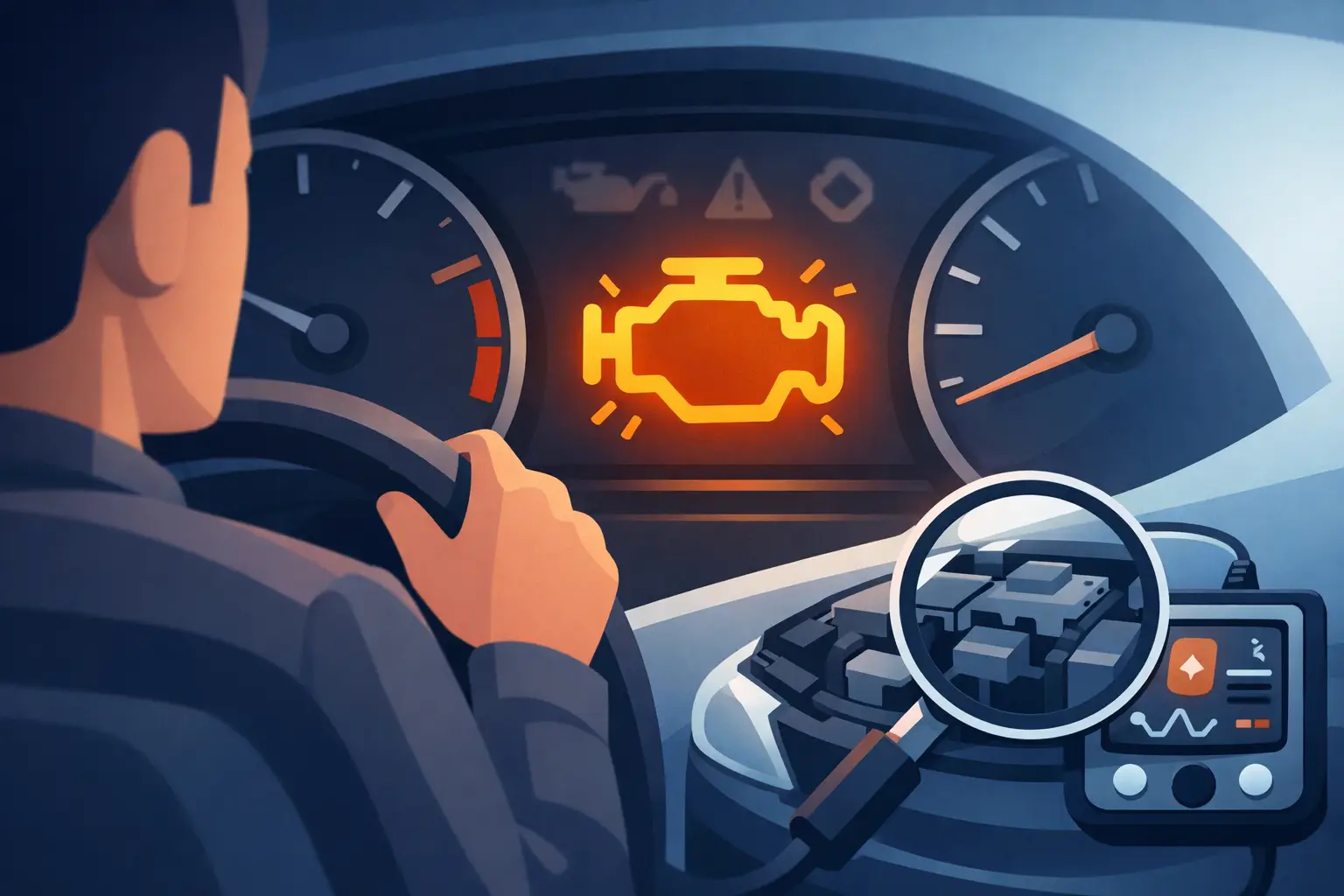
You start the car, glance at the dashboard, and there it is – that small warning light that has a way of making any trip feel uncertain. If you are asking, why is my engine management light on, the honest answer is that your vehicle has detected a fault somewhere in its engine, emissions, or electronic control system. Sometimes it is something minor. Sometimes it is the first sign of a problem that will get more expensive if you ignore it.
The good news is that the light does not automatically mean catastrophic engine failure. Modern vehicles are designed to monitor themselves constantly, and the engine management light is part of that early warning system. The key is understanding what the light might be telling you, how serious it could be, and what to do before a small issue turns into a breakdown.
Why is my engine management light on in the first place?
Your car’s engine control unit monitors data from sensors across the vehicle. It looks at things like fuel mixture, air intake, ignition timing, exhaust gases, and emissions performance. If something falls outside the expected range, it stores a fault code and may switch on the engine management light.
That means the light is not pointing to one single part. It is a warning that the system has seen something it does not like. In some cases, the car will still drive normally. In others, you may notice rough running, poor acceleration, increased fuel use, or a lack of power.
A steady light usually means the fault should be checked soon. A flashing light is more urgent and often points to a misfire serious enough to damage the catalytic converter. If the light is flashing, or the car is running badly, it is best not to keep driving unless absolutely necessary.
Common reasons the engine management light comes on
One of the most common causes is a sensor issue. Modern engines rely on sensors to measure airflow, oxygen levels in the exhaust, coolant temperature, and more. If one of those sensors fails or starts sending inaccurate readings, the engine control unit may trigger the warning light even if the engine itself is mechanically sound.
Spark plugs and ignition coils are another frequent culprit, especially on gasoline vehicles. If a cylinder is misfiring, the engine may feel shaky at idle or hesitant under acceleration. Left alone, that kind of fault can affect performance and damage other components.
Fuel system problems can also trigger the light. That might mean a faulty injector, low fuel pressure, or a problem with the fuel-air mix. You may notice poor throttle response, harder starting, or reduced gas mileage.
Emissions-related issues are high on the list too. A failing oxygen sensor, clogged catalytic converter, or evaporative emissions fault can all bring the light on. Sometimes something as simple as a loose or damaged gas cap can cause an emissions leak code.
Diesel vehicles add another layer. Problems with the EGR valve, DPF system, boost pressure, or glow plug circuit may all cause the warning to appear. Hybrids and newer vehicles can also trigger engine management warnings because of software faults or communication issues between modules.
What the car feels like matters
The warning light should never be judged on the light alone. The way the car is behaving gives important clues.
If the light is on but the vehicle still starts, idles, and drives normally, the issue may be minor or developing slowly. That does not mean you should ignore it. It means you may have time to book a diagnostic check before the problem worsens.
If the light comes on and the car suddenly loses power, goes into limp mode, shakes, stalls, or starts smoking, that changes the picture. Those symptoms suggest a more significant fault. Continuing to drive could increase repair costs or leave you stranded.
A flashing light is the clearest sign that you should take it seriously right away. In many cases, that points to an active misfire. Unburned fuel can overheat and damage the catalytic converter, which is far more expensive than fixing the original ignition issue.
Can I keep driving with the engine management light on?
It depends on how the vehicle is running.
If the light is steady and the car feels normal, you can often drive a short distance with caution and arrange a professional inspection as soon as possible. Avoid heavy acceleration, towing, or long trips until the fault has been checked.
If the light is flashing, or if the vehicle is running rough, struggling to accelerate, overheating, or making unusual noises, it is safer to stop driving and get advice. Driving in that condition may turn a repairable problem into a major engine or exhaust system repair.
There is also the issue of false reassurance. Some faults begin mildly and then escalate without much warning. What starts as an intermittent sensor issue can become a no-start fault later. What feels like a small misfire can eventually affect the catalytic converter, turbocharger, or fuel system.
Why a diagnostic scan matters
When people ask why is my engine management light on, they often want a quick answer based on the symptom alone. The reality is that guessing wastes time and money. The warning light only tells you that the system has detected a fault. It does not tell you exactly which part needs replacing.
A proper diagnostic scan reads the stored fault codes, but that is only the first step. Good diagnosis also means checking live data, confirming whether the fault is current or historic, and testing the related components before any repair is recommended.
This is where experience matters. A code for a lean running condition, for example, does not always mean the oxygen sensor is bad. It could be caused by an air leak, low fuel pressure, or a sensor wiring issue. Replacing parts based on guesswork often costs more than diagnosing the fault properly in the first place.
The most common mistakes drivers make
One mistake is ignoring the light because the car still seems fine. That can be expensive, especially if the problem affects emissions, combustion, or fuel delivery over time.
Another is using a generic code reader and assuming the first code gives the full answer. Basic readers can be helpful, but they rarely tell the whole story. A fault code points you in a direction. It is not a complete diagnosis.
Some drivers also clear the warning light without fixing the cause. That may switch the light off temporarily, but if the underlying issue remains, it will usually come back. More importantly, clearing the code can erase useful diagnostic information that would have helped identify the fault more quickly.
Why the light can come on after service or repairs
Not every engine management warning means a major new problem. Sometimes the light appears after recent work because a connector is loose, a sensor has been disturbed, or a fault memory was not reset correctly. In other cases, a separate issue has simply shown up around the same time.
That is why clear communication matters when your vehicle is inspected. A good garage should explain what the code means, what testing has confirmed, and whether the repair is urgent, recommended soon, or something to monitor.
For drivers who want straightforward advice without pressure, that kind of transparency makes a real difference. At AutoNet VIP, that is exactly how diagnostics should work – clear findings, fair recommendations, and no replacing parts that do not need replacing.
How to reduce the chances of seeing it again
You cannot prevent every warning light, because some sensor and electronic failures happen without warning. But regular maintenance lowers the odds. Keeping up with oil changes, spark plug intervals, air filters, fuel system care, and manufacturer service schedules helps the engine run within its normal range.
Paying attention to early symptoms also helps. A slight hesitation, rough idle, drop in fuel economy, or occasional hard start may not seem urgent, but those are often the clues that appear before the warning light does.
If your vehicle is diesel, short trips can increase the risk of DPF and emissions issues. If you drive a hybrid or newer electronically complex vehicle, software updates and accurate diagnostics become even more important. Different vehicle types have different weak points, which is why one-size-fits-all advice only goes so far.
When to book it in
If the engine management light has come on once and stayed on, book a diagnostic inspection soon. If it is flashing, or if the car is driving differently, treat it as urgent. The sooner the problem is identified, the better the chance of keeping the repair smaller, cheaper, and less disruptive.
Most warning lights are easier to deal with when caught early. A sensor fault may be simple. A misfire may only need ignition components. An emissions issue may be manageable before it affects other parts. Waiting is where minor faults become major repairs.
A dashboard warning light is frustrating, but it is also your vehicle giving you a heads-up. Take it seriously, get it checked properly, and you will usually save yourself time, stress, and money later.