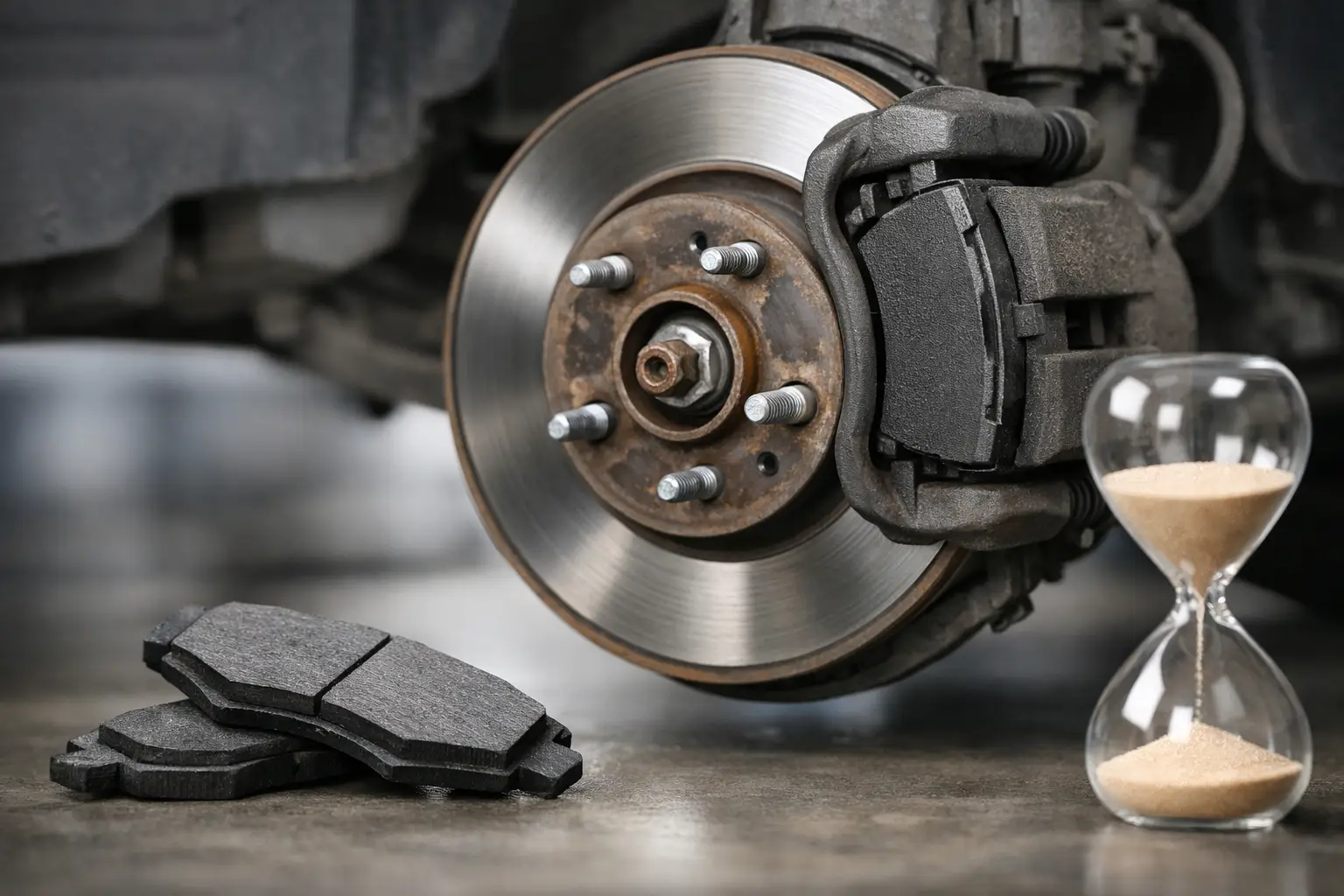
That slight squeal when you stop at a light usually gets your attention fast. And once it does, the next question is obvious: how long do brake pads last? The honest answer is that most brake pads last somewhere between 25,000 and 70,000 miles, but that range is wide for a reason. Your driving style, the type of vehicle you own, the roads you drive, and the brake pad material all make a real difference.
Brake pads are not designed to last a fixed number of years or miles. They wear down gradually every time you slow the car, and some drivers go through them much faster than others. A commuter in stop-and-go traffic will usually replace pads sooner than someone who spends most of their time cruising on the highway. That is why a proper inspection matters more than guessing.
How long do brake pads last on average?
For most drivers, a realistic average is around 30,000 to 50,000 miles. Some premium pads can last longer, and some vehicles with lighter use may stretch beyond that. On the other hand, heavy SUVs, performance cars, delivery vans, and cars driven mostly in city traffic can need brake pads much earlier.
Front brake pads usually wear faster than rear pads. That is because most vehicles place more braking force at the front when you slow down. If your front pads are worn, it does not automatically mean the rear pads are due at the same time, although both should always be checked together.
Hybrid and electric vehicles can be a little different. Because regenerative braking helps reduce how much work the friction brakes do, brake pads may last longer than they do on a gasoline or diesel vehicle. Even so, they still need regular inspection. Pads can wear unevenly, and brakes on lower-use systems can sometimes develop sticking components or corrosion rather than simply wearing out.
What affects brake pad life?
The biggest factor is how and where you drive. Frequent hard braking creates more heat and friction, which wears pads faster. Short trips in traffic are tougher on brakes than long, steady drives. Hills also increase brake use, especially if the driver rides the brakes downhill instead of braking firmly and then releasing.
Vehicle size matters too. A heavier vehicle takes more effort to slow down, so the pads work harder. That includes larger family vehicles, SUVs, vans, and cars carrying regular loads of passengers or equipment. If you tow a trailer, expect more brake wear than average.
Brake pad material also plays a part. Organic pads are often quieter but may wear more quickly. Semi-metallic pads are durable and common, but they can be noisier and harder on rotors. Ceramic pads tend to offer a good balance of low noise, low dust, and steady performance, though they often cost more. There is always a trade-off between price, feel, lifespan, and braking characteristics.
Driving habits can shorten brake pad life more than many people realize. If you brake late, follow too closely, or keep your foot lightly on the brake pedal, you are using up pad material unnecessarily. Smoother driving, more space between vehicles, and earlier lift-off can make a noticeable difference.
Signs your brake pads may be worn
Mileage gives you a rough guide, but the condition of the pads matters more than the number on the odometer. One of the most common warning signs is a squealing or screeching noise when braking. Many brake pads are designed with a wear indicator that makes noise when the material gets low.
Grinding is more serious. If the pad material has worn away too far, metal parts may begin contacting the rotor. At that point, what could have been a straightforward brake pad replacement may become a larger repair involving rotors as well.
You might also notice that the car takes longer to stop, the brake pedal feels less responsive, or the brakes feel uneven. Some vehicles will trigger a brake warning light, especially if equipped with electronic pad wear sensors. Another clue is visible brake dust or a vibration during braking, although vibration can also point to rotor issues rather than pad wear alone.
If the car pulls to one side when braking, do not assume it is just the pads. That can indicate a sticking caliper, uneven pad wear, brake hose issues, or suspension problems. It needs a proper check rather than guesswork.
How long do brake pads last if you drive in the city?
City driving is one of the fastest ways to wear brake pads down. Constant stopping, traffic lights, congestion, roundabouts, parking maneuvers, and lower-speed start-stop driving all add up. If most of your driving is urban, brake pads can wear out well before the higher end of the normal mileage range.
That does not mean every city driver needs new pads every year. It just means inspection intervals matter more. A car doing mostly local school runs and commuting may need brake attention much sooner than a car covering the same annual mileage on highways.
This is one reason service history is useful. A garage can compare previous brake measurements and tell whether your pads are wearing normally or faster than expected. That gives you a clearer timeline and helps avoid last-minute repairs.
Can brake pads last longer with proper maintenance?
Yes, but maintenance does not stop wear completely. Brake pads are consumable parts. What good maintenance does is help the braking system wear evenly, perform properly, and avoid damage that shortens component life.
Regular servicing gives technicians a chance to inspect pad thickness, rotor condition, caliper operation, and brake fluid condition. If a caliper is sticking, one pad can wear much faster than the other. If sliders are seized, braking can become uneven and create extra heat. Fixing those issues early can save money and keep the car safer.
Clean, well-functioning hardware matters just as much as the pad material itself. Especially in areas with wet weather, road salt, or long periods between brake use, components can corrode and start causing trouble before the pads are fully worn.
Drivers can help too. Leaving more room ahead, slowing progressively, and avoiding unnecessary heavy braking all reduce pad wear. It sounds simple because it is simple, but it works.
Should you replace brake pads and rotors together?
Not always. Brake pads and rotors wear at different rates, so one does not automatically mean the other. If the rotors are in good condition, within specification, and wearing evenly, replacing pads alone may be appropriate. If the rotors are heavily worn, scored, warped, or below minimum thickness, they should be replaced or machined if allowed by manufacturer limits.
This is where transparency matters. A good brake inspection should show you what is worn, what is still serviceable, and what can reasonably wait. Some drivers prefer to replace pads and rotors together for a fresh braking surface and more predictable performance. Others may only need pads. The right answer depends on condition, not sales pressure.
When should you get your brakes checked?
If you hear noise, feel vibration, or notice a change in braking performance, get the car checked as soon as possible. Even without symptoms, it is smart to have brakes inspected during routine service or tire work. Waiting until the pads are completely worn can turn a manageable maintenance item into a more expensive repair.
A lot of drivers ask for a brake inspection only once something feels wrong. The better approach is earlier and simpler. Checking pad thickness before a long trip, before winter, or during regular service gives you time to plan rather than react.
For drivers around Essex and London dealing with busy traffic, school runs, and frequent short journeys, brake wear can creep up faster than expected. At AutoNet VIP, that is exactly why brake checks are handled with clear measurements and honest advice, so you know what needs doing now and what can wait.
There is no perfect mileage number that fits every vehicle. If you want your brakes to last as long as they reasonably can, the best move is not guessing – it is paying attention early, driving smoothly, and having them checked before a small warning turns into a bigger repair.