A warning light on an EV can feel different from one on a gas car. It is not just about whether the vehicle still drives. It is about battery systems, software, charging faults, and high-voltage components that need the right training and equipment. That is why choosing an electric car repair specialist matters.
Electric vehicles are often described as simpler because they have fewer moving parts. That is true in some ways, but it can also be misleading. EVs may skip oil changes and some traditional engine work, yet they rely on complex control modules, cooling systems, power electronics, sensors, and high-voltage safety procedures. When something goes wrong, you do not want guesswork. You want clear answers, proper diagnostics, and repairs carried out by technicians who understand the system as a whole.
What an electric car repair specialist actually does
An electric car repair specialist is not just a mechanic who is willing to work on EVs. The role calls for specific knowledge of high-voltage systems, battery management, charging circuits, regenerative braking, inverter function, and manufacturer-led diagnostic processes. It also requires the correct safety procedures before any work begins.
On a modern EV, even a symptom that seems simple can point to several different causes. Slow charging might come from the onboard charger, the charging port, a software fault, a battery temperature issue, or a problem outside the car entirely. Reduced range might be normal in cold weather, or it could be linked to battery conditioning, braking drag, tire condition, or a fault in the energy management system. A specialist knows how to separate normal EV behavior from a real mechanical or electrical problem.
That matters because replacing the wrong part on an electric vehicle is expensive. Good diagnosis saves money. It also shortens downtime and helps avoid repeat visits for the same issue.
Why EV repairs are different from traditional car repairs
There is a reason many drivers look specifically for an electric car repair specialist instead of assuming any garage can handle the job. The tools, training, and safety standards are not the same.
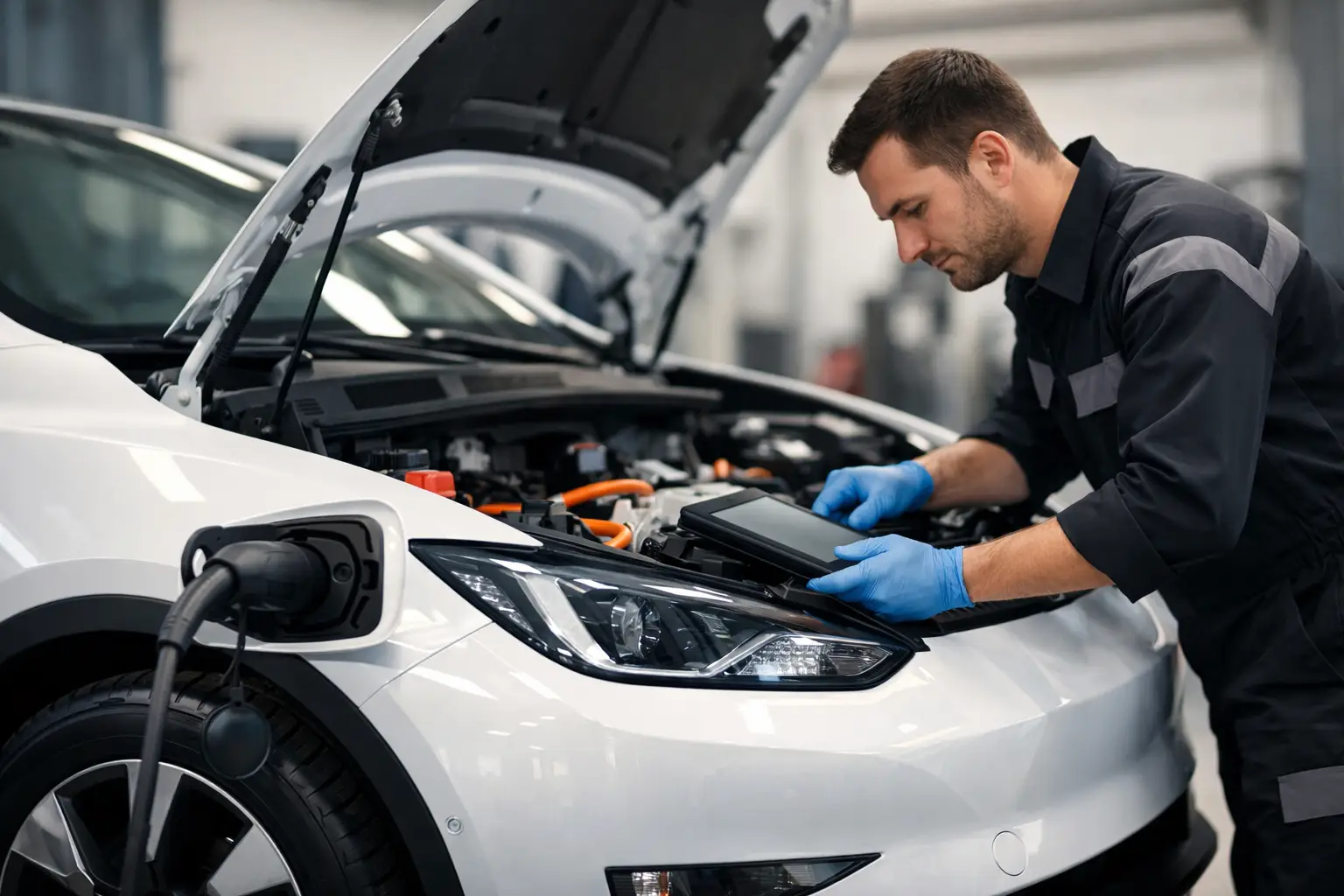
High-voltage systems must be isolated correctly before certain repairs. Battery packs and related components can pose serious risks if handled improperly. Beyond safety, EVs depend heavily on software communication between modules. A fault may not be visible through a basic inspection alone. In many cases, the real work starts with advanced diagnostics, live data analysis, and system testing.
This does not mean every EV problem is dramatic. Some repairs are routine. Tires, suspension parts, brakes, cabin filters, air conditioning systems, and 12-volt batteries still wear out like they do on other vehicles. The difference is that these jobs may still interact with EV-specific systems. Brake wear, for example, can be affected by regenerative braking habits. Thermal management can influence both battery performance and cabin comfort. The best workshop understands how the old-school mechanical side and the newer electrical side work together.
Common reasons drivers need EV specialist support
Most electric car owners do not book repairs because they want technical detail. They want the car fixed properly and explained clearly. The most common reasons for visiting a specialist usually start with a change in how the vehicle behaves.
Charging problems are near the top of the list. A car that will not charge, charges too slowly, or stops mid-session needs proper testing before anyone starts replacing parts. The issue could be in the vehicle, the cable, the wall unit, or the public charging source.
Warning lights and fault messages are another major reason. EVs are designed to monitor themselves closely, but the message on the dashboard is often broader than the actual fault. A drivetrain warning may relate to software, cooling performance, sensor communication, or power delivery.
Drivers also come in for reduced range, poor heater performance, unusual noises, braking concerns, suspension wear, or after-impact inspections. Even a minor collision can affect sensors, battery protection components, or charging hardware depending on where the damage occurred.
What to look for in an electric car repair specialist
The right garage should make you feel more informed, not more confused. Technical ability matters, but so does the way the work is explained.
Start with training and equipment. EV repair should never be treated as an add-on service with limited capability behind it. Ask whether the workshop handles diagnostics, routine maintenance, electrical faults, software-related issues, and high-voltage safety procedures in-house. A capable shop should also be comfortable explaining what they can test, what they have confirmed, and what the next step is.
Transparency is just as important. EV owners often worry that they will be told they need a major battery replacement when the real problem is something smaller. A trustworthy specialist explains the findings in plain language, gives a clear estimate, and talks through the repair options where appropriate. Sometimes the fix is straightforward. Sometimes the answer depends on the age of the vehicle, the value of the repair, and whether the issue sits within a wider pattern.
That is where a modern full-service garage has an advantage. If the same team can handle diagnostics, mechanical repairs, electrical testing, tires, brakes, suspension, and routine service work, you are less likely to be sent from one place to another while the problem drags on.
Routine service still matters on an EV
One of the most common misunderstandings about electric vehicles is that they barely need maintenance. They usually need less than a gas car in some areas, but less does not mean none.
EVs still need inspections, brake checks, tire monitoring, suspension assessment, cabin filter replacement, air conditioning service, fluid checks where applicable, and software review. Because electric cars are often heavier than their gas equivalents, tires and suspension components can see significant wear. Instant torque can also accelerate tire wear if alignment is off or driving style is aggressive.
Brake systems deserve attention too. Regenerative braking can reduce wear on pads and rotors, but that can create its own issue if friction brakes are not used enough and begin to corrode or stick. A specialist understands those patterns and can spot problems before they become expensive.
Battery concerns – what drivers should know
Battery problems are the issue most EV owners worry about first, and often the least understood. Not every drop in range points to battery failure. Weather, driving speed, tire pressure, accessory use, charging habits, and route type can all affect efficiency.
A proper battery-related inspection looks at more than one number on a screen. It may involve checking fault codes, cell balance data, charging performance, thermal behavior, and the overall health signals the vehicle provides. Sometimes the result is reassuring. Sometimes it identifies a genuine concern early, which is exactly what you want.
This is another reason specialist diagnosis matters. Battery systems are too costly for assumptions. You need evidence-based testing and honest advice about whether the issue is urgent, manageable, or simply part of normal EV ownership.
The value of clear communication during EV repairs
For most drivers, confidence in a repair comes from understanding what is happening. That is especially true with electric vehicles, where the systems can feel less familiar.
A good workshop will tell you what symptoms they have confirmed, what tests have been carried out, and whether the repair is definitely required or still under investigation. That level of communication builds trust because it removes the feeling that you are being asked to approve expensive work without context.
At AutoNet VIP, that customer-first approach matters just as much as technical capability. Drivers want a local garage that can explain EV issues clearly, price repairs fairly, and carry out the work with the right tools and training.
When to book sooner rather than later
Some EV issues can wait a few days. Others should be checked quickly. If the vehicle will not charge properly, loses power unexpectedly, shows repeated warning messages, develops unusual noises, or behaves differently under braking, it is worth getting it inspected as soon as possible.
The same applies after an impact, even if the visible damage seems minor. Modern electric vehicles pack a lot of sensitive systems into a tight space. Early checks can prevent a smaller issue from becoming a larger and more expensive one.
Choosing an electric car repair specialist is really about protecting both your vehicle and your peace of mind. The best repairs are not just technically correct. They are clearly explained, fairly priced, and carried out by people who know what they are looking at. If your EV is showing signs that something is off, getting the right diagnosis early is usually the smartest move.