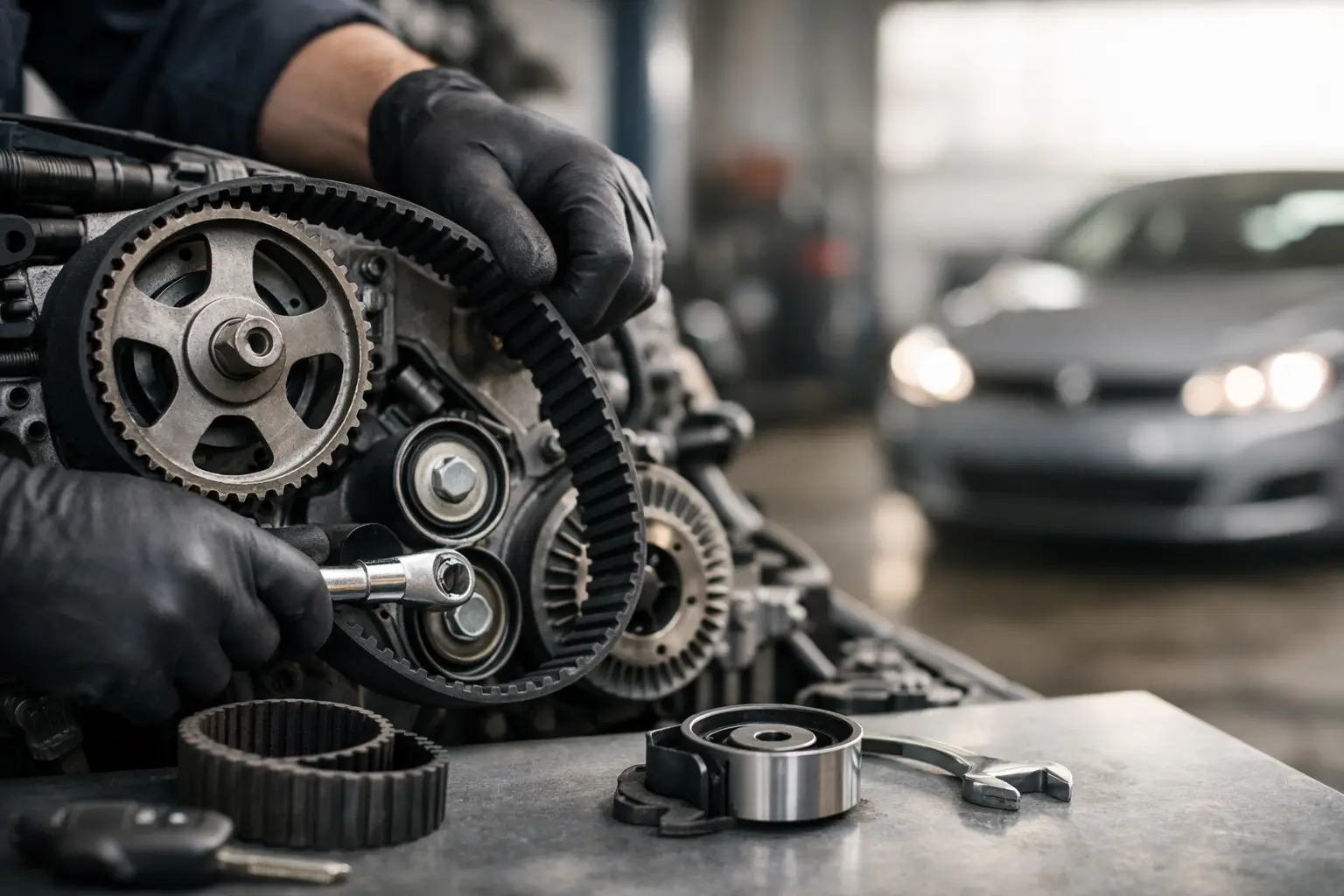
A cambelt can look perfectly ordinary from the outside, yet it controls one of the most precise jobs inside your engine. If it fails, the result can be far more than a breakdown at the roadside. This cambelt replacement guide for the UK explains when to replace yours, what affects the price and why acting before the deadline is usually the most cost-effective choice.
What a cambelt does and why it matters
A cambelt, also called a timing belt, keeps the crankshaft and camshaft turning in the correct sequence. Put simply, it ensures that the engine’s valves open and close at exactly the right moment as the pistons move.
On many modern engines, there is very little clearance between the valves and pistons. If the cambelt snaps or slips, they can collide. That may bend valves, damage pistons, harm the cylinder head and, in severe cases, require an engine rebuild or replacement.
Not every vehicle has a cambelt. Some use a timing chain, while others use gears. A timing chain is not automatically maintenance-free, either, but it follows different inspection and replacement guidance. The surest way to identify what your car needs is to check its service schedule using the registration number and exact engine specification. Model names alone are not enough, as the same car can be fitted with different engines.
When should a cambelt be replaced?
There is no single UK interval that applies to every vehicle. Manufacturers set their own limits, usually based on mileage, age or whichever comes first. A car that has covered low miles can still need a cambelt replacement because rubber deteriorates over time.
Many intervals fall somewhere between 40,000 and 120,000 miles, or around five to ten years. Those figures are only a broad guide, not a reason to postpone a booking. The correct interval can vary significantly between petrol and diesel engines, and even between different versions of the same engine.
Service history matters just as much as the odometer. If you have bought a used car and there is no itemised invoice confirming that the cambelt was changed, it is sensible to treat the work as due. A stamped service book is helpful, but a detailed invoice showing the date, mileage and parts fitted gives much stronger reassurance.
Mileage is only part of the picture
Short journeys, frequent cold starts, long periods parked up and harsh operating conditions can all affect components around the belt. Oil contamination is another concern. A leaking seal can allow oil onto the belt, weakening the material and increasing the risk of failure.
Some engines use a belt that runs in oil, often called a wet belt. These need particularly careful attention to the manufacturer’s oil specification and service intervals. Using the wrong oil, or extending oil changes beyond the recommended schedule, can contribute to belt deterioration. This is a job for a garage that understands the requirements of your particular engine, rather than a one-size-fits-all service.
Warning signs are not a safe replacement plan
Drivers often ask whether a failing cambelt makes a noise. Occasionally, there may be a ticking sound, misfire, rough running or difficulty starting, but these symptoms can also point to many other faults. More importantly, a cambelt can fail with little or no warning.
Do not wait for a dashboard light. Most cars do not have a warning light that says the cambelt is worn. An MOT is not a cambelt inspection either, because the belt is normally enclosed behind covers and cannot be fully assessed as part of a routine test.
If you notice an oil leak around the timing cover, unusual engine noise, poor running or a recent loss of power, arrange diagnostics promptly. The garage can investigate the underlying cause and advise whether the timing system needs attention. If the replacement date is approaching, however, scheduled preventative work is the safer approach.
What should be replaced with the cambelt?
A proper cambelt job is about more than fitting one new belt. The belt works with tensioners, guide rollers and, on many cars, the water pump. These parts have a similar service life and can cause just as much damage if they fail after the belt has been replaced.
For that reason, a quality replacement normally includes a cambelt kit containing the belt, tensioner and relevant rollers. Where the water pump is driven by the belt, replacing it at the same time is often good value. The labour to access it has already been carried out, and it reduces the chance of paying for much of the same work again later.
The exact scope depends on the engine. Some vehicles also require auxiliary belts, bolts, seals or fresh coolant. A trustworthy garage should explain what is included in the quotation, what is recommended and why. That gives you a fair comparison between quotes, rather than choosing a low headline price that excludes essential components.
How much does cambelt replacement cost in the UK?
Cambelt replacement costs vary because access varies. On one engine, the belt may be reasonably straightforward to reach. On another, substantial dismantling is needed, which increases labour time. Parts quality, the water pump, engine layout and any repairs discovered during inspection also affect the final figure.
The cheapest quote is not always the best value. Correct timing procedures matter, and an error during installation can lead to poor running or serious engine damage. The job should be completed using manufacturer repair data, appropriate locking tools and quality replacement parts.
Before approving work, ask whether the quote includes the cambelt kit, tensioners, water pump if applicable, coolant, auxiliary belt, labour and VAT. It is also reasonable to ask what warranty is provided on parts and workmanship. Clear answers are a sign that you are dealing with a garage that takes responsibility for the repair.
A practical cambelt replacement guide for UK drivers
Start by finding the manufacturer’s interval for your exact vehicle. Your owner’s handbook and service records may help, but a garage can confirm the schedule from the registration number, vehicle identification details and engine code where needed.
Next, check whether there is evidence of a previous replacement. Look for an invoice rather than relying on a seller’s memory or a handwritten note. If the paperwork is missing and the car is close to the likely age or mileage limit, book an inspection and discuss replacement rather than gambling on an unknown belt.
When booking, share any relevant details: the car’s registration, current mileage, service history and whether there have been leaks, noises or running problems. This allows the workshop to order the correct kit and give a more accurate estimate. It also avoids delays on the day.
After the work is complete, keep the invoice in the vehicle file and note the next due date and mileage. This protects you from uncertainty later and can make the car easier to sell. For busy families, commuters and van owners, adding a service reminder to the calendar is a simple way to avoid an expensive oversight.
Choosing the right garage for cambelt work
Cambelt replacement is planned maintenance, but it is not a minor service item. Choose a garage that can identify the precise engine, follow the correct timing procedure and explain the work without confusing jargon.
At AutoNet VIP in Harlow, our technicians use professional diagnostic equipment and repair information to assess the needs of the vehicle in front of us. We explain the recommended work clearly, provide transparent pricing and can look after related maintenance at the same visit where appropriate.
A cambelt replacement may feel easy to delay when the car is driving well. Booking it on time turns an uncertain risk into a controlled maintenance job, helping you keep your vehicle dependable for the journeys that matter.