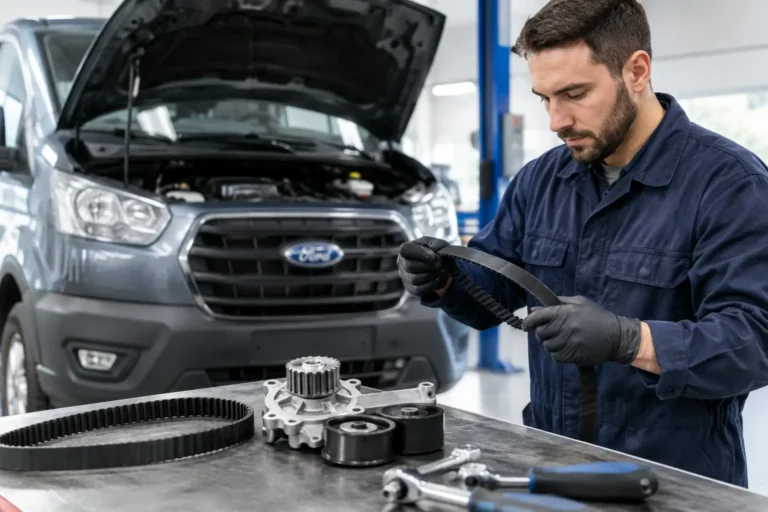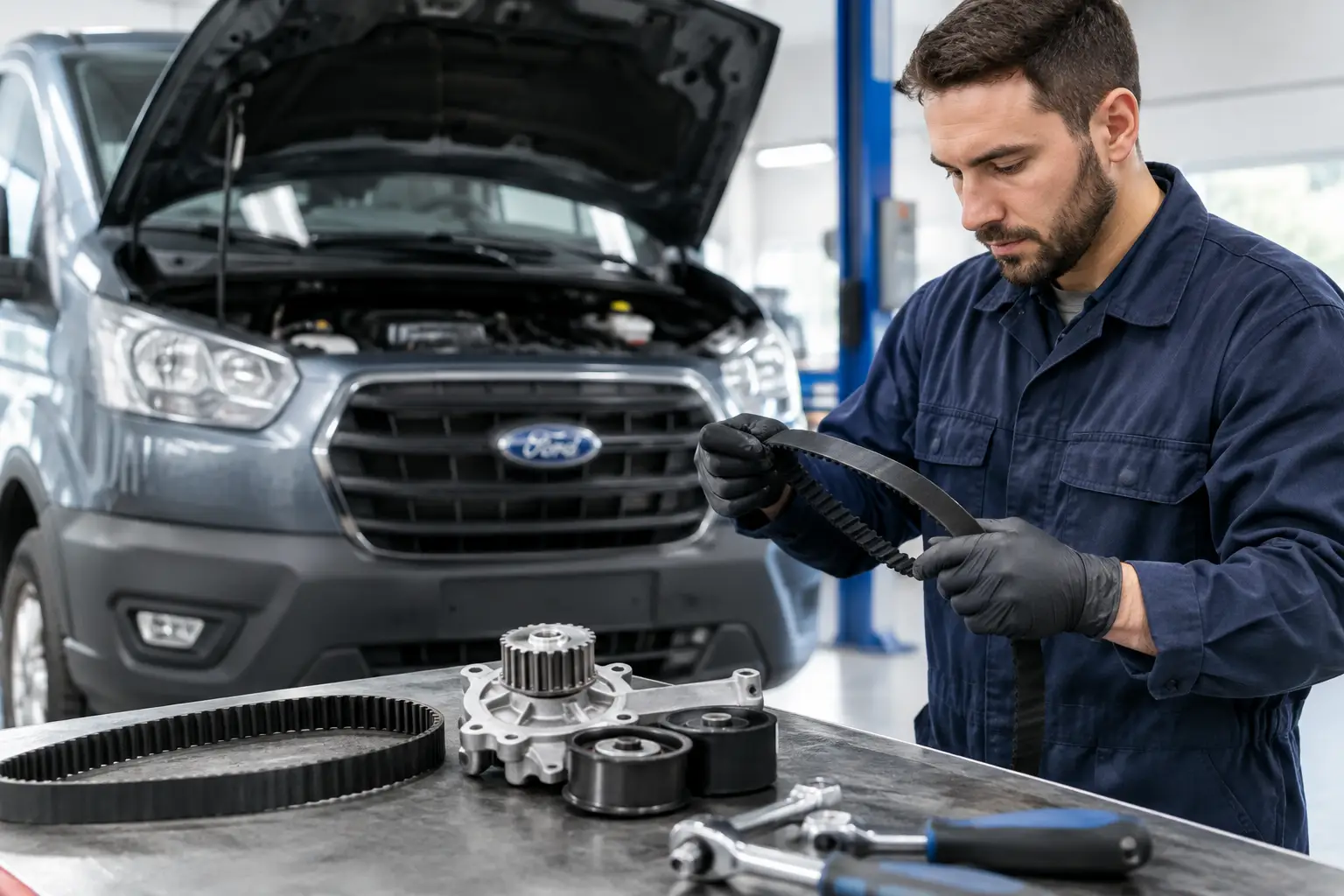
A Harlow Ford Transit wet belt repair – where we found the problem before failure – is always a better outcome than recovering a van after the engine has lost timing. In this case, the warning signs were not dramatic. The vehicle was still running, still working, and still needed by its owner. But a careful inspection revealed that the timing belt was deteriorating in oil, creating a risk that could have turned into major engine damage.
For Transit owners, especially those covering high mileage for work, this is exactly why preventative maintenance matters. A wet belt can fail quietly. By the time a van breaks down, the repair can be far more involved than the belt replacement itself.
What is a wet belt on a Ford Transit?
Many Ford Transit models use a timing belt that runs inside the engine and is lubricated by engine oil. This is commonly known as a wet belt or belt-in-oil system. It has been designed to reduce noise and friction, but it also means the belt’s condition is closely linked to the correct oil, the quality of servicing and the vehicle’s operating conditions.
The timing belt keeps the crankshaft and camshaft working in precise sequence. If it slips, strips teeth or breaks, the engine can lose timing. On an interference engine, internal components may then make contact, potentially damaging valves, pistons and other major engine parts.
Some Transit engines may also have an oil pump belt operating within the system. The exact arrangement, replacement requirements and parts needed depend on the engine code, model year and vehicle identification number. That is why a proper assessment matters more than a one-size-fits-all quote.
Harlow Ford Transit wet belt repair: finding wear early
The Transit came to us before a breakdown had happened. The owner had concerns about maintenance history and wanted the van checked rather than taking a chance with a key working vehicle.
During the assessment, we found evidence that the belt was no longer in the condition we would expect for reliable continued use. Material from a deteriorating wet belt can circulate through the oil system. This is where the risk grows: debris can affect oil pick-up components and lubrication, while a weakened belt itself may be at risk of losing teeth or failing.
At this stage, the sensible repair was preventative rather than reactive. We could address the issue before an engine timing failure, loss of oil pressure or internal damage made the job significantly more expensive.
That distinction matters. Replacing a wet belt at the right time is planned maintenance. Repairing an engine after belt failure can involve a much larger bill, more downtime and uncertainty over the full extent of the damage.
Why wet belts deteriorate
A wet belt does not automatically mean there has been poor maintenance. Age, mileage and daily usage all play a part. However, the wrong engine oil or stretched service intervals can make matters worse.
Ford specifies oils with particular approvals for its engines. Using an oil that appears similar but does not meet the required specification can affect belt material over time. Long intervals between oil changes can also leave contaminants and degraded oil circulating around components that depend on clean lubrication.
Commercial vans are often exposed to conditions that put extra pressure on their oil and timing systems. Frequent short journeys, stop-start traffic, heavy loads, extended idling and high annual mileage all deserve consideration. A courier van, tradesperson’s Transit and family-run business vehicle may each be used differently, even when they have similar mileage.
This is why service records should be viewed as more than a stamped book or digital entry. We look at what work was completed, whether the correct oil was used, the vehicle’s age and mileage, and whether there are signs that further investigation is sensible.
The risks of waiting for a failure
Wet belt problems are not always obvious from behind the wheel. A van may start and drive normally until the point at which it does not. In some cases, warning lights, unusual noise or reduced performance may appear, but these should never be treated as a reliable early-warning system.
If belt debris restricts the oil pick-up, oil pressure may be affected. If the timing belt fails, the engine can stop immediately and internal damage may follow. The practical consequences are often just as frustrating as the mechanical ones: missed jobs, recovery costs, delayed deliveries and an unplanned period off the road.
For a business that relies on one vehicle, avoiding this disruption can be as valuable as avoiding the repair bill. Booking an inspection around a planned service is far easier than arranging emergency recovery on a busy working day.
What a proper wet belt repair should include
A wet belt job is not simply a case of fitting a new belt and closing the engine up. The work needs to be approached carefully, with the correct parts, procedures and checks for that exact Transit engine.
The repair typically involves gaining access to the timing system, replacing the relevant belt components, setting engine timing precisely and inspecting for contamination. Where appropriate, this may include attention to the oil pick-up area and a thorough oil and filter service using the manufacturer-approved oil specification.
It is also sensible to consider associated components while access is available. The right decision depends on the engine and its condition. Replacing parts unnecessarily is not good value, but ignoring items with a known service requirement can create false economy.
At AutoNet VIP, we explain what has been found, what work is recommended and why. You should know whether the repair is being carried out as a planned replacement, because deterioration has been identified, or because a fault has already developed. Clear information allows you to make a confident decision before work begins.
When should a Transit wet belt be checked or replaced?
There is no responsible universal mileage figure for every Ford Transit. Recommended intervals vary by engine, model year and manufacturer guidance, and a vehicle’s history can change the level of concern.
If you have recently bought a used Transit with incomplete history, it is wise to establish whether the wet belt has been replaced and whether the correct oil has been used. If there is no clear evidence, an inspection and discussion of the risk may be more sensible than assuming it is fine.
You should also arrange advice if your Transit is approaching its scheduled belt interval, has had extended oil-change intervals, has been serviced without clear oil specification records, or shows concerns relating to oil pressure or unusual engine behaviour. Do not wait for a warning light to decide whether the timing system deserves attention.
Protecting a working van after the repair
Once a wet belt repair has been completed, the best protection is consistent servicing. Use the correct approved oil, change it at suitable intervals and keep invoices showing the oil grade and work completed. This protects the engine, supports resale value and gives the next owner a clearer picture of how the van has been cared for.
For high-mileage Transits, it can be worth planning maintenance around the vehicle’s workload. A van that earns its keep every day benefits from preventative decisions made on your timetable, not when a failure forces the issue. If you are unsure about your Transit’s belt history, a timely inspection can provide clarity before a manageable repair becomes an avoidable breakdown.