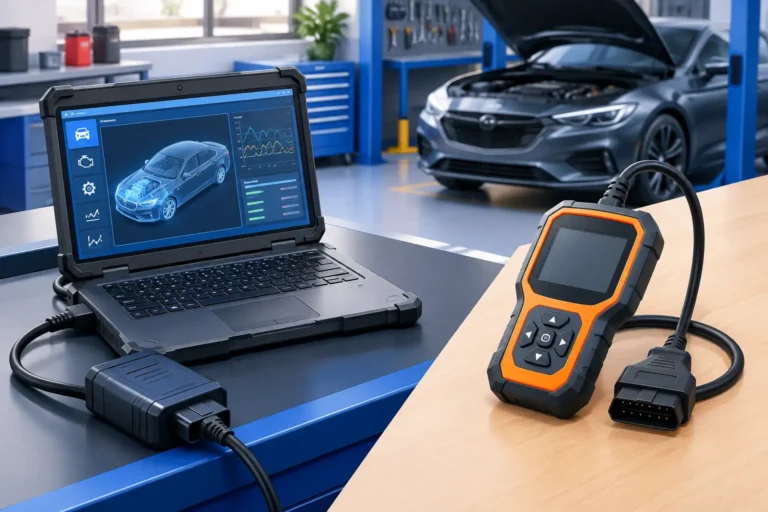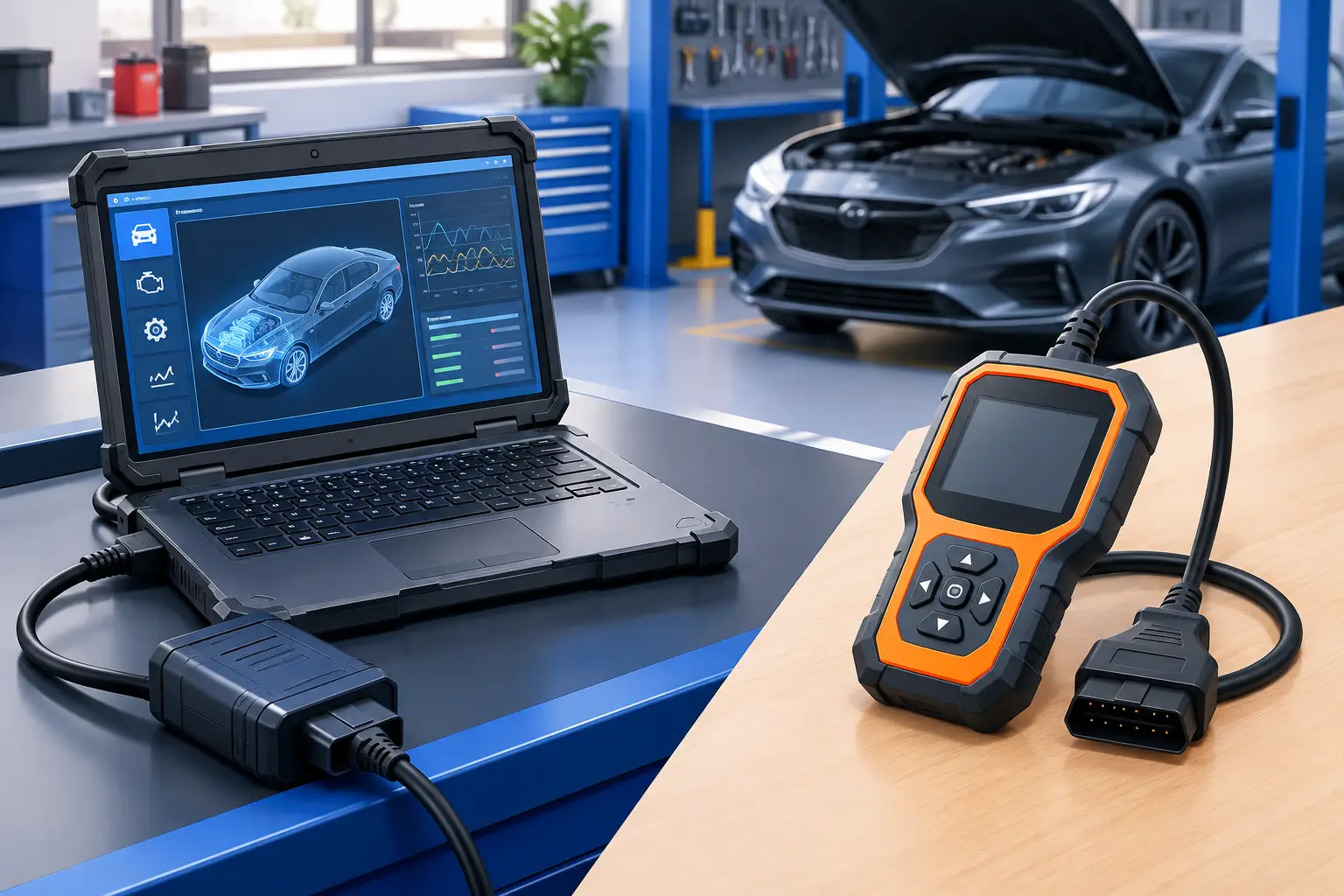
A warning light appears, the car still drives normally, and a low-cost scanner promises an instant answer. That is why garage diagnostics vs code reader is a useful comparison for any driver. A code reader can give you a valuable clue, but it cannot always tell you what has actually failed – or whether replacing a part will solve the problem.
For commuters, families and van operators, getting this distinction right can prevent wasted money and unnecessary time off the road. The best option depends on the fault, the age and type of vehicle, and what you need from the result.
What a code reader can tell you
A code reader plugs into your vehicle’s diagnostic socket, usually located around the driver’s footwell. It communicates with the vehicle’s onboard systems and retrieves diagnostic trouble codes, often called fault codes. These codes are recorded when the vehicle detects a reading or operating condition outside its expected range.
For example, a reader may report a code relating to an oxygen sensor, a misfire, low boost pressure or an emissions control system. This is useful information. It can help you understand why an engine management light has appeared and give a garage a helpful starting point if you make a note of the code.
Many basic readers can also clear warning lights. More advanced consumer tools may display limited live data, such as engine temperature, battery voltage or engine speed. For a driver who wants to monitor a known minor issue or check a warning light before arranging an appointment, this can be convenient.
A fault code is not a diagnosis
The key point is that a code usually identifies the system that noticed a problem, not the component that caused it. A code for an oxygen sensor does not automatically mean the sensor needs replacing. It could be reporting the effect of an air leak, damaged wiring, an exhaust leak, incorrect fuel pressure or another engine fault.
The same applies to misfire codes. A misfire may be caused by a spark plug, ignition coil, injector, air leak, low compression, fuel issue or electrical connection. Replacing the part named in a code description can sometimes work, but it can also turn into expensive guesswork.
What professional garage diagnostics adds
Professional diagnostics is a fault-finding process, not simply a scan. A technician begins by listening to the symptoms you have noticed: when the warning appeared, whether the car loses power, whether it happens when cold or under load, and whether any recent work has been carried out.
The vehicle is then scanned using professional equipment that can access far more than the engine system on many makes and models. Depending on the vehicle, this may include the gearbox, ABS, airbag, body control modules, parking sensors, climate control, battery management and hybrid or electric drive systems.
The next stage is where the difference matters. A technician can assess live data, check freeze-frame information recorded when the fault occurred, compare readings with expected values and carry out guided tests. They may use electrical testing equipment to check wiring, voltage drops, earth connections and signals, rather than assuming a component is faulty because a code mentions it.
On modern vehicles, a repair may also require coding, calibration or an adaptation reset after parts are fitted. This is particularly relevant for battery replacement, electronic steering components, driver-assistance systems, diesel emissions systems and some premium vehicles. Hybrid and electric vehicles bring additional high-voltage safety requirements, so they should always be assessed by appropriately trained technicians.
Garage diagnostics vs code reader: the real difference
The simplest way to look at garage diagnostics vs code reader is this: a code reader reports what the vehicle has noticed, while diagnostics investigates why it happened.
A code reader is usually quick and inexpensive. It can be a sensible first check for a straightforward engine warning light, especially if you are comfortable using it and understand that the result is not a repair instruction. It may also help you decide whether a vehicle needs attention immediately.
Professional diagnostics takes more time because it involves testing, interpretation and experience. That upfront cost can offer better value when a fault is intermittent, affects several systems or has already resisted an attempted repair. It is often cheaper to test properly than to fit several possible parts one after another.
There is also a difference in the quality of information. Generic readers may show only standard engine and emissions codes. A garage-level system can often access manufacturer-specific codes and vehicle data that a basic device cannot see. On some cars, this makes the difference between a vague answer and a clear repair plan.
When a code reader is useful
A code reader can be worthwhile if you want to check a non-urgent engine management light, keep a record of recurring codes or confirm whether a warning has returned after a repair. It can also be useful for drivers who maintain older vehicles and understand the limits of the information displayed.
If you use one, record the code exactly as shown before clearing anything. Note any symptoms, such as rough running, reduced power, poor fuel economy or a warning that appears only after motorway driving. This information can make later diagnosis quicker and more accurate.
Avoid treating code clearing as a fix. If the underlying issue remains, the light is likely to return. Clearing a light shortly before an MOT also does not resolve the fault, and some vehicle systems need time to complete their self-checks after codes have been erased.
When to book professional diagnostics
Some faults need prompt, hands-on investigation rather than another scan. Book a diagnostic assessment if you notice any of the following:
- A flashing engine management light, rough running or a strong fuel smell.
- Loss of power, limp mode, overheating or poor starting.
- ABS, airbag, brake, steering or battery warning lights.
- Repeated fault codes after a part has been replaced or the light has been cleared.
- Electrical problems such as flat batteries, central locking faults, warning messages or intermittent starting.
- Hybrid or electric vehicle warnings, charging issues or drive-system messages.
A flashing engine management light can indicate a misfire serious enough to damage the catalytic converter. Brake, steering and airbag warnings also deserve timely attention because they may affect important safety systems. If the vehicle feels unsafe to drive, do not rely on a reader to decide otherwise.
Why intermittent faults need more than a scan
The most frustrating faults are often intermittent. Perhaps the car starts perfectly at home but struggles after shopping, or a warning appears only in heavy rain. By the time a code reader is connected, the symptom may have disappeared.
A professional technician can use stored data, live readings and targeted tests to build a picture of what happened. They may need to inspect connectors for water ingress, test a battery under load, check charging performance or road-test the vehicle where appropriate. These are the details that a single fault-code description cannot provide.
This approach is especially useful for modern diesel systems, automatic gearboxes and electrical faults. A warning related to a diesel particulate filter, for instance, could be linked to short journeys, a sensor issue, an engine fault preventing regeneration or a genuine blockage. The correct solution depends on the evidence, not just the code.
A clearer route to the right repair
At AutoNet VIP, diagnostic work is approached as an investigation with a clear aim: identify the cause of the concern and explain the next steps in plain language. If further testing is needed, you should understand why it is recommended before work goes ahead.
Bring any code-reader results with you, but also describe what the vehicle is doing. Mention when the issue started, whether it is worse in certain conditions and any recent repairs or battery problems. Those practical details can be just as useful as the code itself.
A code reader can be a helpful tool in your glovebox, but it should not leave you guessing about safety, reliability or repair costs. When the answer is unclear, a proper diagnostic assessment gives you a sounder basis for deciding what your vehicle needs next.