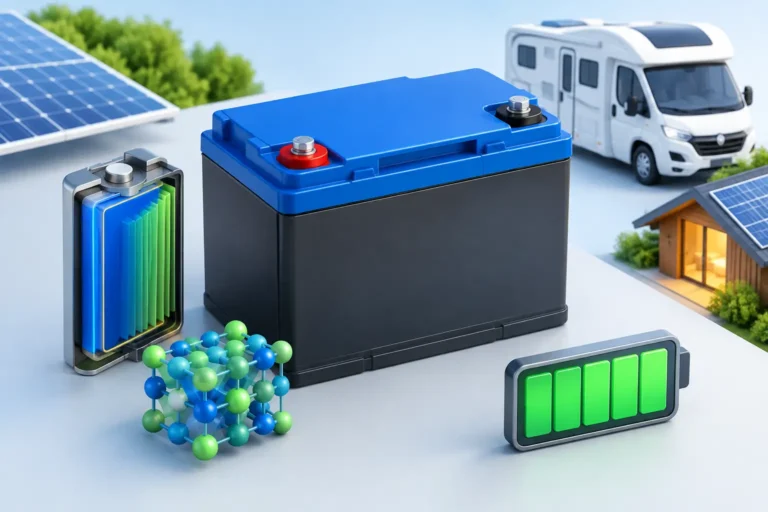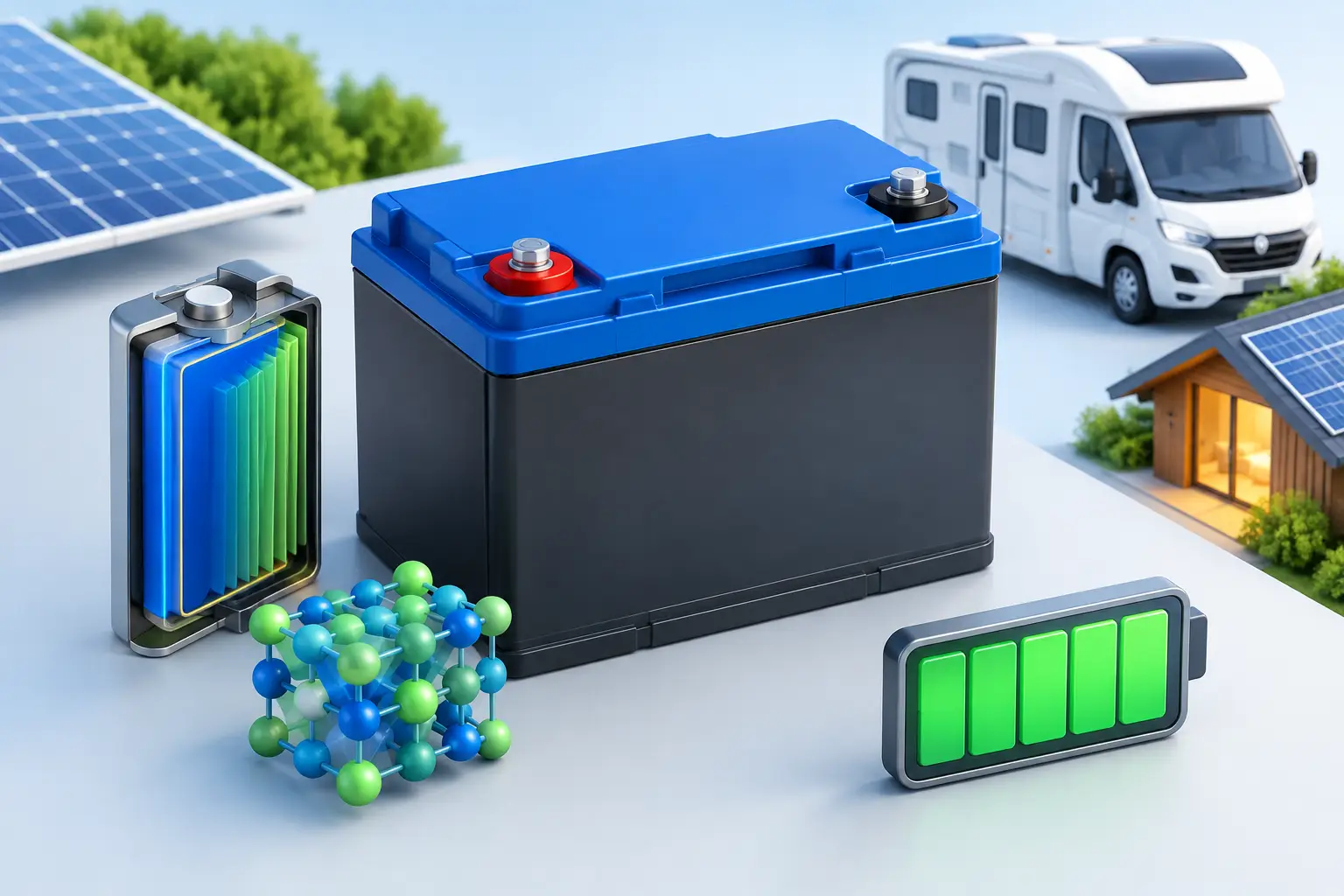
A low voltage battery “LFP” (12.8V) may be small compared with the high-voltage battery in an electric or hybrid vehicle, but it has a major job. It powers essential low-voltage systems, helps wake up vehicle control units and, depending on the vehicle, may support central locking, alarms, lighting, displays and safety electronics. When it begins to fail, a car can produce confusing warnings or refuse to start, even when its main traction battery is well charged.
For drivers, the key point is simple: a 12.8V LFP battery is not just a like-for-like replacement for an ordinary 12V lead-acid battery. Its chemistry, charging requirements and suitability depend on the vehicle.
What is a low voltage battery “LFP” (12.8V)?
LFP stands for lithium iron phosphate. It is a type of lithium battery chemistry valued for thermal stability, long cycle life and a relatively consistent voltage while in use. A 12.8V LFP battery is usually made up of four 3.2V cells connected together.
Although it is often described as a 12V battery, its nominal voltage is 12.8V. That figure helps distinguish it from traditional lead-acid batteries, which are commonly rated at 12V. In practical terms, both may be used for low-voltage vehicle functions, but they do not behave in exactly the same way.
Many electric vehicles still need a separate low-voltage battery alongside their larger high-voltage battery pack. The 12V system operates familiar equipment such as the hazard lights, infotainment system, door locks, control modules and various sensors. In some vehicles, the low-voltage battery also closes the electrical contactors that allow the high-voltage system to come online. If the 12V battery is flat, the vehicle may not become ready to drive.
LFP batteries are also used in certain campervans, leisure vehicles, converted vans and specialist automotive applications. Their suitability is determined by the charging system and the equipment connected to them, not just by whether they physically fit in the battery tray.
Why LFP is different from a conventional car battery
A conventional starter battery uses lead-acid technology. Many modern cars use enhanced flooded batteries or AGM batteries, particularly where stop-start technology places greater demand on the electrical system. LFP is a different chemistry with different strengths and limitations.
One benefit is cycle life. An LFP battery can generally tolerate repeated charging and discharging better than a typical lead-acid battery. It is also lighter for its usable capacity and is less prone to damage from sitting partially discharged. These qualities can make it attractive in the right application.
However, that does not mean an LFP battery is automatically an upgrade for every car. Vehicle manufacturers specify batteries according to cold-cranking performance, charging strategy, battery monitoring systems, physical size and electrical demand. Replacing an AGM or lead-acid battery with an LFP unit without checking compatibility can create charging faults, warning lights or poor reliability.
A lithium battery normally includes a battery management system, often called a BMS. This internal electronic protection monitors voltage, current and temperature. It can disconnect the battery to prevent overcharging, excessive discharge or unsafe operation. That protection is useful, but it can also make diagnosis less straightforward when a battery appears completely dead.
Voltage readings can be misleading
An LFP battery can hold a stable voltage for much of its charge range. That means a quick voltage check alone may not reveal its true condition. A battery can show a seemingly healthy reading with little ability to supply current under load.
Conversely, a low reading does not always mean the battery itself has failed. A parasitic drain, charging issue, poor earth connection or fault in a control module may be responsible. Proper testing should consider battery condition, charging performance and the vehicle’s current draw while parked.
Warning signs worth taking seriously
Low-voltage battery problems do not always present as a clear battery warning light. Modern vehicles rely on dozens of electronic modules, so the symptoms can vary considerably.
You may notice slow or inconsistent starting, repeated messages on the dashboard, central locking faults, dim lights, infotainment resets or stop-start becoming unavailable. Electric and hybrid vehicles may show warnings that appear to concern the high-voltage system, yet the root cause can be the smaller 12V battery.
Intermittent faults are particularly common. The vehicle may work normally after a journey, then struggle the next morning. This often happens because a weak battery temporarily recovers some voltage after resting, but cannot cope with the demand placed on it during start-up or system checks.
Do not assume a warning message means the main EV battery has failed. Equally, do not dismiss it as a minor glitch. A professional diagnostic check can identify whether the fault relates to battery voltage, charging, communication between modules or another electrical issue.
Can you charge an LFP 12.8V battery normally?
It depends on the battery specification and the vehicle. LFP batteries require a suitable charging profile, and some standard battery chargers are designed only for lead-acid, AGM or gel batteries. Using the wrong charging mode may fail to charge the battery fully or, in some cases, cause damage.
A charger with a dedicated lithium or LiFePO4 setting is usually the appropriate option where the battery manufacturer permits external charging. It should be connected according to the vehicle and battery instructions, particularly if the battery management system has entered protection mode.
The vehicle’s alternator or DC-to-DC converter also matters. In petrol and diesel cars, the alternator controls charging. In electric and hybrid vehicles, a DC-to-DC converter commonly charges the 12V battery from the high-voltage pack. If that charging system is faulty, fitting a new battery alone may only provide a temporary fix.
Cold weather deserves extra care. LFP chemistry generally performs well in many conditions, but charging lithium batteries below certain temperatures can be harmful unless the battery has low-temperature protection or a heating function. This is one reason why the exact battery specification matters more than a general assumption that all 12V batteries are interchangeable.
Is an LFP battery right for your vehicle?
For a standard petrol or diesel family car, the correct replacement is usually the battery type and specification approved for that vehicle. If it was fitted with AGM technology from new, it will normally need an AGM replacement of the correct capacity and cranking rating. Some vehicles also need the new battery registered or coded through diagnostic equipment so the charging system can manage it correctly.
For an EV, hybrid, campervan or modified vehicle, the answer can be less straightforward. An LFP battery may be an excellent choice where the charging system, battery management and usage pattern support it. It can be less suitable where high cold-cranking current is essential, charging control is incompatible or the original system was designed around a different battery chemistry.
Size is only one part of the decision. Terminal layout, securing method, fuse protection, ventilation requirements, capacity, maximum discharge current and communication with the vehicle’s battery sensor may all be relevant. A battery that fits physically can still be the wrong electrical match.
Why diagnosis should come before replacement
Battery replacement is sometimes the correct repair, but it should not be a guess. A proper inspection can check the state of health of the battery, charging voltage, cable condition, earth points and any stored fault codes. On modern vehicles, this approach avoids replacing a battery only to find that an unseen drain or charging-system fault has caused the problem.
At AutoNet VIP, electrical diagnosis is approached as a system check rather than a quick assumption. That is especially valuable for hybrid and electric vehicles, where a low-voltage fault can affect systems that appear unrelated at first glance.
Looking after a 12.8V LFP battery
Regular use is usually better than leaving a vehicle parked for long periods. Short journeys, infrequent use and accessories left connected can all place strain on any low-voltage battery. If a vehicle is stored, use only a maintenance charger that is approved for its battery chemistry and fitted in line with the manufacturer’s guidance.
Keep battery terminals clean and secure, and act promptly if warning messages begin appearing. Repeated jump-starting may get a vehicle moving, but it does not identify why the battery discharged. It can also be unsuitable for some hybrid and electric vehicles if done incorrectly.
If your vehicle has started behaving unpredictably, a timely battery and charging-system check can prevent a simple low-voltage issue from becoming a breakdown at home, at work or before a long journey.