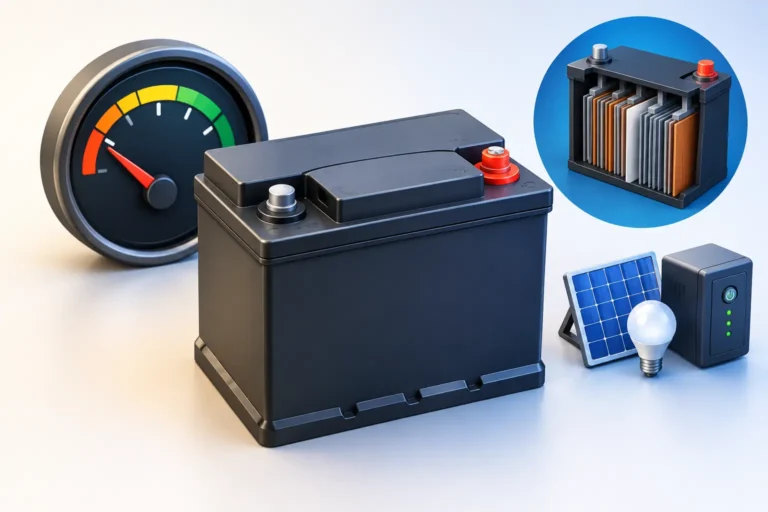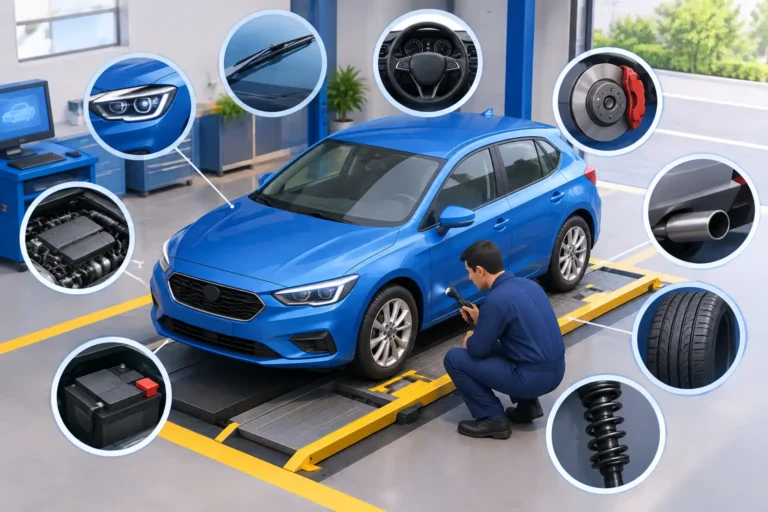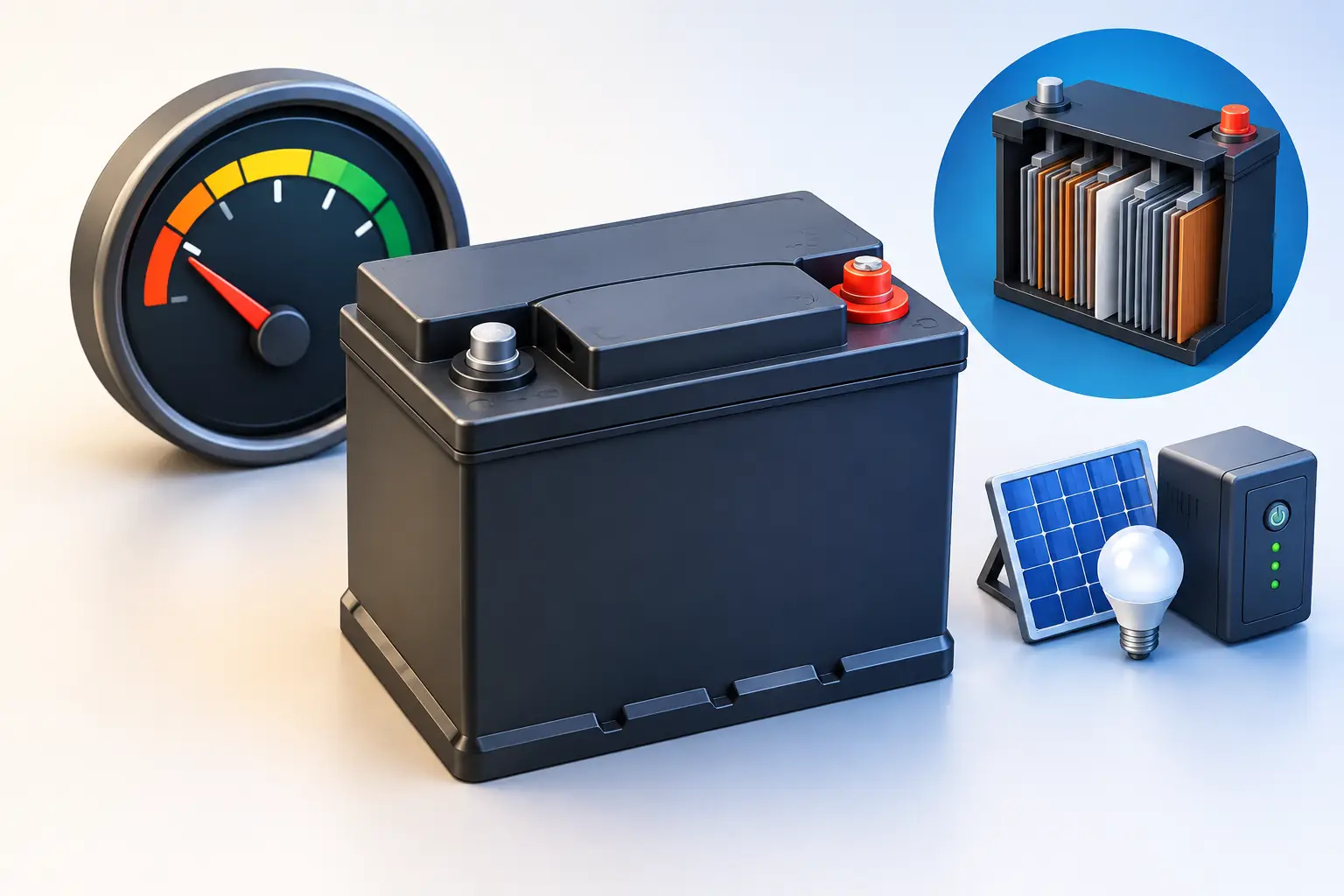
A dashboard warning for a low voltage lead acid (12V) battery is easy to dismiss when the car still starts. However, the 12V battery does far more than crank the engine. It supports the vehicle’s electrical systems, from central locking and lighting to control modules, safety features and infotainment. When its voltage drops, the result can be anything from an inconvenient no-start to confusing warning lights and unreliable vehicle behaviour.
For most drivers, the sensible next step is not to guess or immediately replace the battery. A professional battery and charging-system test can establish whether the battery is simply discharged, nearing the end of its life, or being affected by another fault.
What does a low voltage 12V lead acid battery mean?
In petrol and diesel vehicles, the conventional 12V lead acid battery supplies a high burst of power to start the engine. Once the engine is running, the alternator should recharge the battery and supply power to the car’s electrical equipment.
A healthy battery at rest will usually show around 12.6 volts when fully charged, although the precise reading varies with temperature, battery type and how long the vehicle has been standing. A reading around 12.2 volts suggests the battery is only partly charged. Below roughly 12 volts, it is significantly discharged and may struggle to start the vehicle, particularly on a cold morning.
Voltage is useful, but it is not the whole story. A battery may show an acceptable voltage with no load, then drop sharply when asked to start the engine. This is why a proper test also checks the battery’s ability to deliver current, often described as its cold cranking performance, rather than relying on a simple voltage reading alone.
Common signs of a weak 12V battery
The classic sign is slow or laboured engine cranking. You may hear the starter motor turning more slowly than usual before the engine fires. Other symptoms can be less obvious: dimming headlights at idle, an intermittent stop-start system, a clock or radio that resets, warning messages appearing briefly, or central locking that responds inconsistently.
Modern vehicles are sensitive to voltage changes. They contain multiple electronic control units that need a stable supply. A weak battery can therefore create fault messages that appear unrelated to the battery itself. This does not automatically mean there is a serious fault in every system, but it does mean the underlying battery condition should be checked before expensive repairs are considered.
If the engine will not turn over, the dashboard lights are very weak, or the vehicle has repeatedly needed a jump-start, avoid continuing to rely on temporary fixes. A jump-start may get you moving once, but it will not identify why the battery became flat.
Why 12V lead acid batteries lose charge
Battery problems generally fall into one of three areas: the battery is ageing, it is not receiving enough charge, or the vehicle is using power while parked.
Age is a common factor. Even a well-maintained lead acid battery gradually loses capacity. Many last around three to five years, although this depends on vehicle use, climate, battery quality and electrical demand. Frequent short journeys are particularly hard on batteries because the power used to start the engine may not be fully replaced before the next stop.
Cold weather exposes a weak battery because it reduces the battery’s available power while the engine needs more effort to start. Hot weather can also shorten battery life over time by accelerating internal wear. A battery that seemed acceptable through summer may reveal its weakness during the first cold spell.
A charging fault is another possibility. If the alternator, drive belt, wiring or connections are not working correctly, the battery may not be recharged while driving. On the other hand, overcharging can damage a battery too. Both situations require testing rather than assumptions.
Parasitic battery drain is less common but worth considering where a battery repeatedly goes flat after standing. A light left on, an accessory connected to a power socket, an aftermarket dash cam, or a fault in an electrical circuit can slowly drain the battery. Some systems remain active for a short time after the vehicle is locked, so testing must be carried out correctly once the car has entered its normal sleep mode.
The difference between a flat battery and a failed battery
A flat battery has insufficient charge at that moment. It may recover fully if the cause was straightforward, such as an interior light being left on or the vehicle being unused for a prolonged period.
A failed battery has lost the ability to store or deliver sufficient power. Recharging it may provide a short-term improvement, but the issue will return. Internal sulphation, damaged cells and natural ageing can all reduce capacity. This is why fitting a new battery without checking the charging system can be premature, while repeatedly charging an exhausted battery can leave you stranded again.
A workshop test should consider battery voltage, starting performance, battery condition and alternator output. If there is evidence of an excessive drain, further electrical diagnosis may be required. Clear results help you decide whether charging, repair or replacement is the appropriate route.
Low voltage warnings in hybrid and electric vehicles
Hybrid and electric vehicles have a high-voltage traction battery, but they also normally have a separate 12V battery. Depending on the model, this may be a conventional lead acid unit, an AGM battery or, increasingly, a lithium-based battery.
The 12V battery remains essential. It powers low-voltage systems and helps the vehicle wake up its control units so the high-voltage system can be safely connected. A weak 12V battery can therefore prevent a hybrid or electric vehicle from entering its ready-to-drive mode, even when the main traction battery has plenty of charge.
Do not assume that charging the vehicle’s main battery will resolve a 12V warning. The two systems have different roles. Because hybrids and EVs use complex high-voltage equipment, diagnosis and replacement should be carried out using the correct procedures and equipment.
Can you keep driving with a low battery warning?
It depends on the cause and the warning displayed. If the engine is running and the charging system is operating normally, you may be able to complete a short necessary journey. But a low battery warning should not be treated as a routine service reminder.
If a red battery warning light comes on while driving, it can indicate that the charging system is not working correctly. The vehicle may then be running only on stored battery power. As the voltage falls, electrical systems can begin to shut down and the engine may eventually stop. It is safer to reduce electrical load where practical, stop in a safe location and arrange assessment rather than continue driving until the vehicle fails.
For a battery that has gone flat after being parked, consider what changed. Was the car unused for several weeks? Has it been making only short trips? Was an accessory fitted recently? These details can make diagnosis quicker and more accurate.
How to protect your 12V battery
Regular use helps, but a long motorway journey is not a guaranteed cure for an ageing battery. If you make mainly short local trips, occasional longer drives can help the charging system restore the battery, provided there is no underlying fault.
Keep terminals secure and free from heavy corrosion, and make sure lights, heated screens and accessories are switched off when leaving the vehicle. If a car is stored or rarely used, a suitable smart maintenance charger may help preserve the battery. Always follow the vehicle manufacturer’s guidance, especially for hybrid and electric models.
Battery replacement also needs to be correct for the vehicle. Cars with stop-start technology commonly require an AGM or EFB battery of the right specification. Fitting a cheaper conventional battery can reduce reliability and may affect stop-start operation. Some vehicles also need the new battery registered or coded into the battery management system so charging is controlled correctly.
When to book a battery check
Book a check if starting has become slow, warning lights appear without a clear reason, the battery is more than a few years old, or you have needed a jump-start. It is also sensible to test the battery before winter, before a long trip, or after a period when the vehicle has been left unused.
At AutoNet VIP, a battery concern can be assessed alongside the alternator, starting system and relevant electrical circuits, so you receive clear advice based on the actual cause. A timely check can be the difference between a straightforward repair and being left with a vehicle that will not start when you need it most.