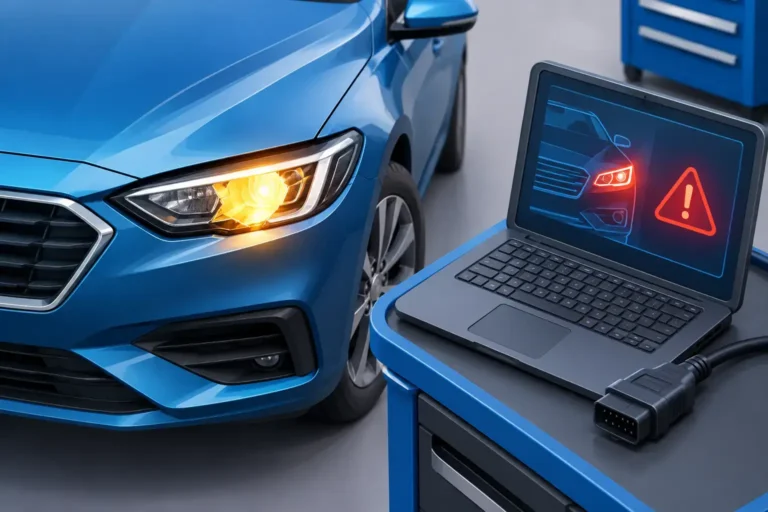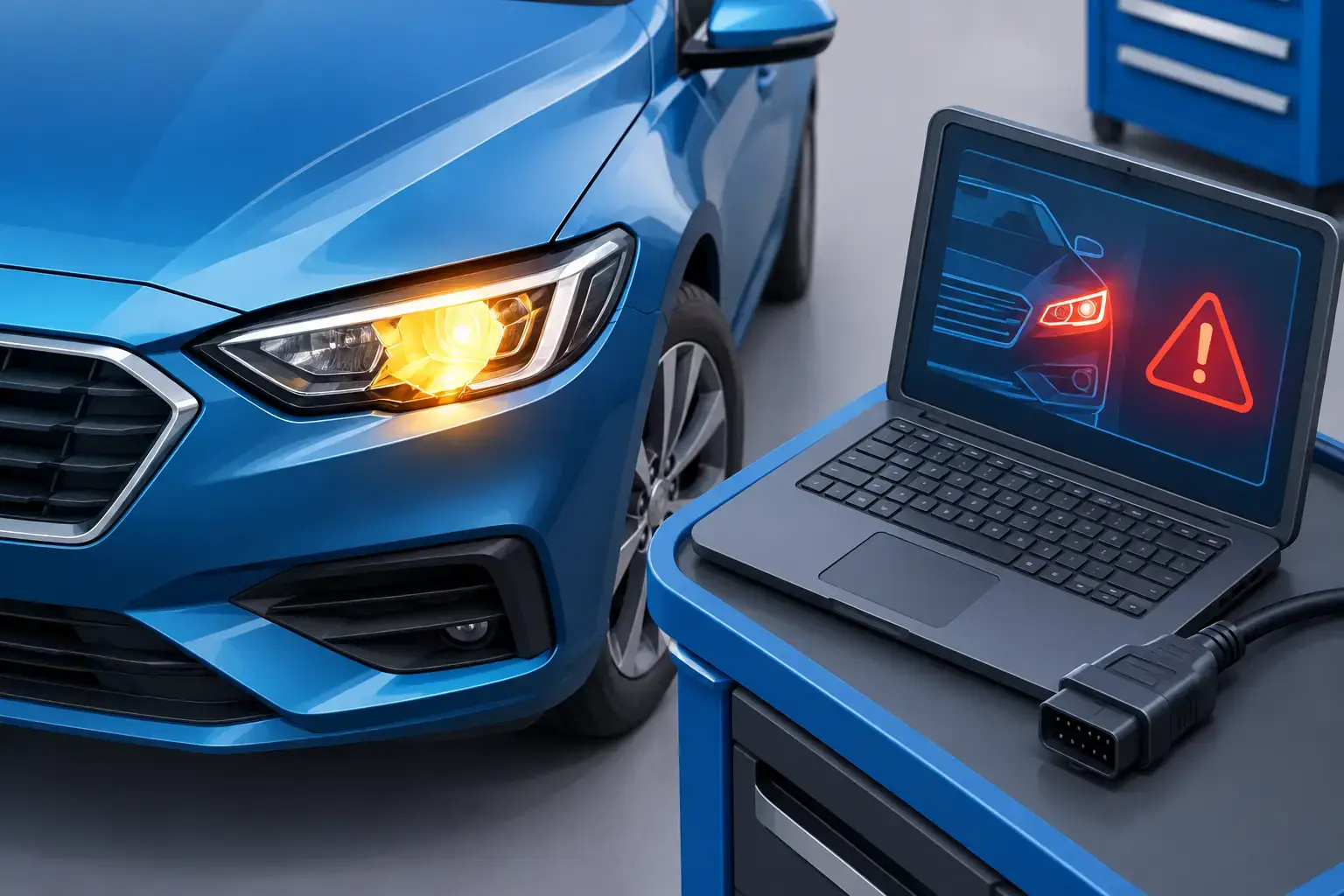
A diagnostic report showing gtw_w097_hcmlversionmismatch – software version incompatibility of the left headlight can sound more alarming than it first appears. It does not automatically mean the entire headlamp unit has failed. It usually means the vehicle has detected that the software or configuration held by the left headlight control module does not match what the rest of the vehicle expects.
Modern headlights are far more than bulbs and reflectors. On many vehicles, especially those fitted with LED, adaptive, matrix or premium lighting systems, each headlamp can contain one or more electronic control modules. These modules communicate with other systems across the vehicle network. When their software versions, coding or installed parts do not match, a warning message or fault code can be recorded.
What does GTW_W097_HCMLVersionMismatch mean?
The wording of this fault can vary between diagnostic systems, but it points to a compatibility issue involving the left headlight module and the vehicle’s wider electronic network. “GTW” may refer to a gateway or network-related report, while “HCML” commonly identifies the left-side headlight control electronics within the scan tool’s terminology.
In plain English, the vehicle is effectively saying: “The left headlight module is present, but its software identity is not what I was programmed to work with.” The headlight may still illuminate, partly operate, or appear normal at times. However, functions such as daytime running lights, indicators, cornering lights, automatic levelling, adaptive beam control or high-beam assist may be affected.
The exact meaning depends on the make, model, model year and lighting specification. This is why a generic code reader is rarely enough to decide which component needs repair. A proper diagnostic assessment checks the complete fault record, module information and live data before any parts are ordered.
Common causes of left headlight software incompatibility
A version mismatch is often found after a repair, an accident, a battery issue or work carried out on the vehicle’s electrical system. It can also arise without an obvious recent event if a module has developed an internal fault.
A replacement headlamp or control module
This is one of the most common causes. A used headlamp assembly may look identical but come from a vehicle with a different build specification, software level or lighting option. Even a new module may need programming and coding after installation.
Headlight modules are not always interchangeable simply because the connectors fit. Part numbers can have revisions, and the vehicle may require a particular hardware and software combination. Fitting an incorrect unit can leave the lights working only partially or trigger repeated dashboard warnings.
Interrupted programming or a failed update
Some faults appear after dealer-level software work, a vehicle-wide update or programming that was interrupted by low battery voltage. If one module does not complete the process correctly, it may retain an older or incomplete software version while the rest of the vehicle moves to a newer level.
This is not a job for a battery charger and a universal fault-code clear. Programming must be carried out with stable voltage support, suitable equipment and the correct manufacturer procedures. Otherwise, there is a risk of leaving the module unusable.
Water ingress, accident damage or poor connections
Headlight units sit at the front of the vehicle, where they are exposed to road spray, vibration and collision damage. Moisture inside a lamp, damaged wiring or corrosion at a connector can interrupt communication with the module. The recorded fault may mention software compatibility even when the root cause is an electrical supply or network problem.
A visual inspection matters. Signs such as condensation that does not clear, cracked housings, damaged mounting points or green corrosion around connectors can provide useful clues before any programming work begins.
Incorrect coding or vehicle configuration
Some vehicles need modules to be coded to their specific equipment level after replacement. This may include the driving side, lighting type, steering-related adaptive functions and other vehicle options. Incorrect coding can create a mismatch between the headlight module and the central control units.
For this reason, copying settings from another vehicle or fitting a second-hand module without checking compatibility can create further faults. It may save money initially, but can become more expensive if the wrong part has to be removed and replaced later.
Symptoms you may notice
A stored mismatch fault does not always produce a clear warning straight away. In other cases, the vehicle may display messages such as “headlight malfunction”, “adaptive light failure” or “check left dipped beam”. The left headlamp may flicker, operate at reduced brightness, fail to move during start-up checks or lose one of its lighting functions.
You may also notice that automatic high beam, cornering lights or levelling functions no longer work. If the vehicle has matrix or adaptive LED headlights, the beam pattern may be restricted to a safe default mode. Do not assume the issue is minor simply because the main beam and dipped beam still switch on.
If a required lamp is not working correctly, or the beam pattern and aim are affected, the vehicle could fail its MOT. More importantly, reduced lighting performance can compromise visibility for you and other road users, particularly on unlit roads or in poor weather.
Why clearing the code is not a repair
It is tempting to clear the warning and see if it returns. This can be useful as part of a controlled diagnostic process, but it is not a cure. If the underlying module, coding, wiring or software issue remains, the fault will usually return once the vehicle completes its next system check.
Avoid repeatedly disconnecting the battery, fitting random second-hand modules or attempting online programming procedures without the correct equipment. Modern lighting systems are integrated with safety and vehicle-network functions. An incorrect procedure can create multiple communication faults or prevent a module from being programmed at all.
How a professional diagnosis should work
A reliable repair begins by confirming the vehicle details and lighting specification. The technician should then carry out a full vehicle scan rather than inspecting the headlight fault in isolation. Network faults elsewhere in the vehicle can sometimes affect what the headlight module reports.
The next stage is to examine the module identification data. This includes fitted part numbers, hardware reference, software version, coding status and communication history. These details are compared with the vehicle’s specification to establish whether the module is correct and whether programming is possible.
Physical checks are equally important. A technician should inspect the headlamp for damage or moisture, test power supplies and earth points, assess network wiring and examine connectors for corrosion or poor pin contact. Where appropriate, live data can confirm whether the module is communicating and whether commands are reaching the lamp.
Only after these checks should software programming, coding, repair or replacement be recommended. In some cases, an approved software update and configuration procedure resolves the fault. In others, the module or complete headlight assembly may need replacing. If the lamp has suffered water damage, programming a compromised module is unlikely to provide a lasting solution.
At AutoNet VIP, diagnostics are approached as fault finding rather than parts swapping. That means explaining what has been tested, what has caused the issue and what repair options are suitable for your vehicle before work goes ahead.
What affects the repair cost?
The cost depends mainly on the type of lighting system and the actual cause. A straightforward coding or software correction can be considerably less costly than replacing a premium LED or adaptive headlight assembly. Wiring repairs, corrosion removal and connector replacement can also vary according to access and the extent of damage.
Used parts can sometimes be a sensible option, but only when their part numbers, condition and compatibility have been checked properly. They may still require coding or programming, and they may not be appropriate where the original unit has a revised specification. A clear diagnostic report before authorising parts helps avoid paying for components that will not solve the problem.
What to do next
If the warning is active, check that all exterior lights are working before driving at night. If the left headlight is dim, flickering, misaligned or not functioning, arrange an inspection promptly and avoid unnecessary journeys in darkness. Do not remove or open a sealed headlamp unit yourself, particularly on high-voltage hybrid or electric vehicles where other electrical safety procedures may apply.
Bring any information you have about recent accident repairs, battery replacement, headlight work or software updates. That history can shorten the diagnostic process and help identify whether the fault is linked to a replacement component or an earlier repair.
A headlight software mismatch is usually solvable, but the right solution comes from identifying why the vehicle and its left headlight module no longer agree. A careful diagnosis now can protect your visibility, prevent repeat warnings and keep an avoidable small fault from becoming an expensive lighting-system repair.