A Tesla can remain remarkably intact after a serious impact, but the visible condition is only part of the story. Tesla’s passive safety system is designed to protect occupants in the moment a collision happens – through the car’s structure, battery placement, airbags, seatbelts and carefully engineered crumple zones. Unlike driver-assistance features, it works without needing a warning, a camera view or an input from the driver.
For owners, the practical point is simple: after any significant collision, or a warning relating to restraints or airbags, the vehicle needs a proper assessment. Safety equipment may have done its job, yet still require replacement, calibration or specialist inspection before the car is returned to normal use.
What is a Tesla passive safety system?
Passive safety refers to the parts of a vehicle that reduce injury when an accident cannot be avoided. They do not steer, brake or alert the driver to a hazard. Instead, they manage crash energy, hold occupants in the right position and create as much protected space as possible around them.
In a Tesla, this includes the passenger compartment, front and rear crash structures, seatbelts and pretensioners, airbags, head restraints, seats, glass and the underbody protection around the high-voltage battery. The exact arrangement differs between models and model years, so a Model 3 will not have identical parts or repair procedures to a Model S, Model X or Model Y.
This is different from active safety. Features such as automatic emergency braking, lane assistance and collision warnings aim to prevent or reduce the severity of a crash. They can be valuable, but they are not a substitute for the passive systems that protect people once impact occurs.
Why Tesla’s design matters in a collision
A key part of Tesla’s approach is the battery pack’s position low in the floor. Its weight lowers the vehicle’s centre of gravity, which can help reduce the likelihood of a rollover in certain situations. Around it, the vehicle is designed with a strong occupant cell and structures intended to absorb and direct impact forces away from passengers.
At the front, the absence of a conventional petrol or diesel engine can provide more space for energy-absorbing structures. That does not mean every impact is minor or that a Tesla is immune to damage. It means the vehicle’s crash structure can be designed differently from a comparable combustion-engined car.
The cabin is intended to remain as stable as possible while areas outside it deform in a controlled way. This balance is crucial. A car that is too stiff may transfer more force to occupants, while one that collapses too easily may reduce survival space. Crash protection relies on the complete design working together, not on one strong component.
The battery pack is protected, but needs specialist care
The battery enclosure is heavily protected, but underbody damage should never be dismissed because the car still drives normally. A deep pothole strike, kerb impact or collision can affect covers, cooling components, high-voltage cabling or the battery housing itself.
Any suspected battery damage needs a careful, safety-led assessment. High-voltage work is not routine mechanical work, and technicians must follow the correct isolation procedures and manufacturer repair information. If there is smoke, heat, a burning smell, visible leakage or a serious impact underneath the vehicle, keep clear of the car and contact emergency services where necessary.
Seatbelts and airbags do more than most drivers realise
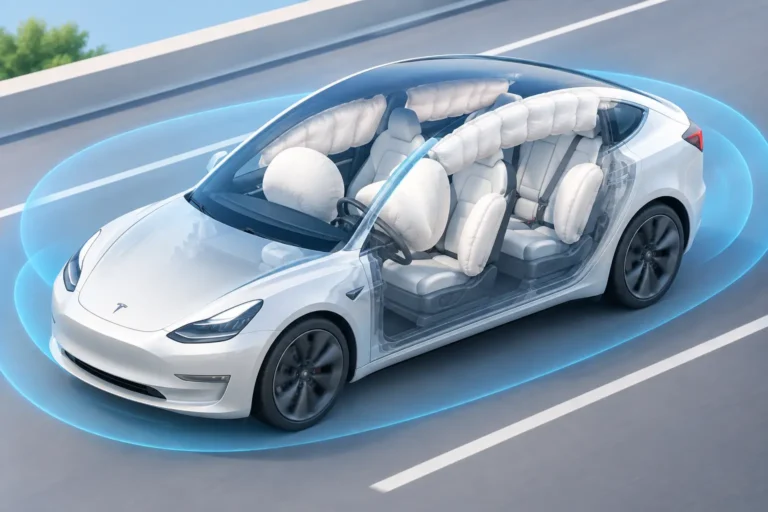
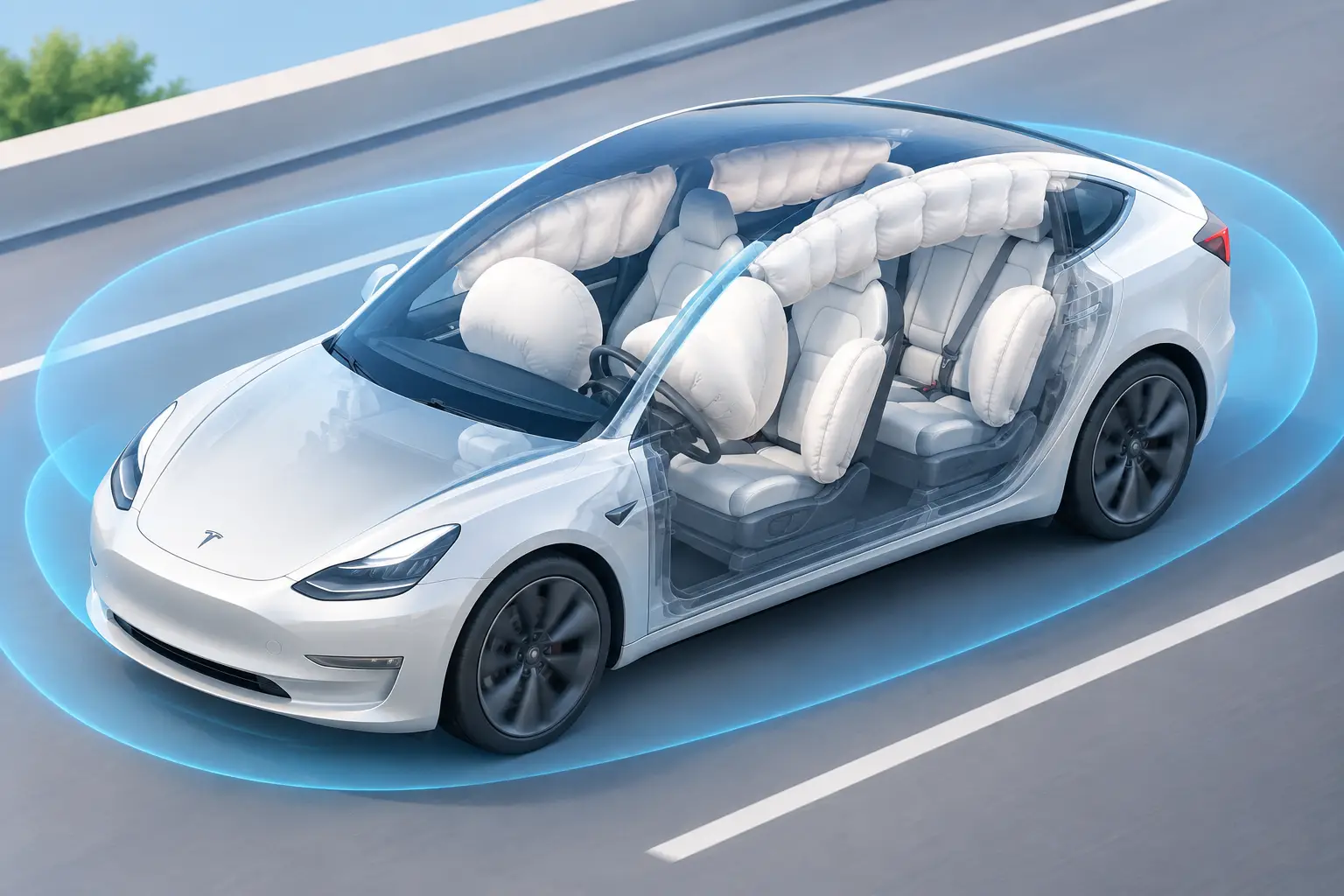
The restraint system is one of the most time-critical parts of passive protection. Seatbelts are designed to manage the body’s movement in a crash, while pretensioners can tighten the belt at the start of an impact. Load limiters may then allow a controlled amount of belt movement to reduce chest loading. Airbags support this protection by cushioning the head and upper body in specific types of collision.
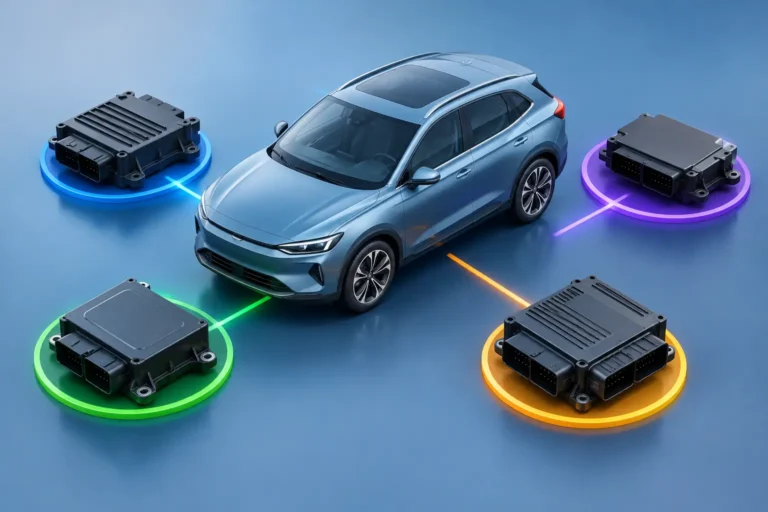
Airbags are not universal cushions that deploy in every accident. The vehicle uses sensors and control modules to determine which restraints are appropriate for the direction and severity of the impact. Frontal airbags, side airbags and curtain airbags each serve different areas of the cabin.
Once an airbag or pretensioner has deployed, it is not something to ignore, reset casually or cover up. Components may need replacement, and the restraint control system should be checked for recorded faults and crash data. Damaged seatbelt webbing, connectors, seat frames or trim can also affect how the system performs in a later incident.
A warning message relating to airbags, seatbelts or the restraint system deserves prompt diagnosis, even if no accident has occurred. Causes can range from a connector issue to a sensor or wiring fault. The important point is that the vehicle may not be able to protect occupants as intended until the fault has been identified and repaired.
Repairs after an impact are about more than appearance
A scuffed bumper or dented wing may look cosmetic, but modern vehicles place sensors, wiring, brackets and impact-absorbing materials behind exterior panels. On a Tesla, a low-speed impact can also affect parking sensors, cameras, radar equipment where fitted, wiring looms, cooling parts or mounting points.
The right repair depends on the location and severity of the damage. A light cosmetic repair may be sufficient in one case. In another, a seemingly modest knock can require structural measurement, diagnostic scanning, replacement safety components or recalibration of driver-assistance equipment. Assumptions are where problems begin.
Be particularly cautious about second-hand parts for safety-critical repairs. While some recycled components can be suitable in the right circumstances, airbags, pretensioners, seatbelts, damaged structural parts and high-voltage components require strict judgement. Their history, condition and compatibility matter. Saving money on the wrong component can compromise protection or create more expensive faults later.
Why diagnostics matter after body repairs
A post-repair diagnostic check is not merely about clearing a dashboard warning. It can reveal stored faults, communication issues between modules and sensor concerns that are not obvious during a road test. Where a vehicle system requires calibration following repair, correct positioning and equipment are essential.
This is also why a clean-looking repair is not always proof of a complete repair. Panel gaps, warning lights and driveability are only some of the checks. The car’s restraint and safety-related systems need to be considered as part of the repair plan from the beginning.
What owners can do to protect the system
The best protection starts before an accident. Everyone in the vehicle should wear their seatbelt correctly, with the belt sitting across the shoulder and low across the hips rather than under an arm or behind the back. Child seats must be compatible, correctly installed and appropriate for the child’s height and weight.
Avoid placing heavy objects unsecured in the cabin or front storage area. In a sudden stop or collision, everyday items can become dangerous projectiles. Also avoid fitting accessories that interfere with seat movement, seatbelt operation, airbag deployment zones or camera and sensor views.
After any impact, check for warning messages, unusual steering behaviour, tyre damage, fluid leaks, damaged undertrays and doors that no longer open or close properly. These signs do not confirm the full extent of damage, but they are good reasons not to delay an inspection.
For Tesla drivers in Harlow and across Essex, a professional repair centre can help assess the mechanical, electrical and diagnostic side of collision-related concerns. At AutoNet VIP, clear advice matters: if a fault is safety-critical, you should understand what has been found, why it matters and what work is recommended before repairs go ahead.
When should you arrange an inspection?
Arrange an assessment as soon as practical after airbag deployment, a restraint-system warning, a wheel or suspension impact, an underbody strike, or any collision that has damaged panels around sensors, lights or doors. Even if the car is driveable, that does not confirm the passive safety systems are fully ready for another collision.
Tesla’s passive safety engineering gives occupants valuable protection when it matters most, but it relies on every component being in the right condition. Treat warning lights and impact damage as a reason to get knowledgeable advice, not as something to monitor indefinitely.