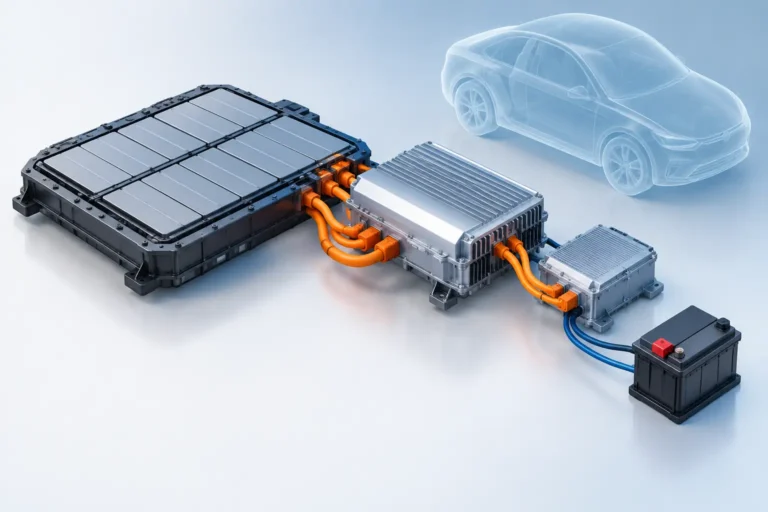
A hybrid or electric vehicle can have a healthy-looking 12-volt battery yet refuse to enter Ready mode, limit power or display an electrical system warning. When drivers or diagnostic reports refer to Gen1 HVJB current between the high-voltage battery, inverter, DC-DC converter and on-board charger, they are referring to a key part of the vehicle’s high-voltage power distribution system.
The HVJB is not simply a box of fuses. It is a controlled safety component that helps direct high-voltage current to the systems that make an EV or hybrid move, charge and support its conventional 12-volt electrics. A fault in this area needs careful diagnosis, not guesswork or parts swapping.
What the Gen1 HVJB does
HVJB stands for High-Voltage Junction Box. In some first-generation high-voltage vehicle systems, it sits between the traction battery and several major electrical consumers. Depending on the vehicle, it can contain contactors, fuses, busbars, current sensing components and connections for high-voltage cables.
Once the car has completed its safety checks, the battery management system commands the high-voltage contactors to close. This allows stored energy from the traction battery to reach the required components. The HVJB helps manage that route while protecting the circuit if it detects a serious overcurrent or isolation issue.
The exact layout varies by manufacturer and model. That matters because an HVJB-related fault code does not automatically mean that the junction box itself has failed. The underlying cause may be a battery issue, damaged wiring, moisture at a connector, a fault inside another high-voltage component or a 12-volt supply problem preventing the system from operating correctly.
How current travels through the high-voltage system
From the high-voltage battery to the inverter
The traction battery stores DC electrical energy. The inverter converts that DC energy into the AC current needed by the electric motor. When accelerating, current flows from the battery through the HVJB and into the inverter. When slowing down under regenerative braking, the direction can reverse as the inverter sends recovered energy back towards the battery.
This is why current readings are not always positive and steady. They change with acceleration, speed, battery temperature, regenerative braking demand and the state of charge. A brief high current demand can be perfectly normal; an unexpected current imbalance or a circuit that cannot carry the requested load is not.
From the battery to the DC-DC converter
The DC-DC converter performs a different but equally essential job. It reduces high-voltage battery power to around 12 volts to run lights, infotainment, wipers, control modules and other familiar vehicle systems. It also keeps the 12-volt battery charged while the vehicle is in Ready mode.
If the DC-DC converter supply is interrupted, the vehicle may show low-voltage warnings, multiple unrelated warning lights or eventually shut down. Drivers can understandably assume they have a faulty 12-volt battery, but the battery may only be showing the effect of a high-voltage charging problem.
From the battery to the on-board charger
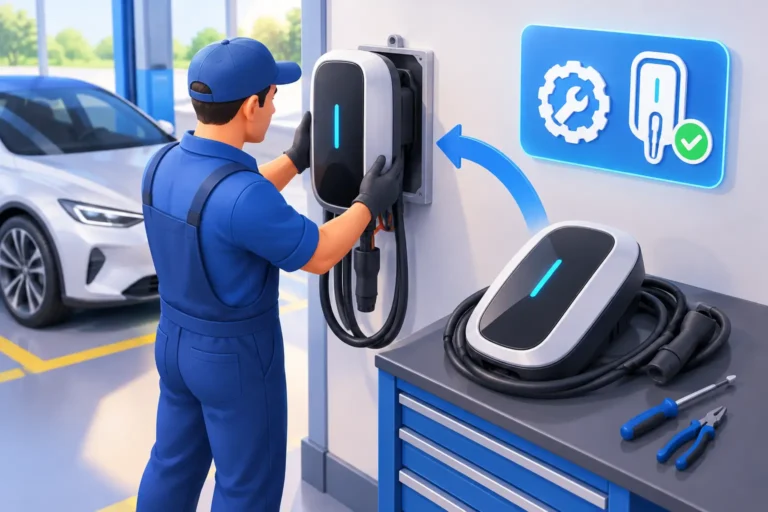
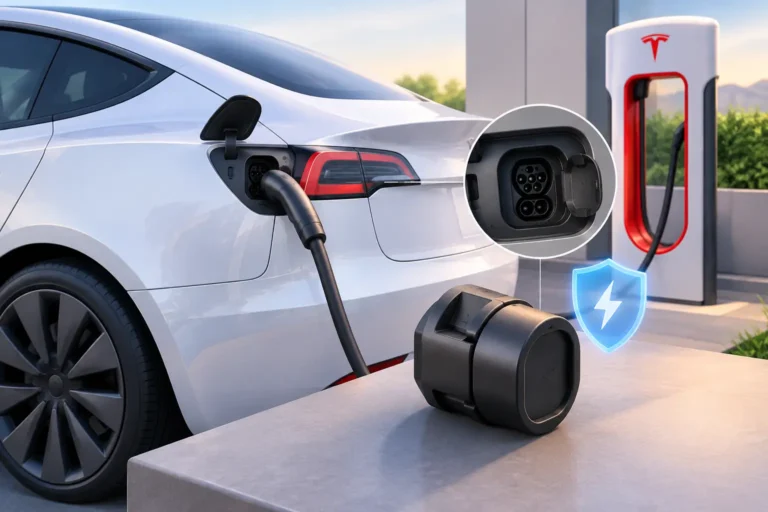
The on-board charger is used during AC charging. It converts AC electricity from a charge point into DC electricity suitable for the high-voltage battery. The HVJB can form part of the protected path between the battery and the charging system.
A fault on this circuit may lead to charging that stops early, a refusal to charge, a charge-system warning or a fault that only appears when a cable is connected. It is worth remembering that a charging complaint can originate from the car, the cable, the charge point or the electrical supply. Proper testing establishes which one is responsible.
Why current monitoring matters
High-voltage systems are designed to monitor far more than voltage alone. The control modules need to know whether current is flowing where expected, whether the contactors have closed properly and whether the requested power matches the measured result.
For example, if the inverter requests drive power but the current path has excessive resistance, the vehicle may limit performance or log a fault. Resistance can rise because of corrosion, heat damage, a poor terminal connection or degradation within a component. Even a small resistance increase can create substantial heat when high current is involved.
The system also monitors for safety conditions such as insulation faults. High-voltage cables and components must remain electrically isolated from the vehicle body. Water ingress, physical impact, rodent damage or internal component failure can reduce that isolation and cause the vehicle to disable the high-voltage system as a precaution.
Common symptoms of an HVJB or high-voltage current fault
Symptoms vary between makes and models, but a problem affecting Gen1 HVJB current circuits can include a warning message, a check-engine light, reduced power, failure to enter Ready mode or a vehicle that will not charge.
Other signs include intermittent shutdowns, a clicking sound as contactors attempt to close, repeated 12-volt battery warnings or heating around a high-voltage connection. A driver may also notice that the vehicle drives normally on one journey but develops a fault after charging, in wet weather or under strong acceleration.
None of these signs proves the HVJB is at fault. They do, however, justify a specialist diagnostic inspection. Continuing to drive with warning lights, charging errors or reduced-power messages can turn a contained issue into a recovery situation.
Why fault codes need interpreting, not just clearing
A diagnostic scanner can identify stored codes and live data, but the code description is only the starting point. A code that refers to a battery-to-inverter circuit could be triggered by a damaged cable, an inverter internal fault, an HVJB contactor problem or a voltage reading outside the expected range.
A sound diagnostic process starts by checking the vehicle’s reported symptoms, 12-volt battery condition, charging history and any previous repairs. A technician then reads all relevant control modules rather than relying on a basic code reader. Freeze-frame data can show the conditions when the fault occurred, including state of charge, temperature, voltage and current demand.
Where safe and appropriate, the technician will inspect high-voltage connectors, cable routing and signs of water ingress or overheating. High-voltage isolation testing and manufacturer-guided measurements may then be required. These checks must only be carried out by trained personnel using the correct equipment and safety procedures.
Clearing a code without finding its cause may make a warning disappear temporarily, but it does not repair the fault. It can also remove useful evidence needed to diagnose an intermittent issue.
Do not attempt high-voltage repairs at home
High-voltage batteries and associated components can carry potentially lethal voltage. The vehicle may appear switched off while the system still contains stored energy, and high-voltage capacitors can require a specified discharge period after isolation.
Do not disconnect orange cables, open an HVJB, remove battery covers or probe high-voltage terminals with ordinary test equipment. Even experienced technicians must follow the vehicle manufacturer’s isolation procedure, use appropriate PPE and confirm that the circuit is de-energised before work begins.
There are still useful checks an owner can make safely. Note exactly when the warning appears, whether charging fails at every location, whether the 12-volt battery warning is present and whether the vehicle has recently suffered impact damage, water exposure or rodent activity. This information can shorten diagnostic time and help identify patterns.
When to arrange specialist diagnostics
Book an inspection promptly if your hybrid or EV displays a high-voltage system warning, will not enter Ready mode, loses power, refuses to charge or repeatedly drains its 12-volt battery. If there is a burning smell, visible cable damage, smoke, unusual heat or a warning after an impact, stop using the vehicle and seek professional advice before attempting to charge or drive it.
At AutoNet VIP, high-voltage diagnostics are approached methodically: confirm the fault, test the relevant systems safely and explain the findings clearly before repair work is agreed. For drivers in Harlow and the surrounding area, that means practical advice based on evidence rather than an expensive assumption.
Your vehicle’s high-voltage system is designed to protect you by reporting problems early. Treat those warnings as a useful prompt to have the car checked properly, and you give yourself the best chance of avoiding unnecessary disruption.