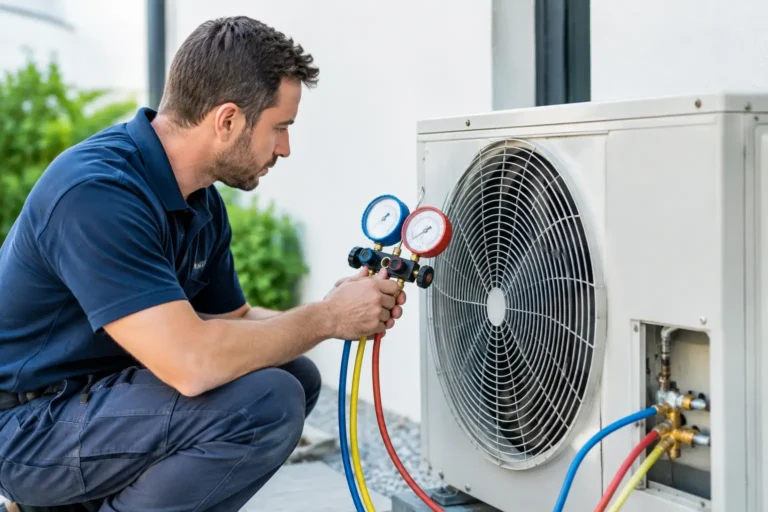
A car air conditioning system rarely stops working without leaving clues. Maybe the air is cool but never truly cold, the fan has become noisy, or an unpleasant damp smell appears every time you start the engine. The best car air conditioning fixes begin with identifying that clue correctly, rather than assuming every problem needs a quick refrigerant top-up.
A working A/C system does more than keep the cabin comfortable on a hot day. It removes moisture from the air, helping clear misted windows in wet and cold weather. That makes prompt attention worthwhile for comfort, visibility, and the long-term health of the system.
Why Car Air Conditioning Loses Its Cooling Power
Your vehicle’s A/C relies on refrigerant circulating through sealed pipes, a compressor, a condenser at the front of the car, and an evaporator behind the dashboard. Even a small fault in one area can noticeably reduce cooling.
The most common cause is a gradual refrigerant leak. Refrigerant does not get used up like fuel, so a system that needs frequent recharging is likely losing gas somewhere. Leaks can develop at seals, pipe connections, the condenser, or the compressor. Damage from road debris is especially common around the condenser because it sits at the front of the vehicle.
However, low refrigerant is not the only explanation. A blocked cabin air filter can restrict airflow, a failed cooling fan can leave the A/C warm when the car is stationary, and an electrical fault can stop the compressor from operating. Hybrid and electric vehicles add another consideration: their high-voltage electric compressors require the correct oil and specialist equipment. Treating every weak A/C system as a simple recharge can waste money and delay the real repair.
The Best Car Air Conditioning Fixes, Matched to the Fault
Replace a blocked cabin air filter
If the air from the vents feels weak, even when the fan is set high, start with the cabin air filter. This filter traps dust, pollen, leaves, and other debris before outside air enters the cabin. Over time, it can become clogged enough to restrict airflow and make an otherwise healthy A/C system feel ineffective.
A replacement filter is one of the more straightforward maintenance jobs, but its location varies by vehicle. It may sit behind the glovebox, beneath the dashboard, or under the bonnet. A clean filter can improve airflow and reduce musty odors, although it will not fix air that is blowing warm because of a refrigerant or compressor issue.
Book a proper A/C recharge after system checks
An A/C recharge, often called an air conditioning regas in the UK, removes old refrigerant and refills the system with the manufacturer-specified amount. Done correctly, the equipment also recovers the existing gas, creates a vacuum to remove moisture, and checks whether the system can hold that vacuum.
This can restore strong cooling when the refrigerant level is low and there is no significant leak. The trade-off is that a recharge alone is not a lasting solution if gas is escaping through a damaged component. If cooling improves for a few weeks or months and then fades again, ask for leak detection rather than paying repeatedly for another refill.
Modern cars may use different refrigerants, including R134a or R1234yf. They are not interchangeable, and the correct procedure matters. This is one reason professionally serviced A/C is safer than using a DIY can with an unknown amount of gas or sealant.
Find and repair refrigerant leaks
A leak test is the right next step when a system is empty, has lost its cooling quickly, or shows signs of oily residue around A/C pipes and components. A technician may use electronic detection equipment, ultraviolet dye, pressure testing, or nitrogen testing, depending on the fault and system design.
The repair could be as modest as replacing a valve core or O-ring. In other cases, it may involve a corroded pipe, damaged condenser, or leaking compressor seal. Replacing the faulty part before recharging the system protects your investment and gives you a fairer picture of the true cost.
Clean the evaporator to tackle bad smells
A sour or damp odor from the vents usually points to bacteria and moisture on the evaporator. Because the evaporator gets cold during operation, condensation naturally forms there. If drainage is poor or the system is not used regularly, bacteria can multiply.
An evaporator cleaning treatment can remove the odor and improve cabin freshness. It is sensible to combine this with a new cabin filter, particularly if pollen or dust has built up. If there is water in the footwells, persistent misting, or a smell that returns immediately, the condensate drain may be blocked and should be inspected.
Repair cooling fans, compressors, and electrical faults
If the A/C is cold while driving but warm in traffic, a condenser cooling fan may not be doing its job. Without sufficient airflow across the condenser, the refrigerant cannot shed heat effectively. This fault is often more noticeable on warm days or when the car is idling.
No cooling at all can also be caused by a compressor fault, blown fuse, pressure sensor issue, damaged wiring, or a control-module fault. These problems need proper diagnostics, not guesswork. A professional scan can identify relevant fault codes, while pressure readings and electrical tests help confirm whether the compressor is being commanded to run and whether it is operating as intended.
Fixes That Can Create Bigger Problems
DIY A/C recharge kits can seem convenient, but they carry real risks. Overfilling a system can raise pressures and affect cooling performance. Using the wrong refrigerant or oil can damage components, while leak-sealing additives can contaminate recovery equipment and make later repairs more difficult.
Do not assume a loud noise from the engine bay is harmless either. A clicking, grinding, or squealing noise when the A/C is switched on may indicate compressor clutch or bearing trouble. Continuing to use the system could turn a manageable repair into a more expensive one.
It is also worth avoiding the habit of running the A/C only in summer. Operating it periodically throughout the year helps circulate oil within the system and keeps seals in better condition. Use it with the heater during colder months to demist the windscreen faster.
When to Arrange Professional A/C Diagnostics
Arrange an inspection if your A/C blows warm, repeatedly loses its cooling, smells bad after cleaning, makes unusual noises, or leaves unexplained water inside the cabin. A garage should explain whether the issue is a straightforward service need or a confirmed mechanical, electrical, or leak-related fault before recommending work.
For hybrid and electric vehicles, this matters even more. Their A/C systems can be linked to battery temperature management and use specialist high-voltage components. The wrong service process may affect both vehicle safety and system performance. A workshop equipped to diagnose conventional, hybrid, and electric vehicles can assess the system correctly without treating every car the same.
At AutoNet VIP, the priority is clear diagnosis and transparent advice. That means explaining what has failed, what repair is recommended, and whether a recharge is appropriate before any work is carried out.
Keep Your A/C Performing Between Services
Run the air conditioning for around 10 minutes every week, including in winter. Keep leaves and debris clear from the lower edge of the windscreen and front grille, where they can affect airflow and drainage. Replace the cabin filter as part of routine servicing, especially if you drive frequently in traffic, dusty conditions, or during high-pollen periods.
Most importantly, pay attention when the cooling first changes. Addressing weak airflow, odd smells, or intermittent cooling early gives you more repair options than waiting until the system stops altogether. A well-diagnosed repair is usually the one that keeps the cabin cool, the windows clear, and the bill under control.