A BMW auxiliary drive belt may be out of sight, but it should never be out of mind. This single belt transfers power from the engine to vital components, and a failure can turn an ordinary journey into a recovery situation surprisingly quickly. BMW auxiliary drive belt replacement is therefore not simply a matter of changing worn rubber. The belt, tensioner, pulleys and surrounding components all need checking together.
On many BMW petrol and diesel models, the auxiliary belt drives the alternator, air-conditioning compressor and, depending on the engine design, other important accessories. If it slips or breaks, the battery may stop charging, steering assistance can be affected on certain older models, and the engine may overheat where the water pump is belt-driven.
What does an auxiliary drive belt do on a BMW?
Often called a serpentine belt, the auxiliary drive belt runs around a series of pulleys at the front of the engine. It is separate from the timing chain or timing belt, but that does not make it a minor maintenance item. A failed auxiliary belt can leave you without charging or cooling and, on some engines, belt debris can cause further damage if it enters areas where it should not be.
The exact layout depends on the BMW engine and model. A 1 Series, 3 Series, 5 Series, X model or MINI-derived BMW engine may use different belt lengths, tensioner arrangements and auxiliary components. That is why the correct replacement part must be selected using the vehicle registration number and engine details, rather than relying on a belt that merely looks similar.
Modern BMWs also make diagnosis less straightforward. A battery warning light may point to a charging issue, but the root cause could be a slipping belt, a weak alternator, a seized pulley or an electrical fault. Replacing parts without testing can add unnecessary cost without solving the problem.
Signs your BMW may need an auxiliary drive belt replacement
A high-pitched squeal when starting the engine, accelerating or switching on the air conditioning is a familiar warning sign. It may be caused by a glazed or worn belt, but it can also indicate poor tension, pulley misalignment or contamination from oil or coolant. A new belt fitted over an unresolved fault will often become noisy again.
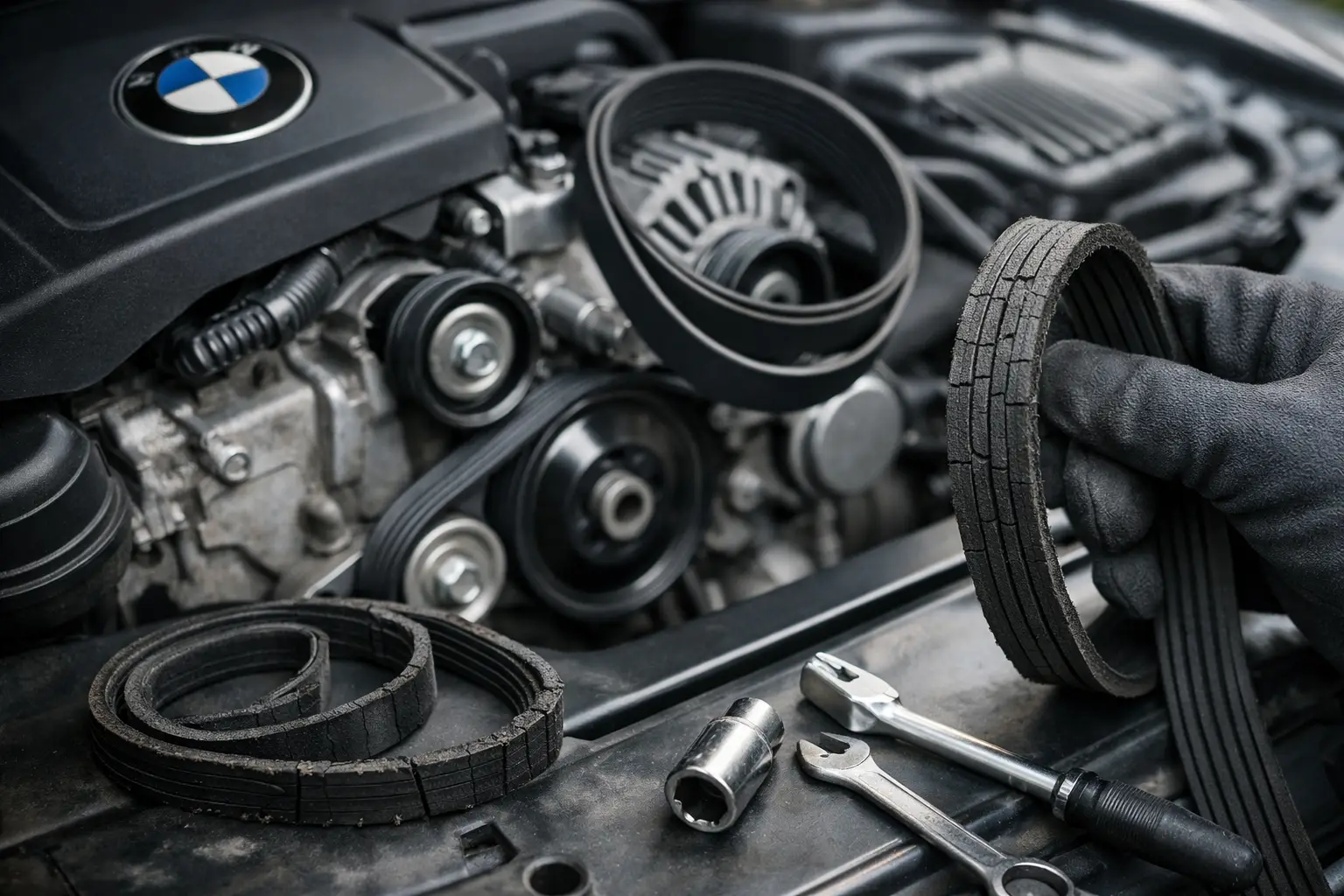
Visible cracking, frayed edges, missing ribs or a shiny, hardened belt surface all justify prompt inspection. Belts can also deteriorate from age even when mileage is modest, particularly on cars that cover short distances, sit unused for long periods or regularly experience stop-start driving.
You may also notice a battery warning light, dimming lights, intermittent electrical problems or a heavy steering feel on applicable models. If the engine temperature rises unexpectedly, stop safely as soon as possible and do not continue driving in the hope that it will settle. Overheating can cause serious engine damage far beyond the cost of a belt repair.
There are occasions when there is no obvious noise at all. During a routine service, a technician may identify cracks in the belt ribs, a weak tensioner or play in an idler pulley before a breakdown occurs. Preventative replacement is usually the more convenient and cost-effective route.
Why the belt is only part of the job
A proper BMW auxiliary drive belt replacement should begin with an inspection, not a quick swap. The old belt provides useful clues. Uneven wear along one edge can suggest pulley misalignment. Rib damage may point to debris or a failing pulley. A belt coated in oil or coolant indicates a leak that needs resolving before the new belt is installed.
The automatic tensioner and idler pulleys deserve particular attention. Their bearings can become noisy or rough, while a tired tensioner may allow the belt to flutter, slip or run incorrectly. On some BMW engines, the crankshaft pulley vibration damper should also be checked for deterioration. If its rubber section begins to separate, it can cause misalignment and damage a replacement belt.
This is the trade-off between the cheapest immediate repair and a dependable repair. Reusing components may be appropriate if they are tested and found to be in good condition. If a pulley is worn or a tensioner is weak, however, replacing only the belt can be false economy. Clear advice should explain what is essential now, what can be monitored, and why.
Common causes of premature belt wear
Age and mileage naturally affect any rubber component, but premature wear usually has an underlying reason. Oil leaks from the engine, coolant leaks around hoses or the water pump, and a failing air-conditioning compressor pulley can all shorten belt life. Frequent short trips and long periods without use can contribute too.
Incorrect fitting is another risk. The belt must follow the manufacturer’s routing precisely and sit fully within every pulley groove. A belt installed incorrectly can shred, jump off or place extra strain on accessory components. This is one reason a quality workshop will confirm the belt routing and run the engine afterwards to check alignment and operation.
When should a BMW auxiliary drive belt be checked?
Your BMW service schedule and model-specific guidance are the starting point, but condition matters as much as a fixed interval. The belt should be inspected during routine servicing, especially once the vehicle is older or has covered higher mileage. If you hear a new squeal, smell burning rubber, see a warning light or notice a damaged belt, arrange an inspection without delay.
There is no single replacement interval that suits every BMW. Engine type, usage, climate, previous repair history and the condition of the tensioner system all matter. A car used for regular motorway journeys may place different demands on the belt from one used mainly for short school runs or London traffic.
For this reason, be wary of blanket advice that promises a replacement is always due at one exact mileage. A reputable technician should inspect the actual condition of the belt and its drive system, then discuss the findings in plain language.
What happens during the replacement?
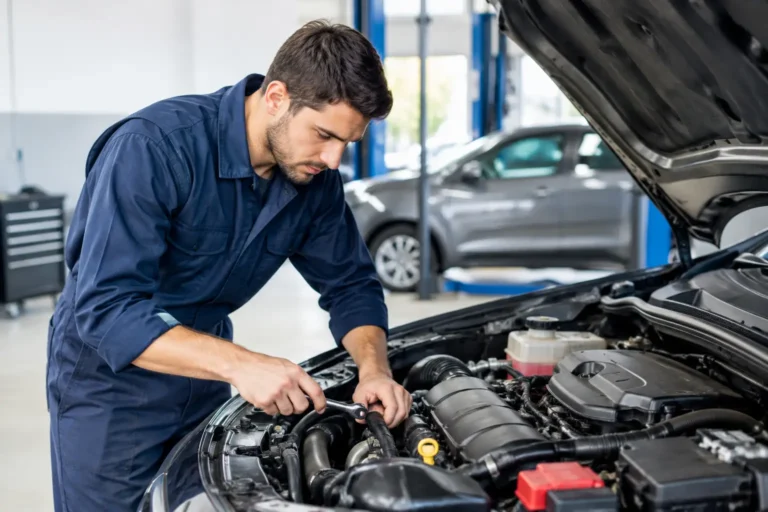
The work starts with identifying the correct belt specification and checking the complete auxiliary drive system. Access can vary considerably between BMW models. On some vehicles the belt is relatively accessible; on others, undertrays, intake components or wheel-arch liners may need removing to reach it safely.
The technician releases the tensioner, removes the old belt and examines each pulley by hand where appropriate. They will look for rough bearings, excess movement, seized components, fluid contamination and misalignment. Any fault found should be explained before additional work is carried out.
Once the new belt is fitted correctly, the system is checked with the engine running. This helps confirm that the belt tracks properly, the tensioner behaves as it should, charging output is satisfactory and there are no unusual noises. If the original concern involved a battery warning light, further charging-system diagnostics may be needed to distinguish a belt issue from alternator or battery faults.
Can you drive with a noisy or damaged auxiliary belt?
It is not a sensible risk. A brief squeal on a damp morning may not always mean immediate failure, but it still deserves investigation. Continuing to drive with visible damage, persistent noise or a warning light can turn a manageable repair into a breakdown or, in the worst cases, overheating damage.
If the belt has broken, stop in a safe place, switch off the engine and seek assistance. Do not attempt to continue just because the car still appears to run. The consequences depend on the engine layout, and the loss of charging or cooling can leave you stranded quickly.
For drivers in Harlow and the surrounding Essex area, AutoNet VIP can inspect BMW auxiliary belt systems, diagnose related charging concerns and provide clear recommendations before work begins. The focus should always be on the condition of the complete system, not simply fitting a new belt and hoping for the best.
A small belt has a large role in keeping a BMW dependable. Acting when the first warning signs appear gives you more choice, more control over cost and a much better chance of avoiding an inconvenient day at the roadside.