The right brake fluid change interval is not a detail to leave until an MOT reminder appears on the dashboard calendar. Brake fluid is the hydraulic link between your foot on the pedal and the brakes slowing the car. When it is overdue, the change is usually gradual and invisible – but the safety margin you depend on in an emergency can be reduced.
Most drivers think first about brake pads and discs, which makes sense because they wear in plain sight. Brake fluid works differently. It sits in a sealed system, yet it can absorb moisture over time, and that changes how it performs. A planned fluid change is a relatively straightforward piece of maintenance that helps protect the braking system, avoid unnecessary repair costs and keep pedal response consistent.
What is the usual brake fluid change interval?
For many cars, the recommended brake fluid change interval is every two years, regardless of mileage. This is a common manufacturer recommendation across petrol, diesel, hybrid and electric vehicles. However, it is a guideline, not a substitute for the service schedule for your particular registration.
Some manufacturers specify a change every three years initially and every two years after that. Others use a fixed two-year interval throughout the vehicle’s life. A few models may have different requirements depending on the type of fluid used, driving conditions or service plan. That is why checking the handbook, digital service record or manufacturer servicing information matters more than relying on a one-size-fits-all rule.
Mileage is less relevant here than it is for engine oil. A low-mileage family car that spends much of its time parked can still need brake fluid replacing on time because moisture absorption is driven by age and exposure, not just miles covered.
Why brake fluid needs changing
Modern brake fluid is designed to operate at high temperatures and transfer pressure reliably. The problem is that most commonly used brake fluids are hygroscopic, meaning they naturally absorb water vapour from the atmosphere over time. Small amounts can enter through hoses, seals and the reservoir whenever the system is opened during servicing.
As water content rises, the fluid’s boiling point falls. Under normal commuting this may not cause an obvious problem. But repeated heavy braking, towing, steep descents or stop-start traffic can create considerable heat. If contaminated fluid gets hot enough for moisture within it to boil, vapour bubbles may form. Unlike fluid, vapour compresses, which can leave the pedal feeling soft or travelling further than expected.
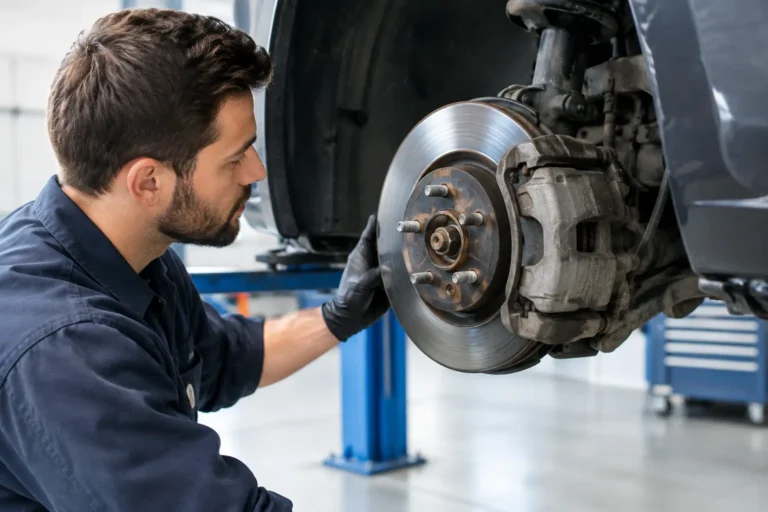
Moisture can also encourage corrosion inside brake pipes, callipers, wheel cylinders and the ABS hydraulic unit. These components are more expensive to repair than a routine fluid replacement. Changing the fluid at the correct interval is therefore as much about protecting the system as it is about maintaining braking performance.
Signs your brake fluid may need attention sooner
A brake fluid change should normally be planned rather than prompted by a fault. If you notice a change in brake feel, do not assume fluid alone is the cause or wait for the next service. Brakes should be inspected promptly.
Warning signs include a spongy pedal, a pedal that travels unusually far, inconsistent braking response, a brake warning light, visible fluid leaks or a burning smell after braking. These symptoms may point to worn pads, a seized calliper, air in the hydraulic system, a master cylinder issue or another fault requiring diagnosis.
Fluid that looks dark can be an indication of age or contamination, but colour alone is not a reliable test. The fluid can discolour as it ages, while some serious issues cannot be judged by appearance. A garage can assess the condition with suitable testing equipment and inspect the wider braking system at the same time.
Does driving style affect the interval?
Your manufacturer’s schedule should always come first, but how and where you drive affects how closely the braking system should be monitored. Regular motorway journeys usually place less demand on the brakes than urban driving with frequent junctions, queues and short trips. Carrying heavy loads in a van, towing, driving a performance car enthusiastically or regularly travelling through hilly areas can also increase brake temperatures.
These conditions do not automatically mean you should replace fluid every year. They do mean brake checks should not be treated as a tick-box exercise. If the brakes are working harder, pads, discs, callipers and fluid condition all deserve careful attention at each service.
For vehicles that are rarely used, age remains the key factor. Leaving a car on the drive for long periods does not preserve brake fluid indefinitely. In fact, infrequent use can create separate issues such as corroded discs, sticking callipers and deteriorating seals.
Hybrid and electric cars still need brake fluid changes
Regenerative braking means hybrid and electric cars can use their friction brakes less often, particularly in town. That can extend pad life, but it does not remove the need for brake fluid maintenance. The hydraulic braking system remains essential whenever stronger braking is needed, and it must be ready to work immediately.
There is a useful trade-off to understand. Regeneration may reduce mechanical wear, yet less frequent use of conventional brakes can allow corrosion to build on discs or cause moving parts to become stiff. A proper service for a hybrid or EV should consider both the high-voltage safety requirements and the condition of the ordinary braking hardware.
What happens during a professional brake fluid change?
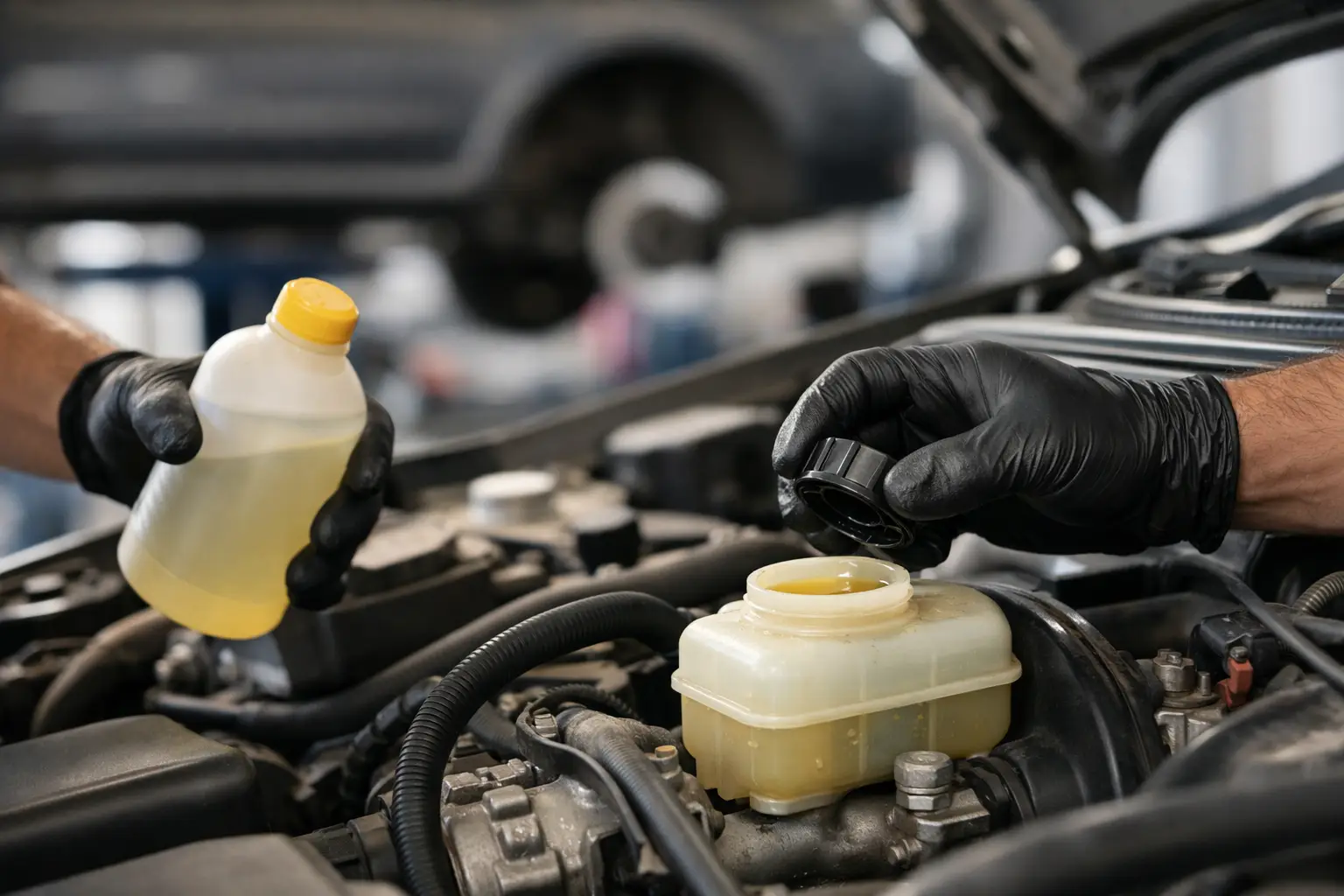
A proper brake fluid replacement is more than topping up the reservoir. The technician checks the system for leaks and obvious component concerns, confirms the correct fluid specification, then removes old fluid from the hydraulic circuits and replaces it with fresh fluid. The system is bled in the correct sequence so that air is not left inside.
Using the specified fluid matters. DOT 4 is common on many UK vehicles, but not every vehicle uses the same grade. Mixing incompatible fluids or choosing a product simply because it is available can affect performance and seals. The reservoir cap and manufacturer information should be checked rather than guessed.
On some newer vehicles, especially those with advanced ABS, electronic brake systems or particular service procedures, diagnostic equipment may be needed to operate valves or place components into service mode. This is one reason a professional brake fluid change is often the sensible choice. The job is safety-critical, and a poor bleed can leave the pedal unsafe.
Brake fluid, the MOT and your service schedule
An MOT does not replace routine maintenance. During an MOT, the tester assesses the braking system’s condition and performance within the test requirements. It is not a full brake fluid quality check, and passing an MOT does not prove that the fluid is fresh or within the manufacturer’s recommended interval.
Similarly, waiting until the annual service can be too long if your last fluid change was nearly two years ago and the service is still months away. Check the invoice or digital record for the date it was last completed. If there is no clear record, it is worth asking for the fluid to be tested and the correct schedule confirmed.
Keeping service records up to date is helpful when selling a vehicle, but the immediate benefit is simpler: you know where you stand. There is no need to second-guess whether a safety-related job was completed or postponed.
How to plan your next brake fluid change
Start by finding the last recorded replacement date, not just the date of your last general service. Then compare it with your vehicle manufacturer’s recommendation. If the two-year mark is approaching, booking it alongside a service, brake inspection or MOT can be convenient, provided it does not delay work that is already due.
Ask the garage to explain what fluid specification your vehicle requires, whether the system showed any signs of leakage or corrosion, and when the next replacement will be due. Clear answers and an itemised record make future maintenance easier to manage.
At AutoNet VIP, we believe brake maintenance should be explained in plain language, with no pressure and no surprises. A brake fluid change may be routine, but it supports every journey you make – from the school run to a wet motorway stop. Book it at the right time, and your braking system has the best chance of responding exactly as it should when you need it most.