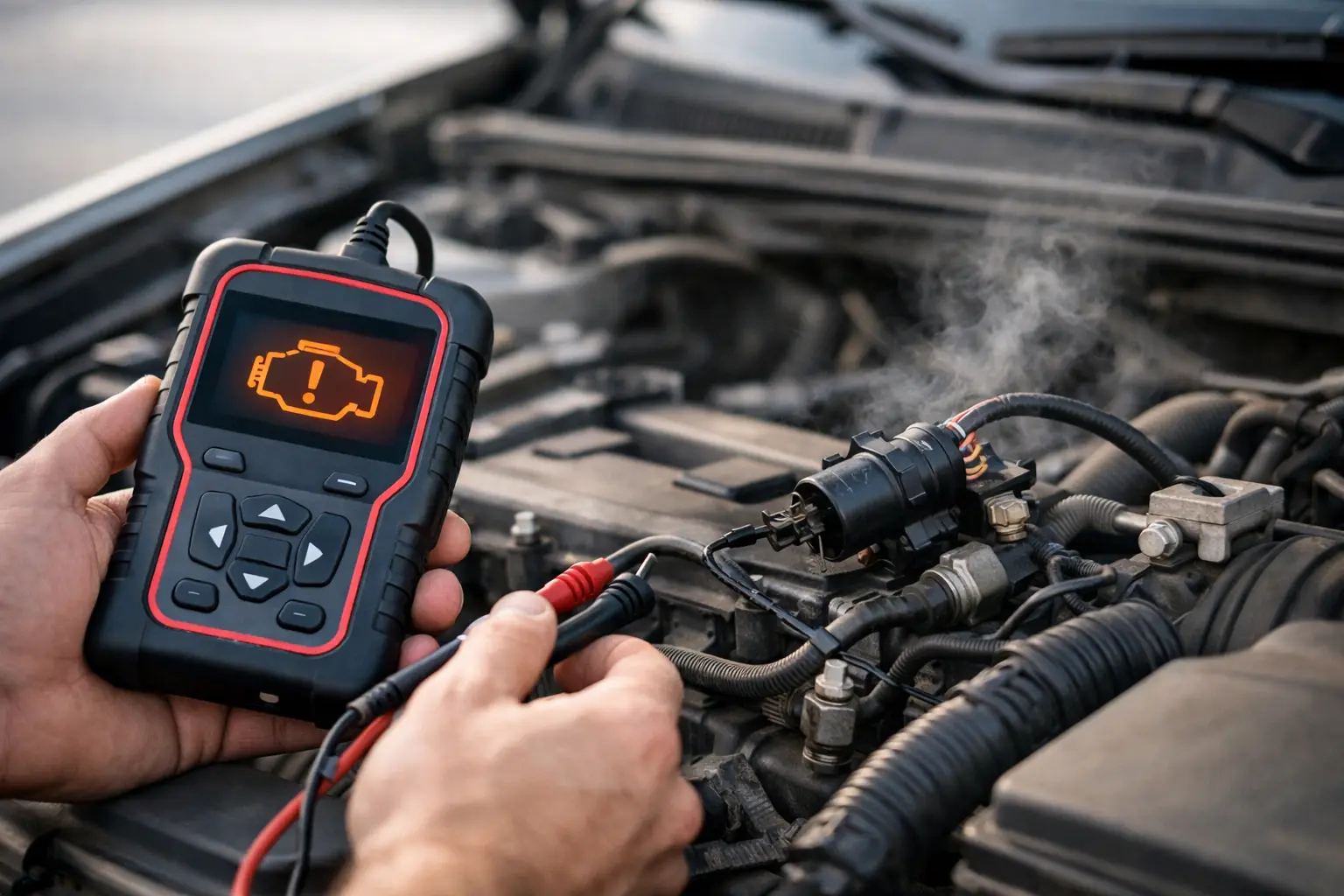
A diagnostic report showing p0005 fault location fuel shut-off valve wiring open circuit fuel shut-off valve can sound more alarming than it is. The code does not automatically mean the valve itself has failed, nor does it identify one exact spot that needs replacing. It tells the technician that the engine control unit has detected an electrical break, or an implausibly high resistance, in the circuit controlling the fuel shut-off valve.
For a driver, this can mean a warning light, difficult starting or a vehicle that will not start at all. For a technician, it is a clear reason to test the wiring, connectors, power supply, earth path and valve before any parts are authorised. That methodical approach matters because replacing a fuel shut-off valve without finding a damaged wire can leave the original fault exactly where it was.
What does a P0005 fault mean?
P0005 is a generic OBD fault code generally described as Fuel Shut-Off Valve A Control Circuit/Open. Put simply, the engine management system is trying to operate a valve or solenoid, but it cannot see a complete electrical circuit.
An “open circuit” is the opposite of a short circuit. Instead of electricity taking an unintended route, it cannot travel along the intended route at all. A wire may be broken internally, a connector may have pulled loose, corrosion may have created high resistance, or the solenoid winding inside the valve may have failed.
The exact component and its position vary by make, model, engine and fuel system. On many diesel vehicles, the relevant valve may be associated with controlling fuel supply. On other vehicles, the manufacturer’s wording and circuit design can differ. This is why a code reader alone cannot provide a reliable P0005 fault location. The correct wiring diagram for the specific vehicle is essential.
Signs you may notice with a fuel shut-off valve wiring fault
The engine warning light is often the first sign, particularly if the fault is intermittent. If the circuit has failed completely, the car may crank but not start because the engine is not receiving fuel as intended.
Other symptoms can include rough running, an engine that cuts out, reduced performance or an intermittent non-start after the vehicle has been driven. However, symptoms depend on the way the manufacturer has designed its fail-safe system. Some cars may store P0005 with few noticeable driving issues, while others may prevent starting to protect the fuel system.
Do not assume that a no-start condition is caused solely by P0005. A weak battery, blown fuse, fuel pressure issue, immobiliser fault or separate engine-management code can create similar symptoms. A proper diagnostic inspection looks at the complete picture rather than treating one stored code as a final answer.
Common P0005 fuel shut-off valve open-circuit causes
A damaged section of wiring is one of the most common causes. Engine-bay wiring lives in a harsh environment, exposed to heat, vibration, moisture and movement. Looms can rub against brackets, become brittle near hot components or suffer damage following previous repair work.
Connector faults are equally common. Bent pins, water ingress, green corrosion and poor terminal tension can interrupt the circuit, even when the plug appears connected from the outside. Rodent damage is also worth considering where a vehicle has been parked for a long period.
The fuel shut-off valve or solenoid itself can fail internally when its winding develops excessive resistance or breaks. Less commonly, the issue may be a blown fuse, a fault in the relay or control module, or a problem with the engine control unit’s output stage. These possibilities need testing in order, as module replacement is never the sensible first step.
How a proper P0005 diagnosis is carried out
A reliable repair starts with confirming the fault, checking whether it is current, pending or historic, and reading all other stored codes. Freeze-frame information can show the operating conditions when the fault was detected, which is particularly useful for an intermittent issue.
A technician should then inspect the relevant wiring loom and connector carefully, looking for trapped, chafed, melted or contaminated wiring. The valve connector may be checked for a secure fit and terminal damage. This visual stage can find obvious faults quickly, but it is not enough on its own.
Electrical testing follows. Using the manufacturer’s wiring information, the technician checks for the correct supply voltage, a sound earth where applicable, continuity between the valve and control unit, and the resistance of the valve’s solenoid. A voltage-drop test can expose a weak connection that a basic continuity check may miss.
Where the fault only occurs when the engine moves or reaches temperature, the loom may need to be gently manipulated while live readings are monitored. This is often the difference between a lasting repair and a frustrating cycle of warning lights.
Only after these checks should a replacement valve, repair section of wiring, connector or other component be recommended. Once repaired, the code should be cleared and the vehicle retested to make sure the engine management system no longer detects an open circuit.
Why replacing the valve first can cost more
A fuel shut-off valve is a tempting target because the fault code names it. Yet the code refers to the valve’s control circuit, not necessarily the valve itself. If a corroded connector or broken wire is the real cause, fitting a new valve may provide no improvement at all.
There is also a practical safety consideration. Fuel systems and electrical circuits need careful handling. Attempting to bridge terminals, fit an unsuitable fuse or bypass a valve can create a fire risk, damage the vehicle’s control module or make a fault harder to trace later. If the car will not start, it is better to arrange professional diagnostics than repeatedly cranking it or experimenting with wiring.
The repair cost depends on what the tests reveal. A minor connector repair may be relatively straightforward, whereas a damaged loom in a difficult-to-reach area can take longer. If the valve has failed, the final cost will vary by vehicle and parts availability. Clear testing before approval keeps those costs transparent and avoids replacing parts on speculation.
Can you drive with code P0005?
It depends on the symptoms. If the engine is running normally and only the warning light is on, the vehicle may still be driveable for a short journey to a garage. Even then, it should not be ignored. An intermittent electrical fault can develop into a complete no-start without warning.
If the engine cuts out, struggles to start, runs poorly or loses power, avoid unnecessary driving. Loss of power in traffic is a safety concern, and continued use may leave you stranded. A vehicle that smells strongly of fuel, has visible wiring damage or repeatedly blows a fuse should not be driven until it has been checked.
For diesel, petrol, hybrid and modern electronically controlled vehicles alike, the right response is evidence-led diagnosis. The code wording may be generic, but the correct repair is always vehicle-specific.
What to tell your garage
When booking in, explain whether the engine warning light is permanent or intermittent, whether the car starts consistently, and whether the issue began after recent work, a flat battery, heavy rain or rodent damage. Mention any other warning messages and bring the scan-code printout if you have one.
At AutoNet VIP, diagnostic work is focused on identifying the actual cause before repairs are proposed, with findings explained clearly so you can make an informed decision. For drivers in Harlow and the surrounding area, that means a P0005 fault can be investigated properly rather than guessed at.
A warning light is rarely convenient, but an open-circuit fault is usually manageable when it is traced early. Book a diagnostic check, get the circuit tested properly and give yourself the best chance of a repair that solves the issue first time.