A P2348 fault can be unsettling because it often arrives with a warning light, rough running or a noticeable loss of power. The phrase error code P2348 – cylinder pressure sensor circuit malfunction points to an electrical signal issue in the system the engine control unit uses to monitor combustion pressure. It is most commonly associated with certain modern diesel engines, where accurate cylinder-pressure data helps control injection timing, emissions and smooth running.
This is not a code to clear and ignore. The vehicle may still drive, but continued use can lead to poor fuel economy, difficult starting, reduced performance and, in some cases, additional emissions-system faults. A proper diagnostic check identifies whether the sensor itself is at fault or whether the real cause lies in its wiring, connector, power supply or engine control system.
What does P2348 cylinder pressure sensor circuit malfunction mean?
Cylinder-pressure sensing is used on some diesel engines to give the engine control unit a clearer picture of what is happening during combustion. Rather than relying only on estimated values, the system can measure pressure changes within a cylinder and adjust fuelling accordingly.
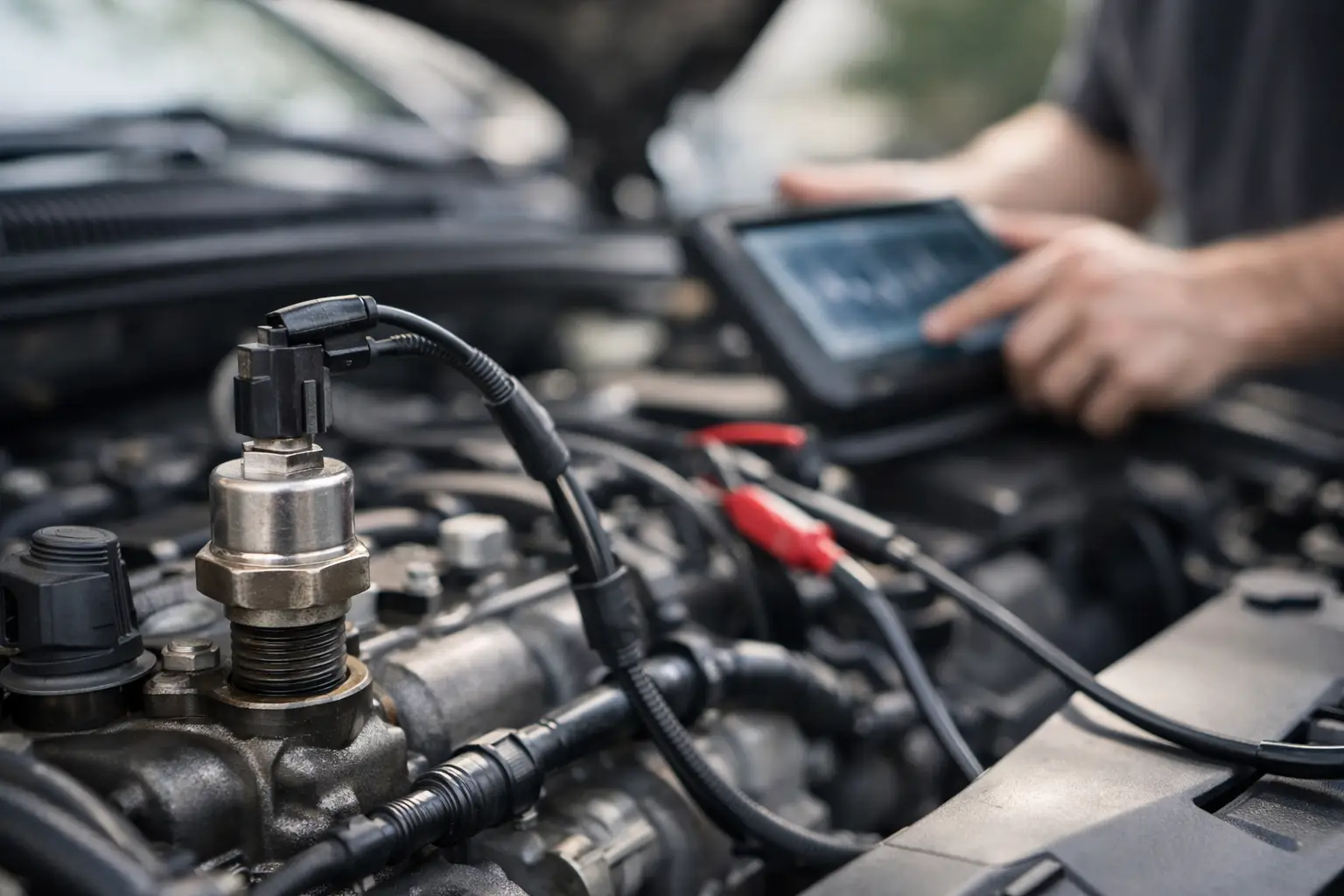
On many applications, the sensor is integrated into a glow plug. On others, it may be a separate component. The exact design, cylinder location and manufacturer wording vary, so the code description shown by a basic scanner should be treated as a starting point, not a final diagnosis. Some vehicles describe P2348 as a circuit signal problem, while others provide a more specific description such as a signal reading outside its expected range.
In plain English, the control unit has received a reading that does not make electrical sense. That could mean the sensor is damaged, but it could equally mean the signal cannot travel correctly between the sensor and the control unit.
Signs you may notice while driving
The symptoms depend on the vehicle and how the engine has responded to the fault. Some drivers only see the engine management light. Others notice a change in the way the car starts, idles or accelerates.
Common signs include difficult cold starting, uneven idle, hesitation under acceleration, reduced power or limp-home mode, increased fuel use and excessive smoke from the exhaust. The glow plug warning light may also appear on vehicles where the pressure sensor is built into a glow plug.
A diesel particulate filter may be affected over time too. If combustion is not being controlled accurately, the engine can produce more soot than usual. That places extra pressure on the DPF and can create further warning lights or regeneration problems. It does not mean a P2348 code has automatically damaged the DPF, but it is a good reason not to delay investigation.
The most likely causes of a P2348 fault
The sensor is a possible cause, especially on higher-mileage vehicles or where a component has suffered heat stress. However, replacing it without testing is not the transparent or cost-effective approach. Modern engine bays expose wiring and connectors to vibration, oil contamination, water ingress and extreme temperature cycles.
A technician will usually consider the sensor circuit as a whole. Likely causes include:
- A failed or deteriorating cylinder-pressure sensor
- Damaged, stretched or heat-affected wiring near the sensor
- Corrosion, loose terminals or oil contamination in the electrical connector
- A poor earth, reference voltage or power supply issue
- Incorrect readings caused by a control-unit wiring fault or, less commonly, an engine control unit problem
- Previous repair work that has trapped, disturbed or incorrectly routed a wiring loom
There can also be related faults stored alongside P2348. These might concern glow plugs, injector control, boost pressure, EGR operation or the DPF. They should not be assumed to be separate failures. A shared wiring issue, weak battery voltage or an underlying combustion problem can produce several codes at once.
Why a code reader alone cannot confirm the repair
A handheld code reader is useful for identifying that a problem exists, but it cannot reliably tell you which part to buy. Clearing P2348 may turn off the warning light temporarily, yet the light will return when the engine control unit sees the same implausible signal again.
A proper diagnostic process begins with a full vehicle scan, including freeze-frame data. This records conditions when the code was set, such as engine temperature, speed, voltage and load. Those details matter. A fault that occurs only on a cold start needs a different line of enquiry from one that appears during motorway acceleration.
The technician should then inspect the relevant sensor, connector and loom carefully. Wiring damage is sometimes visible, but not always. A wire can break internally while its outer insulation still looks intact. Electrical testing checks continuity, resistance, voltage supplies and earth quality against the manufacturer’s specification.
Live data is equally valuable. By comparing cylinder-pressure readings with expected values and looking for an intermittent drop-out, the technician can assess whether the signal is believable. Depending on the vehicle, further tests may include checking glow plug operation, examining injector correction values or carrying out a guided manufacturer diagnostic routine.
Repair options and what affects the cost
The repair depends entirely on the confirmed cause. A corroded terminal or damaged section of loom may be repairable without replacing the sensor. If the sensor has failed, replacement is usually required, followed by code clearing, system checks and a road test.
On engines where the pressure sensor is built into a glow plug, removal must be handled with care. Glow plugs can seize in the cylinder head, particularly on older diesel engines. Forcing one out can turn a relatively straightforward repair into a more involved job. An experienced workshop will assess the risk, use the correct extraction methods where needed and discuss any additional work before proceeding.
Costs therefore vary more than drivers often expect. The vehicle make and engine, sensor design, access, wiring condition and whether the fault is intermittent all affect labour time. The fairest route is diagnosis first, then a clear estimate for the work actually required. Paying for a confirmed repair is usually better value than fitting parts by guesswork.
Can you keep driving with P2348?
If the engine management light is on but the vehicle is running normally, you may be able to drive a short distance to arrange diagnostics. Even then, avoid heavy towing, hard acceleration and long journeys until the cause is known. Watch for worsening performance, smoke or repeated warning messages.
Stop driving and seek assistance sooner if the engine is misfiring severely, entering limp mode, struggling to start, producing heavy smoke or displaying a flashing warning light. These symptoms can indicate a more urgent issue and may increase the risk of damage to emissions equipment.
Do not assume the MOT will be unaffected. An illuminated engine management light can lead to a failed MOT if it indicates an emissions-related fault. More importantly, resolving the underlying fault helps keep the engine clean-running and dependable between services.
Preventing sensor and wiring problems
Not every P2348 issue is preventable, as electronic components can fail with age. Regular servicing does, however, give a garage an opportunity to spot damaged wiring, oil leaks around electrical connections, poor battery health and developing diesel-system faults before they become more disruptive.
If you have had injector, glow plug or engine work carried out recently and P2348 appears soon afterwards, mention that when booking in. It does not prove the previous work caused the fault, but it gives the technician useful context and can shorten the diagnostic process.
For drivers in Harlow and the surrounding area, AutoNet VIP can investigate engine management faults with manufacturer-level diagnostic equipment and explain the findings before any repair is authorised. The useful next step is not to speculate about the code at home, but to have the sensor circuit tested properly so you can make a clear, informed decision about your vehicle.