You do not usually notice wheel alignment going out all at once. It tends to show up in small ways first – the steering wheel sits a little off-center, the car drifts more than it used to, or your front tires start wearing faster on one edge. Those are classic signs you need wheel alignment, and catching them early can save you money, protect your tires, and make the car feel safer to drive.
Alignment is not just about whether the wheels look straight. It affects how your vehicle tracks down the road, how evenly your tires wear, and how stable the car feels when you brake, corner, or drive at highway speed. If it is off, even by a small amount, you may notice changes in comfort and control long before a warning light ever appears.
What wheel alignment actually means
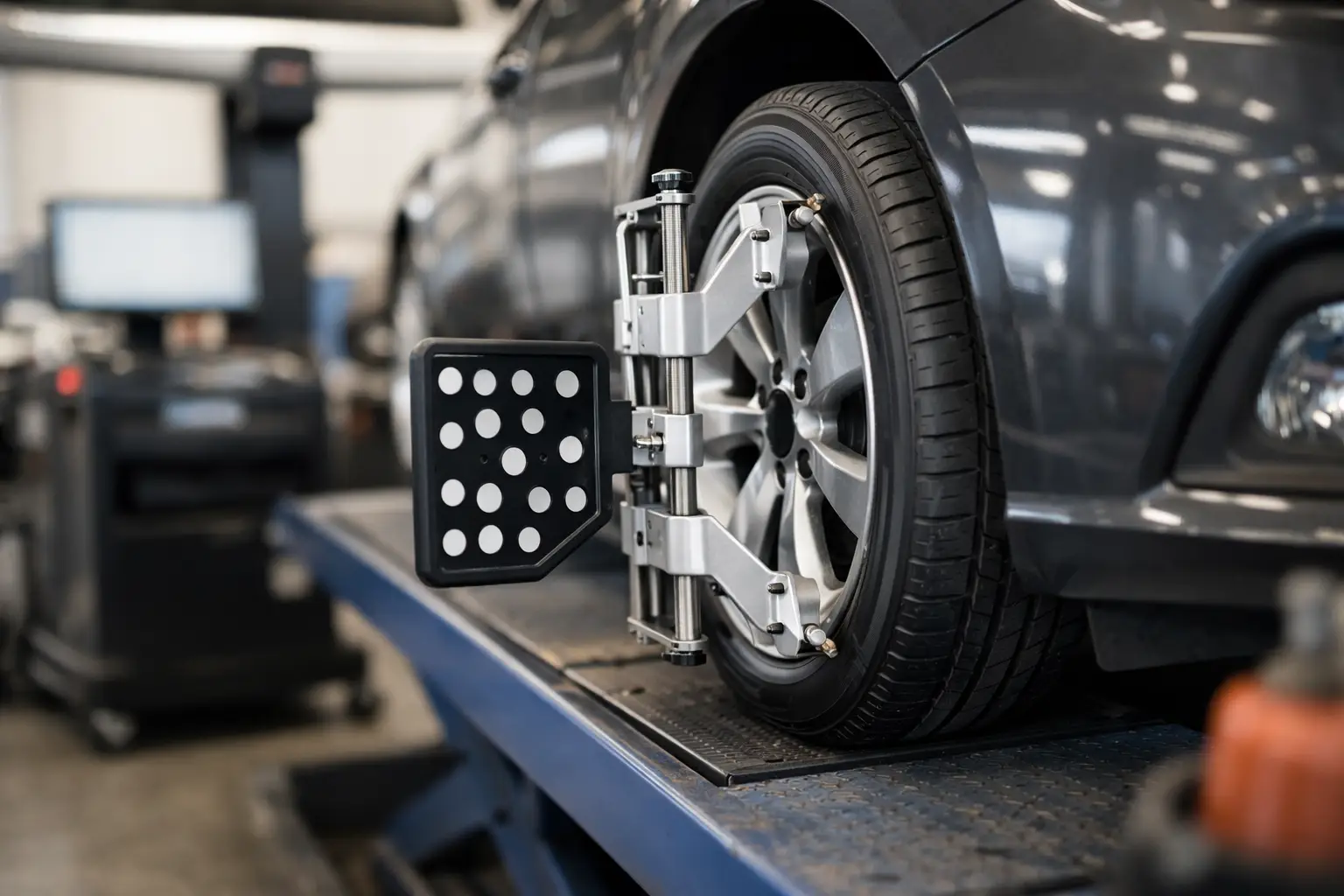
Wheel alignment is the adjustment of the suspension angles so the wheels sit at the correct position for the manufacturer’s specifications. The key settings include camber, toe, and caster. Most drivers do not need to memorize those terms, but they do matter because they influence how much of the tire meets the road and how the vehicle responds to steering input.
A proper alignment helps the car drive straight, keeps the steering predictable, and reduces uneven tire wear. It also works hand in hand with suspension components, tire condition, and steering geometry. That is why alignment issues can sometimes feel like a tire problem, a suspension problem, or both.
Signs you need wheel alignment
Some symptoms are obvious, while others are easy to ignore until they become expensive. If you notice one of these signs consistently, it is worth having the vehicle checked.
Your car pulls to one side
If you are driving on a level road and the vehicle wants to move left or right without you steering that way, alignment is one of the first things to consider. A slight drift can happen because of road camber, wind, or tire pressure differences, but a steady pull is not something to brush off.
That said, pulling is not always caused by alignment alone. A sticking brake caliper, uneven tire wear, or low pressure on one side can create a similar feeling. A proper inspection matters because the fix depends on the real cause, not just the symptom.
The steering wheel is off-center
A steering wheel that sits crooked when you are driving straight is one of the clearest signs your alignment is off. Sometimes it is only a small angle, which makes it easy to live with for a while. But if the steering wheel is not centered, the wheel angles may not be set correctly either.
Drivers often adapt to this without realizing it. You hold the wheel slightly to one side every day, and it starts to feel normal. It is still worth correcting, because what feels minor at the wheel can translate into unnecessary tire wear over time.
Your tires are wearing unevenly
Tire wear tells a story. If one edge of a tire is wearing faster than the rest, or if the tread pattern looks noticeably different from one side to the other, alignment may be the reason. Inner-edge wear, outer-edge wear, and feathering across the tread can all point to incorrect wheel angles.
This is one of the most expensive alignment warning signs to ignore. Tires wear out much faster when they are not meeting the road evenly, and replacing a set of tires costs far more than correcting the alignment that damaged them.
The steering feels loose or unstable
A car with poor alignment can feel vague on the road. You may find yourself making constant small corrections to keep it straight, especially at higher speeds. Some drivers describe it as the car feeling unsettled or less planted than usual.
There is a trade-off here. While alignment can cause instability, worn suspension or steering parts can cause it too. In many cases, an alignment check is part of a larger inspection because there is no point setting angles precisely if a worn component is still allowing movement.
The vehicle vibrates or feels unsettled
Vibration is more commonly linked to wheel balancing or tire issues than alignment by itself, but poor alignment can contribute to a generally rougher, less settled driving feel. If the car feels off and the tires are also wearing unevenly, alignment should be part of the diagnosis.
This is where experience counts. Good repair work is not about guessing from one symptom. It is about checking the full picture – tires, suspension, steering, braking, and alignment – so you do not spend money fixing the wrong problem first.
You recently hit a pothole or curb
One hard impact can knock alignment out, even if the car seems fine right afterward. Potholes, curbs, speed bumps taken too quickly, and minor collisions can all shift suspension geometry. Modern vehicles are built to handle daily use, but they are not immune to impact damage.
If you know you hit something hard, it is smart to stay alert for new symptoms over the next few days. Sometimes the signs show up gradually rather than immediately.
You had suspension or steering work done
Any time major suspension or steering components are replaced, alignment should be checked afterward. New parts can change the position of the wheels, and even small differences matter. The same goes for certain tire replacements, ride height changes, or accident repairs.
Skipping the alignment after repair work can undo the benefit of the job. The parts may be new, but the car still will not drive properly if the angles are not set correctly.
What causes alignment to go out?
Normal driving wear is part of it. Roads are not perfect, and over thousands of miles your suspension components absorb impacts that can gradually affect alignment. Potholes and curb strikes are the obvious causes, but worn ball joints, tie rods, bushings, and shocks can also allow the wheel position to change.
Vehicle load can play a role as well. Vans, family vehicles, and work cars that regularly carry heavy loads may place more strain on suspension components. For hybrid and electric vehicles, the added weight of battery systems can also make tire condition and suspension health especially important to overall ride quality and handling.
Why it is worth fixing quickly
The biggest cost of delayed alignment service is usually tire wear. A tire that should last tens of thousands of miles can wear out far sooner if one edge is doing most of the work. Beyond cost, poor alignment can make the vehicle less predictable in wet weather, during emergency braking, or on long highway drives where driver fatigue already sets in.
Fuel economy can also take a small hit if the wheels are not rolling efficiently. It is not always dramatic, but any extra rolling resistance means the vehicle has to work harder than necessary.
When to book an alignment check
If you notice more than one symptom, book it soon. If you notice just one, but it is getting worse, do not wait for tire damage to confirm it. A check is also sensible after suspension repairs, after a heavy pothole impact, or when fitting new tires if the old set wore unevenly.
A good workshop will not treat alignment as a standalone upsell. It should be part of a clear, honest assessment. If the issue is really tire pressure, a damaged tire, or worn suspension, you should be told that first. At AutoNet VIP, that kind of straightforward diagnosis is exactly what drivers expect from a garage that values trust as much as technical accuracy.
A small issue that can turn into a bigger one
Wheel alignment often gets ignored because the car still starts, still moves, and still gets you where you need to go. But the early warning signs matter. A slight pull, an off-center wheel, or unusual tire wear is your vehicle telling you something has changed.
If your car no longer feels quite right on the road, listen to that instinct. Getting it checked early is one of the simplest ways to protect your tires, restore safe handling, and keep everyday driving smooth and predictable.