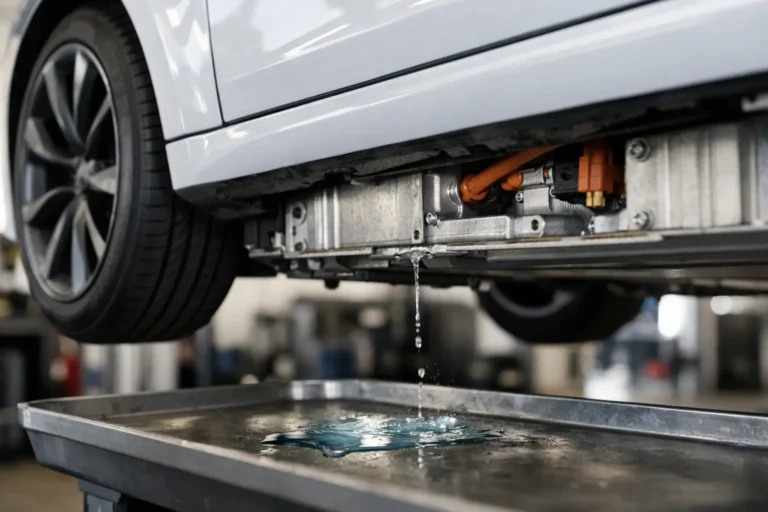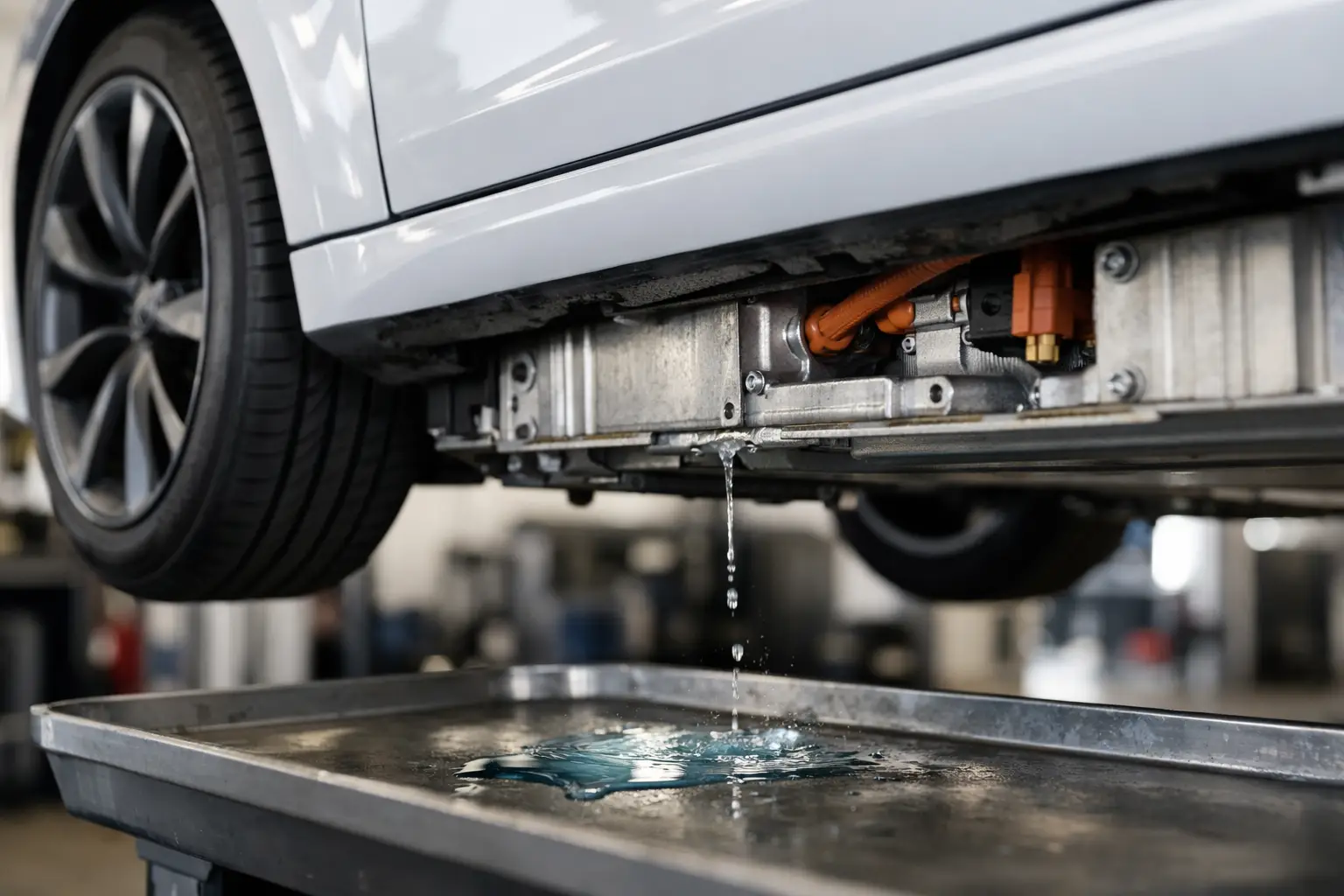
A tiny patch of pink, blue or clear fluid beneath a Tesla can be easy to dismiss, especially when the car still drives normally. But can a small coolant leak damage a Tesla battery? Potentially, yes. The leak itself does not usually harm the battery immediately, but allowing the cooling system to run low can affect temperature control and lead to warnings, reduced performance or a costly repair if left unchecked.
Teslas do not have engine coolant in the traditional sense, but they do use carefully managed thermal systems. These systems move coolant around components that may include the high-voltage battery, drive units and cabin heating or cooling equipment. That makes prompt, accurate diagnosis far more sensible than topping up a fluid and hoping for the best.
Why Tesla battery cooling matters
Lithium-ion batteries work best within a controlled temperature range. When a battery becomes too hot or too cold, the vehicle’s thermal management system steps in to regulate it. Coolant is one part of that system, working with pumps, valves, radiators and, on some models, a heat-pump system.
A small loss of coolant may not cause an immediate breakdown. The system can sometimes compensate for a while, and the car may show no obvious change on a short commute. However, coolant level can continue to fall, and a minor seep from a hose connection, radiator, valve or pump can become a proper leak surprisingly quickly.
If the system cannot circulate enough coolant, the Tesla may limit charging speed, reduce power or display a thermal-system warning. In more serious cases, it may protect itself by restricting driving or refusing to charge until the fault is repaired.
Can a small coolant leak damage a Tesla battery over time?
The key risk is overheating rather than fluid touching the battery. Tesla battery packs are sealed units, so a small external coolant leak does not normally mean coolant has entered the battery itself. The concern is that insufficient coolant or poor circulation prevents the battery from being cooled as designed.
Repeated exposure to excessive heat can accelerate battery degradation. It may also place extra strain on pumps and other thermal-management components. That does not mean every small leak results in battery damage, but it is a risk not worth taking with a high-value high-voltage system.
There is also an important distinction between coolant and air-conditioning refrigerant. A refrigerant leak can affect cabin cooling and, depending on the vehicle’s design and operating conditions, may affect how efficiently the thermal system manages heat. The fluids and repair procedures are different, so guessing based on a puddle or a warning message is rarely reliable.
Signs that need a diagnostic check
A visible puddle is only one clue. Many coolant leaks evaporate on hot components or collect behind undertrays, where they are not immediately visible. You may instead notice a sweet or chemical smell, warning messages relating to coolant or thermal management, louder-than-usual fans, reduced rapid-charging performance, or a loss of cabin heat.
Do not assume that every liquid under the vehicle is a fault. Water dripping after air-conditioning use can be normal, particularly in warm weather. Screenwash, brake fluid and coolant can all look different depending on the vehicle and contamination, while an undertray can move the apparent source of the drip away from the actual leak.
A proper inspection should identify the fluid, check coolant condition and level where applicable, inspect hoses and connectors, and use suitable diagnostic equipment to look for fault codes, pump performance and temperature readings. On an electric vehicle, this work needs to be carried out with the correct high-voltage safety procedures.
What to do if you suspect a coolant leak
If there is a warning on the screen, a growing puddle, a strong smell, or reduced power or charging performance, avoid long journeys and high-demand driving. Do not open or interfere with high-voltage components, and do not add an unknown coolant type. Using the wrong fluid can create compatibility problems and make diagnosis more difficult.
For a small, unexplained drip with no warnings, arrange an inspection soon rather than waiting for the next service. Take a photograph of the fluid and note where it appears after the car has been parked. That information can help the technician narrow down the cause.
At AutoNet VIP, EV diagnostics are approached as a complete system check, not a quick visual guess. A prompt assessment can separate harmless condensation from a coolant-system fault and help protect the battery, charging performance and reliability of your Tesla.