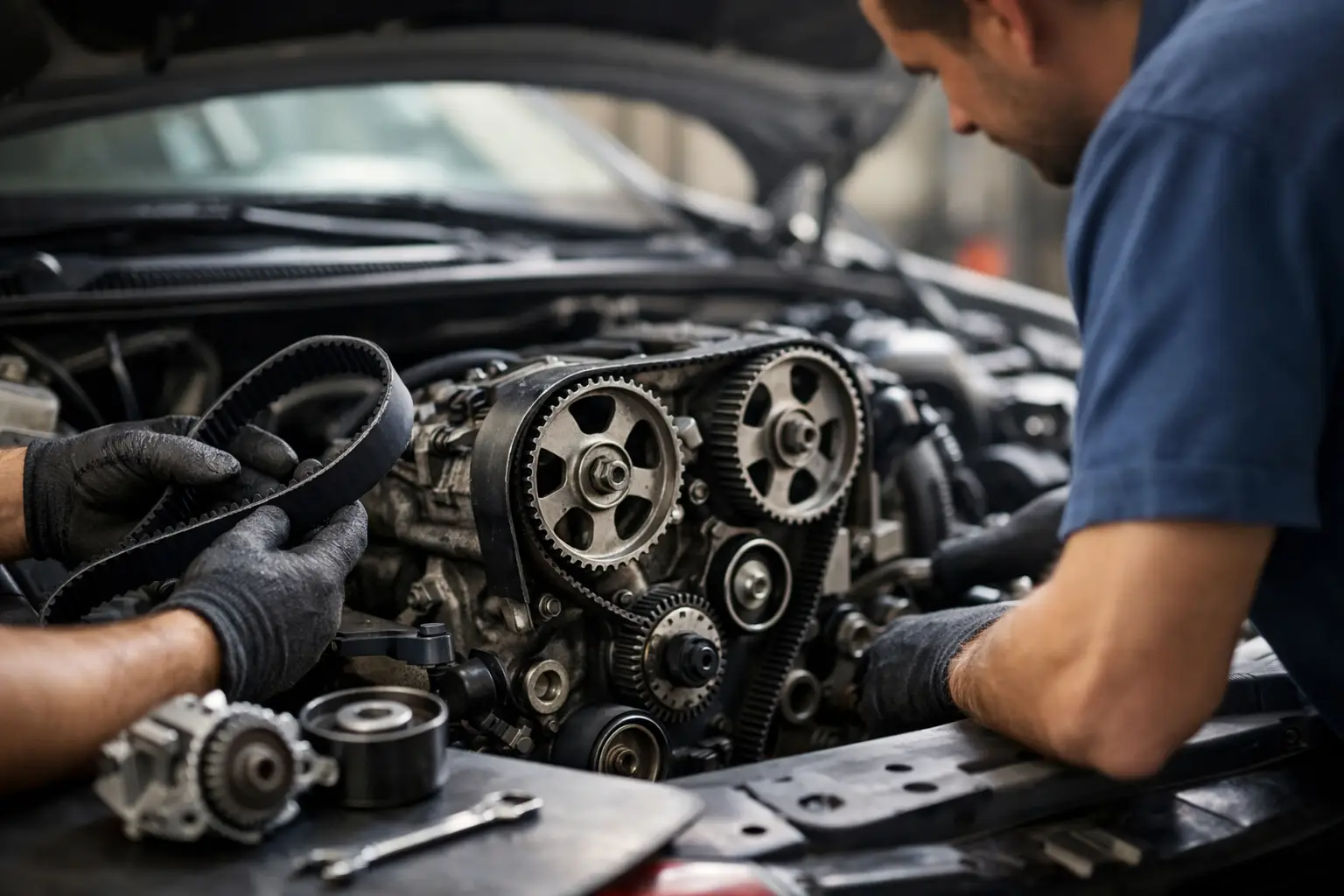
A timing belt can look like a simple rubber component, but it has one of the most demanding jobs in your engine. It keeps the crankshaft and camshaft turning in precise time so the valves and pistons move without colliding. This timing belt replacement guide explains when replacement is due, what can go wrong if it is delayed, and why correct installation matters as much as the belt itself.
For many drivers, a timing belt is out of sight until a warning light, unusual noise, or breakdown creates an urgent problem. The better approach is planned maintenance based on your vehicle manufacturer’s schedule. Replacing a belt before it fails is far less stressful, and usually far less expensive, than repairing an engine after a failure.
What Does a Timing Belt Do?
Your engine relies on carefully coordinated movement. As the crankshaft turns, the timing belt drives the camshaft or camshafts. This controls when the engine’s valves open and close, allowing air and fuel in and exhaust gases out at the correct moment.
On many modern vehicles, the internal clearances are extremely tight. These are often called interference engines. If the belt snaps or jumps teeth, the pistons can strike open valves. The result may be bent valves, cylinder-head damage, damaged pistons, or a complete engine rebuild.
Not every vehicle uses a timing belt. Some have a timing chain, which is metal and usually designed to last longer, while others use a belt running in oil. The service requirement depends on the specific engine, not simply the vehicle’s age or mileage. A professional can confirm which system your vehicle has and what maintenance it needs.
When Should a Timing Belt Be Replaced?
The most reliable answer is in the manufacturer’s maintenance schedule. Replacement intervals vary considerably by make, model, engine, and year. A belt might be due around 60,000 miles on one vehicle and closer to 100,000 miles on another. Time matters too. Even a low-mileage car may need a new belt after a set number of years because rubber deteriorates with age.
If you have bought a used vehicle and cannot verify when the belt was last changed, do not assume it has been done. A stamped service book, detailed invoice, or confirmed digital service record is much more useful than a verbal assurance from a previous owner. If there is no reliable evidence, budgeting for replacement is sensible protection.
Short journeys, extreme temperatures, oil leaks, and poor prior repairs can all shorten component life. Vans, family cars used for frequent school runs, and commuter vehicles can all face different operating conditions, even at similar mileages. This is why a garage should check the service history and the vehicle’s exact engine code before advising on an interval.
Warning Signs You Should Not Ignore
A timing belt does not always give a clear warning before it fails. In fact, many belts break without obvious symptoms. That is why following the service interval is so valuable.
However, certain problems deserve prompt inspection. A ticking, slapping, or whirring noise from the front of the engine may point to a worn tensioner, idler pulley, or belt-related issue. Rough running, misfires, difficulty starting, loss of power, or an engine warning light can also occur if the timing has slipped.
Oil or coolant leaks around the timing cover should also be investigated. Fluids can damage a belt and may indicate a failing seal or water pump. Do not keep driving in the hope that the noise or warning will disappear. A small fault in the timing system can become a major repair quickly.
What Is Included in a Proper Timing Belt Replacement?
A quality timing belt job is more than fitting a new belt. The belt works as part of a system, and the surrounding parts have similar wear exposure. Replacing only the belt may save money initially, but it can leave an older tensioner, pulley, or water pump as the weak point.
A complete timing belt replacement commonly includes the belt, tensioner, and guide or idler pulleys. On many engines, the water pump is also replaced at the same time because it is driven by the timing belt or is difficult to access afterward. Fresh coolant may be needed if the water pump is changed.
The technician should inspect for oil leaks, coolant leaks, damaged covers, worn auxiliary belts, and any signs of incorrect previous work. The engine must then be locked and timed using the correct manufacturer procedures and tools. A belt fitted one tooth out can cause poor performance, warning lights, or serious engine damage.
Once assembled, the engine should be turned over by hand where appropriate, started, checked for correct operation, and inspected for leaks. Good workmanship is not only about completing the job. It is about verifying the engine is correctly timed and returning the vehicle with clear records of what was replaced.
Why Timing Belt Replacement Costs Vary
Timing belt replacement is labor-intensive because the belt is usually located behind covers at the side of the engine. Access may require removal of engine mounts, wheel-arch liners, auxiliary components, or other parts. The engine layout has a major effect on labor time.
The parts package also affects the price. A basic belt alone costs less than a quality kit with tensioners, pulleys, water pump, coolant, seals, and related hardware. Choosing the cheapest option can be a false economy if a lower-quality component fails prematurely.
There is a genuine trade-off to consider. If the water pump is easy to reach separately and shows no signs of wear, replacement may not always be necessary. But if reaching it later means repeating most of the same labor, replacing it during the belt service is usually the sensible choice. A transparent estimate should explain what is included, what is recommended, and why.
Can You Replace a Timing Belt Yourself?
Some experienced home mechanics have the tools and technical knowledge to work on timing systems. But this is not a routine DIY job. It requires accurate engine timing information, vehicle-specific locking tools, correct torque settings, and the ability to identify related problems before reassembly.
One mistake can be costly. Incorrect timing may cause immediate engine damage when the engine is started, while an incorrectly tensioned belt may fail much sooner than expected. There are also safety considerations when supporting an engine or removing engine mounts.
For most drivers, professional replacement offers better peace of mind. A qualified workshop can identify the exact parts required, use approved procedures, inspect related components, and provide a clear record for future servicing and resale. At AutoNet VIP, the focus is on explaining the work in plain language, so you understand the recommendation before any repair goes ahead.
How to Protect Your Engine Between Services
The best protection is simple: follow the correct time and mileage interval, keep service records, and investigate oil or coolant leaks promptly. Do not wait for a belt to make noise, because a belt can fail with little warning.
If you are unsure whether your timing belt is due, bring the vehicle details and available service history to a trusted technician. A quick conversation now can replace uncertainty with a clear maintenance plan and help keep an avoidable engine failure from interrupting your journey.