A timing belt failure can turn a normally running car into a recovery job in seconds. A worn timing chain can be more subtle, often announcing itself with a rattle at start-up or an engine warning light before the problem becomes serious. Understanding timing chain versus timing belt helps you plan maintenance properly, ask the right questions when buying a used car, and avoid an expensive engine repair.
Both parts perform the same essential job: they keep the crankshaft and camshaft(s) turning in precise time. That synchronisation controls when the valves open and close. If it is lost, the engine may stop immediately and, on many vehicles, internal components can collide.
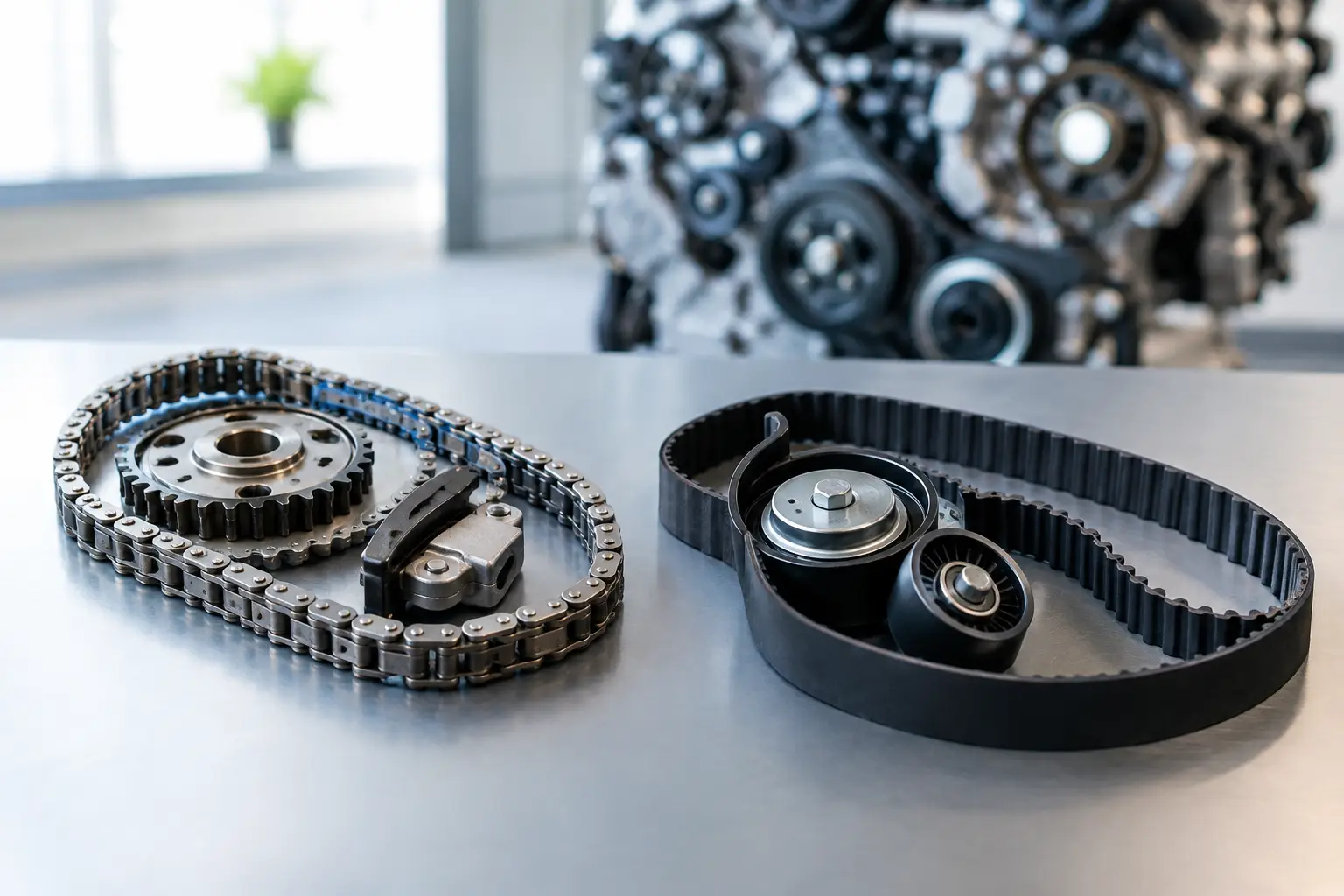
Timing chain versus timing belt: the key difference
A timing belt is a reinforced rubber belt, usually hidden behind protective covers at the front or side of the engine. It runs quietly and does not need engine oil to operate. Manufacturers specify a replacement interval based on time, mileage, or both.
A timing chain is a metal chain located inside the engine and lubricated by engine oil. It is designed to be durable and is often described as lasting the life of the vehicle. In practice, that phrase needs treating with care. A chain, its guides, tensioner and sprockets can all wear, particularly when oil changes have been missed or the wrong oil has been used.
Neither design is automatically better for every driver. A belt provides predictable scheduled maintenance, while a chain can go a long time without replacement but may be more costly to repair when it does develop a fault.
What a timing belt does well
Timing belts are lightweight, quiet and generally cheaper to replace than a chain system. Their major advantage is certainty: if your service record confirms the belt was changed at the correct interval, you have a clear baseline for future maintenance.
The drawback is that replacement is not optional. A belt can deteriorate with age even on a low-mileage car. Heat cycles, oil contamination, a leaking water pump or a seized tensioner can all shorten its life. For that reason, a car that has covered very few miles but is overdue by age still needs attention.
When replacing a timing belt, a quality garage will commonly inspect or replace associated components such as the tensioner, idler pulleys and, where driven by the belt, the water pump. Fitting a new belt alongside worn components is false economy.
What a timing chain does well
A chain is strong and normally has no fixed replacement schedule. With regular oil and filter changes using the correct manufacturer-approved grade, many chains give dependable service for a very long time.
However, chains do not simply last forever without care. Oil pressure operates many chain tensioners, and old or low-quality oil can allow wear to build up. Chain guides can become brittle, tensioners can fail, and a stretched chain can throw off the engine timing. On some engines, the chain is positioned at the gearbox end, making labour time substantial if replacement is required.
The real benefit of a chain is not that it eliminates maintenance. It is that good routine servicing is usually the best protection.
Is your car fitted with a belt or chain?
Do not rely on the badge alone. Different engines within the same model range can use different timing systems, and manufacturers sometimes change designs during a vehicle’s production run. The registration number, vehicle identification number and engine code provide the most reliable way to check.
This matters especially when buying a used car. “It has a chain, so it needs no maintenance” is not a substitute for a complete service history. Equally, “the timing belt was done” should be backed up by an invoice showing the date, mileage and work completed.
There is also a third design worth knowing about: the wet belt. This is a toothed belt that runs inside the engine oil. It is still a belt and still requires replacement at the manufacturer’s stated interval. Correct oil specification is particularly important because unsuitable oil can contribute to belt degradation. A wet belt should never be treated like a conventional timing chain simply because it operates inside the engine.
Warning signs that need prompt attention
A belt may fail without much warning, which is why replacing it on schedule is so important. Still, a squealing or chirping noise from the belt area, visible cracking where inspection is possible, fluid leaks around covers, or starting problems should be checked rather than ignored.
Chain faults can be easier to notice, though they should not be diagnosed from noise alone. A metallic rattle for a second or two on cold start, persistent rattling from the engine, rough running, poor performance, difficulty starting, or an engine management warning light can all point to a timing-related issue. These symptoms can also have other causes, so professional diagnostics are needed before approving repairs.
If the engine suddenly loses power, will not start, or makes a severe mechanical noise, stop driving where safe and arrange recovery. Continuing to crank or drive an engine with suspected timing failure can increase the damage.
How often should a timing belt be changed?
There is no universal mileage figure. Some belts are due around 60,000 miles, while others may have intervals closer to 100,000 miles. Time limits vary too, commonly between five and 10 years. Your vehicle handbook and manufacturer service information take priority over general advice.
For drivers who cover short trips, age can be the deciding factor. For high-mileage commuters, the mileage interval may arrive first. In either case, book the work before the deadline rather than waiting for an MOT or annual service to highlight it.
Timing chains do not usually have a planned replacement interval. Instead, follow the scheduled oil service interval carefully, check the oil level between services, and investigate unusual engine noises quickly. Extending oil changes to save money can be a costly decision on a chain-driven engine.
Cost: predictable maintenance versus potential repair
A timing belt replacement is a planned maintenance cost. The price depends on access, engine design and whether related parts need replacing, but a quote should clearly explain what is included. Ask whether the tensioners, pulleys, water pump and fresh coolant are part of the job where relevant.
Timing chain work can cost more because the chain sits within the engine and dismantling time is often greater. Yet replacing a chain only because a car reaches a certain mileage is not normally necessary. The right approach is evidence-led: assess fault codes, engine noise, oil condition, timing data and the vehicle’s service history.
The most expensive outcome in either case is a snapped belt or jumped chain on an interference engine. Bent valves, damaged pistons and cylinder-head repairs can quickly outweigh the cost of preventative servicing.
What to ask when booking your car in
A good repair starts with a clear conversation. Tell the garage whether you know the timing system type, when the belt was last replaced, and whether there have been warning lights, rattles or starting issues. Bring previous invoices if you have them.
Before authorising work, ask what parts will be fitted, whether associated components are included, and what warranty applies to parts and labour. If diagnostics are required, ask for an explanation of the findings before major work begins. Clear information lets you make a decision based on the condition of your car, not pressure or guesswork.
For motorists in Harlow and the surrounding area, AutoNet VIP can check the correct maintenance requirements for your specific vehicle and investigate suspected timing faults with appropriate diagnostics. Whether your car uses a belt, chain or wet belt, timely advice is far less stressful than dealing with an avoidable breakdown.
Keep the service record, use the correct oil, and act before a small noise becomes a major engine bill. That is the practical difference between routine car care and an unwelcome repair.