A service reminder appears on the dashboard, and the choice can feel more complicated than it should: book with the manufacturer’s dealership or use a trusted independent nearby? The local garage vs dealership servicing decision is not simply about finding the lowest price. It is about protecting your vehicle, understanding what you are paying for and choosing a workshop that can do the job properly.
For many drivers, a dealership feels like the safe default, particularly with a newer, premium, hybrid or electric car. A good local garage can be every bit as reassuring, provided it has the right training, equipment, parts policy and communication standards. The best option depends on your car, its age, its warranty position and the type of service or repair it needs.
Local garage vs dealership servicing: the practical differences
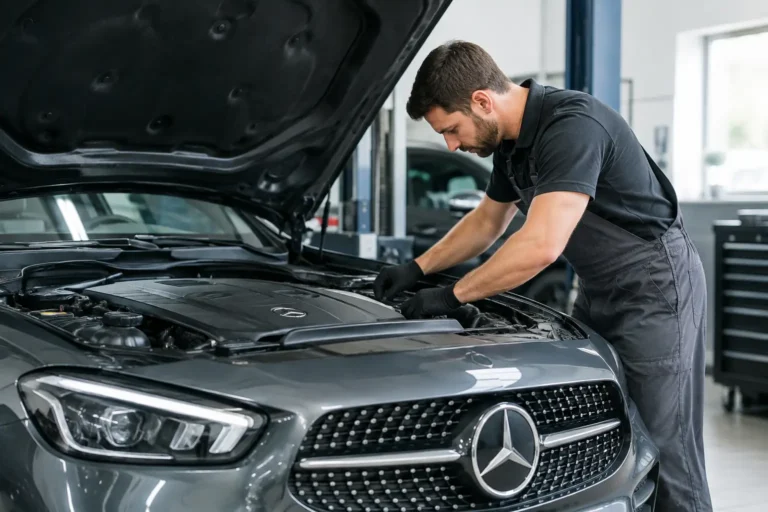
A main dealership is tied to a particular vehicle manufacturer. Its technicians receive brand-specific training, it has access to the manufacturer’s latest technical information and it can carry out recall work, warranty repairs and certain software updates directly. That is a genuine advantage when an issue is unusual, manufacturer-led or covered by warranty.
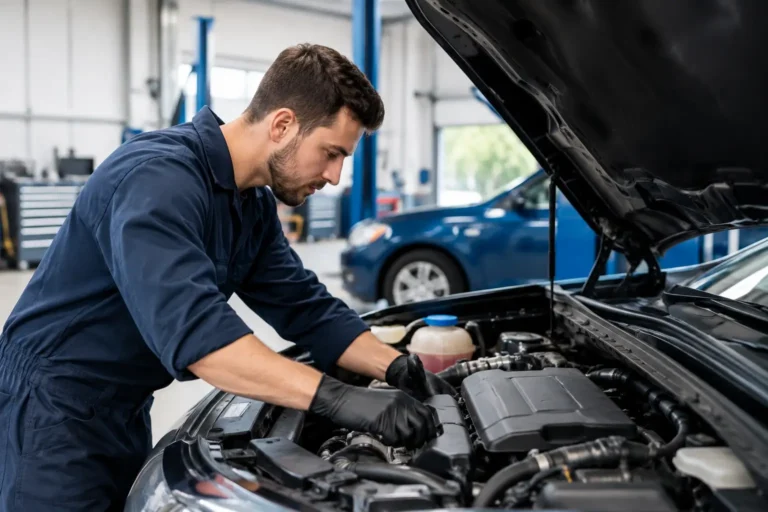
An independent garage works across multiple makes and models. The strongest local workshops invest in advanced diagnostics, manufacturer-level data access, skilled technicians and quality parts so they can service modern vehicles properly without the overheads of a franchised site. This can make them especially useful for households or businesses with more than one vehicle brand.
Neither badge on the building guarantees a better experience. A dealership can offer excellent work but feel impersonal or expensive. A local garage can offer outstanding value and personal service, but standards vary. The question is not whether a workshop is independent or franchised. It is whether it is equipped and committed to look after your particular vehicle correctly.
Cost: look beyond the headline service price
Dealership servicing usually costs more. Franchised premises, manufacturer programmes and brand-specific systems all add to the operating cost, and this is reflected in labour rates and fixed-price service menus. For a nearly new car, some drivers are happy to pay that premium for the dealer record and direct manufacturer relationship.
A reputable local garage will often provide a more competitive price for the same essential maintenance work. It may also offer more flexibility. Instead of replacing items automatically because they appear on a package list, an independent technician can explain their condition, show you the issue where practical and advise what is urgent, what can wait and why.
The cheapest quote is not always the best value. Check what the price includes: the correct grade and quantity of oil, oil and air filters, spark plugs or fuel filters where applicable, brake-fluid replacement, diagnostic checks, labour and VAT. A low starting price can become less attractive if essential items are later added without a clear explanation.
Transparent garages provide a written estimate before work starts and contact you if additional repairs are found. That clarity matters more than a headline saving, especially when a vehicle is essential for school runs, commuting or running a van-based business.
Warranty and service history: what actually matters
A common concern is that using a local garage will automatically invalidate a manufacturer warranty. In most cases, routine servicing does not have to be carried out by a dealership for the warranty to remain valid, provided the work follows the manufacturer’s service schedule, uses parts and fluids of the required quality and is documented properly. However, warranty terms differ, so it is sensible to check the paperwork for your vehicle and keep every invoice.
A careful independent garage should record the mileage, service date, work completed and parts used. For vehicles with a digital service record, ask whether the workshop can update it or provide the information you need to keep the record complete. A well-documented history supports resale value and gives future buyers confidence that the car has been maintained consistently.
There are situations where a dealership remains the sensible choice. Warranty repairs, safety recalls and certain manufacturer software campaigns normally need to go through the franchise network. If a car has a complicated, repeat fault that the manufacturer is actively investigating, dealer technical support can also be valuable.
For routine oil services, brakes, tyres, suspension, air conditioning and many diagnostic or repair jobs, a capable independent garage can be a practical alternative. The key is using a workshop that follows the right process rather than cutting corners to meet a price point.
Expertise is changing with modern cars
The old idea that a local garage only handles basic mechanical work no longer reflects the best independent workshops. Modern vehicles rely on complex electronics, driver-assistance systems, battery management and software as much as engines, gearboxes and brakes. Proper diagnosis now requires more than plugging in a generic code reader.
Ask direct questions before booking. Does the garage have the diagnostic capability for your make? Are its technicians trained to work on hybrid and electric vehicles? Can it carry out high-voltage safety procedures, battery health checks and electronic fault-finding? If your car needs camera or radar calibration after a windscreen, suspension or body repair, can that work be completed correctly?
A good garage will answer clearly, without pretending every job should be kept in-house. Honest advice sometimes means recommending a dealership for a manufacturer-only update or a specialist for a highly specific issue. That is a sign of professionalism, not a lack of capability.
For drivers in Harlow and the surrounding area, AutoNet VIP is designed to provide that modern independent-garage balance: straightforward service advice alongside diagnostics and repair capability for petrol, diesel, hybrid and electric vehicles.
Convenience and customer care are part of the service
Servicing is not only about what happens under the bonnet. It is also about whether the process fits around your life. Dealerships may provide comfortable waiting areas, courtesy transport or collection arrangements, though availability can vary and booking lead times may be longer.
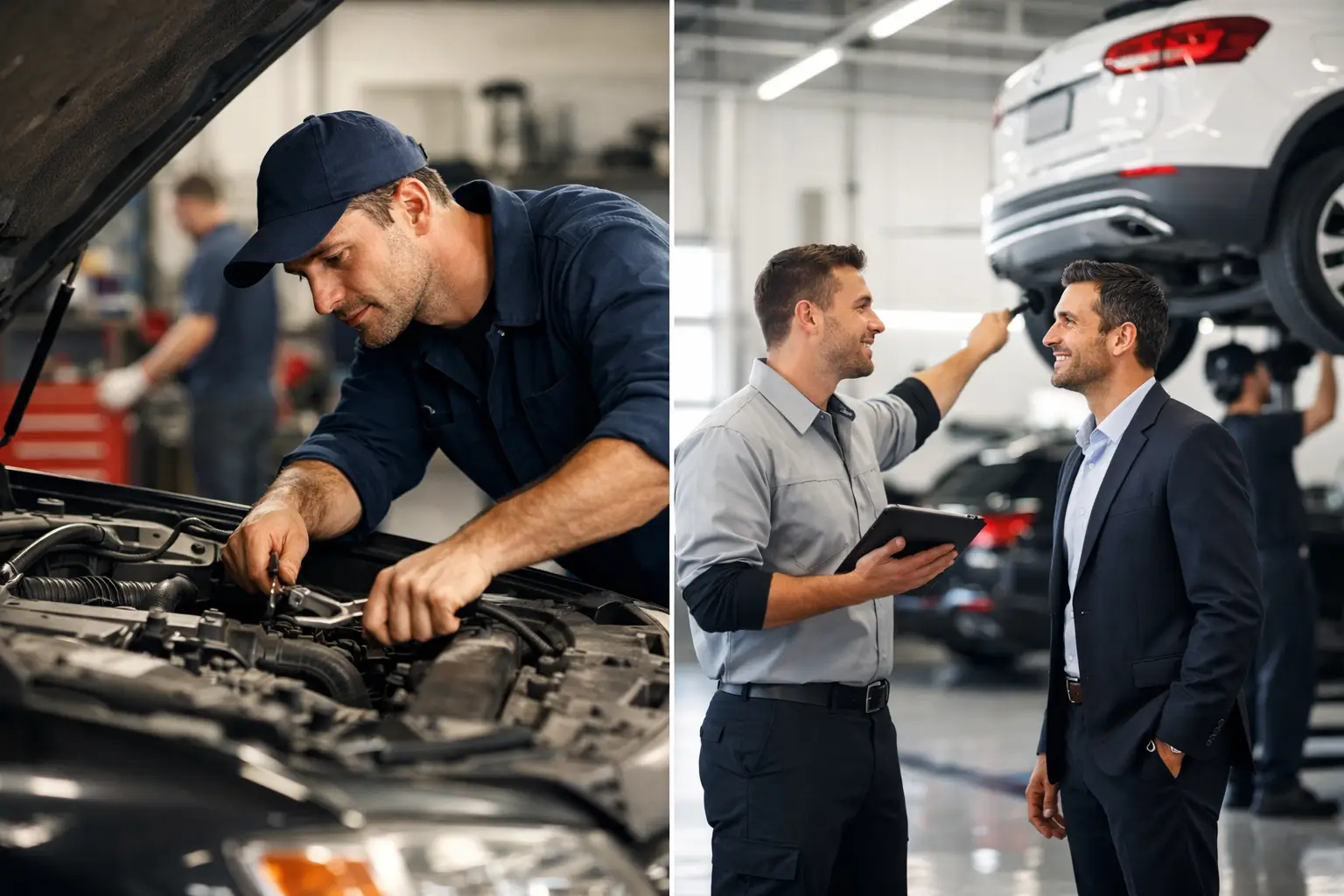
A local garage can offer a more personal experience. You are more likely to speak with the person advising on the work, ask questions without feeling rushed and build a relationship with a workshop that sees your vehicle regularly. For families, commuters and small business owners, having one trusted place for servicing, MOT testing, tyres, repairs and warning-light diagnostics can remove a lot of unnecessary stress.
Clear communication should be non-negotiable wherever you go. You should know what service is due, what has been checked, what has been replaced and what may need attention in the future. Technical language has its place, but the explanation should always make sense to the person paying the bill.
When a dealership makes most sense
Choose a dealership when your vehicle needs recall work, a manufacturer warranty repair or a specific software update that only the franchise network can perform. It may also be the preferred route for a very new vehicle where maintaining a complete dealer history is personally important to you, or for an intermittent fault requiring direct manufacturer escalation.
That does not mean every service must be booked there. Many owners use a dealer for warranty-led work and a trusted independent for routine maintenance once they are confident the garage meets the required standard.
When a local garage is the stronger choice
A local garage is often the better fit when you want fair pricing, a clear explanation and a workshop that can maintain several vehicles in your household or fleet. It is particularly useful once a vehicle is outside its initial warranty period, when labour-rate differences become more significant and practical maintenance decisions matter most.
Choose carefully. Look for qualified technicians, suitable diagnostic equipment, a willingness to discuss parts and service schedules, transparent estimates and invoices that show exactly what was done. For hybrid and electric vehicles, do not assume all garages have the same high-voltage capability – ask before you book.
Your car does not need a logo on the workshop wall. It needs the correct work, carried out by competent people, with honest advice and a record you can rely on. Book the garage that gives you confidence before the keys leave your hand, not just the one that sends the most polished reminder.