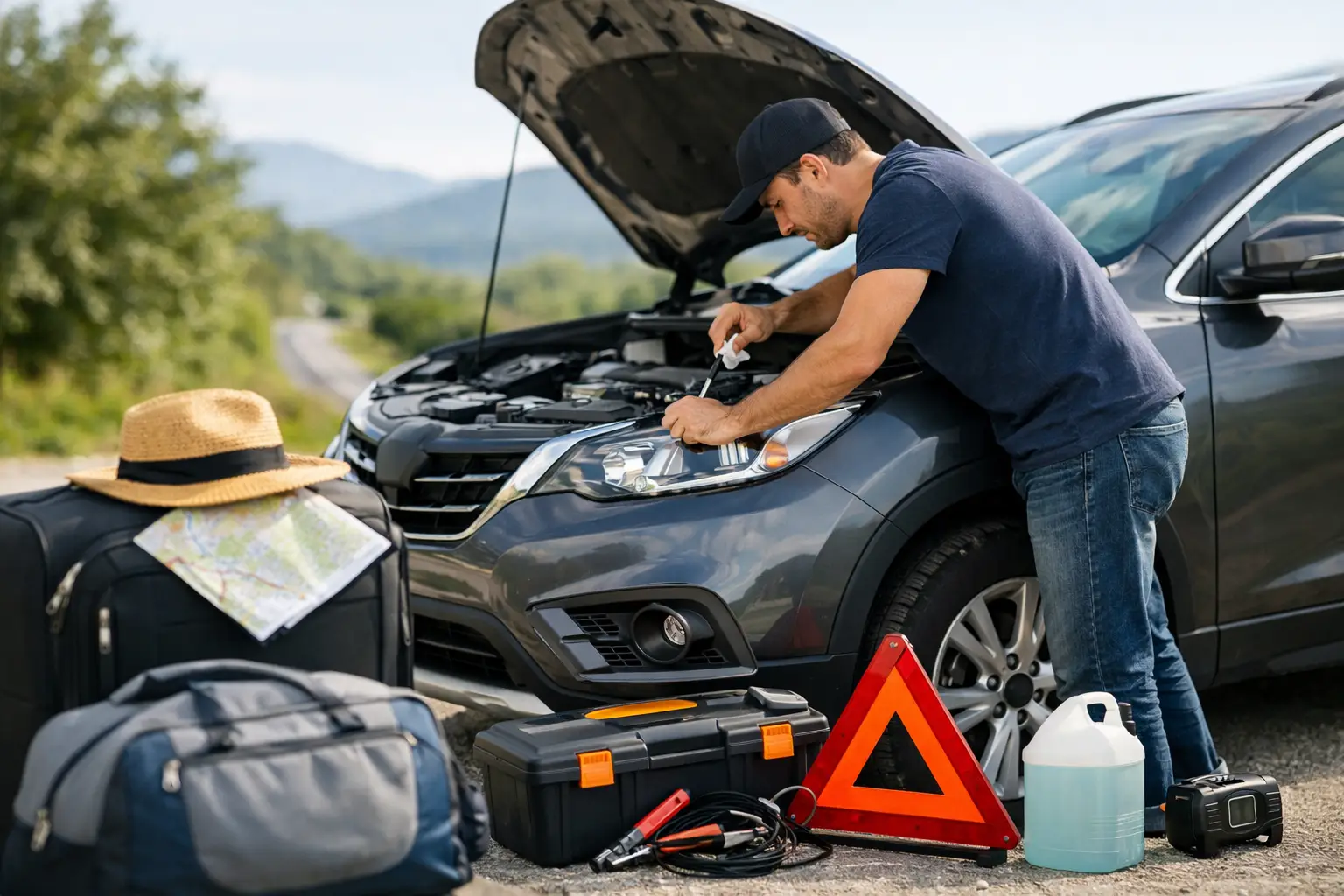
A long drive can expose a minor vehicle issue very quickly. A tyre that is slightly underinflated, a battery already struggling on cold starts or brakes that have begun to make noise may seem manageable on local journeys, but they can turn a holiday or family visit into an expensive and stressful delay. Knowing how to prepare a car for long trips gives you the best chance of arriving safely, comfortably and on time.
The right preparation is not about replacing parts unnecessarily. It is about identifying wear, checking the essentials and dealing with warning signs before you are committed to motorway miles, unfamiliar roads or heavy traffic.
How to prepare a car for long trips: start with a health check
If your car is due a service, has an advisory from its last MOT, or has developed a new noise, warning light or vibration, arrange an inspection before you travel. A proper pre-trip check is particularly worthwhile if you are driving abroad, towing, carrying a full load or covering several hundred miles in a short period.
Tell the garage how you plan to use the vehicle. A car loaded with passengers, luggage and a roof box works harder than it does on the school run. The additional weight affects tyre pressures, braking distances, suspension and fuel consumption. It may also reveal problems that are not obvious during ordinary local driving.
A technician can assess the condition of key components and explain what needs attention now, what can be monitored and what may reasonably wait. Clear advice matters here: not every advisory requires immediate replacement, but leaving a safety-critical fault until after departure is rarely a good gamble.
Check tyres, wheels and the spare
Tyres are the only part of the car in contact with the road, so they deserve more than a quick glance. Check the tread across the full width of each tyre, including the inner and outer edges. The legal minimum tread depth in the UK is 1.6mm across the central three-quarters, but replacing tyres before they reach that limit provides better wet-weather grip and a greater safety margin.
Look for cuts, cracks, bulges, embedded objects and uneven wear. Wear on one edge can point to alignment, steering or suspension issues, while vibration through the wheel may suggest wheel balance problems or tyre damage. Neither should be ignored before a long journey.
Set tyre pressures when the tyres are cold, using the manufacturer’s recommended figures for the planned load. These are often shown inside the fuel flap, on the driver’s door frame or in the handbook. Do not simply use the pressure printed on the tyre sidewall – that is a maximum rating, not necessarily the correct operating pressure for your car.
Check the spare tyre too, if your vehicle has one. Many newer cars instead have a sealant kit or run-flat tyres. Know which system you have and how it works before you need it beside a busy road. A sealant kit is not suitable for every puncture, and run-flat tyres still have speed and distance limits after pressure loss.
Test brakes, steering and suspension
Your brakes should feel firm and predictable, with no pulling, juddering, grinding or squealing. A little surface rust can form on brake discs after the car has been parked, but persistent noise or vibration needs investigation. Long downhill stretches, stop-start traffic and a heavily laden car all create more heat and demand from the braking system.
Pay attention to the steering as well. If the car drifts to one side, the steering wheel is no longer centred or the vehicle feels unsettled over bumps, book a check. These symptoms can be caused by wheel alignment, worn suspension components or tyre issues. They can make a long drive tiring and may accelerate tyre wear.
Do not assume a recent MOT removes the need for attention. An MOT confirms that a vehicle met minimum legal standards on the day of the test. It is not a guarantee that a developing fault will not worsen before your journey.
Check fluids and look for leaks
Engine oil, coolant, brake fluid and screenwash all have a direct role in safe, reliable driving. Check oil on level ground and follow the method in your vehicle handbook, as some cars need to be checked when cold while others provide an electronic reading after a particular driving cycle. Use the correct specification of oil if a top-up is needed.
Check coolant only when the engine is cold. The level should sit between the minimum and maximum markers, and any repeated need to top it up should be investigated. Coolant loss can indicate a leak, and an overheating engine can cause serious damage if you continue driving.
Make sure there is enough screenwash for the trip, particularly in winter or on motorway journeys where spray from lorries quickly coats the windscreen. Plain water is a poor substitute because it does not clean as effectively and can freeze in cold conditions. If the brake fluid level is low, do not simply top it up and forget it – the cause may be worn brake components or a leak.
Before leaving, look beneath the parked car for fresh puddles or drips. Water from air conditioning is usually normal, but oil, coloured coolant or brake fluid should be checked promptly.
Make sure the battery and electrics are ready
A weak battery often shows itself through slow cranking, dim lights, electrical glitches or a dashboard warning message. It may still start the car at home, then fail after an overnight stop or a short fuel break. Battery testing can reveal whether it is holding sufficient charge and whether the charging system is working correctly.
Check all exterior lights with someone’s help: headlights, brake lights, indicators, reversing lights, number-plate lights and fog lights. Replace failed bulbs where appropriate, although some modern LED units require professional repair rather than a simple bulb change. Clean the lenses and windscreen too – visibility is a safety system, not a cosmetic detail.
For hybrid and electric vehicles, check the charging cable, charge level and planned charging stops. Use reliable charging locations rather than relying on a single unfamiliar site, especially at busy holiday periods. Any high-voltage warning, charging fault or reduced-performance message should be diagnosed before travelling, not worked around.
Plan for heat, weather and comfort
A working air conditioning system is more than a luxury in summer. It helps keep the cabin cool, reduces driver fatigue and demists the windscreen in damp weather. If it is blowing warm, smells unpleasant or takes a long time to clear the glass, have it inspected before the trip.
Replace worn wiper blades if they smear, chatter or leave missed areas. Sudden heavy rain on a motorway is not the moment to discover that your wipers are past their best. In colder months, check that the heater and demisters work properly, and carry suitable de-icer and a scraper.
Pack the car sensibly. Keep heavier bags low down and secure loose items, which can become dangerous projectiles during sharp braking. Do not overload the roof box, and remember that extra height can affect access to car parks, ferries and drive-throughs. If you are towing, verify the nose weight, lights and connections before setting off.
Carry the essentials, but do not rely on them
A few well-chosen items can make a roadside problem easier to manage. Keep a warning triangle where legal and appropriate for your destination, a high-visibility vest, torch, phone charging lead, first-aid kit, drinking water and warm or waterproof layers. For overseas travel, check the current equipment and document requirements for every country on your route, including insurance, driving licence, vehicle documents and emissions-zone rules.
Carry locking wheel-nut keys if your wheels use them, plus details of your breakdown cover. Save the provider’s number in your phone, but do not rely solely on the phone – poor signal and a flat battery are both possible. It is also sensible to share your route and expected arrival time with someone if you are travelling late or alone.
Leave time for the checks that matter
The simplest way to prepare a car for long trips is to avoid leaving it until the day before departure. Booking an inspection early gives time to source parts, carry out repairs properly and test the car afterwards. It also prevents the pressure to accept a rushed decision because the holiday starts tomorrow.
If your vehicle has any unresolved warning lights, unusual noises, fluid loss or handling changes, arrange professional advice rather than hoping the problem stays minor. For drivers in Harlow and the surrounding area, AutoNet VIP can carry out a clear pre-trip vehicle check and explain any recommended work before it begins. A little preparation before you leave is far more enjoyable than spending the first day of your break waiting for roadside assistance.