A warning light, an unfamiliar noise or a sudden loss of power is worrying enough without the question of who will pay. A warranty repair can remove much of that uncertainty, but only when the fault, the policy terms and the approval process all line up. Getting it wrong can mean delays, rejected claims or an unexpected bill.
The sensible approach is not to assume that every mechanical or electrical fault is covered. Instead, establish what warranty you have, what has failed and whether the repair needs approval before any parts are fitted. A good garage will help you understand the process in plain English, while giving you clear options if the claim is declined.
What does warranty repair cover?
A warranty is a promise from a manufacturer, dealer or third-party provider to pay for certain faults during an agreed period. The detail matters. Manufacturer warranties usually cover defects caused by materials or workmanship, while used-car and aftermarket warranties often cover a defined list of components and may have more exclusions.
For example, an engine management fault caused by a failed covered sensor may qualify. A worn clutch, depleted brake pads or tyres reaching the end of their working life will usually not. These are serviceable items, so the cost is normally the owner’s responsibility unless the failure resulted from a separate covered defect.
Modern vehicles make the distinction less obvious. A hybrid or electric vehicle may display a battery or high-voltage system warning that requires specialist diagnosis before anyone can say whether the issue is covered. Equally, a diesel warning light could relate to a covered component, a maintenance issue or driving conditions that have caused a filter to block. Diagnosis comes before certainty.
The checks to make before warranty work begins
The most important rule is simple: do not authorise chargeable repairs under the assumption that the warranty company will reimburse you later. Many providers require a garage to obtain an authorisation number before work starts. Without it, even a genuine fault may be harder to claim for.
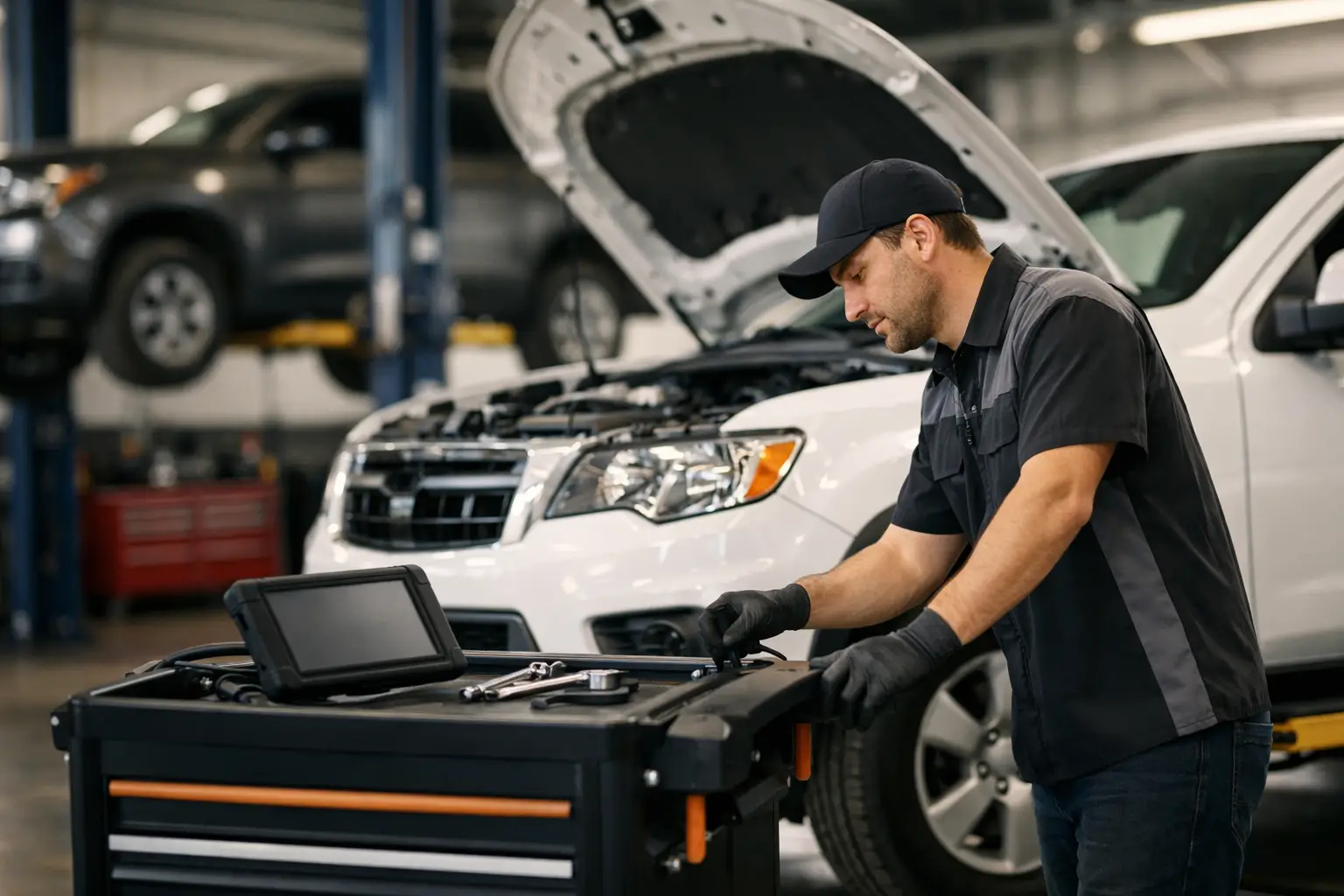
Your garage should first inspect the vehicle and carry out appropriate diagnostics. This identifies the fault codes, tests the affected systems and confirms whether the failed part is likely to be covered. The findings can then be supplied to the warranty administrator, alongside an estimate for labour, parts and any required additional work.
Before booking in, have your policy details, registration number, mileage and service records ready. It is also useful to make a note of when the fault began, what warning messages appeared and whether the vehicle remains safe to drive. Clear information helps the garage diagnose efficiently and gives the provider fewer reasons to delay a decision.
Some policies contribute only up to a set hourly labour rate or impose a claim limit. Others exclude diagnostic time, fluids, seals, software programming or consequential damage. A failed water pump, for instance, may be included while overheating damage caused by continuing to drive might not be. Ask for the likely shortfall before agreeing to proceed.
Servicing outside the main dealer network
Many drivers believe they must use a franchised dealer throughout the manufacturer warranty period. That is not generally the case. You can usually have routine servicing completed by a competent independent garage without automatically invalidating the manufacturer warranty, provided the correct schedule, specification parts and procedures are followed.
The key word is “correct”. Engine oil must meet the required manufacturer specification, service items must be suitable for the vehicle, and the service record should be completed properly. Keep itemised invoices as well as the service history. They provide evidence that the vehicle has been maintained to the necessary standard if a later claim is questioned.
Warranty repairs themselves may have different rules. A manufacturer or warranty provider can require the repair to be completed within its approved network, or it may approve an independent specialist after reviewing the estimate. It depends on the policy, not simply on where the car was serviced.
When a claim may be refused
A refusal is frustrating, but it should come with a reason. Common exclusions include normal wear and tear, accidental damage, misuse, modifications, lack of maintenance, pre-existing faults and repairs that began without permission. Policies also commonly exclude bodywork deterioration, trim, infotainment issues and consumables, although the wording varies widely.
Missed servicing can create a particular problem. If a warranty company can reasonably link the failure to overdue maintenance, it may reject the claim. That does not mean every late service voids every claim. A failed window motor, for example, is unlikely to be caused by an overdue oil change. The connection between maintenance and the fault matters.
Modifications can be more complicated. Performance tuning, non-standard electrical accessories or suspension changes can affect a claim where they contribute to the failure. Be open with the garage and provider from the start. The facts are easier to deal with before work begins than after an inspection has uncovered something undisclosed.
If you disagree with a decision, ask for it in writing and request the specific policy clause being relied upon. Your garage’s diagnostic report, photographs and service records may help clarify the cause of failure. A clear technical explanation is far more useful than an argument based on assumption.
Warranty, insurance and your consumer rights are different
These terms are often used interchangeably, but they protect you in different ways. A warranty is contractual cover with its own limits and exclusions. Mechanical breakdown insurance is also policy-based and may include claim excesses or conditions around servicing and mileage.
Your consumer rights are separate. If a vehicle was faulty when sold, you may have rights against the supplying dealer under consumer law, even where a warranty has expired or does not cover that particular item. The time since purchase, the nature of the fault and the evidence available will affect the remedy. In these cases, speak to the dealer before authorising repairs where possible.
A garage repair warranty is another separate matter. When you pay for a repair, you should expect the work to be carried out with reasonable care and skill. If the same issue returns because a fitted part is faulty or the repair was not completed correctly, contact the repairing garage promptly and allow it the opportunity to inspect the vehicle.
Why accurate diagnosis protects your claim
Replacing parts based on a warning light alone is not good practice. A fault code identifies a symptom or system, not always the failed component. The same code can be caused by damaged wiring, poor connections, software issues, a sensor fault or a mechanical problem elsewhere.
This matters for warranty repair because the provider needs a credible cause of failure. Proper diagnostics can prevent unnecessary parts being fitted, reduce downtime and produce the evidence needed for approval. It also protects you if only part of the repair is covered. You can make an informed decision about any contribution before the vehicle is stripped down or parts are ordered.
At AutoNet VIP, this means treating the approval process with the same care as the repair itself. The aim is to explain what has been found, what the warranty provider has agreed to pay and what, if anything, remains your responsibility. There should be no confusion over the work being authorised.
How to make the process less stressful
Report new faults promptly, particularly if a warning light is flashing, the vehicle is overheating, braking feels different or there is a noticeable loss of power. Continuing to drive can turn a manageable defect into wider damage, and some policies may not cover the consequences.
Avoid clearing fault codes or disconnecting the battery before an inspection unless you have been advised to do so. That can remove useful diagnostic information. Keep all service invoices, receipts for maintenance items and correspondence from the warranty company together. These small details can save considerable time when a claim is assessed.
Most of all, choose a garage that will talk you through the findings rather than hide behind technical language. Whether your car is petrol, diesel, hybrid or electric, a warranty claim should not leave you guessing about the next step. A clear diagnosis, written approval and an honest conversation about any exclusions give you the best chance of getting back on the road with confidence.