A Tesla does not need oil changes, spark plugs or a traditional exhaust repair, but that does not mean it is maintenance-free. If you are searching for Tesla service Harlow, the real question is not simply where to book. It is whether the workshop understands the systems that keep an electric vehicle safe, efficient and enjoyable to drive.
Tesla ownership can be refreshingly straightforward, particularly when daily charging and over-the-air updates take care of much of the routine experience. Yet tyres still wear, brakes still corrode, suspension components still work hard on uneven roads, and warning messages still need proper diagnosis. The right service approach protects your car, your time and your confidence behind the wheel.
What does Tesla servicing actually involve?
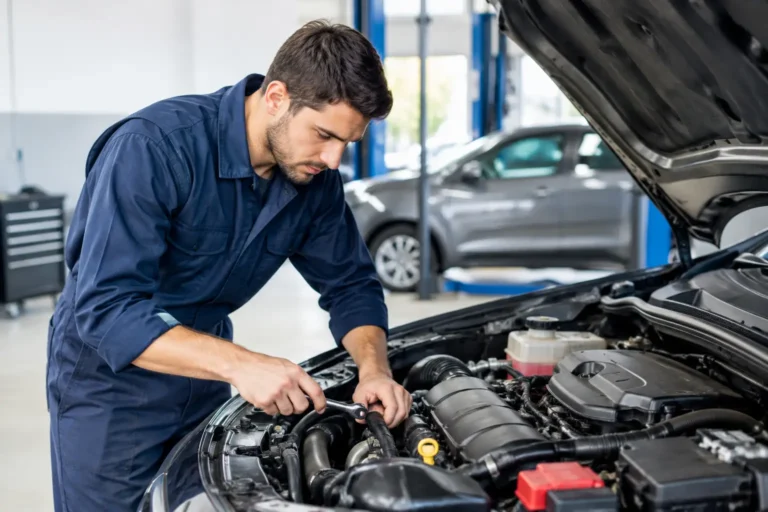
Electric vehicles have fewer moving powertrain parts than petrol or diesel cars, but they are still complex vehicles. A thorough Tesla service should focus on the areas that experience wear, are essential for safety, or need inspection before a small issue becomes an expensive one.
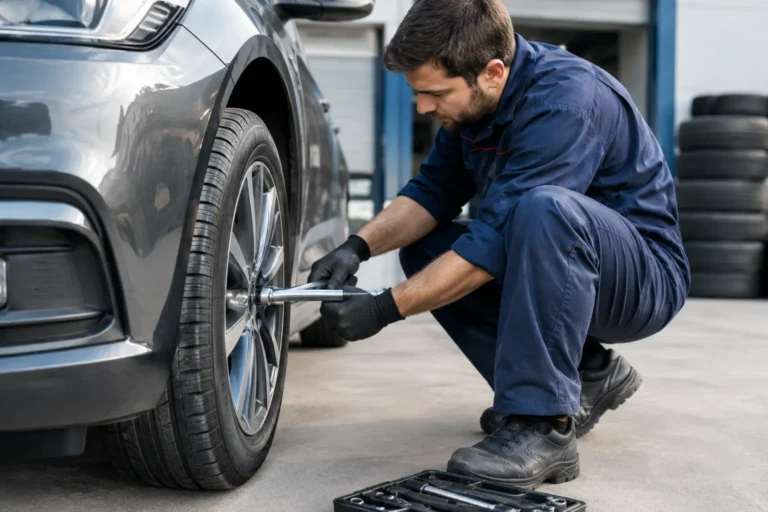
Tyres deserve particular attention. Teslas are often heavier than equivalent petrol cars because of the battery, and their instant torque can accelerate tyre wear if pressures, alignment or driving style are not right. A technician should inspect tread depth and wear patterns, check pressures, assess the condition of the wheels and look for signs that wheel alignment may be out. Uneven inner-edge wear, a steering wheel that sits off-centre or a car that pulls to one side should never be ignored.
Brakes also need regular care, even though regenerative braking reduces use of the friction brakes. In fact, reduced use can allow discs to corrode, especially after wet weather, short journeys or long periods parked outside. A proper inspection checks pad thickness, disc condition, brake pipes, callipers and the movement of sliding components. Brake fluid condition should be assessed in line with the vehicle’s maintenance guidance as well.
The suspension and steering system need the same careful approach as any modern premium vehicle. Bushes, ball joints, dampers, springs and steering components all contribute to ride comfort, stability and tyre life. A clunk over bumps, vibration at speed or a change in the way the car handles is worth investigating promptly.
A good inspection also covers the cabin filter, windscreen wipers, washer system, lights, air conditioning and the condition of the 12-volt battery. Although the high-voltage battery drives the car, the 12-volt system remains important for many everyday functions. When it begins to weaken, it can create warnings and inconvenience that are far easier to address early.
Tesla service in Harlow: choosing the right workshop
Not every job needs a Tesla service centre, but not every garage is suitable for every job either. The sensible choice depends on the work required, the vehicle’s warranty status and whether the issue involves Tesla-only systems.
For routine maintenance, tyre replacement, brake servicing, suspension work, air conditioning checks, MOT preparation, body repairs and many diagnostic concerns, an independent garage with electric-vehicle capability can be a practical local option. The advantages are often more convenient booking, direct communication with the technician and a clearer conversation about what has been found before work starts.
However, some matters are best handled by Tesla directly. Warranty claims, safety recalls, certain high-voltage battery concerns, manufacturer campaigns and work requiring access to Tesla’s proprietary systems may need an authorised Tesla route. Software updates are commonly delivered over the air, but some updates or module configurations may require manufacturer-level access.
The key is honesty. A capable local workshop should be comfortable explaining what it can inspect and repair, where specialist equipment is required and when Tesla involvement is the right next step. That clarity prevents wasted time and avoids repairs being recommended without evidence.
At AutoNet VIP, the focus is on straightforward advice, modern diagnostics and careful servicing for electric, hybrid and conventional vehicles. For Tesla owners, that means discussing the symptoms, checking the relevant systems properly and setting out the options in plain language.
Diagnostics should find the cause, not just clear a warning
A dashboard alert can be unsettling, particularly in a vehicle that relies so heavily on electronics. It is tempting to assume every warning points to the traction battery, but that is rarely a useful starting point. A warning may be linked to a sensor, low-voltage battery, charging issue, tyre-pressure system, cooling component or communication fault between control modules.
Effective diagnostics begins with the driver’s experience. Was the warning intermittent? Did it appear after charging, heavy rain, a pothole impact or a recent tyre change? Has the car lost range, made a new noise or behaved differently when braking? These details help direct testing and can prevent unnecessary parts being fitted.
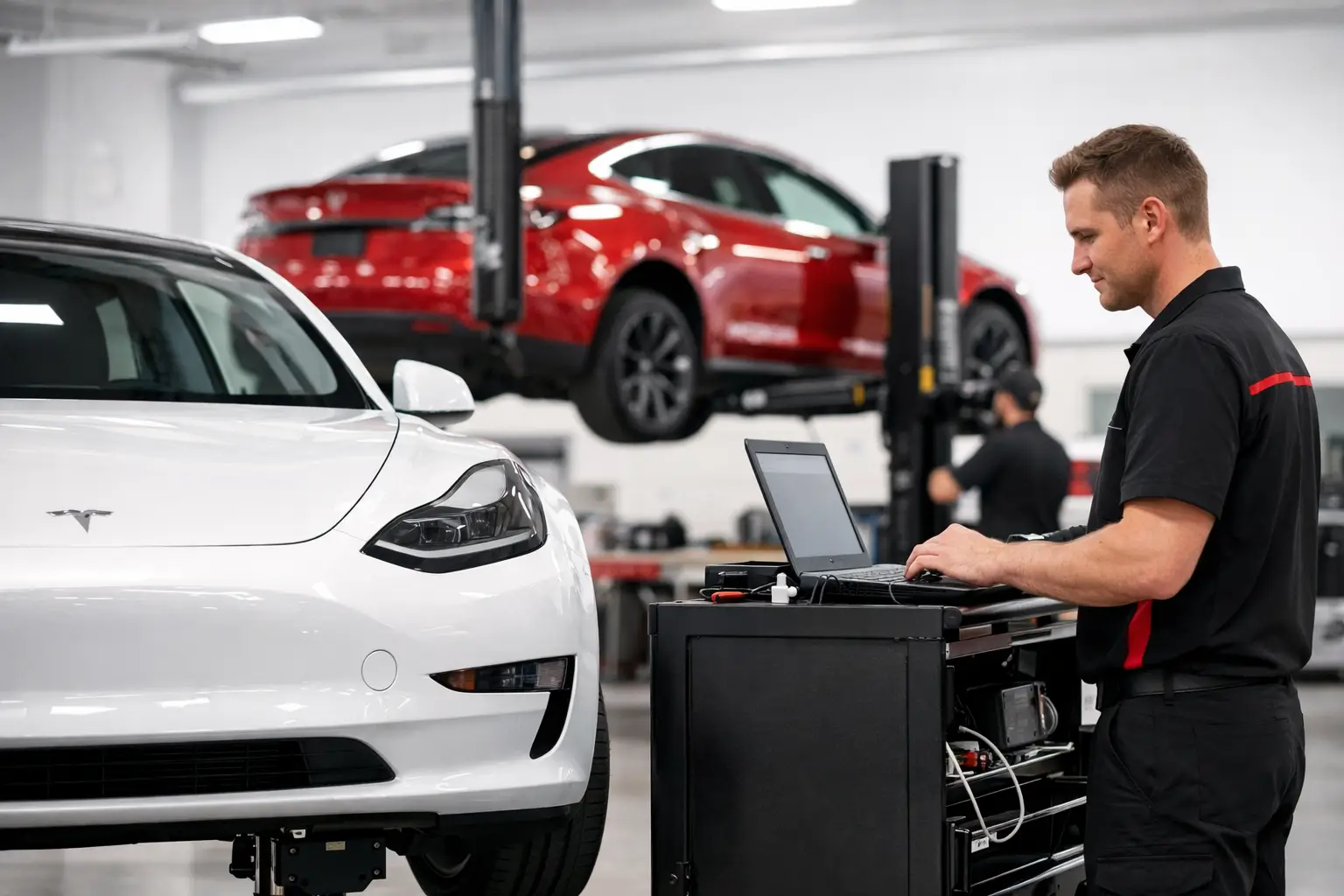
The technician should then carry out relevant checks rather than relying on a code alone. Fault codes are clues, not verdicts. A trustworthy garage explains what has been tested, what the findings mean and whether a repair is urgent, advisable or simply something to monitor.
This is especially important around high-voltage systems. Work on EV components requires trained personnel, the correct safety process and appropriate equipment. High-voltage cables and battery-related parts are not an area for guesswork or shortcuts. If a fault points towards a system that needs manufacturer intervention, it is better to say so clearly than to make promises that cannot be kept.
Do not overlook the MOT
Electric cars need an MOT once they reach the applicable age, just like petrol and diesel vehicles. The test does not include an emissions check for a fully electric Tesla, but it still covers many safety-critical items. Tyres, brakes, suspension, steering, lights, wipers, seatbelts, visibility and warning lamps all matter.
The absence of an engine can make an EV feel simpler, but MOT failures are usually caused by familiar issues: worn tyres, damaged wipers, ineffective brakes, suspension wear or lights that are not working correctly. Booking an inspection before the test is sensible if you have noticed a noise, vibration, warning light or brake concern.
One point worth considering is brake condition. Regenerative braking is useful, but it does not eliminate the need for the conventional braking system to operate correctly during an MOT. Regular inspection and appropriate maintenance help keep callipers and discs in working order, particularly through colder and wetter months.
Warranty, servicing records and parts quality
If your Tesla is still within a manufacturer warranty, keep clear records of all servicing, inspections and repairs. A vehicle warranty is not automatically lost simply because work is carried out by an independent garage, but the work must be completed properly, using suitable parts and procedures. The details matter when a future warranty claim is assessed.
Before booking, ask what will be inspected, whether the garage has the appropriate EV training and equipment, and how the work will be documented. You should receive a clear estimate before chargeable work begins and an explanation of any additional recommendations.
Parts quality is also worth discussing. The cheapest option is not always the best value, especially for tyres, brakes and suspension components. A good garage will explain the difference between suitable options without pressuring you into the most expensive choice. The right part depends on your model, mileage, driving pattern and budget.
When should you arrange a Tesla inspection?
There is no need to wait for a warning light. Arrange an inspection if you notice uneven tyre wear, reduced braking confidence, a knocking noise, steering vibration, air conditioning that is no longer cooling effectively, a charging concern or a change in handling. It is also wise to have the car checked before a long journey, after striking a significant pothole or when preparing for an MOT.
For owners who cover high annual mileage, regular checks can catch tyre, alignment and suspension issues before they affect safety or create a larger bill. For lower-mileage cars, periodic inspections are still useful because corrosion, ageing rubber components and 12-volt battery condition are not solely linked to miles travelled.
The most helpful step before you book is simple: note the warning messages, when the problem occurs and any changes you have felt while driving. That small amount of information gives the technician a stronger starting point and gives you a better chance of a clear, efficient answer.