A Land Rover is built to handle demanding conditions, but day-to-day driving around Harlow brings its own pressures: short journeys, stop-start traffic, potholes and missed service intervals. When looking for a Land Rover specialist in Harlow, the priority is not simply finding a garage that can change the oil. You need technicians who can identify the real cause of a warning light, understand the vehicle’s systems and explain the work clearly before it begins.
Whether you drive a practical Discovery Sport, a Range Rover Evoque, a Defender or an older Freelander, good maintenance protects more than performance. It helps preserve safety, reliability and the value of a vehicle that is often a significant investment.
What a Land Rover Specialist in Harlow Should Offer
Land Rover vehicles combine capable mechanical engineering with complex electronics. Modern models may have multiple control units, sophisticated four-wheel-drive systems, air suspension, driver-assistance technology and, in some cases, hybrid or high-voltage components. This means a fault that appears straightforward can have several possible causes.
A proper specialist approach starts with accurate diagnostics rather than replacing parts on guesswork. If an engine-management light appears, for example, the issue could relate to a sensor, emissions system, wiring fault, fuel delivery problem or a stored software fault. Reading the code is only the first step. The important work is testing the system, interpreting the results and confirming what has actually failed.
The same principle applies to suspension warnings, gearbox concerns and electrical faults. A clear diagnosis can take longer than a quick code scan, but it reduces the risk of spending money on repairs that do not solve the problem.
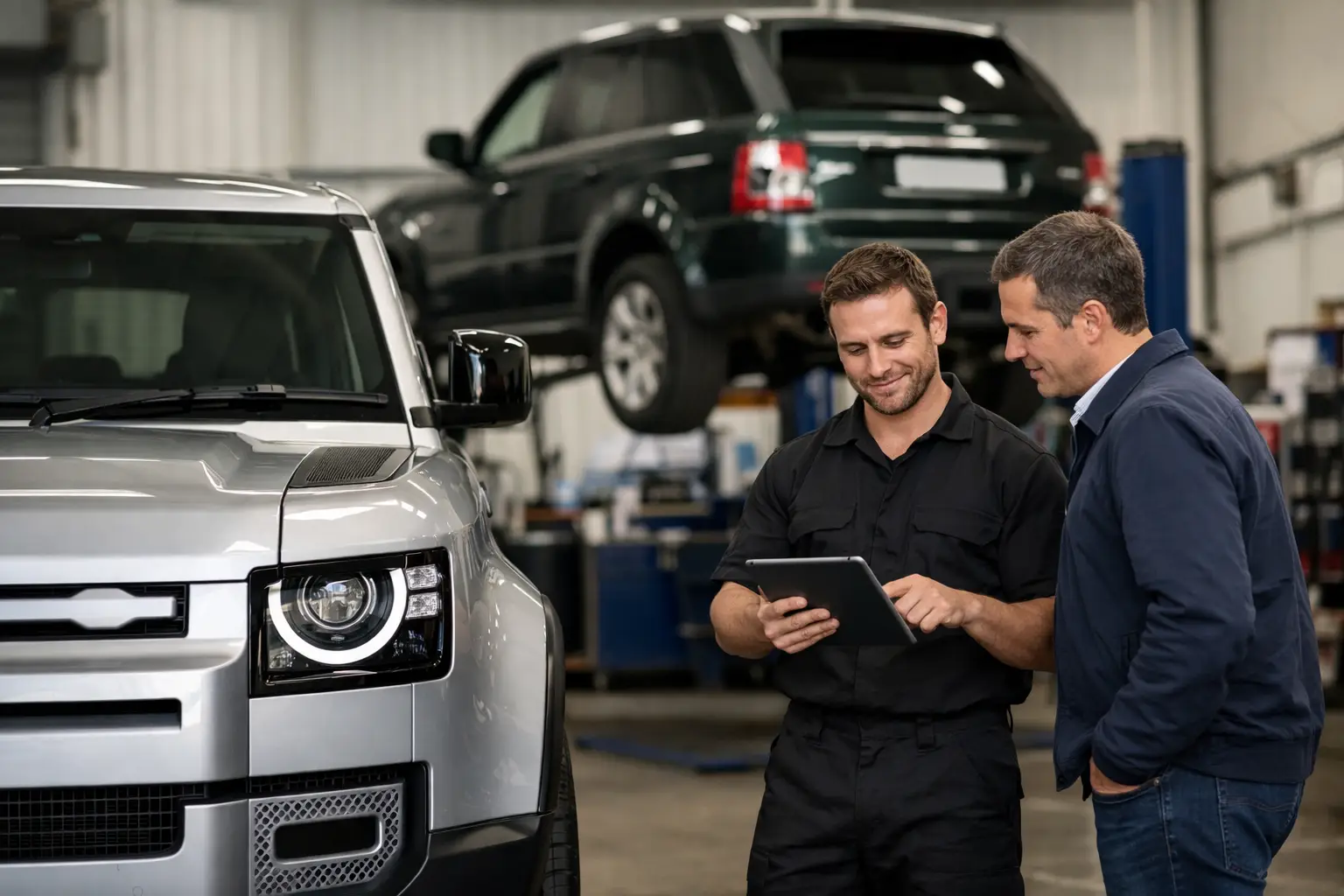
At AutoNet VIP, this means combining trained technicians with modern diagnostic equipment and a straightforward explanation of the recommended work. Customers should know what has been found, what needs attention now and what can be monitored for later.
Servicing That Reflects How You Use Your Land Rover
There is no single servicing plan that suits every vehicle. A Land Rover used mainly for short local trips can need different attention from one that regularly covers motorway miles, tows a caravan or travels off-road. The right service takes account of mileage, age, previous maintenance and how the vehicle is used.
Routine servicing commonly includes an engine oil and filter change, checks of braking components, tyres, steering, suspension, lighting and fluid levels. However, the value lies in the inspection behind the checklist. A careful technician may spot early brake wear, a small fluid leak, deteriorating bushes or uneven tyre wear before it becomes a more expensive repair.
For diesel models, servicing should also consider the health of the diesel particulate filter, commonly called the DPF. Repeated short journeys may prevent the vehicle from completing a regeneration cycle, which can lead to warning messages, reduced performance and eventual blockage. Sometimes a suitable longer drive can help, but once a fault is stored or the filter is heavily loaded, it needs professional assessment rather than hopeful driving.
Petrol, hybrid and electric Land Rover models have different needs. Hybrids and EVs still require routine checks on brakes, tyres, suspension and cooling systems, while their electrical and high-voltage systems should only be assessed by suitably qualified technicians. Choosing a workshop with capability across petrol, diesel, hybrid and electric vehicles gives owners a practical option as their household vehicle needs change.
Genuine, OEM or Quality Aftermarket Parts?
Parts choices deserve an honest conversation. Genuine parts are supplied through the manufacturer’s network and may be the preferred option for particular components, warranty considerations or owners who want a like-for-like replacement. OEM parts are made by the original equipment manufacturer and can offer similar quality without always carrying the vehicle brand packaging.
Quality aftermarket parts can be a sensible choice in the right situation, particularly on older vehicles where value matters. The key is not choosing the cheapest part available. It is using a suitable, reputable component and making sure the customer understands the options, expected lifespan and price difference before authorising the repair.
Common Land Rover Issues Need Careful Diagnosis
Land Rovers have a reputation for sophisticated systems, and sophistication requires methodical maintenance. That does not mean every warning light signals a major bill. It does mean that small symptoms should not be ignored.
Air suspension is one example. If a vehicle sits lower at one corner, displays a suspension fault message or takes too long to rise, the cause might be an air leak, a tired compressor, a valve block issue, a sensor fault or an electrical connection. Replacing the compressor without checking for leaks may only treat part of the problem.
Cooling-system concerns also need prompt attention. Coolant loss, overheating, a sweet smell from the engine bay or a warning message should be inspected quickly. Continuing to drive with an overheating engine can turn a manageable hose, thermostat or water-pump repair into serious engine damage.
Other concerns that benefit from specialist-level testing include rough running, loss of power, AdBlue warnings, excessive smoke, gearbox hesitation, parking sensor faults and intermittent battery warnings. Modern vehicles rely heavily on stable battery voltage, so an apparently minor battery or charging issue can trigger a surprising range of dashboard messages.
MOT Testing and Safety Checks Without the Guesswork
An MOT is a legal safety and emissions test, not a replacement for a full service. It checks key roadworthiness areas, including brakes, tyres, lights, suspension, steering, seat belts and emissions where applicable. Passing an MOT does not necessarily mean that every component is in perfect condition, just as an advisory is not always an urgent failure.
The useful part of a good MOT experience is receiving clear context. A tyre advisory may mean the tyre is approaching its legal limit, has uneven wear or has started to age. Each situation has a different level of urgency. Similarly, a brake advisory should be explained in plain terms: how much wear is present, whether it is safe for normal use and when replacement is likely to be needed.
Booking an MOT alongside a service can be convenient, particularly where a vehicle has been standing or has not had recent maintenance. It also gives the garage the opportunity to investigate concerns before they become a last-minute test failure. However, if your MOT is due immediately, do not delay a booking in the hope that a warning light will disappear on its own.
Questions Worth Asking Before You Book
The best garage relationship is based on clarity, not technical jargon. Before authorising work, ask how the fault has been diagnosed, whether the quoted price includes parts, labour and VAT, and whether additional work will be discussed before it is carried out. These are reasonable questions, especially where a repair could involve more than one possible cause.
It is also sensible to ask whether the garage can support your particular model and powertrain. A workshop may be excellent with routine servicing but not equipped for high-voltage repairs or advanced software-related diagnostics. There is no issue with a garage being clear about its limits. What matters is that it does not attempt specialist work without the right skills or equipment.
Keep an eye on the quality of communication, too. A trustworthy garage should be able to translate the technical finding into a practical decision. You should leave knowing whether the repair is essential for safety, advisable to prevent further damage or simply something to plan for at a future service.
Protecting Reliability Between Visits
A few regular checks make a real difference. Watch for new warning lights, changes in handling, unusual noises, vibrations, fluid marks where the vehicle is parked and changes in fuel economy. Check tyre pressures regularly, particularly before longer trips or towing, and do not ignore a slow coolant loss or repeated need to top up oil.
Use the correct fluids and specifications for your model, especially for engine oil and coolant. Mixing unsuitable products can create avoidable problems. If you are unsure, asking first is always cheaper than correcting a mistake later.
Most importantly, act on changes while they are still small. A dependable Land Rover does not require panic or guesswork. It requires timely maintenance, accurate diagnosis and a garage that treats your vehicle and your budget with equal care.