A quiet drive and no trips to the gas station can make an EV feel almost maintenance-free. It is not. This electric vehicle maintenance guide explains what still needs attention, what is different from a petrol or diesel car, and when a warning sign deserves professional inspection.
Electric vehicles have fewer moving parts in their powertrains, so they do not need oil changes, spark plugs, timing belts, or exhaust repairs. That can reduce routine servicing costs. However, an EV is still a heavy, fast-moving vehicle with tires, brakes, suspension, steering, air conditioning, electronics, and safety systems that need regular care.
What an Electric Vehicle Maintenance Guide Should Cover
The best service plan follows your manufacturer’s schedule first. Intervals vary by model, battery chemistry, mileage, driving conditions, and age. A low-mileage EV still needs annual checks because brake components can corrode, fluids age, tires lose pressure, and the 12-volt battery can weaken even when the high-voltage battery is healthy.
A professional EV service should look beyond a dashboard warning light. It should include a visual inspection of the high-voltage system and charging hardware, a scan for stored fault codes, checks of brakes and tires, suspension and steering inspection, fluid checks, cabin filter replacement where required, and an assessment of the 12-volt battery. The aim is to find small problems before they affect reliability, range, or safety.
The high-voltage battery: protect it, do not interfere with it
The traction battery is the most valuable component in an electric vehicle. It is also not a DIY item. Orange cables, battery enclosures, connectors, and high-voltage components should only be handled by trained technicians using the correct safety procedures and equipment.
For everyday ownership, battery care is mostly about sensible habits. Avoid leaving the car at 100% charge for long periods unless your vehicle manufacturer specifically recommends it or you need the full range for a journey. Frequent rapid charging is useful when traveling, but relying on it constantly can place more heat stress on the battery than slower AC charging. A balanced routine of home or workplace charging, with rapid charging when needed, is usually the practical choice.
Range will fall in cold weather, during short journeys with cabin heating, and when tires are underinflated. That does not automatically mean the battery is failing. What deserves attention is a sudden, persistent change in usable range, repeated charging errors, a battery warning message, unusual cooling fan activity, or a noticeable loss of performance. These symptoms call for proper diagnostics rather than guesswork.
Do not overlook the 12-volt battery
Many EV owners are surprised to learn that a small 12-volt battery can stop the vehicle from waking up, unlocking properly, or entering drive mode. It powers control modules and essential low-voltage systems. If it weakens, the car may display multiple warnings that appear far more serious than the underlying problem.
Have the 12-volt battery tested as part of routine servicing, especially after three years, with infrequent use, or if the vehicle has needed a jump-start. Replacing it before it fails can prevent an inconvenient breakdown.
Tires, Brakes, and Suspension Need Regular Attention
EVs are often heavier than comparable gasoline cars because of the battery pack. They also deliver instant torque. Both factors can increase tire wear, particularly on the driven wheels. Tire condition has a direct effect on braking, wet-weather grip, comfort, and range.
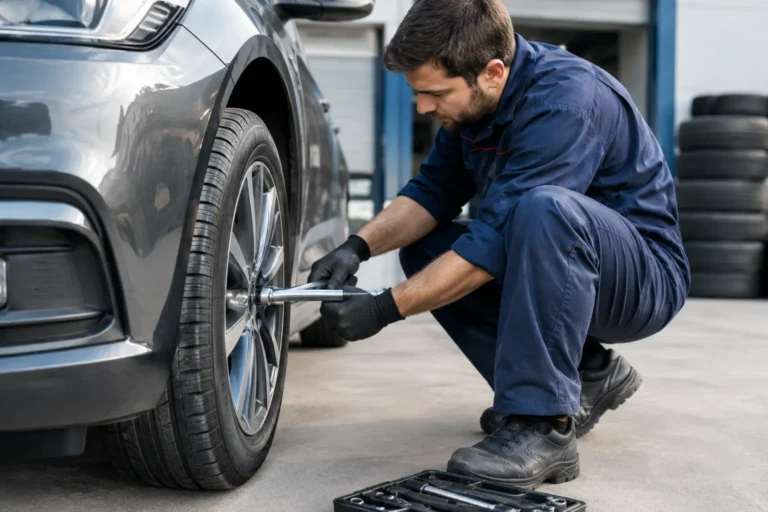
Check tire pressures at least monthly and before longer journeys, using the pressures stated for your exact vehicle. Do not rely on a tire pressure monitoring alert as your only check, since it may warn you only after pressure has dropped significantly. Uneven wear can point to alignment, suspension, or steering issues, while frequent wheelspin can shorten tread life quickly.
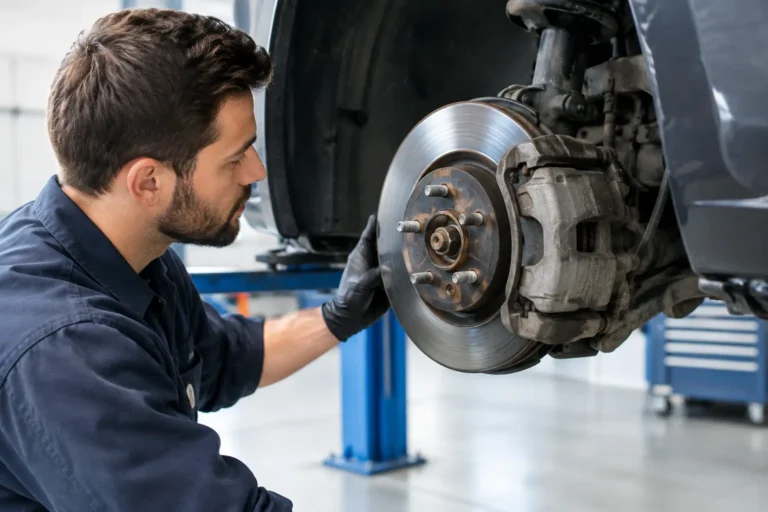
Regenerative braking reduces the workload on friction brakes, but it can create a different problem: brake discs and pads may be used less and can corrode, particularly during wet British winters or on vehicles driven mainly on short local trips. A brake inspection should confirm that pads move freely, calipers are not sticking, discs are in good condition, and brake fluid meets the manufacturer’s standard.
Try not to assume that strong regenerative braking means conventional brakes are unnecessary. They remain essential for emergency stops and must be kept in safe working order. If you notice pulling under braking, grinding, vibration, a soft pedal, or a warning light, arrange an inspection promptly.
Suspension bushes, shock absorbers, wheel bearings, and steering components wear in the same way they do on any other car. An EV’s extra weight can make neglected suspension more noticeable. Knocking sounds, a bouncy ride, uneven tire wear, or a vehicle that drifts from a straight line are all good reasons to book a check.
Cooling, Air Conditioning, and Fluids
An EV does not need engine oil, but it may use coolant to manage the temperature of the battery, inverter, motor, and charging components. The system is specialized, and the correct coolant specification matters. A coolant leak, contamination, or low level can affect charging and battery temperature control, so it should never be ignored.
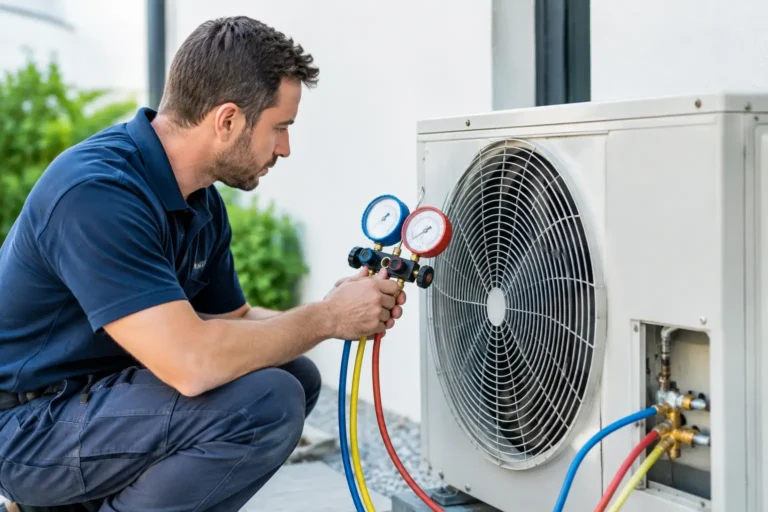
Air conditioning also plays a larger role than many drivers realize. In some EVs, the heat pump or climate system supports battery thermal management as well as cabin comfort. If the system is weak, noisy, smells musty, or fails to demist the windshield effectively, have it checked. Replacing the cabin air filter at the recommended interval helps airflow and can reduce window misting.
Washer fluid, brake fluid, and, on some models, gearbox or reduction-drive fluid are still part of the maintenance picture. There is no universal EV fluid schedule, which is why the manufacturer’s handbook and a vehicle-specific service plan matter.
Charging Equipment and Software Checks
Look over your charging cable and connector regularly. They should be clean, dry, free from cracks, and stored without tight kinks. Stop using the cable if the plug is damaged, unusually hot, loose in the socket, or showing discoloration. The same applies to a home charging point that repeatedly trips, overheats, or fails to start a charge.
Software updates can improve charging behavior, range calculations, driver-assistance systems, and fault detection. Some updates install over the air, while others require workshop equipment. If your EV develops a recurring electronic issue after an update, or if an update will not complete, a diagnostic check can identify whether the cause is software, a low-voltage battery issue, or a component fault.
A Practical EV Service Schedule
Your handbook sets the final schedule, but a sensible ownership routine is straightforward. Check tires, lights, washer fluid, and charging cable condition monthly. Arrange a full service inspection at the manufacturer’s mileage or time interval, even if the car has covered few miles. Have brakes inspected at least annually, particularly if you mostly use regenerative braking or drive in wet, salty conditions.
Book a check sooner if a warning light appears, charging becomes unreliable, range changes sharply without an obvious weather or driving explanation, the car makes new noises, or it has suffered an impact underneath. Damage to the battery enclosure or undertray should be assessed quickly, even if the vehicle still drives normally.
For vehicles in Harlow and the surrounding area, AutoNet VIP can provide informed EV servicing and diagnostics alongside the routine work every car still needs. Clear findings and an agreed plan matter, especially when a fault involves a complex electrical system.
An EV rewards owners who pay attention to the basics. Keep the tires correctly inflated, let trained technicians handle high-voltage work, and respond early to changes in charging, braking, or range. That approach protects the parts you can see and the technology you cannot.