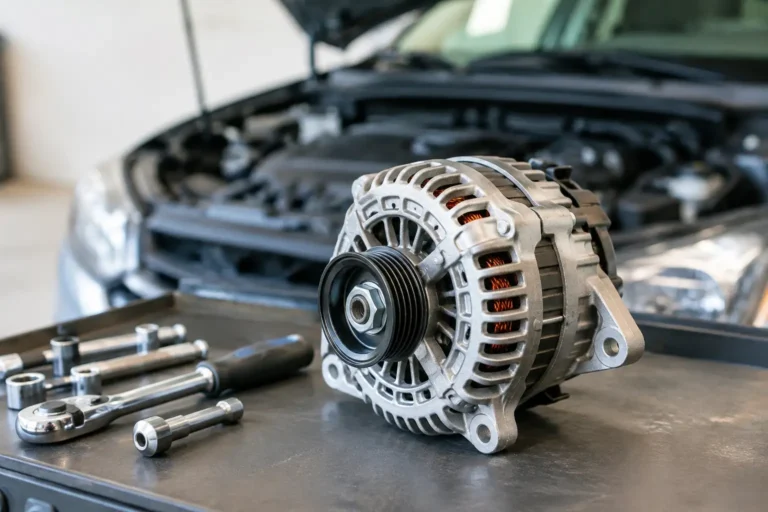
A battery warning light on the dashboard does not automatically mean you need a new battery. Very often, it means the battery is no longer being recharged while you drive. The top causes of alternator failure range from worn internal components to a slipping drive belt, damaged wiring and faults elsewhere in the charging system.
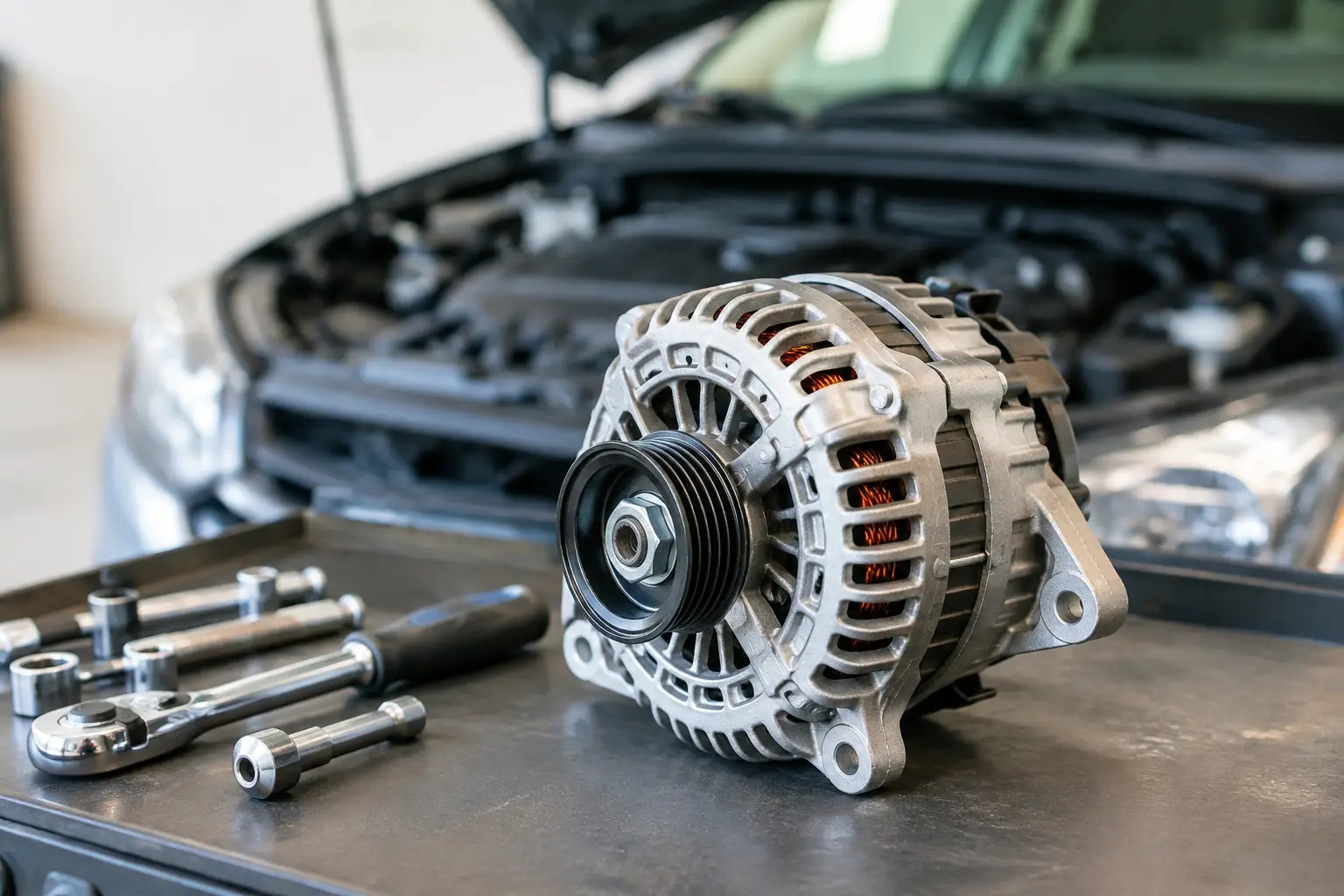
Your alternator supplies electrical power once the engine is running. It keeps the battery charged and supports essentials such as the lights, heater blower, wipers, infotainment and engine management system. When it begins to fail, a small warning can turn into a non-start, a roadside breakdown or electrical faults that are difficult to ignore.
What an alternator fault can feel like
Alternator trouble rarely looks identical from one vehicle to another. The first sign may be a red battery symbol, headlights that dim at idle, a burning rubber smell, unusual whining from the engine bay or electrical features behaving erratically. You may also notice slow window operation, a flickering dashboard or an engine that cuts out once the battery charge has been used up.
These symptoms can also be caused by a weak battery, corroded terminals, a faulty cable or a poor earth connection. That is why replacing parts based on the warning light alone can be an expensive guess. Proper charging-system diagnostics should test the battery condition, charging voltage, belt drive and electrical connections before any repair is recommended.
Top causes of alternator failure
Worn bearings and internal wear
Alternators work hard every time the engine runs. Inside are bearings, windings, brushes and other components that face constant heat, vibration and rotation. Over time, bearings can wear and become noisy. A rumbling, grinding or high-pitched whine from the auxiliary belt area should be checked promptly, especially if the noise changes with engine speed.
If a bearing begins to seize, the alternator may struggle to turn or the drive belt can be damaged. In some cases, early attention means the fault is contained. Leaving it until the unit locks up can lead to a belt failure and a much more inconvenient breakdown.
Failed voltage regulator or diodes
Modern alternators contain electronic components that control output and convert the current generated into a form the vehicle can use. The voltage regulator prevents overcharging, while diodes help maintain a stable supply.
When these components fail, the alternator may undercharge the battery or overcharge it. Undercharging leaves the battery flat after driving. Overcharging can damage the battery and may affect sensitive vehicle electronics. A battery that repeatedly fails, smells strongly of sulphur or appears swollen needs immediate professional attention.
This is one of the reasons charging voltage must be measured rather than assumed. A reading that is too low is a problem, but a reading that is excessively high can be just as serious.
A worn, loose or contaminated auxiliary belt
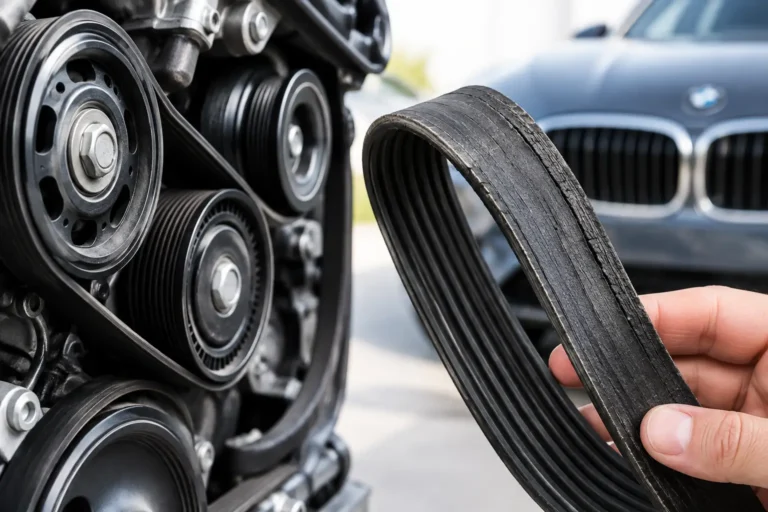
The alternator is normally driven by the auxiliary belt, sometimes called the serpentine belt. If the belt is cracked, stretched, contaminated with oil or coolant, or not held at the correct tension, it may slip instead of driving the alternator efficiently.
You might hear a squeal when starting the engine or when switching on high electrical loads such as heated screens and headlights. A belt issue does not always mean the alternator itself has failed, which is good news if it is identified early. However, the belt, tensioner and pulleys should all be inspected together because one worn component can quickly damage another.
Water, oil and heat damage
Alternators operate in a harsh environment. Road spray, deep standing water, oil leaks and coolant leaks can all shorten their life. Moisture can corrode connections and internal parts, while oil contamination may damage the alternator or make the belt slip.
Heat is another major factor. Engine bays run hot, particularly in stop-start traffic and during warmer weather. Heat gradually degrades insulation, wiring and electronic components. Vehicles used for short journeys may be especially vulnerable to charging issues because the battery is repeatedly used to start the car without receiving enough time to recover its charge.
Battery and cable faults that overload the system
A failing battery can place extra demand on a healthy alternator. If the battery cannot hold charge properly, the alternator has to work harder to replenish it. Corroded battery terminals, damaged cables and poor earth connections can create resistance in the system, leading to weak charging or misleading fault symptoms.
This does not mean every flat battery has damaged the alternator. It depends on the battery condition, the vehicle’s electrical demand and how long the fault has been present. But fitting a new alternator without checking the battery and cables risks leaving the underlying issue behind.
Heavy electrical demand and unsuitable modifications
Modern cars have far more electrical equipment than older models. Heated seats, climate control, charging ports, upgraded audio systems, additional lighting and accessories all increase demand. A standard alternator is designed for the vehicle’s original specification, so poorly installed aftermarket equipment can overwhelm the charging system or create wiring problems.
This is particularly relevant for vans and vehicles fitted with work equipment, leisure conversions or extra lighting. Any electrical upgrade should be installed correctly, with suitable wiring, fuses and a realistic assessment of available charging capacity.
Poor-quality replacement parts or incorrect fitting
Not every replacement alternator offers the same reliability. A low-quality unit may have weaker internal components or may not match the vehicle’s required output. On many modern cars, the charging system is also controlled by the engine management system, so fitting the wrong specification can produce warning lights or irregular charging.
Incorrect belt routing, unsuitable tension or damaged connectors during installation can cause a newly fitted alternator to perform poorly. The part may look like the fault, when the issue is actually the installation or a related component. This is where experienced diagnostics and quality parts make a meaningful difference.
Do not ignore the warning signs
If the battery warning light comes on while driving, reduce unnecessary electrical use where it is safe to do so. Turn off non-essential items such as heated seats, mobile phone charging and rear window heating. Do not switch off the engine simply to clear the warning light – it may not restart.
Arrange an inspection as soon as possible. How far you can drive depends on the battery’s remaining charge and the vehicle’s electrical needs, so there is no reliable mileage figure. Some cars may continue briefly; others may stop soon after the alternator stops charging.
A burning smell, smoke, a loud belt noise or rapidly failing electrics are stronger warning signs. Stop in a safe place and seek assistance rather than trying to continue your journey.
How alternator faults should be diagnosed
A dependable diagnosis starts with the basics. A technician should check the battery state and terminals, inspect the auxiliary belt and tensioner, look for leaks or damaged wiring, then test charging performance under appropriate electrical load. Fault codes can provide useful clues on newer vehicles, but they are only one part of the picture.
For hybrid and electric vehicles, the situation can be different. Many use a 12-volt battery and a DC-to-DC converter rather than a conventional belt-driven alternator. Similar warning lights or low-voltage symptoms may appear, but the testing process and safety requirements are not the same. These vehicles need technicians with the right equipment and high-voltage awareness.
Reducing the risk of future failure
You cannot prevent every alternator fault, as internal components eventually wear. You can reduce avoidable problems by having the auxiliary belt checked during routine servicing, fixing oil or coolant leaks promptly and keeping battery terminals clean and secure. If your vehicle has struggled to start or the battery has gone flat more than once, have the charging system tested instead of relying on repeated jump-starts.
For drivers in Harlow and the surrounding area, AutoNet VIP can assess the complete charging system, explain the findings clearly and advise whether the answer is a battery, belt, wiring repair or alternator replacement. A timely diagnostic check is usually far less disruptive than discovering the problem when the car will not start on the way to work, school or home.