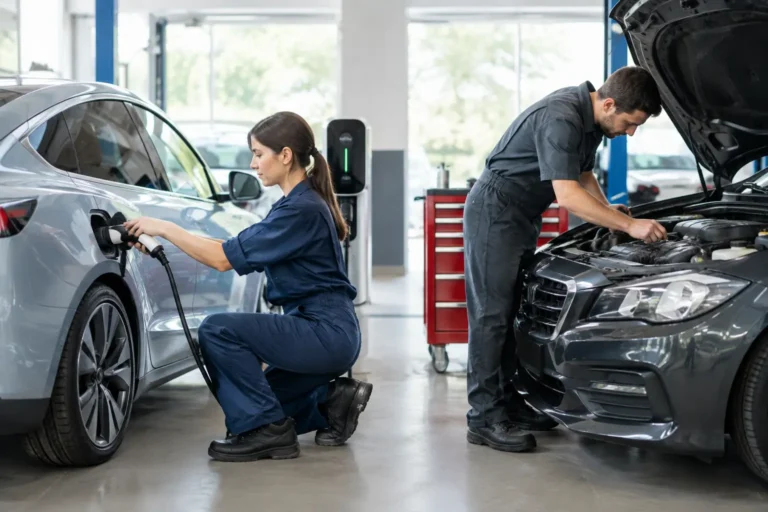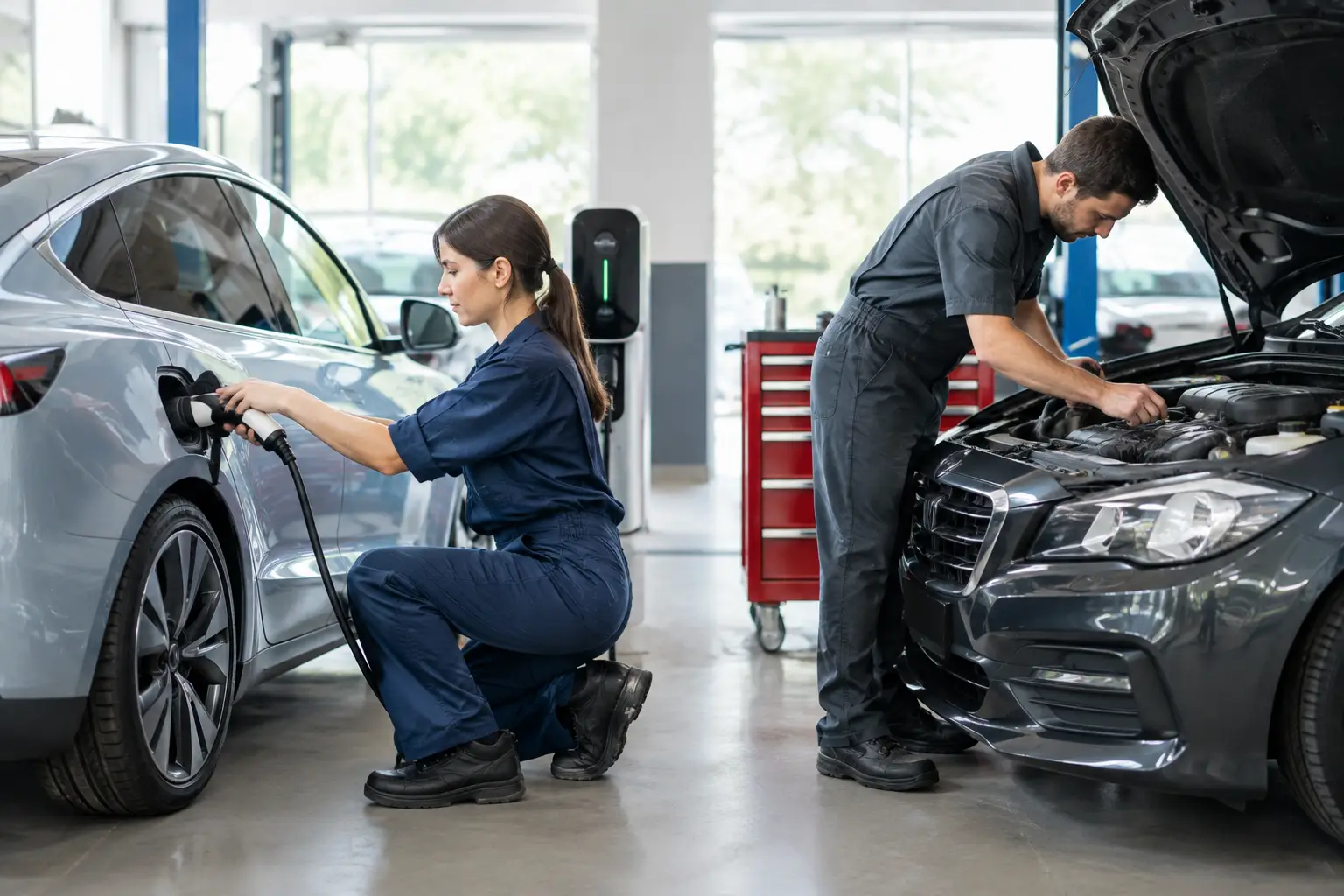
A car may have no exhaust, no spark plugs and far fewer moving engine parts, but it still needs professional care. Electric car servicing versus petrol is not simply a question of which vehicle costs less to maintain. The work is different, the checks are different, and the right garage needs the skills and equipment to work safely on both.
For drivers weighing up an EV, keeping one for the long term, or running a mixed household fleet, understanding those differences helps avoid surprises. A well-maintained electric or petrol car should be safer, more reliable and easier to sell when the time comes.
Electric car servicing versus petrol: the main difference
A petrol car relies on an internal combustion engine. That means regular oil and filter changes, spark plug replacement at specified intervals, and inspection of components such as belts, hoses, exhaust parts and fuel-system items. These are wear-related jobs that do not exist in the same form on a battery-electric car.
An electric vehicle uses a high-voltage battery, electric motor and power electronics instead of an engine and gearbox with many moving internal parts. There is no engine oil to replace, no oil filter, no spark plugs and no exhaust system. As a result, routine EV servicing can involve fewer consumable parts and, in many cases, less labour.
That does not mean an EV is maintenance-free. It still has brakes, tyres, suspension, steering, cooling systems, cabin filters, wipers, lights and safety systems. It also has complex software and high-voltage components that require trained technicians and appropriate procedures.
What is checked during an electric car service?
A proper electric car service begins with safety. Before work starts, the vehicle must be handled correctly around its high-voltage system. Technicians should follow manufacturer procedures, use suitable diagnostic equipment and understand when a system needs isolating before repairs are carried out.
The service itself will usually include an inspection of the battery pack and its casing for damage, corrosion or signs of impact. The high-voltage cables, connectors and charging port should be checked, while diagnostic equipment can identify stored fault codes, charging issues and battery-related warnings. Depending on the manufacturer’s schedule, the cooling circuit that manages battery and motor temperatures may also need inspection or fluid replacement.
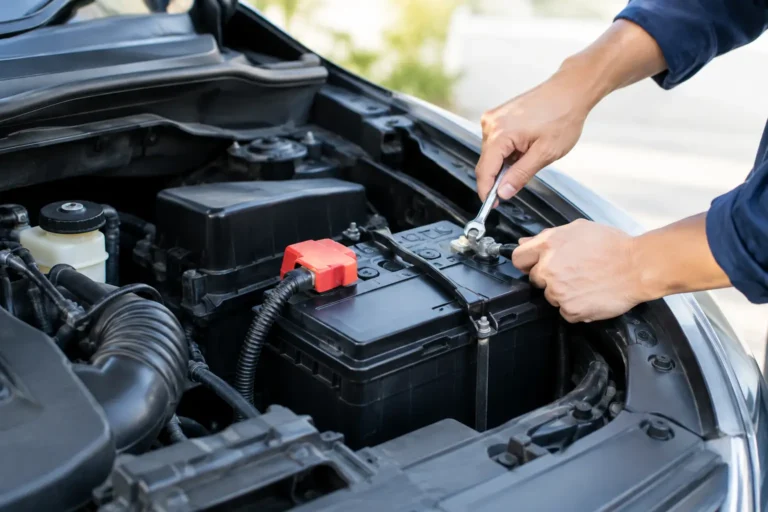
Routine road-going items remain just as important. Tyres are checked for tread depth, condition and uneven wear. Suspension and steering components are inspected, along with lights, wipers, washer fluid, the 12-volt battery, pollen filter and air conditioning performance. Software updates may also form part of the visit where applicable.
The brakes deserve particular attention. Regenerative braking means an EV can slow down using the motor, reducing use of the friction brakes. This can extend pad and disc life, but it can also allow discs to corrode if the vehicle is mainly used for short, gentle journeys. A visual inspection alone is not always enough – calipers may need servicing to ensure they move freely.
What does a petrol car service involve?
A petrol service covers many of the same safety-critical areas: tyres, brakes, suspension, steering, lights, fluid levels, filters and diagnostics. The difference is that the engine needs regular attention as well.
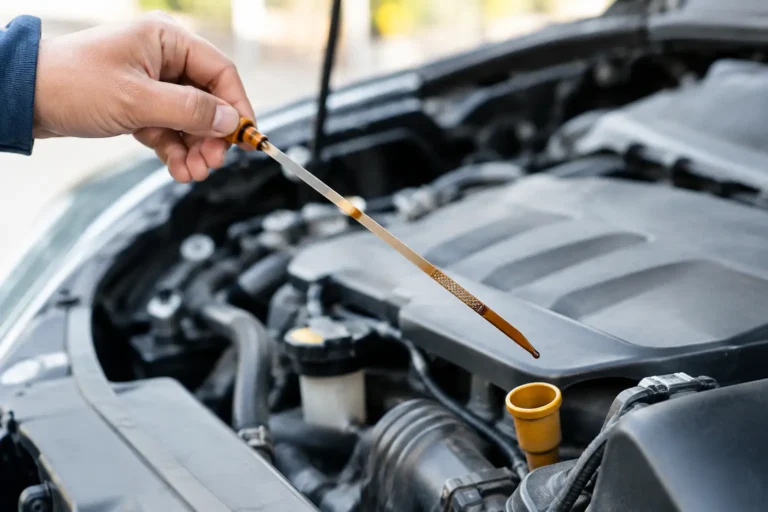
Engine oil degrades over time and use, so changing the oil and filter at the correct interval is fundamental. Old or low-quality oil can increase wear inside the engine and contribute to expensive faults. Air filters, spark plugs and fuel filters may need replacement according to the service schedule, while the garage may check the condition of the auxiliary belt, coolant, exhaust and emissions-control components.
Modern petrol cars are highly electronic too. An engine management warning light may relate to sensors, ignition, fuelling, emissions or software, not simply a mechanical failure. Quality diagnostics therefore matter whether your car is petrol or electric.
Are electric cars cheaper to service?
Often, yes. With fewer parts that need regular replacement, an EV can have lower routine servicing costs than a comparable petrol car. There is no oil service, no spark plug change and no exhaust system to repair. For drivers covering high mileages, that reduction in scheduled maintenance can make a meaningful difference over several years.
However, cheaper routine servicing is not the same as cheaper ownership in every situation. EVs can be heavier than petrol equivalents, which may increase tyre wear. Strong acceleration can do the same if it is used frequently. Tyres must be the correct size, load rating and specification for the vehicle, rather than simply the cheapest available option.
Repairs can also be more specialised. Damage to a battery casing, fault in a charging system or issue with high-voltage electronics requires a workshop with the right training and tools. Those repairs can be significant, particularly outside warranty, although they are not part of normal annual maintenance.
Petrol cars may cost more in routine servicing, but their parts and repair processes are familiar to most garages. The best choice depends on the model, its age, mileage, service history and how it is used.
Service intervals: follow the manufacturer, not assumptions
It is easy to assume that an EV needs a service only when a warning light appears. That is a false economy. Most manufacturers set time and mileage intervals, and these should be followed to protect the vehicle, maintain any warranty conditions and spot developing faults early.
Some EVs have longer intervals than petrol cars, but a yearly inspection is still sensible for many drivers. A car that covers only a small annual mileage can still suffer from low-use issues such as brake corrosion, tyre deterioration, a weak 12-volt battery or air conditioning faults.
For petrol vehicles, the correct interval may be based on miles, time or both. Short journeys, stop-start commuting and infrequent use can be harder on engine oil than steady motorway miles. If you are unsure which schedule applies, check the handbook or ask a garage to confirm it using your registration and vehicle details.
MOT checks are not the same as servicing
An MOT confirms that a vehicle meets minimum roadworthiness and environmental standards on the day of the test. It is essential, but it is not a replacement for servicing.
For a petrol car, the MOT includes relevant emissions testing. An electric car has no tailpipe emissions test, but its tyres, brakes, suspension, steering, lights, seat belts and other safety items are examined in the usual way. Both types of vehicle can fail an MOT for worn tyres, damaged suspension, brake issues or warning lights.
A service is more preventative. It allows a technician to replace fluids and filters, inspect components in greater detail and address early wear before it becomes a breakdown or MOT failure.
Choosing a garage for an EV or petrol car
For routine petrol servicing, clear communication and proper diagnostics are key. You should receive an explanation of what is due, what has been found and what work is recommended now versus what can be monitored. No driver should feel pressured into repairs they do not understand.
For an EV, ask whether the garage is equipped and trained to work on high-voltage vehicles. A capable workshop should be able to carry out appropriate servicing, diagnostics and repairs without treating an electric car as an unfamiliar exception. The same principle applies to hybrids, which combine conventional mechanical systems with high-voltage technology.
At AutoNet VIP, the aim is to give drivers in Harlow and the surrounding area straightforward advice on petrol, hybrid and electric vehicle care. Whether the job is a routine service, a brake concern, tyre wear or an electrical warning, knowing what is being checked and why makes the decision easier.
The practical choice for your car
An electric car will usually need less routine maintenance than a petrol car, but neither should be neglected. EV ownership shifts the focus from engine maintenance towards tyres, brakes, battery-related systems and diagnostics. Petrol ownership adds oil, filters, ignition and exhaust-related checks to the same core safety work.
The most useful approach is not to choose servicing by stereotype or price alone. Follow your manufacturer’s schedule, act on warning lights promptly and use a garage that can explain the work in plain English. That gives your car the attention it needs, whatever is powering it down the road.