A brake pedal that feels different on the school run, a squeal in slow-moving traffic or a warning light that stays on after starting the engine should never be treated as a minor irritation. Brake repair Harlow drivers can rely on starts with understanding what the vehicle is telling you, then carrying out the right checks before a small issue becomes a safety concern or a larger bill.
Your braking system works hard in every journey. It manages stop-start commuting, wet Essex roads, heavy loads, steep car parks and the sudden stops that come with everyday driving. Because wear often develops gradually, it is easy to adjust your driving without realising the brakes no longer feel as confident as they should.
When should you book brake repair in Harlow?
Some brake faults are obvious, while others are quieter. If the car does not stop, steer or feel as expected, arrange an inspection promptly rather than waiting for the next service or MOT. Brakes are not an area where guesswork or delay is worth the risk.
The most common warning signs include:
- A high-pitched squeal, scraping or grinding noise when braking
- A soft, spongy or unusually hard brake pedal
- Pulling to one side under braking, or vibration through the pedal or steering wheel
- A brake, ABS or electronic parking brake warning light on the dashboard
- Longer stopping distances, a burning smell or a vehicle that feels as though it is resisting movement
Noise does not always mean the same fault. A light squeal may be caused by surface corrosion after rain or a car standing overnight, particularly if it disappears after a few controlled stops. Grinding, however, can mean the friction material has worn away and metal is contacting the brake disc. Continuing to drive can damage parts that might otherwise have been retained.
Likewise, vibration may come from worn brake discs, but it can also relate to suspension, tyres or wheel balance. A proper assessment matters because replacing parts based solely on a symptom can be expensive and fail to solve the underlying problem.
What a proper brake inspection should cover
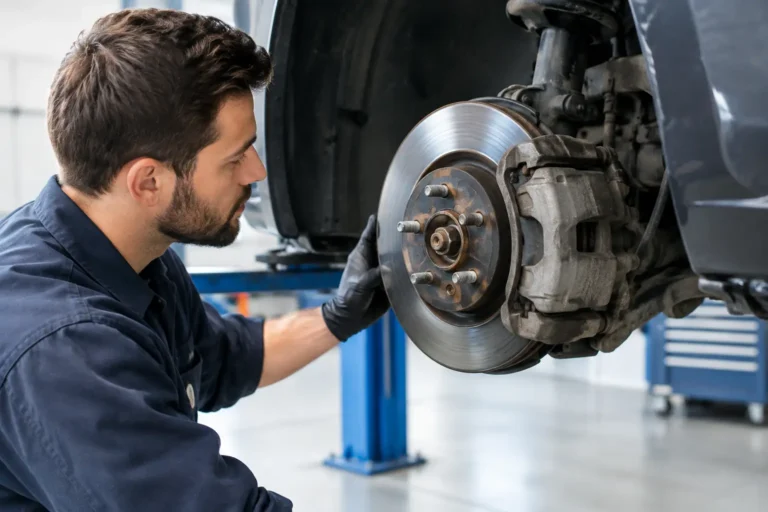
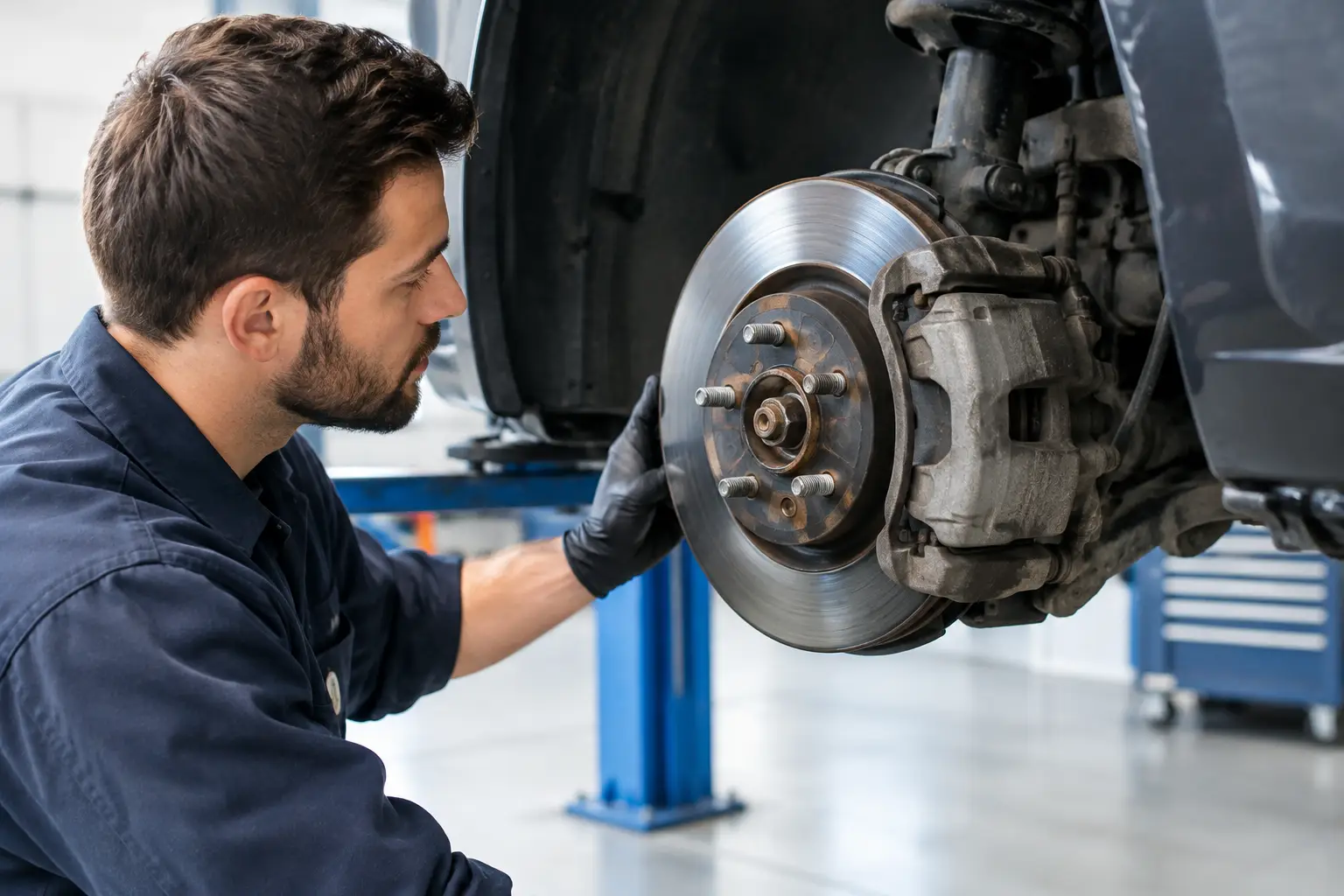
A good brake check is more than a quick look through the wheel. The wheels may need to be removed so the technician can assess the brake pads, discs, calipers, hoses and fixings properly. They should also consider the brake fluid condition, the operation of the parking brake and any stored fault codes affecting ABS, traction control or electronic braking systems.
Pads are designed to wear, but they need replacing before the friction material becomes too thin. Discs should be measured and checked for scoring, corrosion, overheating and uneven wear. Calipers must move freely and apply braking force evenly. A seized caliper can cause one pad to wear rapidly, make the vehicle pull under braking and reduce fuel economy because the brake may be dragging.
Brake fluid deserves attention too. It absorbs moisture over time, which can lower its boiling point and affect braking performance under repeated heavy use. The required replacement interval varies by manufacturer, so the service schedule for your vehicle should guide the decision. If a fluid change is recommended, the reason and the work involved should be explained clearly.
At AutoNet VIP, the aim is to identify the cause before recommending repairs. You should know what is worn, what can safely remain in service and what the cost covers before authorising work. That is especially valuable when a brake issue overlaps with tyres, suspension or dashboard warning lights.
Pads, discs and calipers: why repairs vary
There is no single price or repair for every braking concern. On one vehicle, new front pads may be all that is needed. On another, worn pads have damaged the discs, or a sticking caliper has caused uneven wear on one side. Replacing pads alone in that situation may create a short-term improvement without fixing the fault.
Brake components are generally replaced in pairs across the same axle. This helps preserve balanced braking, provided the rest of the system is in good condition. The correct parts also depend on the vehicle. Family cars, vans, performance models and heavier hybrid or electric vehicles can have different specifications, and fitting components simply because they are the cheapest option is not a sound safety decision.
Quality parts and skilled fitting are worth considering, but that does not mean every car needs premium upgrades. The right choice depends on the manufacturer specification, how the vehicle is used and the condition of the existing system. A transparent garage will set out the options without pushing unnecessary work.
Brakes, MOTs and roadworthiness
An MOT is a useful annual safety check, but it is not a substitute for maintaining brakes throughout the year. During the test, issues such as inadequate braking performance, badly worn components, brake fluid leaks and warning lights can lead to a failure. Advisories may also flag wear that does not yet fail the vehicle but should be planned for.
Do not wait for an MOT appointment if there is a new brake symptom. A dashboard warning light, grinding noise or sudden change in pedal feel calls for attention now. Addressing the problem early can make your MOT preparation more straightforward and gives you more control over timing and cost.
For drivers covering high mileage, towing, carrying tools or regularly travelling with family passengers, brake checks at routine services are particularly sensible. Urban journeys can be demanding too, despite lower speeds, because frequent braking gives pads and discs little respite.
Hybrid and electric vehicle brake care
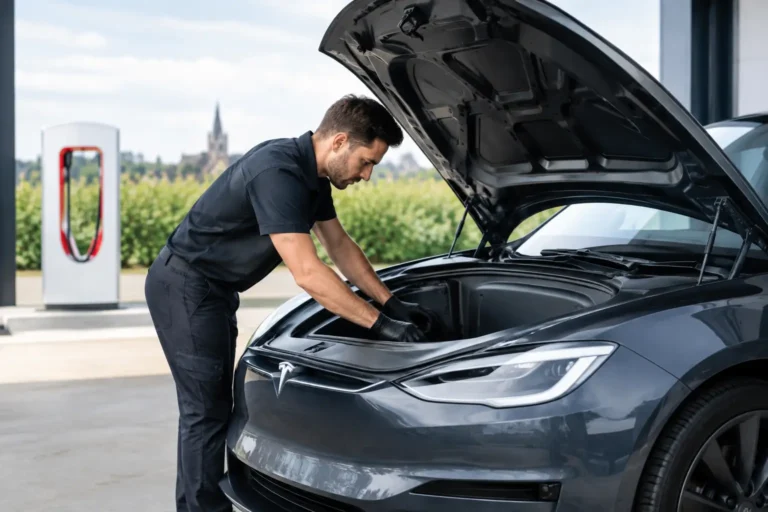
Hybrid and electric vehicles use regenerative braking to recover energy when slowing down. This often means the conventional friction brakes are used less heavily, which can extend pad life. It does not mean they can be overlooked.
Because the discs and pads may be used less often, corrosion can become more noticeable, especially during damp weather or on vehicles used mainly for short trips. Electronic parking brakes, brake-by-wire systems and vehicle-specific diagnostic procedures also need technicians who understand the system fitted to the car.
A capable workshop can inspect the mechanical brake components while using suitable diagnostic equipment to investigate warning messages and electronic faults. For high-voltage vehicles, the repair process should follow the correct safety procedures rather than treating the car as a conventional petrol or diesel model.
How to protect your brakes between visits
Gentle, observant driving helps. Leave enough space to slow progressively where possible, avoid resting your foot on the brake pedal and do not ignore changes in feel or sound. After washing the car or driving through heavy rain, a little surface rust can form on brake discs. A few careful applications of the brakes usually clear it, but persistent noise or poor performance needs checking.
It is also wise to pay attention after any wheel, tyre or suspension work. If a new vibration, pull or warning light appears, contact the garage rather than assuming it will settle. Braking performance relies on several systems working together, from tyre grip and wheel alignment to suspension condition and electronic stability controls.
Clear advice makes brake repairs less stressful
The best time to deal with brake wear is before it becomes urgent. A clear inspection gives you the facts: what needs attention now, what can be monitored and why the recommended repair is appropriate for your vehicle. Ask to have findings explained in plain language, including whether a repair is safety-critical or simply advisable as part of planned maintenance.
If your brakes are making noise, the pedal feels wrong or a warning light has appeared, book a professional inspection and drive only if it is safe to do so. Prompt, honest advice can protect your vehicle, your budget and, most importantly, everyone travelling in it.