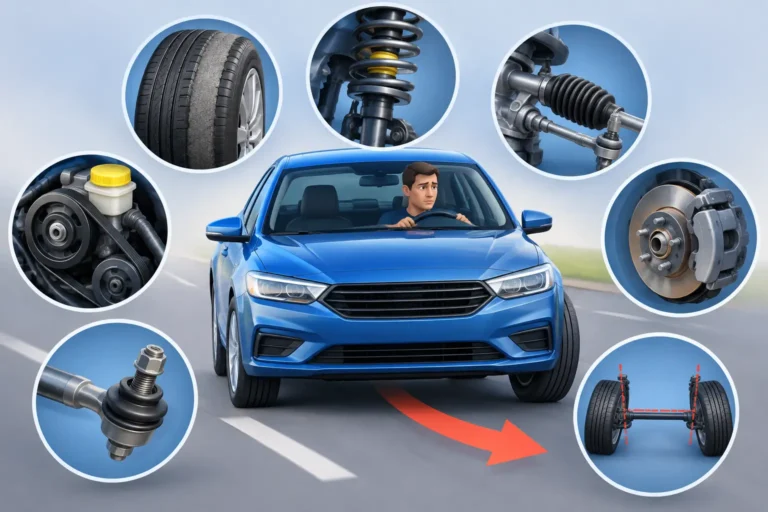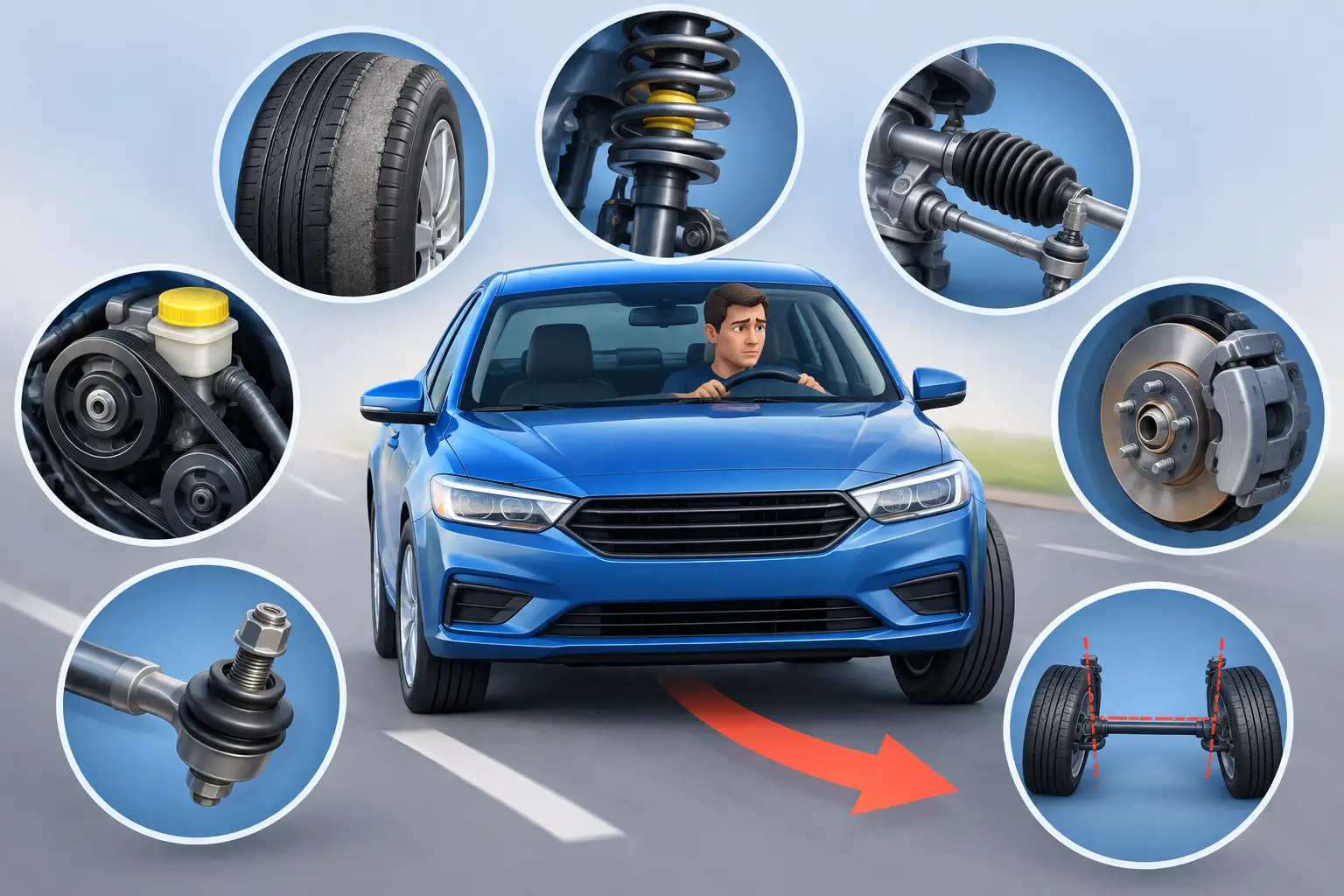
A car that drifts towards one side can make even a familiar journey feel tiring. If you are asking what causes steering pulling, the answer may be as simple as tyre pressure, but it can also point to a brake, suspension or wheel-alignment fault that needs attention. The key is noticing when the pull happens and arranging the right checks before it affects safety or tyre wear.
What Causes Steering Pulling While Driving?
Steering pull describes a vehicle that consistently moves left or right when you briefly relax your grip on a level, safe stretch of road. It is different from a slight reaction to the road surface, a strong gust of wind or grooves in the carriageway. A genuine pull is repeatable and usually becomes more obvious as you drive.
The cause is often related to the way the tyres meet the road. For a vehicle to travel straight, the tyres must have suitable pressure, even grip and correct alignment. The brakes and suspension also need to release and move freely. When one side of the vehicle creates more resistance or less grip than the other, the steering can begin to favour one direction.
Road camber can be misleading
Most UK roads are built with a gentle slope to help rainwater drain away. On a normal road, this can create a mild tendency to move towards the kerb. Test the vehicle only where it is safe to do so and compare the behaviour on different, reasonably level roads. If the direction or strength of the pull changes dramatically with the road, camber may be playing a part.
However, do not assume road camber is always responsible. A persistent pull, a crooked steering wheel, uneven tyre wear or a pull that worsens under braking should be professionally inspected.
1. Uneven or Incorrect Tyre Pressures
A low tyre has a larger contact patch and more rolling resistance. If one front tyre is noticeably under-inflated, the car may pull towards that side. This is one of the quickest issues to check and one of the easiest to overlook, particularly as tyre pressures can fall gradually over time.
Check pressures when the tyres are cold, using the vehicle manufacturer’s recommended settings. These are commonly shown inside the fuel filler flap, on a door shut or in the handbook. Do not rely on how a tyre looks alone, as modern tyres can appear acceptable even when they are below the correct pressure.
If a tyre repeatedly loses pressure, it may have a puncture, damaged valve or wheel-rim sealing issue. Inflating it again is only a short-term measure. It is worth having the cause found before a small leak becomes a roadside problem.
2. Uneven Tyre Wear or Tyre Damage
Tyres do far more than provide grip. Their shape, tread depth and internal condition directly influence steering feel. Worn inner or outer edges, feathering across the tread, bulges and separated tyre belts can all cause a vehicle to wander or pull.
A tyre with internal damage may not always show an obvious external defect. You may instead notice a new vibration, a thudding sensation, noise that rises with road speed or a pull that began after striking a pothole or kerb. Avoid continued driving if there is a visible bulge, exposed cords or significant sidewall damage.
Different tyre types or very uneven tread depths across an axle can also affect handling. This does not mean every vehicle needs four matching tyres, but tyres on the same axle should be a compatible pair of the correct size and specification. On four-wheel-drive, performance, hybrid and electric vehicles, tyre choice and tread-depth differences can matter even more, so follow the manufacturer’s guidance.
3. Wheel Alignment Is Out of Specification
Wheel alignment is a common explanation for steering pulling, especially after a pothole strike, a kerb impact or suspension work. Alignment refers to the precise angles at which the wheels sit and travel. Small deviations can alter how the tyres contact the road, creating a pull, an off-centre steering wheel or accelerated tyre wear.
The term is sometimes used loosely as though it only means adjusting the front wheels. In practice, a proper alignment assessment considers the vehicle’s geometry and checks whether the settings are within the manufacturer’s tolerances. On some vehicles, the rear axle position can also influence how the car tracks down the road.
Alignment adjustment is not a cure for every pull. If a worn suspension component, bent wheel or damaged tyre is causing the problem, adjusting the angles alone will not provide a lasting repair. A good inspection identifies the underlying reason first.
4. A Binding Brake Caliper or Sticking Brake Component
If the car pulls mainly when braking, a brake issue moves high up the list of possible causes. A sticking caliper, seized slider, restricted brake hose or uneven brake-pad condition can make one wheel brake harder than the other. The vehicle may then tug sharply to one side when you press the pedal.
A brake that does not release properly can cause a pull even when you are not braking. Other signs include a hot wheel, a burning smell, poor fuel economy, brake noise or the vehicle feeling reluctant to coast. Do not touch a wheel or brake assembly immediately after a journey, as it may be extremely hot.
A braking pull should not be put off. It can affect stopping stability and may lead to further damage to discs, pads and calipers. Arrange an inspection promptly, particularly if the pull is sudden or severe.
5. Worn Suspension or Steering Components
Suspension and steering parts keep the wheels positioned correctly while absorbing bumps and allowing the vehicle to turn. Wear in components such as track-rod ends, ball joints, control-arm bushes, springs, dampers or top mounts can let a wheel move out of its intended position.
The symptoms are not always limited to pulling. You may hear knocking over uneven roads, notice vague steering, feel a vibration through the wheel or find that the car dips and moves around more under braking. A broken spring can also affect ride height on one corner and change the vehicle’s handling.
These components naturally wear with mileage and road conditions. Regular servicing and MOT inspections can identify many concerns, but a vehicle may develop a fault between tests. If the steering suddenly feels loose, unusually heavy or unpredictable, stop driving when safe and seek advice.
6. A Bent Wheel or Damage After an Impact
Potholes, kerbs and road debris can damage a tyre, bend an alloy wheel or affect suspension geometry. The impact does not need to be dramatic to create a problem. You may initially notice a vibration at certain speeds, then find that the steering wheel sits at an angle or the vehicle begins to pull.
A visual check can reveal obvious rim damage, but hairline cracks, slight distortion and internal tyre damage require closer inspection. Continuing to drive on a damaged wheel or tyre risks worsening the fault and compromising control, particularly in wet conditions.
If the pull started immediately after an impact, mention this when booking the vehicle in. It gives the technician useful context and helps focus the inspection on the most likely areas.
7. Electronic Steering or Driver-Assist System Faults
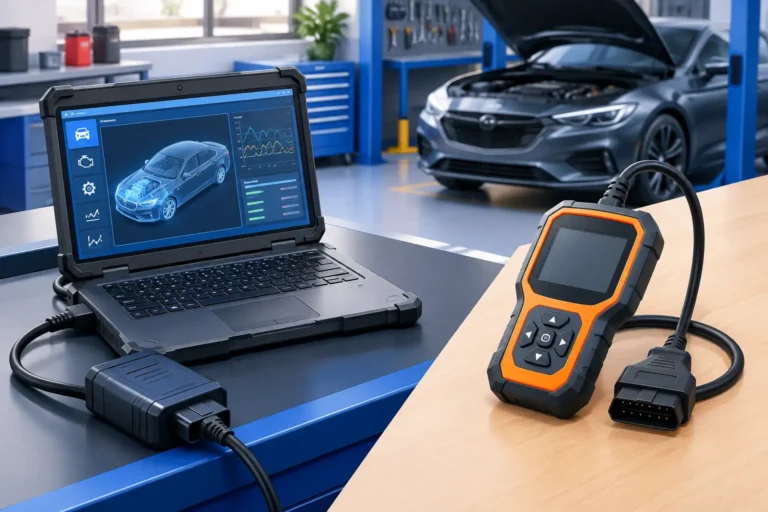
Modern vehicles may use electric power steering, steering-angle sensors and driver-assistance systems that interact with the steering and brakes. These systems are generally reliable, but warning lights, sudden changes in steering assistance or a pull accompanied by dashboard messages should be diagnosed properly.
This is especially relevant for newer hybrid and electric vehicles, where specialist diagnostic equipment and correct repair procedures are essential. A warning light does not always mean the system itself is the cause of the pull, but it should not be ignored.
What You Can Check Before Booking an Inspection
Start with a calm, basic assessment. Check tyre pressures against the manufacturer’s specification, look for visible tyre damage and note whether the pull happens constantly, only when braking or only after hitting bumps. Also consider whether the vehicle has recently had new tyres fitted, suspension repairs completed or a pothole impact.
Avoid trying to correct a steering pull by adjusting tyre pressures unevenly or making steering adjustments yourself. These approaches can mask the symptom while increasing tyre wear or making the vehicle less predictable. The safest route is a proper inspection of the tyres, brakes, steering and suspension, followed by wheel alignment if the vehicle needs it.
When Steering Pulling Needs Urgent Attention
Book an assessment soon if the pull is noticeable, persistent or getting worse. Treat it as more urgent if the vehicle pulls heavily under braking, the steering feels loose, a tyre is damaged, a wheel is hot, there is a burning smell or warning lights are showing.
A vehicle that no longer holds a straight line comfortably is asking more of the driver at exactly the moment attention should be on traffic, cyclists and changing road conditions. At AutoNet VIP, a clear inspection can separate a simple tyre-pressure correction from a brake, suspension or alignment repair, so you can make an informed decision and get back on the road with confidence.