A warning light rarely arrives at a convenient time. More often, it appears before a busy commute, a school run, or a long trip when you need your car to work without question. The best car service checklist helps you avoid that uncertainty by showing what should be inspected, maintained, and discussed during a proper garage visit.
A service is not simply an oil change and a stamp in a book. It is a planned health check for the systems that affect safety, reliability, efficiency, and the long-term value of your vehicle. The exact work depends on your manufacturer’s schedule, mileage, age, engine type, and how the car is used. A diesel commuting long distances has different needs from a hybrid used mainly for short local journeys.
What Should Be on the Best Car Service Checklist?
A worthwhile service starts with the vehicle manufacturer’s service schedule, not a one-size-fits-all package. Your garage should explain whether your car needs an interim, full, or major service and why. It should also confirm any extra work that is due by time as well as mileage, such as brake fluid replacement, spark plugs, timing belt work, or transmission servicing.
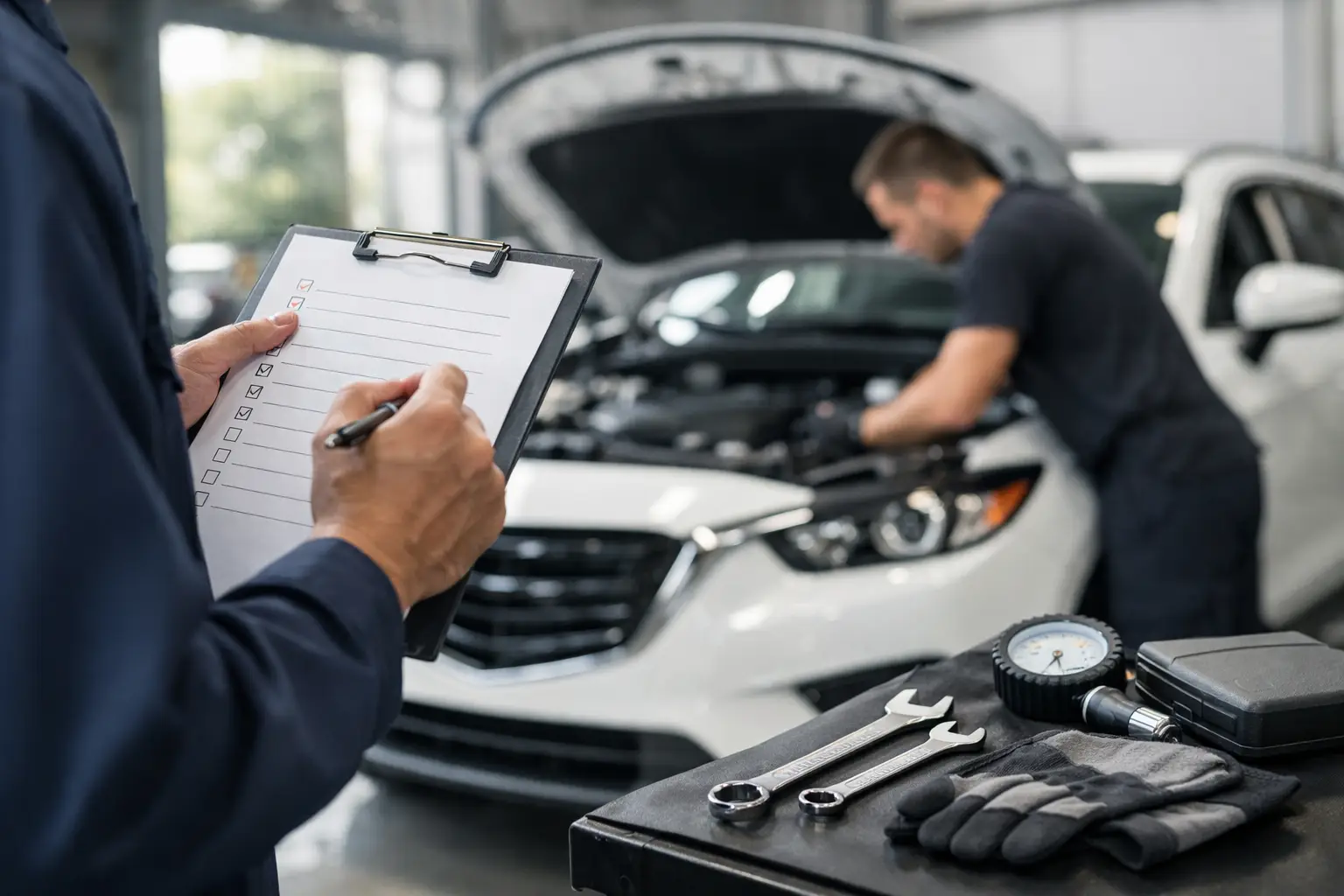
The following checks form the foundation of a thorough car service.
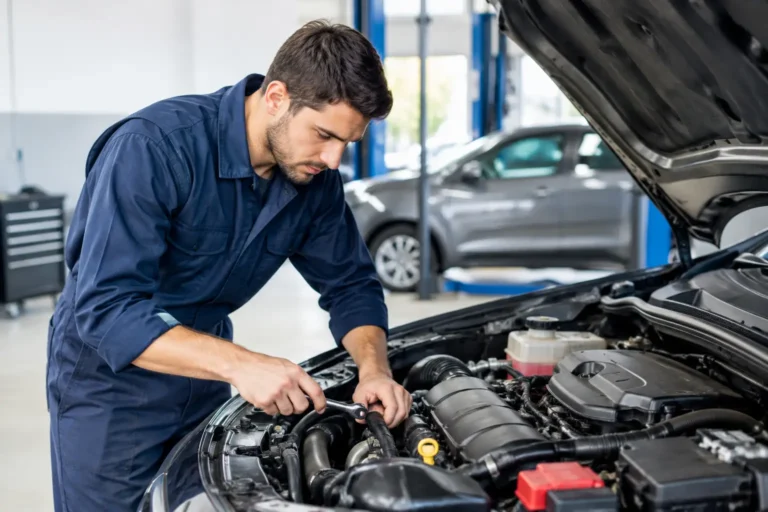
- Engine oil and oil filter: Oil protects moving engine components from heat and wear. Old or low oil can contribute to poor performance, increased fuel use, and expensive internal damage. The correct oil specification matters, particularly for modern petrol, diesel, hybrid, and performance vehicles.
- Air, cabin, and fuel filters: A blocked engine air filter can affect efficiency, while a dirty cabin filter can reduce airflow and contribute to odors or misting. Fuel filters are especially relevant on many diesel vehicles and should be replaced at the manufacturer-recommended interval.
- Fluid levels and condition: A technician should check coolant, brake fluid, screen wash, power steering fluid where fitted, and transmission fluid where applicable. A low level is not always a simple top-up issue. It can point to a leak that needs diagnosing.
- Brakes: This includes pad thickness, disc condition, brake lines, hoses, calipers, fluid condition, and the operation of the parking brake. A visual check alone does not always tell the whole story, so concerns such as pulling, squealing, vibration, or a soft pedal should be reported before the service begins.
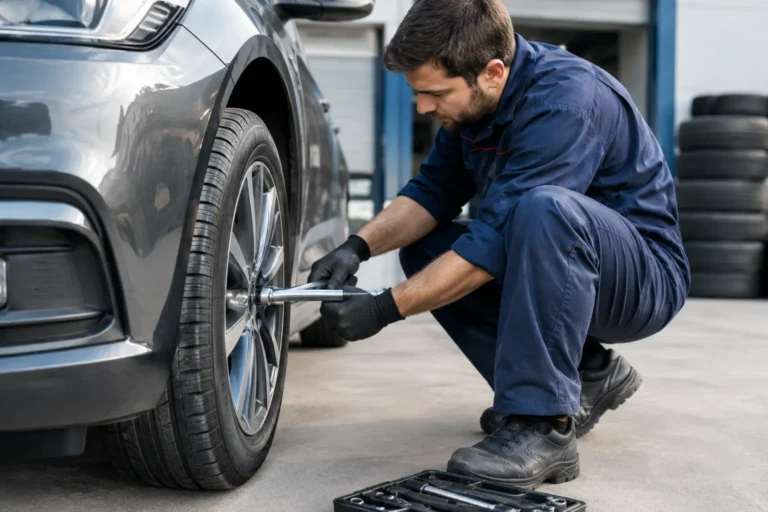
- Tires and wheels: Tires should be inspected for tread depth, uneven wear, pressure, sidewall damage, punctures, and age-related cracking. Uneven wear can signal alignment, suspension, or steering issues that will shorten tire life if left unresolved.
- Suspension and steering: Worn bushes, ball joints, shock absorbers, springs, and steering components can affect handling and braking stability. A knocking sound over bumps or a car that feels unsettled on the road deserves attention.
- Battery and charging system: A battery test is particularly useful before winter and for cars that make frequent short journeys. The alternator or DC-DC charging system should also be considered if there are starting problems, warning lights, or repeated flat batteries.
- Lights, wipers, and visibility: Headlights, brake lights, indicators, number plate lights, wiper blades, washers, and the windscreen should all be checked. These are straightforward items, but they have a direct effect on safe driving and MOT readiness.
- Belts, hoses, and leaks: Auxiliary belts, coolant hoses, visible seals, and underbody areas should be inspected for cracking, wear, or leaks. Catching a small coolant or oil leak early is usually far less costly than dealing with overheating or low oil pressure later.
- Exhaust and emissions equipment: A service should include an exhaust condition check and, where appropriate, attention to emissions-related components. For diesel vehicles, this can include concerns around the diesel particulate filter, AdBlue system, and exhaust sensors.
- Diagnostic scan and service reset: Modern cars store fault information even before a warning light becomes obvious. A diagnostic check can identify stored codes, battery-voltage concerns, sensor issues, and service requirements. The service indicator should be reset only after the correct work has been completed.
Service Items That Depend on Your Car
The best checklist is not the longest checklist. It is the one that matches your vehicle.
For example, a timing belt may need replacement at a specific age or mileage interval. Missing that interval can lead to major engine damage on many vehicles. Timing chains do not usually have a fixed replacement schedule, but they still need attention if there is rattling on start-up, poor servicing history, or diagnostic evidence of timing issues.
Spark plugs are another item that varies widely. Some petrol engines need them changed relatively frequently, while others use long-life plugs with much longer intervals. Gearbox oil is similar. Some automatic gearboxes benefit from regular fluid and filter changes even where drivers have been told the fluid is sealed for life. The right decision depends on the gearbox design, mileage, use, and manufacturer guidance.
Hybrid and electric vehicles also need regular servicing, even though they do not require conventional engine oil changes in the same way as petrol or diesel cars. Their checklist should cover brakes, tires, suspension, cabin filters, coolant circuits where fitted, charging equipment, high-voltage system health checks, and software updates. Regenerative braking can mean brake pads last longer, but it can also allow corrosion to develop on discs or calipers when friction brakes are used less often.
Tell the Garage What You Have Noticed
A service is more effective when the technician has a clear description of how the vehicle behaves between visits. Mention symptoms even if they seem minor or intermittent. They can guide the inspection and prevent a routine service from missing the real problem.
Useful details include whether a noise happens during cold starts, braking, cornering, accelerating, or driving over bumps. Note any warning lights, changes in fuel economy, vibrations through the steering wheel, burning smells, difficulty selecting gears, or repeated loss of tire pressure. If a warning light comes and goes, a diagnostic scan may still retain useful fault information.
This is also the time to raise practical concerns: an air conditioning system that is no longer cold, a key that is unreliable, a window that sticks, or an infotainment feature that has stopped working. Not every concern will be part of the standard service price, but clear communication allows the garage to inspect it, explain the likely cause, and provide an estimate before additional work begins.
How Often Should You Service Your Car?
Your owner’s manual and service history should set the starting point. Many vehicles use annual or mileage-based intervals, commonly every 12 months or after a set number of miles, whichever comes first. However, cars used for short trips, stop-start driving, heavy loads, towing, or frequent idling may need closer attention than a vehicle covering steady motorway miles.
Do not confuse a service with an MOT. An MOT is a legal annual roadworthiness test for eligible vehicles in the UK. It checks whether the car meets minimum safety and environmental standards at that moment. A service is preventive maintenance designed to reduce wear, identify developing faults, and keep the vehicle operating as it should. One does not replace the other.
If you have bought a used vehicle with incomplete history, arranging a comprehensive inspection and service is often sensible. It establishes a baseline, identifies overdue maintenance, and gives you a clearer idea of future costs. This is especially valuable for premium vehicles, older cars, vans, and vehicles with complex hybrid, electric, or automatic systems.
What Good Service Communication Looks Like
Trust matters as much as technical skill. Before work starts, you should understand what service is being carried out, what it costs, and what is included. If extra repairs are found, the garage should contact you with a clear explanation, not simply add work to the final bill.
Ask for a breakdown of advisory items into three categories: work that is urgent for safety or reliability, work that should be planned soon, and items to monitor. This approach helps you make sensible decisions without feeling pressured. A cracked tire sidewall or severely worn brake pads should not wait. A component showing early wear may be something to budget for and recheck at a future visit.
You should also receive a record of the work completed, parts used where relevant, and any recommendations. Keeping invoices and service records supports future maintenance decisions and can strengthen resale value.
Keep the Checklist Working Between Services
A professional service is the main event, but a few simple habits make it more effective. Check tire pressures and exterior lights regularly, keep screen wash topped up, and pay attention to new noises or warning messages. For conventional engines, check the oil level according to the manufacturer’s guidance, particularly before long journeys.
If something changes, do not wait for the next scheduled service just because the car is still moving. Early diagnosis can turn a manageable repair into a much smaller bill. For drivers in Harlow and the surrounding area, AutoNet VIP can assess concerns clearly, explain the options in plain language, and help keep every type of vehicle ready for the miles ahead.