The school run, a morning commute or a last-minute trip to the shops can all be stopped by one small component: the battery. Car batteries do far more than start the engine. They supply the initial power needed to crank it, support electrical systems and help modern vehicles manage everything from stop-start technology to safety systems.
A battery can seem fine right up until the moment it is not. Knowing what affects its life, recognising early warning signs and choosing the correct replacement can prevent an inconvenient breakdown and avoid unnecessary expense.
What car batteries actually do
In a petrol or diesel vehicle, the 12-volt battery provides a strong burst of electrical current to start the engine. Once the engine is running, the alternator recharges the battery and powers the vehicle’s electrical equipment. That includes lights, wipers, heating controls, infotainment, central locking and many of the electronic control units that keep a modern car operating properly.
The battery is also under greater pressure than it once was. More electrical equipment means more demand, particularly during short journeys when the alternator may not have enough time to restore the charge used during starting. Cold weather makes the job harder too, because a battery delivers less power in low temperatures while the engine needs more effort to turn over.
Hybrid and electric vehicles still usually have a conventional 12-volt battery alongside their high-voltage traction battery. The two systems have very different roles. A fault with the 12-volt battery can prevent a hybrid or EV from waking up and operating normally, even when the main drive battery has plenty of charge. High-voltage systems should only be assessed by properly trained technicians using the correct equipment.
Signs your battery may be failing
Slow engine cranking is one of the clearest signs. If the engine turns over more sluggishly than usual before starting, especially first thing in the morning, the battery may be losing its ability to hold charge. A clicking sound when you turn the key or press the start button can also point to insufficient battery power, although starter motor and connection faults can produce similar symptoms.
Other warnings can be less obvious. You may notice dimming headlights at idle, electrical features operating slowly, a stop-start system that no longer activates or a battery warning light on the dashboard. Some vehicles display a message asking you to start the engine because battery charge is low.
None of these symptoms automatically means the battery needs replacing. A weak battery may be the result of an alternator fault, damaged wiring, loose or corroded terminals, or an electrical drain while the car is parked. Replacing the battery without checking the charging system can mean the problem returns. A proper battery and charging-system test gives a clearer answer.
How long do car batteries last?
Many car batteries last around four to six years, but there is no fixed expiry date. A battery used mainly for longer journeys in mild conditions may last well beyond that range. One fitted to a vehicle that makes repeated short trips, sits unused for long periods or carries high electrical demand may fail sooner.
Usage matters as much as age. Starting the engine takes a significant amount of energy. If a car is driven for only a few minutes at a time, especially with heated screens, blowers, lights and seat heaters running, it may use more charge than it replaces. Leaving a vehicle parked for weeks can have the same effect, as alarm systems, remote locking receivers and other background functions continue to draw a small amount of power.
A battery test is worth considering before winter, before a long journey or when a battery is approaching the usual replacement age. It is a simple precaution that can be particularly valuable for family cars, work vans and vehicles relied upon for daily commuting.
Choosing the right replacement battery
A replacement must match the vehicle’s requirements, not simply fit in the battery tray. Key details include physical size, terminal layout, cold-cranking performance, capacity and the battery technology specified by the manufacturer.
Many cars with stop-start systems require an AGM or EFB battery. AGM batteries are designed to cope with deeper cycling and heavier electrical loads, while EFB batteries are commonly used in less demanding stop-start applications. Fitting a standard flooded battery where an AGM or EFB unit is required may cause poor performance, reduced lifespan and stop-start faults.
There is also a cost trade-off. The correct technology can cost more initially, but fitting the wrong type is rarely a saving. It may need replacement earlier and can affect functions that the vehicle was designed to use. For premium, hybrid and electrically advanced vehicles, the battery may also need to be registered or coded to the car after fitting so that its charging strategy is adjusted for the new unit.
This is why a battery replacement should begin with the registration number, vehicle specification and a battery test rather than a guess based on appearance alone.
Simple ways to protect battery life
Good battery care does not need to be complicated, but it does need to suit how you use the car. If possible, combine several short trips into one longer journey occasionally so the charging system has time to replenish the battery. Avoid sitting with the engine off while using lights, music or heating for extended periods.
If your vehicle will be parked for a few weeks, a suitable smart battery conditioner can help maintain charge. This is often useful for second cars, classic vehicles and cars kept off the road while owners are away. Use a quality unit compatible with your vehicle and follow the manufacturer’s instructions.
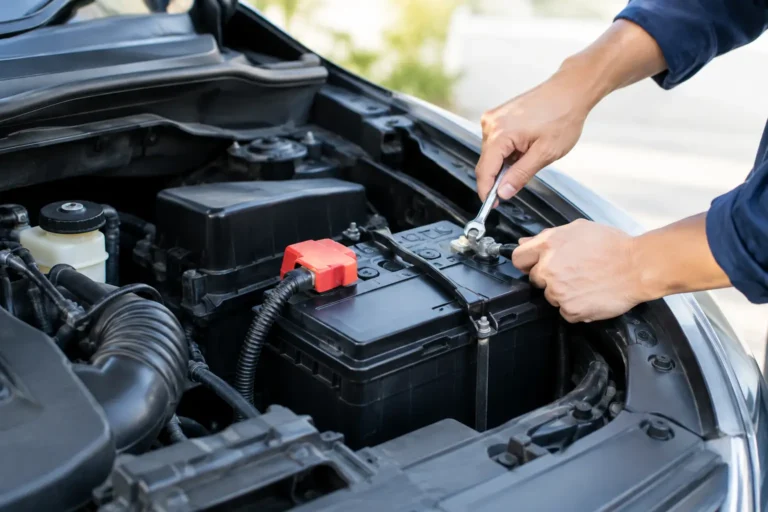
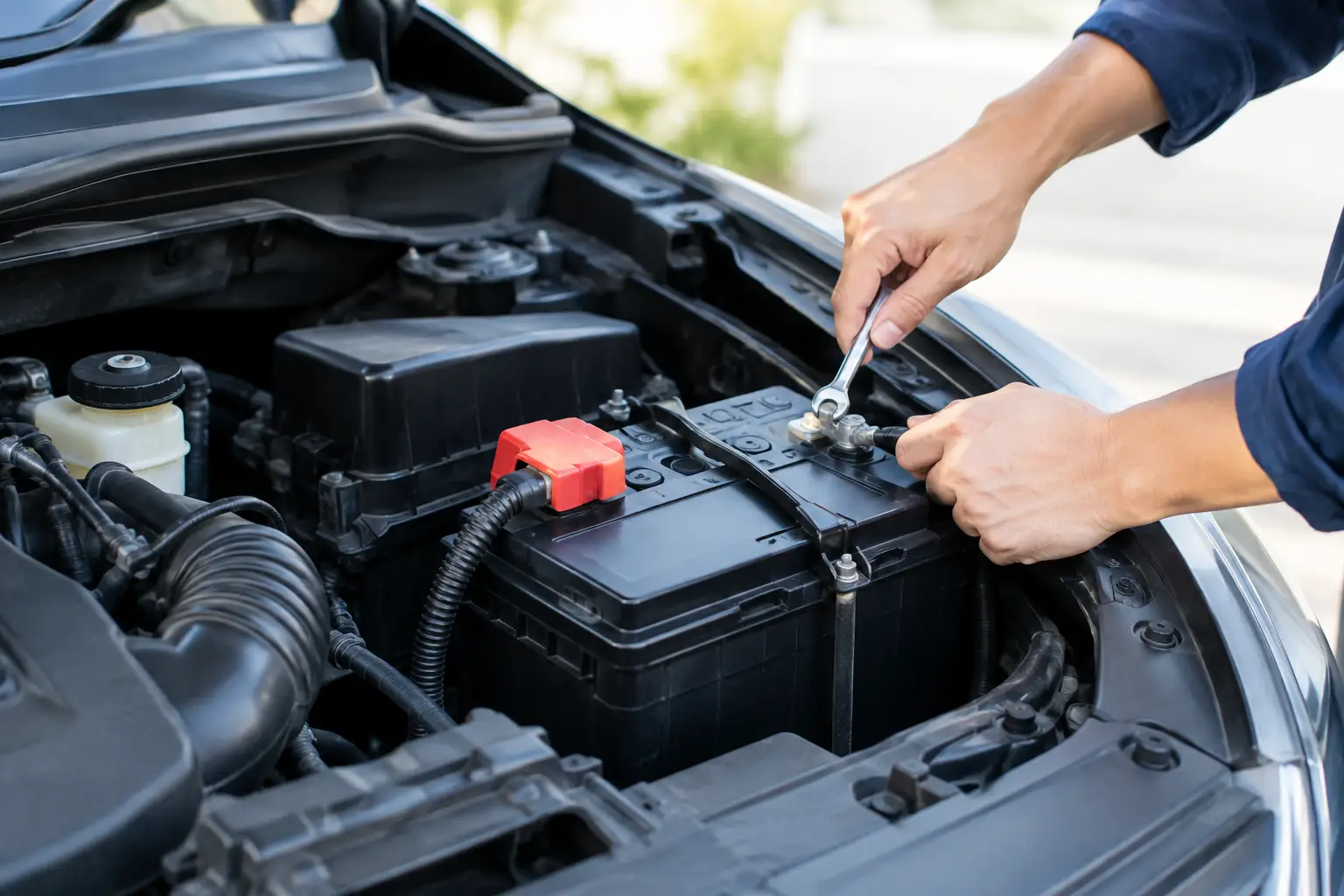
Keep battery terminals clean and secure. White or blue-green deposits around terminals can interfere with the connection and should be inspected. Do not assume corrosion is only cosmetic. Loose connections can cause intermittent starting issues and warning lights that appear difficult to explain.
It is also wise to deal with warning lights promptly. A battery-shaped warning light normally relates to the charging system, not necessarily the battery itself. Continuing to drive may be possible for a short distance, but if the alternator is not charging, the vehicle can eventually lose electrical power and stop.
When jump-starting is sensible – and when it is not
A jump-start can be a practical way to get a flat battery vehicle moving, but it is not a repair. If the engine starts after a jump, the battery may simply need a full recharge following an unusual period of inactivity. Equally, it may be worn out or the car may have a charging fault.
Modern vehicles need care when jump-starting. Incorrect connection order, unsuitable leads or poor-quality jump packs can damage electrical systems. Hybrid and electric vehicles have specific procedures, and their high-voltage components must never be treated like a conventional 12-volt system. Consult the vehicle handbook and, if there is uncertainty, arrange professional assistance.
Avoid repeatedly jump-starting a battery that continues to go flat. Repeated deep discharge can shorten battery life, and the underlying cause needs identifying. A diagnostic check can establish whether the issue is battery condition, alternator output, parasitic drain or another fault.
A clear check is better than a guess
Battery trouble is frustrating because it often appears at the worst possible time. The good news is that many failures give warning signs, and a professional test can assess battery health, charging performance and connections before you commit to replacement.
For drivers in Harlow and the surrounding area, AutoNet VIP can check the system, explain the findings in plain language and fit the correct battery where one is needed. Whether your car is petrol, diesel, hybrid or electric, the aim should be the same: dependable starting, safe electrical operation and no surprises when you need to set off.