A car can look perfectly secure from the outside, yet the wrong lifting point or an overlooked underbody issue can turn a routine inspection into a serious risk. Clear support before your car goes on the ramp is not a minor workshop detail. It is the first safety check behind brake repairs, suspension work, exhaust inspections, tyre work and many MOT-related repairs.
At a professional garage, putting a vehicle in the air is never simply a matter of driving it onto a ramp and pressing a button. The technician needs to know what is underneath, where the vehicle is designed to be supported and whether the lifting equipment is suitable for that particular car, van, hybrid or electric vehicle.
Why proper support matters before a car is lifted
A vehicle ramp gives technicians safe access to areas that cannot be properly checked from the ground. That access is valuable only when the vehicle is stable, balanced and supported in the correct places. A car that is poorly positioned may be damaged, may sit unevenly, or in the worst case may move while work is being carried out beneath it.
Modern vehicles make this more important than ever. Plastic undertrays can hide corrosion or impact damage. Low-slung performance cars may have limited ground clearance. Electric and hybrid vehicles carry high-voltage batteries, often positioned beneath the cabin floor. Vans may have heavy loads, aftermarket conversions or uneven weight distribution.
The right approach depends on the vehicle. A small hatchback, a long-wheelbase van and an electric SUV should not be treated as though they have identical lifting requirements.
Clear support before your car goes on the ramp
Before a vehicle is raised, a trained technician will assess both the vehicle and the equipment. This is a practical process, not unnecessary delay. It protects the car, the technician and the quality of the repair.
Checking the manufacturer lifting points
Every vehicle has designated jacking or lifting points. These are reinforced areas intended to carry the vehicle’s weight when it is raised. They may be marked along the sill, built into the chassis or specified in the manufacturer’s workshop information.
Using the wrong point can bend a sill, crack a plastic cover, damage a floor pan or put pressure where it does not belong. On older cars, corrosion can weaken the metal around a lifting point. That is why a visual check matters before the arms of a two-post lift are positioned.
For some vehicles, suitable rubber pads or specialist adaptors are needed to prevent damage. This is particularly relevant for premium cars with protected sills, low ground clearance or shaped underbody panels.
Looking for visible damage and corrosion
A technician should take notice of obvious concerns before lifting begins. Severe rust around sills, subframes or suspension mounting areas can affect how safely a vehicle can be supported. So can accident damage, poorly repaired bodywork, loose undertrays and damaged jacking points.
This does not automatically mean the vehicle cannot be lifted. It means the workshop may need to use a different method, a different ramp, additional support or a more cautious inspection plan. Honest communication is important here. If there is a safety concern, you should be told what has been found, what it means and what options are available.
Confirming weight, height and balance
Workshop ramps have safe working load limits. The technician must ensure the vehicle is within that limit, while also considering its weight distribution. A loaded van, for example, can behave very differently from an empty one. Roof racks, heavy tools, camper conversions and cargo all matter.
Vehicle height is relevant too. Sports cars and some electric vehicles may require low-profile ramp access or careful positioning to avoid scraping bumpers, battery guards or undertrays. The aim is not simply to get the car off the ground. It is to do so without creating another problem.
Ramp types and why the choice changes
The word “ramp” covers several types of workshop lifting equipment. Each has strengths, and a good garage chooses the one that suits the inspection or repair.
A two-post lift supports the vehicle at specific lifting points and leaves the wheels hanging free. It is useful for suspension, brake, wheel and underbody work. A four-post ramp supports the tyres and is often well suited to alignment checks, certain inspections and larger vehicles. Scissor lifts can be useful for rapid servicing or jobs where access beneath the centre of the vehicle is needed.
There is no single best ramp for every job. If suspension components need checking under normal vehicle weight, a wheel-supporting ramp may be appropriate. If wheels must be removed for brake repairs, a two-post lift may offer better access. The technician’s decision should be based on safety and the work required, rather than speed alone.
Extra care for hybrid and electric vehicles
Hybrid and electric vehicles require specialist awareness before any lifting work begins. Their battery packs, high-voltage cables and protective casings must not be struck, crushed or used as lifting points. Damage to these systems can be expensive and, in some circumstances, dangerous.
A qualified workshop will identify the vehicle type, follow the relevant manufacturer guidance and use the correct support locations. High-voltage safety procedures may also be required before certain repairs, particularly where electrical components, battery housings or orange high-voltage cables are involved.
This is one reason drivers should be cautious about assuming any garage can handle every vehicle in the same way. Routine maintenance may look straightforward, but the safe process behind it can be more technical than it appears.
What customers should expect from a professional garage
You do not need to know every lifting point on your car. That is the workshop’s responsibility. You can, however, expect clear standards when handing over your keys.
The vehicle should be moved carefully into the work area, assessed before lifting and supported using suitable equipment. If a technician finds corrosion, damage or a complication that affects the job, they should explain it before carrying out additional work. You should not be left wondering why a repair has changed in scope or cost.
It is also reasonable to ask questions. If your car is low, modified, electric, heavily loaded or has known underbody damage, mention it when booking. This gives the garage the chance to plan for the right equipment and enough inspection time.
Do not rely on makeshift lifting at home
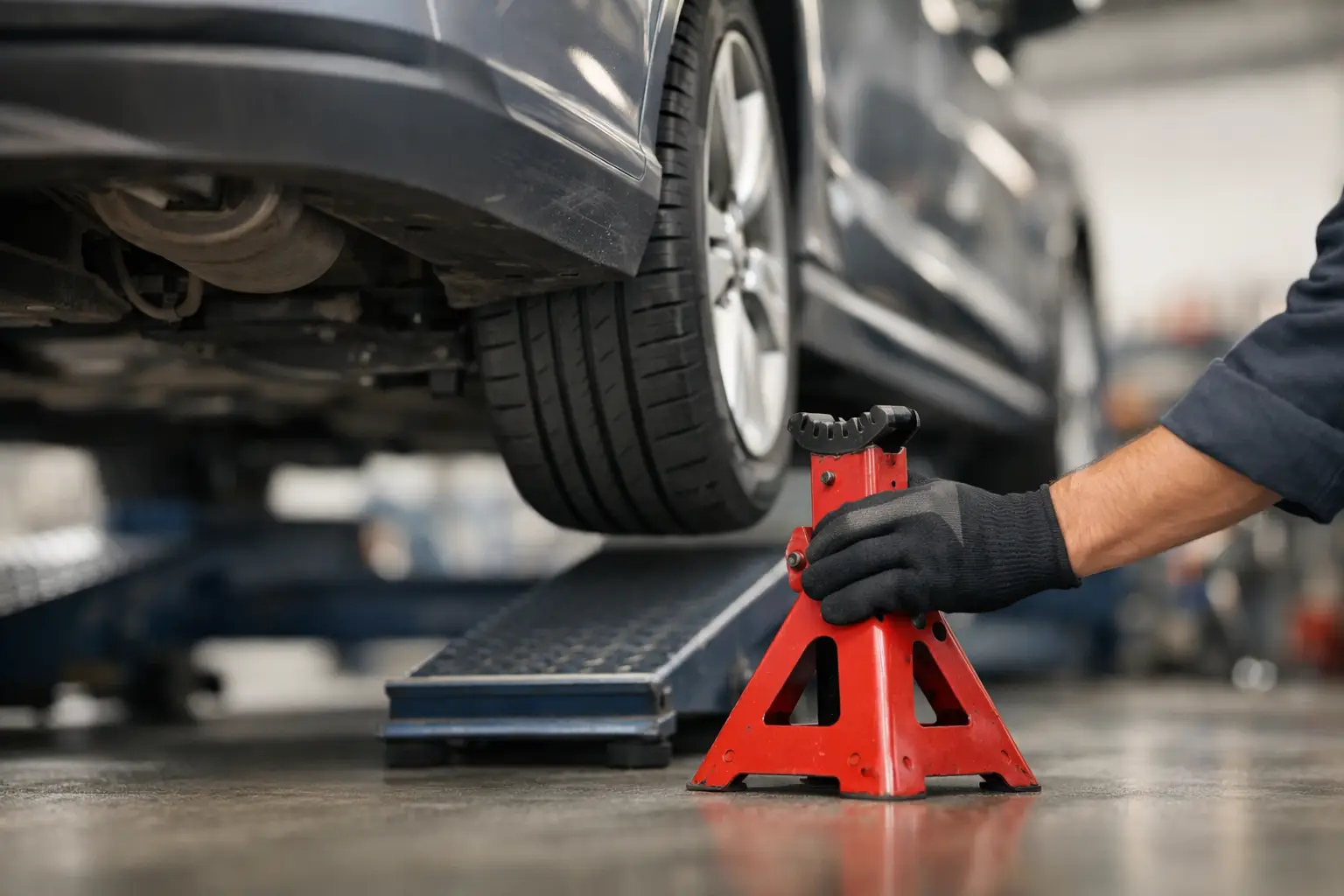
Driving onto consumer ramps or lifting a car with a trolley jack can be useful for simple checks, but only when the equipment is rated correctly, used on level ground and paired with proper axle stands where appropriate. Never work beneath a car supported only by a jack. Never use bricks, timber offcuts or improvised supports in place of equipment designed for the job.
Even good equipment has limits. A steep driveway, soft tarmac, a badly positioned ramp or a vehicle that is not centred can make a seemingly simple task unsafe. If you need more than a quick visual check, professional lifting equipment and trained technicians are the safer choice.
Safe lifting supports better repairs
The value of correct ramp support goes beyond avoiding damage. When a vehicle is lifted safely, technicians can inspect brakes, suspension joints, leaks, exhaust mountings, tyres, wheel bearings and underbody corrosion properly. It gives them the access needed to diagnose the real cause of a noise, vibration or warning sign rather than guessing from ground level.
For drivers, that means clearer advice and fewer surprises. At AutoNet VIP, the aim is to explain what your vehicle needs in plain language, with the care and equipment to carry out the work properly. If something does not look right beneath your car, a safe inspection is the sensible place to start.