A temperature warning appearing during the school run, a queue on the M25 or a hot afternoon in Harlow can quickly turn a normal journey into a worry. So, how do I know if my vehicle is overheating? The clearest answer is usually a warning light or temperature gauge, but there can be earlier signs too – and acting early may prevent serious engine damage.
Modern vehicles are designed to maintain a carefully controlled operating temperature. When the cooling system cannot do that, heat builds rapidly. A minor issue such as a coolant leak, failed fan or sticking thermostat can become an expensive repair if the vehicle is driven on while hot.
How Do I Know If My Vehicle Is Overheating?
Most cars will give you a dashboard warning before the situation becomes critical. Look for a red temperature light, often shown as a thermometer above wavy lines, or a message such as Engine Overheating, Coolant Temperature High or Stop Safely. On some vehicles, the temperature gauge will move towards, or into, the red section.
Treat a red temperature warning as an instruction to stop as soon as it is safe. An amber warning may allow you a little time to reduce load and find a safe place, but it still needs prompt attention. The exact message and colour can differ between manufacturers, so your handbook remains useful if you are unsure what a symbol means.
Do not rely on the gauge alone. Some newer cars have no traditional temperature gauge, while certain faults develop quickly enough that steam or a warning message may be the first sign.
Signs you may notice before the warning light
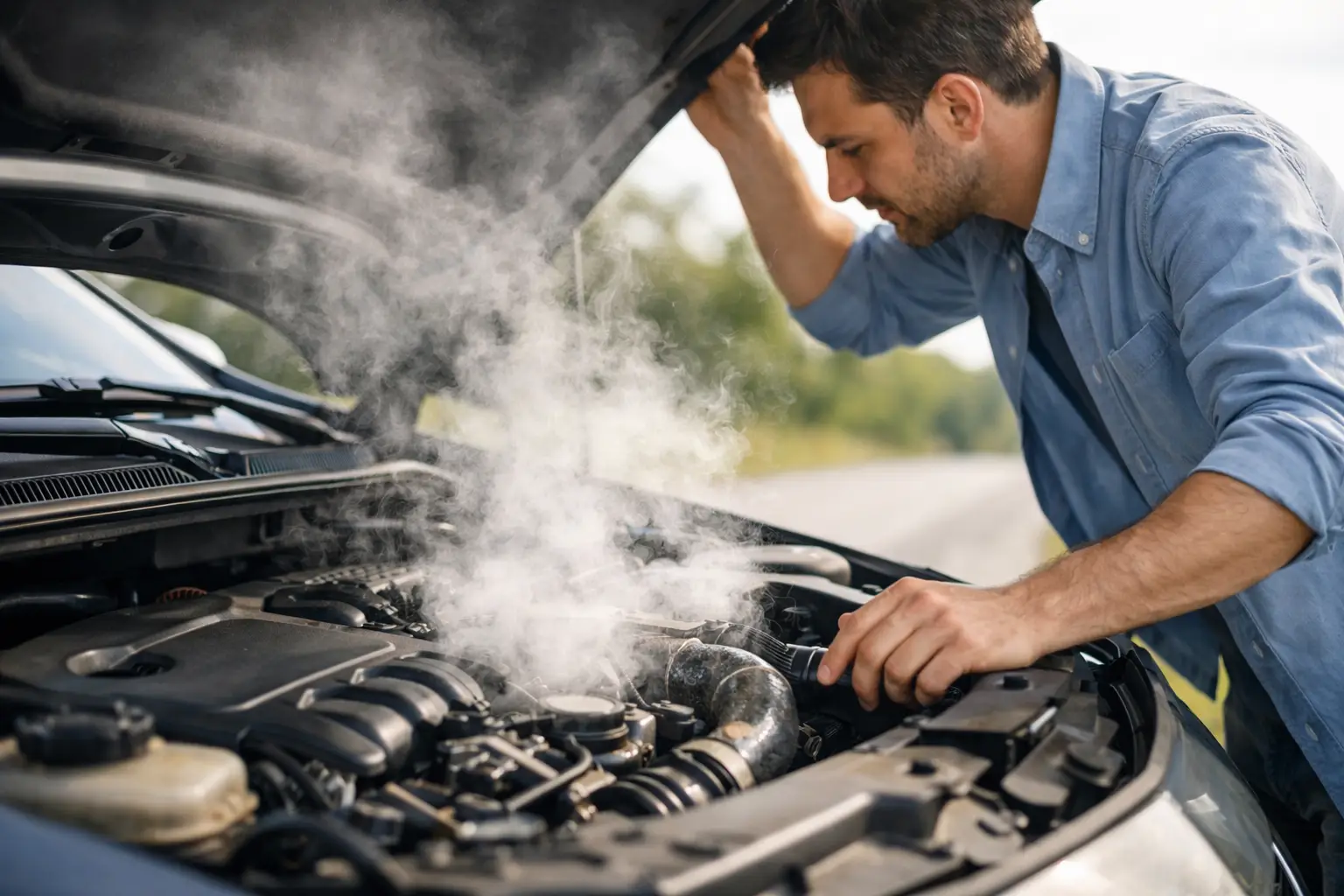
An overheating vehicle can give off clues through its smell, sound and behaviour. You may notice a sweet, slightly chemical smell from leaking coolant, steam or vapour from under the bonnet, or a visible puddle beneath the front of the car after parking. Coolant can be pink, orange, green, blue or clear, depending on the type used, so colour alone does not identify the cause.
The cabin heater is another useful clue. If you select heat and it suddenly blows cold air while the engine is hot, coolant may be low or may not be circulating correctly. Conversely, an unusually hot smell through the vents can point to a cooling-system problem.
Listen for a cooling fan running loudly or continuously after a short journey. This does not always mean there is a fault – the fan may be working normally after heavy traffic or warm weather – but it is worth checking alongside other symptoms. Loss of power, rough running, a burning smell or knocking noises are more serious warnings. Stop driving if any of these occur with a high temperature reading.
What to do if your car starts overheating
Your priority is safety, followed by preventing further damage. Do not try to push on to your destination just because it is only a few miles away. A vehicle can go from hot to severely damaged in a very short distance.
If the warning appears while driving, turn off the air conditioning and, if safe to do so, reduce engine load. Pull over at the earliest safe location, switch on your hazard lights and stop the engine. If you are stuck temporarily in slow traffic, setting the cabin heater to maximum can draw a little heat away from the engine, but this is only a short-term measure to help you reach a safe stopping point.
Once stopped, keep clear of traffic and allow the engine to cool completely. Steam and pressurised coolant can cause serious burns. Never remove the radiator cap or coolant reservoir cap while the engine is hot, and do not pour cold water over a hot engine. Both actions can create danger and may make damage worse.
After the engine has cooled, you can look for obvious signs such as a leak on the ground, a split hose or a low coolant level in the expansion tank. Only top up with the correct coolant if the engine is cold and you are confident it is safe to do so. Water may be used as a temporary emergency measure in some conventional vehicles, but it is not a proper substitute for the correct coolant mixture and should be rectified promptly.
If the warning returns, coolant is leaking, or you cannot identify a simple issue, arrange recovery rather than driving on. This is particularly sensible if the engine ran in the red, steam was visible, or there is any concern about loss of power.
Why a vehicle overheats
The cooling system moves heat away from the engine through coolant, hoses, a water pump, radiator and cooling fan. A fault in any one of these parts can upset that balance. Diagnosis matters because replacing the wrong part wastes time and money.
Common causes include a coolant leak from a hose, radiator, water pump or reservoir; a thermostat that fails to open; a radiator blocked internally or externally; and an electric cooling fan that does not switch on when required. A worn water pump may not circulate coolant effectively, while a faulty radiator cap can prevent the system from maintaining correct pressure.
There are also more complex possibilities. Combustion gases entering the cooling system, often linked to a head gasket fault, can force coolant out and cause repeated overheating. This is not something to diagnose from one symptom alone. White exhaust smoke, mayonnaise-like residue under the oil cap and unexplained coolant loss can be clues, but each can have other explanations depending on the vehicle and how it is used.
Traffic, towing, steep hills and hot weather put extra demand on a cooling system. They do not normally cause a healthy car to overheat. If your vehicle only gets hot in traffic but settles at speed, the fan or airflow through the radiator may be the issue. If it overheats at motorway speeds as well, low coolant, circulation problems or an internal fault become more likely. These patterns help a technician narrow the investigation down.
Hybrid and electric vehicle overheating warnings
Hybrid and electric vehicles need the same caution, but their cooling systems can be more complicated. They may use separate cooling circuits for the battery, electric motor, inverter and cabin systems, alongside a conventional engine cooling circuit on a hybrid.
A warning could relate to the engine, battery or high-voltage electronics rather than a visible radiator problem. Do not open covers, disconnect orange cables or attempt repairs around high-voltage components. Follow the vehicle’s on-screen instructions, stop safely and arrange professional assessment where required. A workshop equipped to work on hybrid and electric vehicles can read the fault data and test the relevant system without guesswork.
When to book a cooling-system check
Book an inspection even if the warning has disappeared. Intermittent faults can be misleading: a small leak may only show when the system is pressurised, while a fan fault may only occur once the engine reaches a certain temperature.
A proper check can include a visual inspection, pressure test, coolant condition check, fault-code scan and confirmation that the thermostat and fans operate as intended. This gives you a clear explanation of the cause and the repair options before work begins. At AutoNet VIP, diagnostics are approached this way – with straightforward findings and practical advice rather than assumptions.
Regular servicing also helps catch tired hoses, degraded coolant and early leaks before they leave you at the roadside. If your vehicle has ever shown a temperature warning, lost coolant or produced steam, treat it as a reason to act promptly. A calm stop and a timely inspection are far cheaper than risking an engine that has been allowed to overheat.